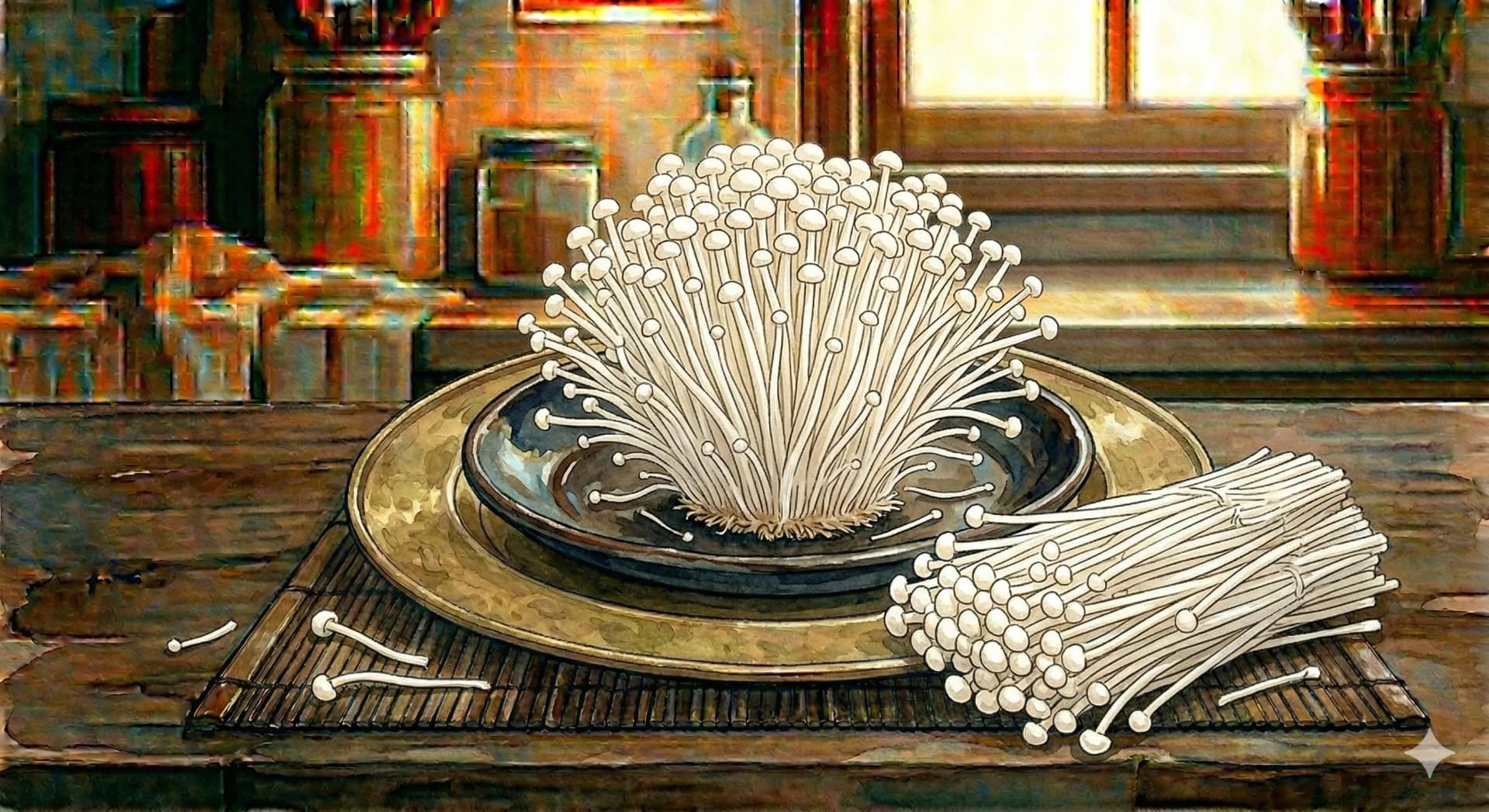
Enoki Mushrooms
Also known as: Jin Zhen Gu, Golden Needle Mushrooms, Flammulina velutipes, Winter Mushrooms
Enoki mushrooms are clusters of slender, white, needle-like mushrooms with tiny caps grown in the dark to produce their characteristic pale color and delicate texture. Their flavor is mild and slightly fruity; their primary contribution to dishes is textural — a tender crunch and visual elegance that makes them one of the most beautiful mushrooms in Chinese and Japanese cooking. They are an essential hot pot ingredient and a ubiquitous garnish in Asian cuisine.
Key facts at a glance:
- They are an essential — Hot pot ingredient and a ubiquitous garnish in Asian cuisine.
- Enoki mushrooms — Clusters of slender, white, needle-like mushrooms with tiny caps grown in the dark to produce their characteristic pale color and delicate texture.
Flavor Profile
Origin
East Asia, China, Japan
Traditional Medicine Perspectives
Traditional Chinese Medicine
Enoki mushrooms (Jin Zhen Gu) are classified as cool and sweet in TCM, associated with the Liver and Stomach meridians. They are used to tonify the Spleen and Stomach, nourish Liver Blood, promote digestion, and improve memory. They are considered particularly nourishing for children and people with Liver Blood deficiency. TCM attributes enoki's slender form to their affinity with the Liver, which governs the sinews.
Modern Scientific Research
Enoki mushrooms contain beta-glucans — polysaccharides with well-studied immunomodulatory properties. Research shows enoki beta-glucans may enhance NK cell activity and macrophage function. Flammulina velutipes extracts have been studied for potential anti-tumor properties in laboratory research. Enoki also contain ergosterol (a vitamin D precursor when exposed to UV), B vitamins, and amino acids including arginine, which supports immune function.
Cultural History
Enoki mushrooms in their cultivated white form have been grown commercially in East Asia since the 1940s, though the wild form (which is brown and different in appearance) has been used in Chinese cooking for much longer. The cultivated form, grown in darkness on bottled substrate, is a modern agricultural product that has achieved remarkable cultural integration — enoki are now inseparable from hot pot culture, Japanese and Korean cooking, and increasingly global Asian cuisine. Wild enoki — found growing on rotting elm wood in autumn and winter — are prized by foragers in China and Japan.
Culinary Uses
Add to hot pots — they cook in seconds and are best eaten barely warm. Use raw or very lightly cooked in cold preparations.
Bundle and wrap with thinly sliced beef or pork for a classic hot pot preparation. Add to soups at the very last moment.
Use as a garnish over noodle dishes. Grill briefly for a lightly caramelized preparation.
Preparation Methods
Trim the root base (the compressed end where they join) and separate into smaller clusters. Do not overcook — enoki go from pleasantly tender to mushy very quickly. They can be eaten raw in salads with a light dressing.
Traditional Dishes
- Hot pot vegetable
- Beef-wrapped enoki (yakiniku style)
- Japanese enoki miso soup
- Cold enoki salad
- Stir-fried enoki with oyster sauce
Comments
Share your thoughts on this ingredient.
Sign in to comment0 Comments