Korean Cuisine
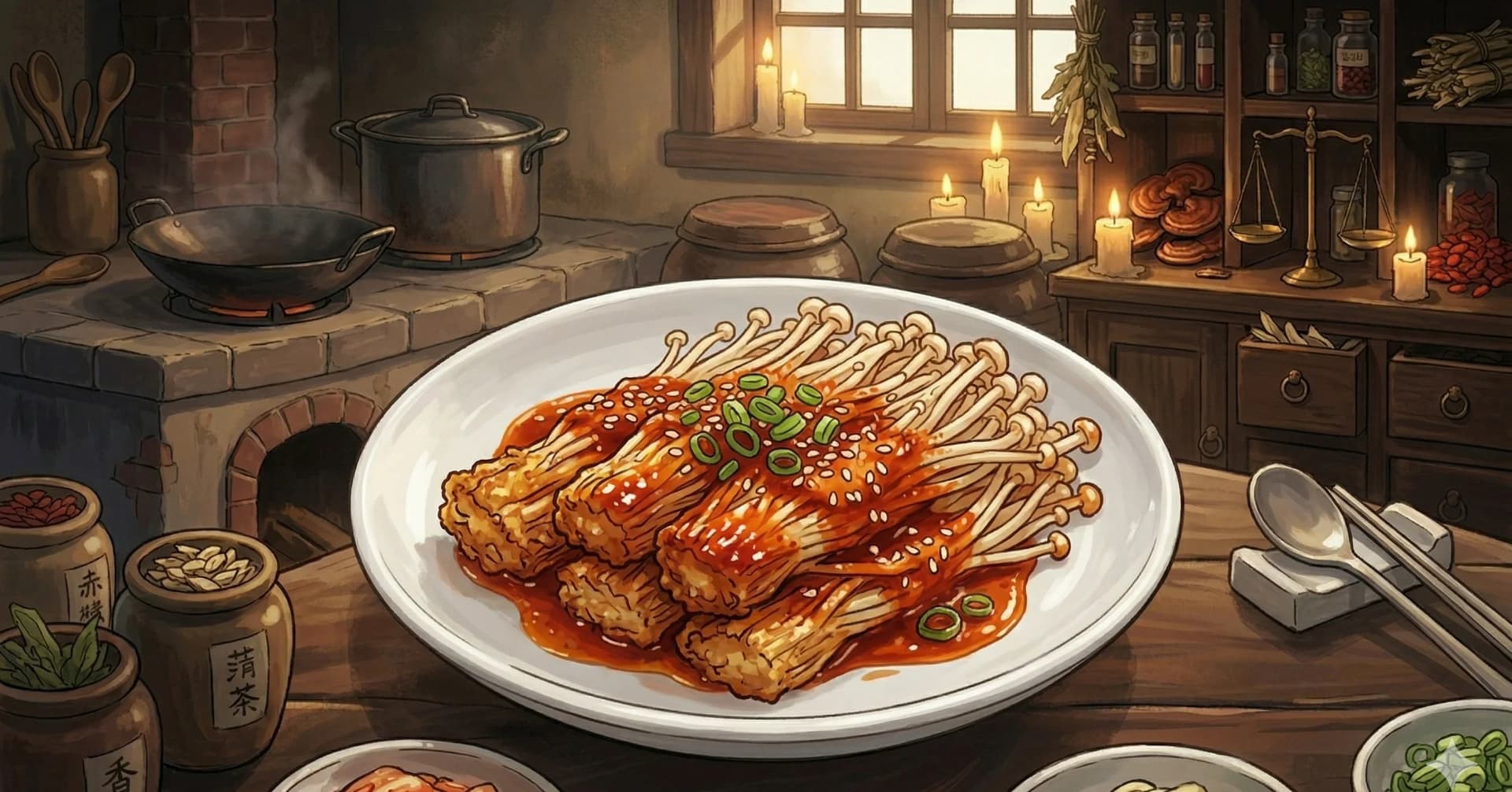
Spicy Enoki Mushrooms (Maeun Paengi Beoseot)
Crispy-bottomed enoki mushrooms glazed in a sweet, spicy gochugaru sauce and finished with sesame seeds and scallions, Korean banchan style
Banchan, the small shared dishes that arrive at the start of every Korean meal, are where some of the most satisfying cooking happens. Not the dramatic, centerpiece dishes, but the quiet ones. The ones you reach for again and again between bites of rice. This spicy enoki mushroom dish has become one of the most popular banchan in Korean home cooking, and its rise to fame outside Korea owes a lot to mukbang, the eating broadcast culture where these golden, glazed mushrooms became a visual and auditory sensation.
The technique is what makes it work. Instead of stir-frying the enoki in a jumble, you arrange them in a flat layer across the pan and let them sear undisturbed until the bottom turns golden and crispy. This is the same principle behind Korean pajeon (scallion pancakes): a flat layer of thin ingredients pressed into hot oil, creating a crust. Flipping reveals a gorgeous golden sheet, and then the sauce goes in.
The sauce itself is straightforward Korean pantry. Gochugaru (Korean chili flakes) provides a fruity, moderate heat that is more warm than aggressive. Soy sauce adds salt and depth. Sugar balances the spice and helps the sauce caramelize into a sticky glaze. Garlic, because Korean cooking without garlic is barely Korean cooking at all.
You build the glaze in stages. Half the sauce goes on the first flip, cooking down and concentrating as the mushrooms absorb it. The second addition goes on the final flip, giving a fresh, glossy coating over the caramelized layer beneath. The result is mushrooms that are crispy on the bottom, tender through the middle, and sticky-spicy on the surface.
If you want to push the heat and depth further, a tablespoon of gochujang or oyster sauce added to the sauce mix gives it more body and a slightly fermented edge. But the basic version, with just gochugaru, soy, sugar, and garlic, is already exactly right.
At a Glance
Yield
2 servings
Prep
5 minutes
Cook
12 minutes
Total
17 minutes
Difficulty
Easy
Ingredients
- ½ lbenoki mushrooms, root end trimmed, halved lengthwise through the base
- 3 tbspchili oil, (or neutral oil)
- 1 tbspgochugaru (Korean chili flakes)
- 1 tbspsoy sauce
- 1 tbspsugar
- 1 tbspgarlic, finely chopped
- 2green onions, thinly sliced
- 1 tspsesame seeds
- 1 tbspgochujang or oyster sauce (optional)
Method
- 1
Trim the root end from the enoki mushrooms and halve them lengthwise through the base, so you have two flat-bottomed bundles. If the bundles are very thick, separate them into thirds instead.
- 2
Mix the sauce: combine the gochugaru, soy sauce, sugar, and garlic in a small bowl. Stir until the sugar dissolves. If using gochujang or oyster sauce, add it here.
- 3
Heat the chili oil (or neutral oil) in a large skillet over medium-high heat until it shimmers. Arrange the enoki bundles flat-side down in the pan in a single layer. Press them down gently with a spatula. Let them sear undisturbed for 3 minutes until the bottom is golden brown and crispy. The mushrooms will shrink as they lose moisture.
- 4
Flip the enoki carefully with a spatula. Spoon half of the sauce over the mushrooms, spreading it evenly. Cook for 4 to 5 minutes, letting the sauce bubble and reduce. The mushrooms will absorb the sauce and the liquid will start to concentrate.
- 5
Flip once more and add the remaining sauce. Cook for another 3 to 4 minutes until the sauce has thickened into a sticky, glossy glaze and the mushrooms look deeply caramelized. The pan should be nearly dry, with the sauce coating the mushrooms rather than pooling.
- 6
Transfer to a plate, scatter the sesame seeds and sliced green onions over the top, and serve immediately. These are best while the bottom layer is still crispy.
Key Ingredient Benefits
Enoki mushrooms: Low in calories and a good source of B vitamins, particularly niacin and thiamine. They contain conjugated linoleic acid and beta-glucan fiber that have been studied for potential metabolic benefits, though evidence remains preliminary. Traditional Korean dietary wisdom considers mushrooms beneficial for vitality and immune function.
Gochugaru: Korean chili flakes contain capsaicin, which has been extensively studied for its effects on metabolism and pain perception. They are also rich in vitamin C and beta-carotene. The moderate heat level of gochugaru (compared to more concentrated chili powders) makes it easier to consume in quantities where these compounds become nutritionally meaningful.
Garlic: Contains allicin and other organosulfur compounds that have been studied for cardiovascular and antimicrobial properties. Korean cuisine uses garlic in quantities large enough to be nutritionally significant, typically several cloves per dish rather than a token amount.
Why This Works
The flat-sear technique is borrowed from Korean pancake making, and it is the single most important step. Enoki mushrooms are thin, watery, and tangled. When you pile them in a pan and stir, they steam instead of browning, and you end up with a limp, pale mass. But when you arrange them flat and leave them alone, the water cooks out from the bottom layer first, the sugars concentrate and caramelize, and you get a golden, crispy sheet that holds together like a mushroom pancake.
Adding the sauce in two stages is a technique common in Korean stir-fries and braises. The first addition penetrates the mushrooms as they cook, seasoning them from within. As that sauce reduces and concentrates, it creates a caramelized layer on the surface. The second addition goes on fresh, giving a bright, glossy coating over that caramelized base. You end up with two layers of flavor: deep and cooked-in underneath, fresh and vibrant on top.
The sugar in the sauce is not just for sweetness. It is essential for the glaze. Sugar caramelizes as the sauce reduces, creating the sticky, shiny coating that makes these mushrooms look (and taste) like they came from a Korean restaurant. Without it, you get a sauce that is spicy and salty but thin and dull-looking.
Chili oil rather than neutral oil adds another layer of heat and a more complex flavor base from the start. If you use neutral oil, the dish will still work well, just with a slightly simpler flavor profile.
Substitutions & Variations
Enoki mushrooms: King oyster mushrooms, sliced into thin planks, give a meatier version. Shimeji mushrooms work well in clusters. Regular oyster mushrooms, torn into strips, are another good option.
Gochugaru: This is the defining ingredient and has no perfect substitute. In a pinch, a blend of sweet paprika and a small amount of cayenne pepper approximates the color and heat level, though the fruity complexity will be missing. Aleppo pepper flakes are the closest non-Korean alternative.
Chili oil: Neutral oil works fine. The chili oil just adds an extra dimension of heat. If you have Chinese chili crisp (like Lao Gan Ma), a tablespoon of the oil from the jar is an excellent choice.
Sugar: Brown sugar or honey can replace white sugar. Each adds a slightly different character to the glaze. Honey will give a more golden color and slightly floral note.
Gochujang (optional): Doenjang (Korean fermented soybean paste) mixed with a pinch of chili flakes gives a different but equally Korean flavor profile.
Serving Suggestions
Serve as banchan alongside steamed rice and other small dishes for a traditional Korean meal. It pairs naturally with Kimchi, seasoned spinach (sigeumchi namul), and a bowl of doenjang jjigae (soybean paste stew). For a quick meal, pile these mushrooms on top of a bowl of hot rice with a fried egg and a drizzle of sesame oil. They also make a surprisingly good topping for ramen or udon noodles.
Storage & Reheating
Best fresh: The crispy bottom texture is gone within 30 minutes of cooking. These are best served immediately.
Refrigerator: Store in an airtight container for up to 2 days. The texture will be soft, but the flavor remains excellent. Cold leftover spicy enoki makes a good topping for rice bowls straight from the fridge.
Reheating: Reheat in a dry skillet over medium-high heat for 2 to 3 minutes. This will not fully restore the crispiness but will warm the mushrooms and re-concentrate the glaze slightly.
Freezing: Not recommended.
Cultural Notes
Banchan (반찬) is the collective term for the small side dishes served alongside rice at every Korean meal. The tradition reflects a Korean dining philosophy where meals are composed of many small flavors rather than one large centerpiece. A home meal might include 3 to 5 banchan, while a restaurant or special occasion could feature 10 or more. Each banchan is typically served in small dishes and shared by the whole table. The practice of including mushrooms in banchan is ancient, with Korean foraging traditions identifying dozens of wild mushroom species for culinary use. Enoki mushrooms (paengi beoseot, 팽이버섯) are among the most popular cultivated mushrooms in Korea, prized for their delicate texture and ability to absorb strong flavors. This particular preparation gained international recognition through Korean mukbang (먹방, eating broadcast) culture, where the visual drama of crispy, saucy mushrooms and the sounds of eating became a genre of online entertainment.
Nutrition Facts
Calories: 155kcal (8%)|Total Carbohydrates: 14g (5%)|Protein: 3.5g (7%)|Total Fat: 11g (14%)|Saturated Fat: 1.5g (8%)|Cholesterol: 0mg (0%)|Sodium: 520mg (23%)|Dietary Fiber: 2g (7%)|Total Sugars: 7g
You Might Also Like
Ratings & Comments
Ratings & Comments
Ratings
Share your thoughts on this recipe.
Sign in to rate and comment