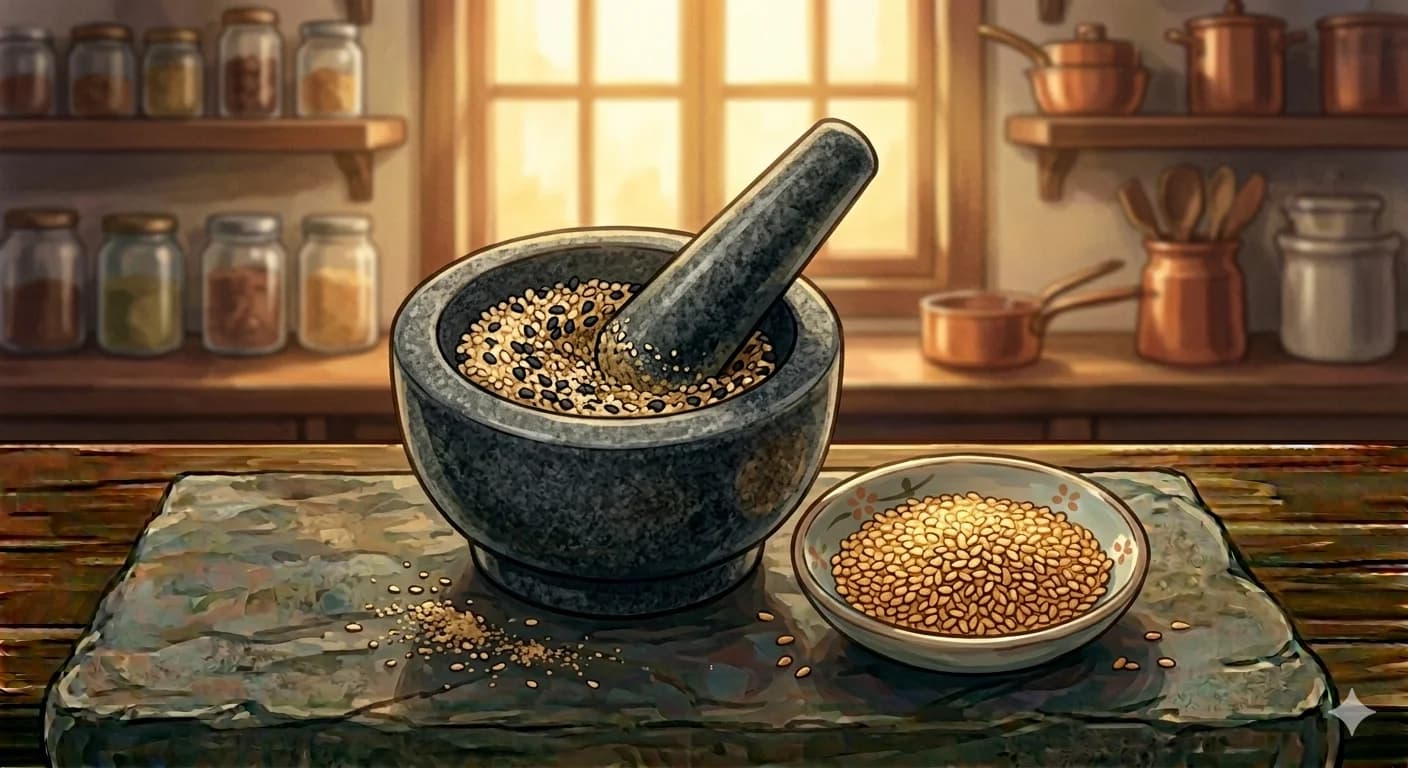
Sesame Seeds
Also known as: Chamkkae, 참깨, Til, Goma, Zhi Ma, Sesamo
Sesame seeds — tiny, tear-shaped seeds that pack an extraordinary amount of flavor and nutrition into their minuscule frames — are one of the most universally important ingredients across Asian cuisines, from Korean banchan to Indian sweets to Japanese garnishes.
The flavor of toasted sesame is warm, nutty, and deeply aromatic, with a richness that borders on addictive. This flavor intensifies dramatically with toasting — raw sesame seeds are relatively bland, but the application of heat unlocks a complex bouquet of roasted, caramelized, and earthy notes.
In Korean cooking, sesame seeds and sesame oil are so foundational that they appear in virtually every meal. In Indian cuisine, sesame (til) is central to winter sweets and religious offerings. In Japanese and Chinese cooking, they serve as both garnish and flavoring agent.
Key facts at a glance:
- One of the oldest cultivated oilseed crops — over 5,000 years of documented use
- Toasting transforms flavor — raw seeds are bland; toasted seeds are deeply aromatic
- Universal across Asian cuisines — Korean, Indian, Japanese, Chinese, Middle Eastern
- Two main types — white (hulled) and black (unhulled), with distinct flavors
- Source of sesame oil — one of the most important cooking oils in East Asia
This page covers the hulled white seed used as a garnish and finishing note. The black cultivar is the same species but is treated as a separate ingredient by every tradition that uses it, with its own medicinal indications and its own desserts: see black sesame seeds.
Flavor Profile
Origin
Indian subcontinent, Africa, East Asia, Middle East
Traditional Medicine Perspectives
Ayurveda
Sesame (til) is considered warm, heavy, and sweet in Ayurveda. It pacifies Vata dosha and is associated with strength, nourishment, and warmth. Sesame oil (til ka tel) is the primary oil used in Ayurvedic massage (abhyanga) and is considered deeply nourishing for the skin, joints, and nervous system. Sesame is traditionally consumed in greater quantities during winter months.
Traditional Chinese Medicine
Sesame seed (Hei Zhi Ma, black sesame) is classified as sweet and neutral, entering the Liver, Kidney, and Large Intestine meridians. It is used to tonify the Liver and Kidney, nourish blood, moisten the intestines, and benefit the skin and hair. Black sesame is traditionally associated with preventing premature graying of hair and strengthening bones. It is a common ingredient in longevity formulas.
Modern Scientific Research
Sesame seeds are rich in lignans, particularly sesamin and sesamolin, which are converted in the body to mammalian lignans with demonstrated antioxidant properties. These compounds are unique to sesame and have been studied for their potential effects on lipid metabolism and blood pressure.
Sesame seeds provide significant calcium (especially unhulled/black seeds), iron, magnesium, zinc, and B vitamins. They are also one of the richest plant sources of phytosterols, which may help manage cholesterol levels.
Black sesame seeds have higher antioxidant activity than white due to their anthocyanin content in the seed coat. However, sesame is one of the major food allergens and can cause severe reactions in sensitized individuals.
Cultural History
Sesame is one of the oldest oilseed crops known to humanity, with cultivation dating back over 5,000 years to the Indus Valley civilization. The phrase "open sesame" from the Arabian Nights reflects the plant's ancient cultural significance — the sesame pod splits open suddenly when ripe, revealing its treasured seeds.
In Korea, sesame (chamkkae) and perilla (deulkkae) are the twin pillars of seed-based seasoning. Toasted sesame seeds and sesame oil appear in virtually every Korean meal — scattered over rice, mixed into namul, stirred into marinades, and drizzled as a finishing touch.
Sesame is one of the oldest oilseed crops known to humanity — its cultivation predates recorded history, and it remains essential across virtually every Asian culinary tradition.
In India, sesame (til) is deeply connected to the winter festival of Makar Sankranti, when til-gul (sesame-jaggery sweets) are exchanged with the blessing "til-gul ghya, god god bola" — take this sesame-jaggery and speak sweet words.
Culinary Uses
Toast white sesame seeds in a dry pan over medium heat, shaking constantly, until golden and fragrant — about 2-3 minutes. This is the single most important step. Scatter generously over finished dishes: rice, namul, stir-fries, noodles, salads.
Grind toasted sesame seeds with salt for gomashio (Japanese sesame salt) or blend into tahini/sesame paste for sauces and dressings. In Korean cooking, mix toasted sesame with soy sauce, garlic, and sesame oil for the universal seasoning base used in countless banchan.
Raw sesame seeds are relatively bland — toasting is what unlocks their extraordinary warm, nutty aroma. This transformation takes only 2-3 minutes but makes all the difference.
Black sesame seeds are used in Chinese and Japanese desserts — black sesame soup (zhi ma hu), black sesame ice cream, and sesame balls (tang yuan filling). In India, use sesame in til laddoo, chikki (brittle), and as a coating for fried snacks.
Preparation Methods
Always toast before using for maximum flavor. Toast in a dry pan over medium heat, shaking frequently, until they turn golden and begin to pop — about 2-3 minutes. Do not walk away; they burn quickly.
For sesame paste, toast first, then grind in a food processor or mortar until a smooth, oily paste forms. This takes patience — the seeds need to release their oil.
Store toasted sesame seeds in an airtight container in the refrigerator — they go stale within a week or two at room temperature. Buy whole seeds and toast in small batches for the best flavor.
Traditional Dishes
- Bibimbap garnish
- Til laddoo
- Gomashio
- Black sesame tang yuan
- Japchae garnish
- Tahini
- Sesame chicken
Comments
Share your thoughts on this ingredient.
Sign in to comment0 Comments