
Cross-Cultural · Korea
Braised Baby Potatoes (Algamja-jorim / 알감자조림)
Baby potatoes boiled, pan-fried until wrinkled, and glazed in soy sauce and rice syrup
Algamja-jorim is the Korean banchan that turns humble baby potatoes into something addictive. The name translates literally to "egg potato braised," because the potatoes are as small as quail eggs. They are boiled first until fork-tender, then pan-fried in oil until the skins wrinkle and turn golden, then glazed in a mixture of soy sauce and rice syrup that reduces into a sticky, sweet-salty coating.
The wrinkled skin is the key. When boiled potatoes hit hot oil, the surface moisture evaporates and the skin contracts and crinkles. This wrinkling creates texture and surface area that catches the glaze. Inside, the potato stays fluffy and moist. The contrast between the crunchy, glazed exterior and the soft interior is what makes this banchan disappear from the table faster than almost any other.
The glaze is two ingredients: soy sauce for salt and rice syrup for sticky sweetness. They reduce in the pan with the potatoes and a clove of minced garlic, cooking down until the sauce thickens and the potatoes look shiny and lacquered. Sesame oil at the end adds nuttiness, and sesame seeds go on for visual appeal. The whole thing takes about thirty minutes, most of which is the potato boiling time. It keeps for about a week in the fridge and is one of those banchan that tastes just as good cold as it does warm.
At a Glance
Yield
4 servings
Prep
5 minutes
Cook
25 minutes
Total
30 minutes
Difficulty
Easy
Ingredients
- 1 lbbaby potatoes, quail-egg size
- 2 tbspvegetable oil
- 3 tbspsoy sauce
- 3 tbsprice syrup or corn syrup or honey
- 1garlic clove, minced
- 1 tspsesame oil
- 1 tbspsesame seeds
Method
- 1
Boil potatoes in salted water about 15 minutes until fork-tender. Drain and let steam dry 2-3 minutes.
- 2
Pan-fry in oil over medium heat for 3-5 minutes until golden with wrinkled skin.
- 3
Reduce heat to low. Add soy sauce, rice syrup, and garlic. Stir together.
- 4
Return to medium heat, stir and cook 4-5 minutes until sauce is reduced and potatoes look shiny and wrinkly.
- 5
Remove from heat. Mix in sesame oil, sprinkle sesame seeds. Serve.
Key Ingredient Benefits
Baby potatoes: Small, thin-skinned potatoes are essential here. Their high surface-area-to-volume ratio means more contact with the braising sauce, and the thin skins absorb the soy-syrup glaze without becoming tough. They also cook through evenly without needing to be cut, preserving the visual appeal of the dish. Baby potatoes are a good source of vitamin C, potassium, and resistant starch when cooled and reheated.
Rice syrup (jocheong): The defining ingredient of jorim glazing. Rice syrup is less aggressively sweet than refined sugar and produces a lacquered, glossy finish that coats every potato in a translucent caramel. Its high viscosity means the glaze clings to the potatoes rather than pooling at the bottom of the pan.
Soy sauce: Provides salinity and the deep mahogany color that defines all Korean jorim dishes. Korean cooking uses soy sauce in two registers — jin-ganjang for braising and glazing, and guk-ganjang (soup soy sauce) for soups and stews. This dish calls for the former.
Sesame oil and sesame seeds: The classic Korean finishing pair. The oil adds nutty fragrance, the toasted seeds add crunch and visual texture. Both are added off the heat to preserve their delicate aromas.
Why This Works
Pre-boiling the potatoes before braising is the key to this dish. Raw potatoes braised directly in the sauce would absorb sauce unevenly and take so long to cook that the sauce would burn before the potatoes turned tender. By parboiling first, the potatoes are already soft and ready to absorb the glaze when they hit the pan.
The ratio of soy sauce to rice syrup is intentionally close to 1:1, which is unusually sweet for a savory dish. This high sugar content is what allows the sauce to caramelize into a sticky, lacquered coating rather than just a liquid braise. As the sauce reduces, the sugars concentrate and Maillard browning begins on the potato surface, giving the dish its addictive, candy-like quality.
Cooking with the lid off and stirring frequently in the final 5 minutes is essential. The sauce needs to reduce and adhere to the potatoes, not steam them. The pan should look almost dry at the end, with only a sticky glaze coating each potato.
Finishing with sesame oil and seeds off the heat preserves their delicate aromatics, which would be destroyed by direct heat.
Substitutions & Variations
Baby potatoes: Larger waxy potatoes (red, yellow, or fingerling) cut into 1-inch chunks work but lose the textural appeal of whole baby potatoes. Russets are too starchy and fall apart in the braise.
Rice syrup: Honey is the closest substitute and very common in Korean home cooking. Light corn syrup works for the glazing function but lacks floral notes. Brown sugar dissolved in equal water gets close enough. Maple syrup will work but introduces a distinct flavor that shifts the dish.
Soy sauce: Use Korean jin-ganjang if available. Japanese soy sauce is a perfect substitute. Avoid sweet, low-sodium, or tamari with unusual seasonings.
Garlic: Cannot be skipped, but the quantity can be adjusted. Some versions use 3 to 4 cloves for a more garlic-forward dish.
Sesame seeds: Hemp seeds or finely chopped peanuts work for the textural finish, though the flavor shifts.
Serving Suggestions
Algamja-jorim is a banchan that lives in the fridge, ready to serve with any Korean meal. The sweet-savory potatoes work especially well alongside spicy or richly seasoned mains like jeyuk-deopbap, bulgogi, or galbi-jjim, where their sweetness provides relief from the heat or richness.
Pair with steamed short-grain rice and at least one fresh, crunchy banchan to balance the soft, sweet potatoes — oi muchim (spicy cucumber salad) and kkakdugi (cubed radish kimchi) are both excellent choices.
This is also one of the best banchan to pack in a lunch box. The potatoes hold up beautifully at room temperature and the glaze does not turn watery, unlike many braised dishes. Many Korean working adults grew up with algamja-jorim in their dosirak (lunch box).
Storage & Reheating
Refrigerator: Store in an airtight container for up to 1 week. Algamja-jorim is one of the longest-keeping Korean banchan, which is part of why it appears in so many home refrigerators. The glaze tightens slightly in the fridge but loosens again with gentle warming.
Serving temperature: Equally good served at room temperature or briefly warmed in a pan or microwave. Most Korean homes serve it cold, straight from the fridge as banchan.
Reheating: A few seconds in the microwave or 2 minutes in a hot pan with a splash of water restores the glossy glaze if needed. Avoid prolonged reheating, which can dry out the potatoes.
Make-ahead: This dish is designed to be made ahead. The flavor actually improves over 1 to 2 days as the potatoes absorb more of the soy-syrup glaze.
Freezing: Not recommended. The potato texture suffers significantly on thawing.
Cultural Notes
Jorim (조림) is one of the foundational techniques of Korean home cooking — braising in a small amount of seasoned liquid until the sauce reduces to coat the main ingredient. The technique is applied to almost every category of food: fish (eundaegu-jorim), tofu (dubu-jorim), lotus root (yeon-geun-jorim), and many vegetables. Algamja-jorim is the entry-point dish for the technique because it requires no special ingredients and almost no skill.
The use of small baby potatoes specifically — called al-gamja (egg potato) for their size — is recent. Until the 1990s, Korean grocers rarely sold potatoes smaller than fist-sized, and home cooks used cubed russet potatoes for jorim. The introduction of waxy baby potatoes through agricultural trade with Europe and the Americas gave rise to algamja-jorim as a distinct dish, prized for its visual appeal and the way the whole, intact potatoes hold their shape and glaze.
In Korean Buddhist temple cuisine, a version of this dish appears without garlic and with rice syrup instead of honey, following Buddhist dietary restrictions against pungent allium vegetables. The temple version is often served at temple stays and is a good example of how Korean monastic cooking adapts everyday banchan to ascetic practice.
Nutrition Facts
Calories: 202kcal (10%)|Total Carbohydrates: 29.6g (11%)|Protein: 3.9g (8%)|Total Fat: 7.8g (10%)|Saturated Fat: 0.8g (4%)|Cholesterol: 0mg (0%)|Sodium: 635mg (28%)|Dietary Fiber: 3g (11%)|Total Sugars: 4.7g
You Might Also Like
 Medium
Cross-Cultural · Korea
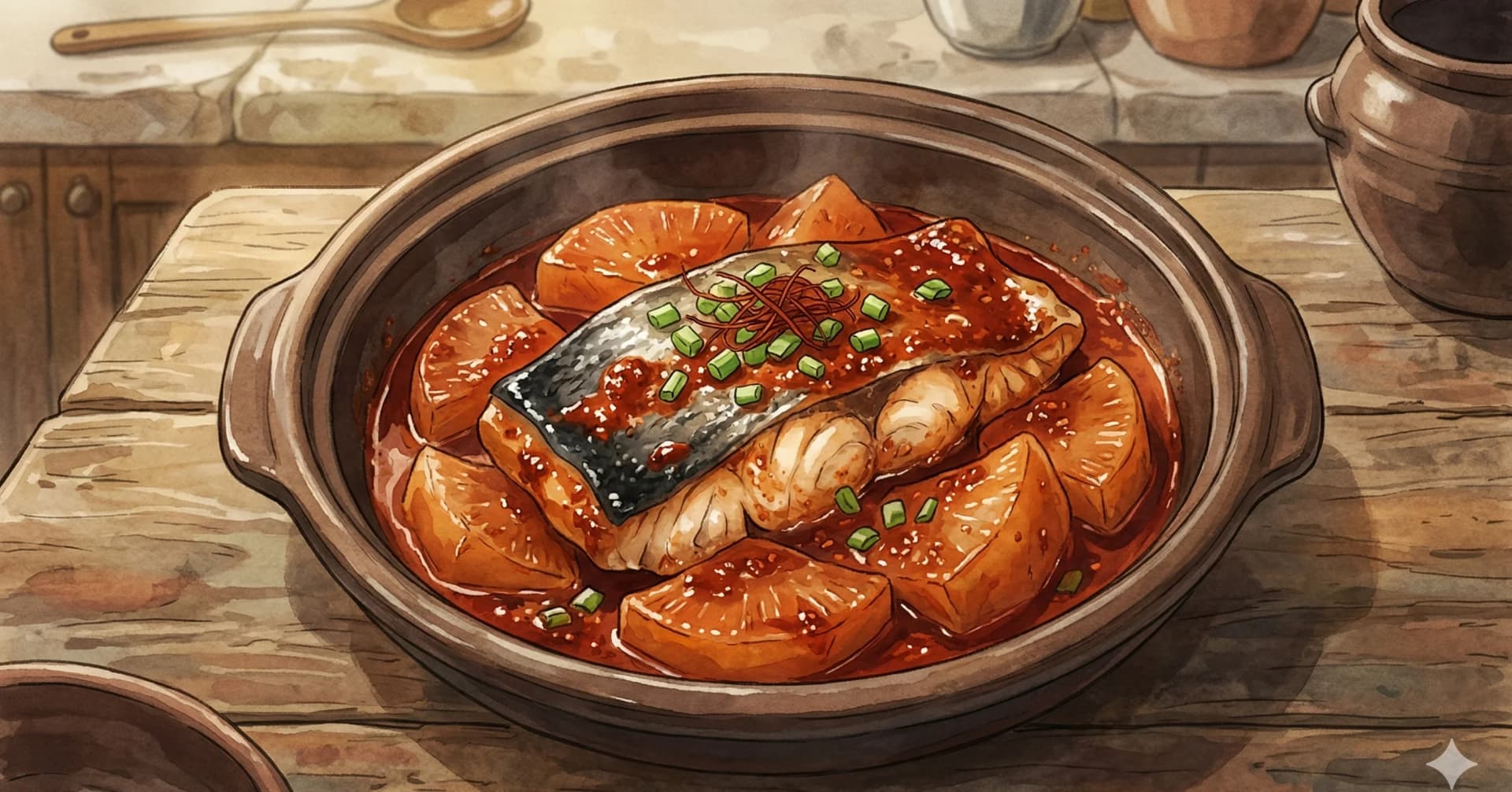
Braised Black Cod (Eundaegu-jorim / 은대구조림)
45 minutes
 Medium
Cross-Cultural · Korea
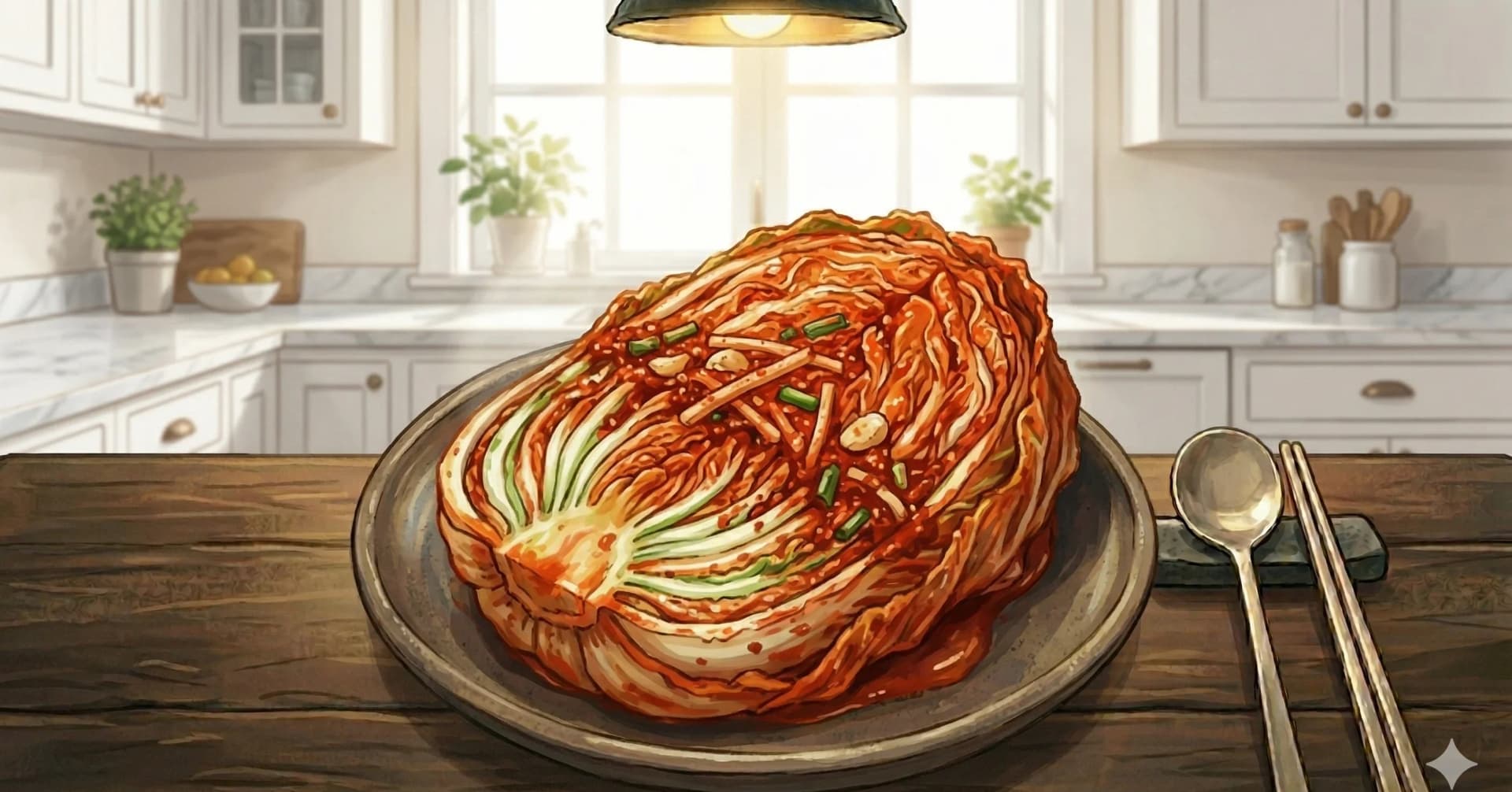
Napa Cabbage Kimchi (통배추김치)
8 hours plus 1-2 days fermentation
 Easy
EasyCross-Cultural · China
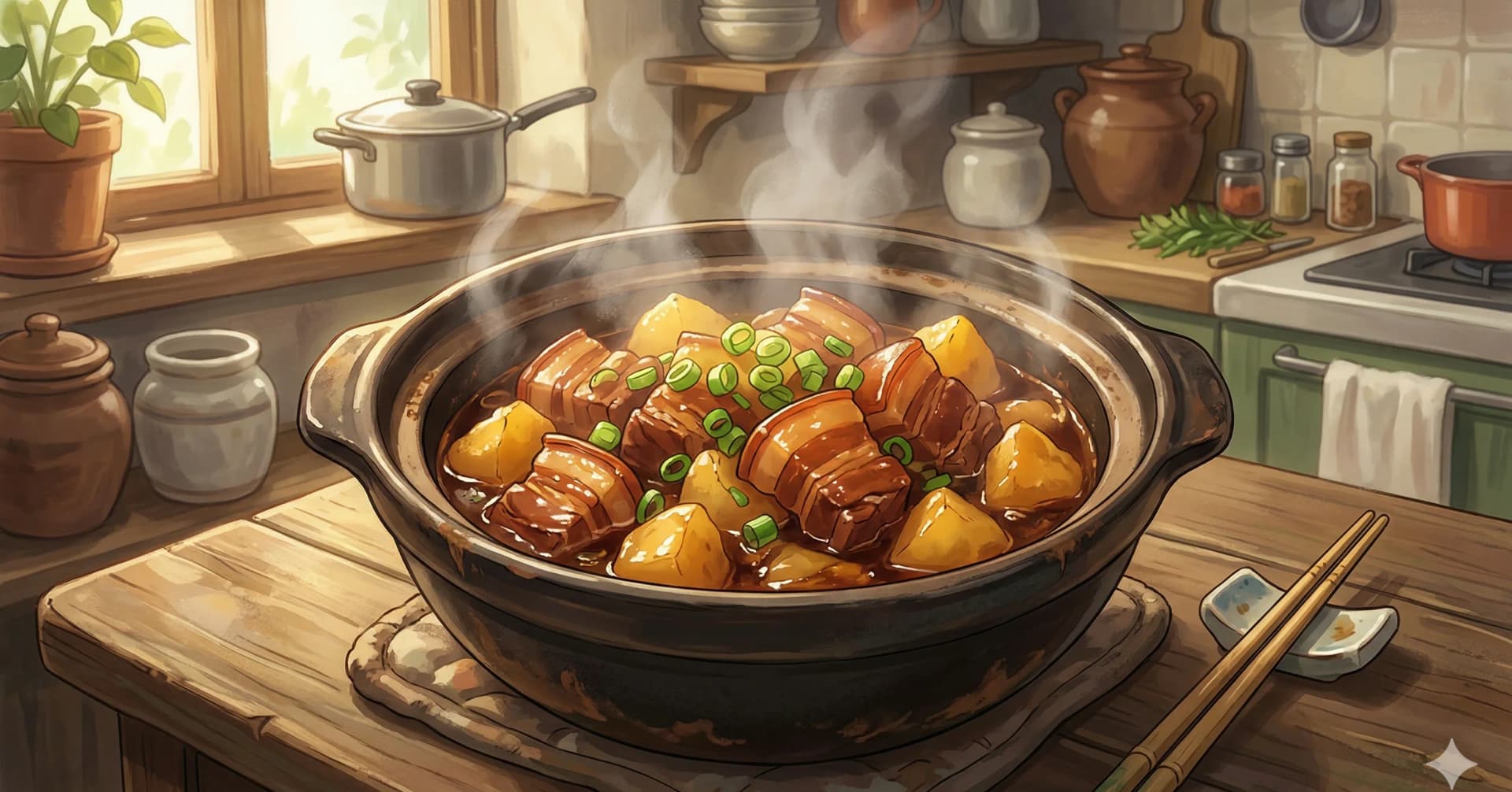
Braised Pork with Potatoes (薯仔炆豬肉)
40 minutes
 Medium
Korean Cuisine
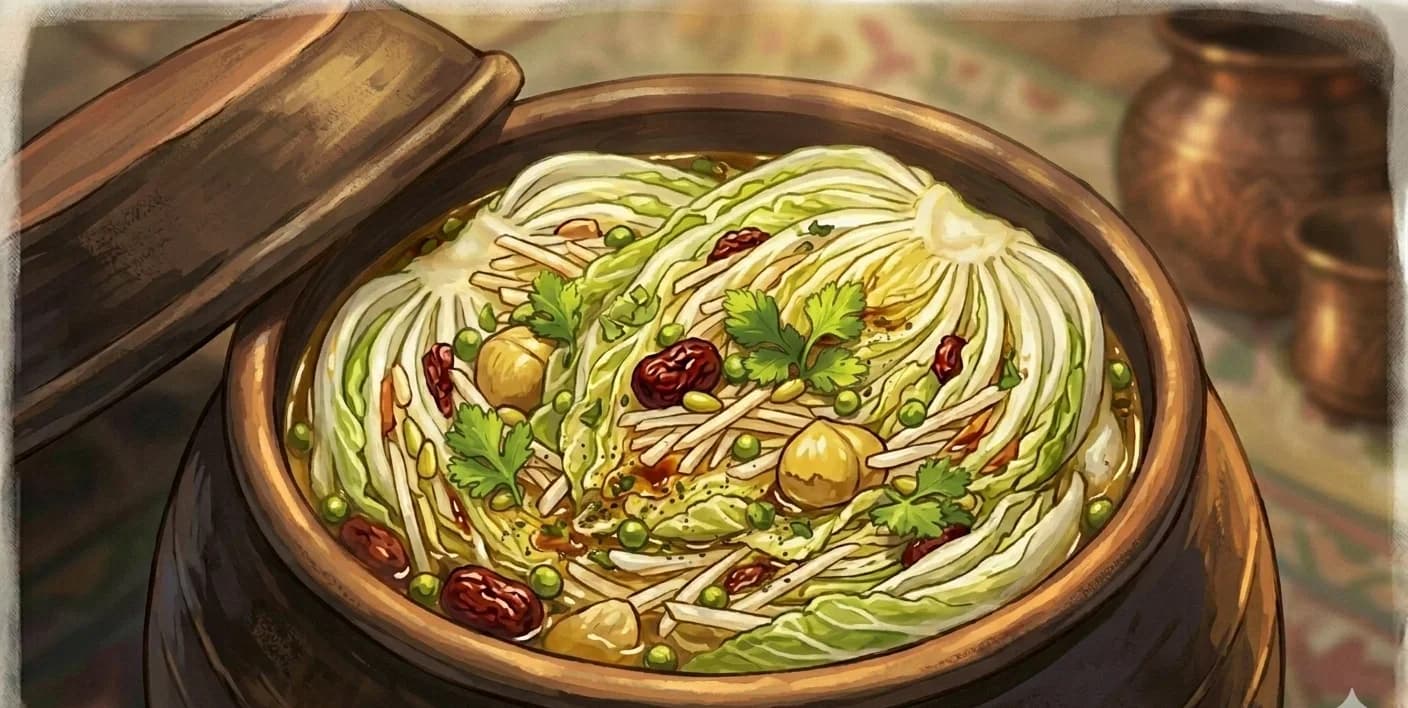
Baek Kimchi (White Kimchi)
3 hours (plus 1 to 3 days fermentation)
Ratings & Comments
Ratings & Comments
Ratings
Share your thoughts on this recipe.
Sign in to rate and comment