Korean Cuisine
Baek Kimchi (White Kimchi)
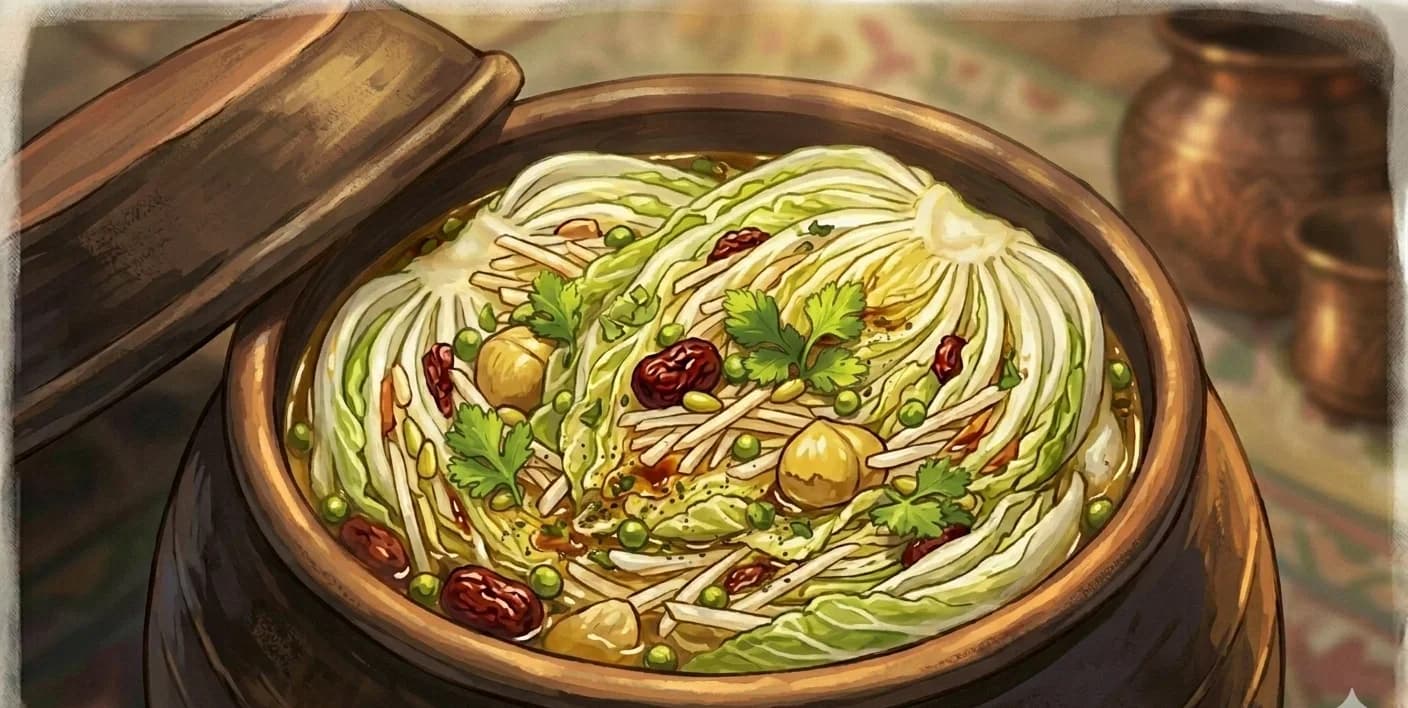
A non-spicy fermented napa cabbage kimchi filled with jujubes, chestnuts, pine nuts, and fresh vegetables
Baek-kimchi, or white kimchi, is proof that kimchi does not have to be red and fiery to be extraordinary. Made without a single flake of gochugaru, this kimchi is pale, elegant, and surprisingly complex. The cabbage leaves are filled with strips of jujubes, chestnuts, pine nuts, Korean radish, carrots, red bell pepper, and Asian chives, then submerged in a fragrant brine infused with pureed Korean pear, garlic, onion, and ginger.
The flavor develops over one to three days of fermentation at room temperature. The brine becomes slightly fizzy, the cabbage softens but retains its crunch, and a gentle tang emerges alongside the natural sweetness of the pear and chestnuts. It is nothing like the bold punch of traditional red kimchi, but it is no less captivating. The taste is clean, refreshing, and layered, with a nuttiness from the pine nuts and a subtle fruitiness from the jujubes.
White kimchi has a long history as a special-occasion dish. The precious ingredients, chestnuts, pine nuts, jujubes, make it more elaborate and expensive than everyday kimchi, so it tends to appear at holidays and celebrations. It is also the kimchi of choice for those who cannot tolerate spicy food, whether young children, the elderly, or anyone whose stomach simply prefers gentleness.
This recipe is vegetarian because it uses no fish sauce or fermented shrimp, relying on salt alone for seasoning. For a slightly more savory version, you can replace 1 teaspoon of salt in the brine with 1 to 2 teaspoons of saeujeot (salted fermented shrimp). The result will be a bit more umami-rich while still remaining non-spicy and pale.
At a Glance
Yield
About 1 quart
Prep
45 minutes (plus 2 hours salting)
Cook
0 minutes
Total
3 hours (plus 1 to 3 days fermentation)
Difficulty
Medium
Ingredients
Cabbage Ingredients
- 1large napa cabbage (about 1.4 kg)
- ⅓ cupkosher salt, divided
Filling Ingredients
- 8 ozKorean radish (or daikon) (about 2½–3 radishes), cut into matchsticks
- 1 ozcarrot, cut into matchsticks
- 1½ ozAsian chives (buchu), cut into 2.5 cm pieces
- 3jujubes, seeded and cut into thin strips
- 2fresh chestnuts, peeled and cut into thin strips
- ½ ozpine nuts
- 1/2red bell pepper, cored and cut into thin strips
- —Several strands of silgochu (shredded dried red pepper), optional
Method
- 1
Salt the cabbage. Cut the cabbage in half lengthwise. Cut a 2-inch slit through the core of each half so the leaves loosen but remain attached. Rinse under running water until all leaves are wet. Place the halves in a large basin and sprinkle 1/3 cup kosher salt evenly between the leaves. Let sit for 1 1/2 to 2 hours, turning every 20 minutes.
- 2
Rinse and drain. Rinse the cabbage halves thoroughly under cold running water to remove dirt and excess salt. Split each half into quarters under the running water. Cut out the remaining core. Drain well and set aside.
- 3
Prepare the filling. Combine the radish matchsticks, carrot matchsticks, jujube strips, Asian chives, chestnut strips, and red bell pepper strips in a bowl. Toss gently to mix.
- 4
Make the brine seasoning. Blend the Korean pear, garlic, onion, and ginger in a food processor or blender until creamy and smooth.
- 5
Prepare the brine. In a large bowl, combine 4 cups of water with 2 tablespoons plus 2 teaspoons of kosher salt. Stir until the salt is fully dissolved. Place the blended seasoning mixture into a cotton pouch or wrap it in a double layer of cheesecloth. Submerge the pouch in the brine and squeeze it gently, pressing and stirring for a minute or two so the flavors seep through into the water. Remove and discard the pouch.
- 6
Fill and assemble. Take a cabbage quarter and spread some of the vegetable filling between each leaf, distributing evenly. Top with a few pine nuts and strands of silgochu. Fold the quarter over on itself and place it in a glass jar or Korean earthenware pot. Repeat with the remaining cabbage quarters.
- 7
Add the brine. Pour the seasoned brine over the kimchi so it is fully submerged. Press down gently to remove air pockets.
- 8
Ferment. Cover and leave at room temperature for 1 1/2 to 3 days, depending on the warmth of your kitchen. A warmer room ferments faster. Check daily by tasting: when the brine turns slightly sour and fizzy, fermentation has begun.
- 9
Refrigerate. Once the kimchi has reached your desired level of fermentation, move it to the refrigerator. The cold will slow down the fermentation process. Baek kimchi keeps for about 1 month refrigerated.
- 10
Serve. Cut the stuffed cabbage quarters into bite-sized pieces and serve cold, with some of the brine spooned over the top.
Key Ingredient Benefits
Fermented vegetables: The lactic acid fermentation that produces baek kimchi encourages the growth of Lactobacillus and other beneficial bacteria. Research has shown that kimchi fermentation creates a diverse population of probiotic organisms that may support gut health and immune function. Because baek kimchi ferments in brine, it tends to have a slightly different microbial profile than red kimchi.
Jujubes (daechu): Used in Korean and Chinese traditional medicine for millennia. They contain jujubosides, saponins studied for their calming effects on the nervous system. See daechu-cha for a jujube tea preparation.
Pine nuts (jat): One of the most calorie-dense nuts, rich in monounsaturated and polyunsaturated fats, vitamin E, and magnesium. They contain pinolenic acid, a fatty acid unique to pine nuts that has been studied for its effects on appetite hormones.
Korean pear: Provides the enzyme calpain, which aids protein digestion. In this recipe, the pear primarily serves as a flavor agent and a sugar source for fermentation.
Why This Works
Straining the blended pear, garlic, onion, and ginger through cheesecloth rather than adding the puree directly keeps the brine clear and clean-tasting. The flavors diffuse into the water, but the fibrous solids stay behind, preventing the kimchi from becoming cloudy or gritty.
Salting the cabbage for nearly two hours draws out moisture, which concentrates the flavors and gives the leaves a pliable texture that holds the fillings. The rinsing afterward removes excess salt while leaving enough seasoning on the surfaces to begin fermentation.
The natural sugars in the Korean pear and the jujubes provide food for the Lactobacillus bacteria that drive fermentation. As these bacteria consume the sugars, they produce lactic acid, which creates the characteristic tang, and carbon dioxide, which gives the brine its gentle fizz.
Substitutions & Variations
Cabbage: One large head of napa cabbage is standard. Baby napa cabbages can be used whole for a more delicate presentation.
Korean pear: A Bosc pear or Fuji apple can substitute. The flavor will be slightly different but the fermentation will proceed normally.
Chestnuts and pine nuts: Can be omitted if unavailable, though they contribute significantly to the character of the dish. Walnuts or sliced almonds are unconventional but add a similar nutty quality.
Saeujeot variation: Replacing 1 teaspoon of the brine salt with 1 to 2 teaspoons of salted fermented shrimp (saeujeot) adds a savory, umami depth. This makes the kimchi non-vegetarian.
Serving Suggestions
Baek kimchi is best served cold as a banchan alongside grilled meats like bulgogi or galbi. Its mild, refreshing character provides a cooling counterpoint to spicy dishes like dak galbi or dakdoritang. The brine can be sipped alongside the kimchi or used as a light, tangy broth over cold noodles in summer.
Storage & Reheating
Refrigerator: Store submerged in its brine in a sealed container for up to 1 month. The flavor will continue to develop, becoming more sour over time.
Freezer: Not recommended. Freezing disrupts the texture of the cabbage and kills the beneficial bacteria.
Serving: Always serve cold, directly from the refrigerator. Cut into portions as needed rather than cutting the entire batch at once, which exposes more surface area and speeds up fermentation.
Cultural Notes
Baek-kimchi (백김치) means literally "white kimchi," and it is the older sibling of the now more famous red tongbaechu kimchi. Before chili peppers reached Korea in the 17th century by way of Portuguese traders working out of Japan, all kimchi was white. The recipe in your bowl, with its delicate brine of pear, jujubes, pine nuts, and aromatics, is closer to what Joseon-dynasty Koreans actually ate than any modern gochugaru-laced version.
Baek-kimchi held on as a regional specialty in the colder northern provinces, especially Pyongan and Hwanghae, where milder ferments matched the local palate and the longer cold-storage winters. North Korean kimchi traditions still favor the white style. South Korea adopted the bolder red variety as the default.
In contemporary Korean homes, baek-kimchi is the kimchi you serve to children, to elders with sensitive stomachs, or alongside heavily seasoned grilled meats like bulgogi and galbi, where its clean, gently sour-sweet refreshment cuts through the richness. It is also the kimchi of choice for kimchi mari guksu, a chilled noodle soup where the kimchi brine itself becomes the broth. Modern fine-dining Korean restaurants have rediscovered baek-kimchi as a more nuanced, more terroir-driven expression of the kimchi tradition.
Nutrition Facts
Calories: 70kcal (4%)|Total Carbohydrates: 12.5g (5%)|Protein: 2.4g (5%)|Total Fat: 1.7g (2%)|Saturated Fat: 0.1g (1%)|Cholesterol: 0mg (0%)|Sodium: 5833mg (254%)|Dietary Fiber: 3.6g (13%)|Total Sugars: 5.2g
You Might Also Like



Ratings & Comments
Ratings & Comments
Ratings
Share your thoughts on this recipe.
Sign in to rate and comment