Korean Cuisine
Daechu Cha (Jujube Tea)
A warm, naturally sweet tea made by simmering dried jujubes until they dissolve into a deep amber infusion
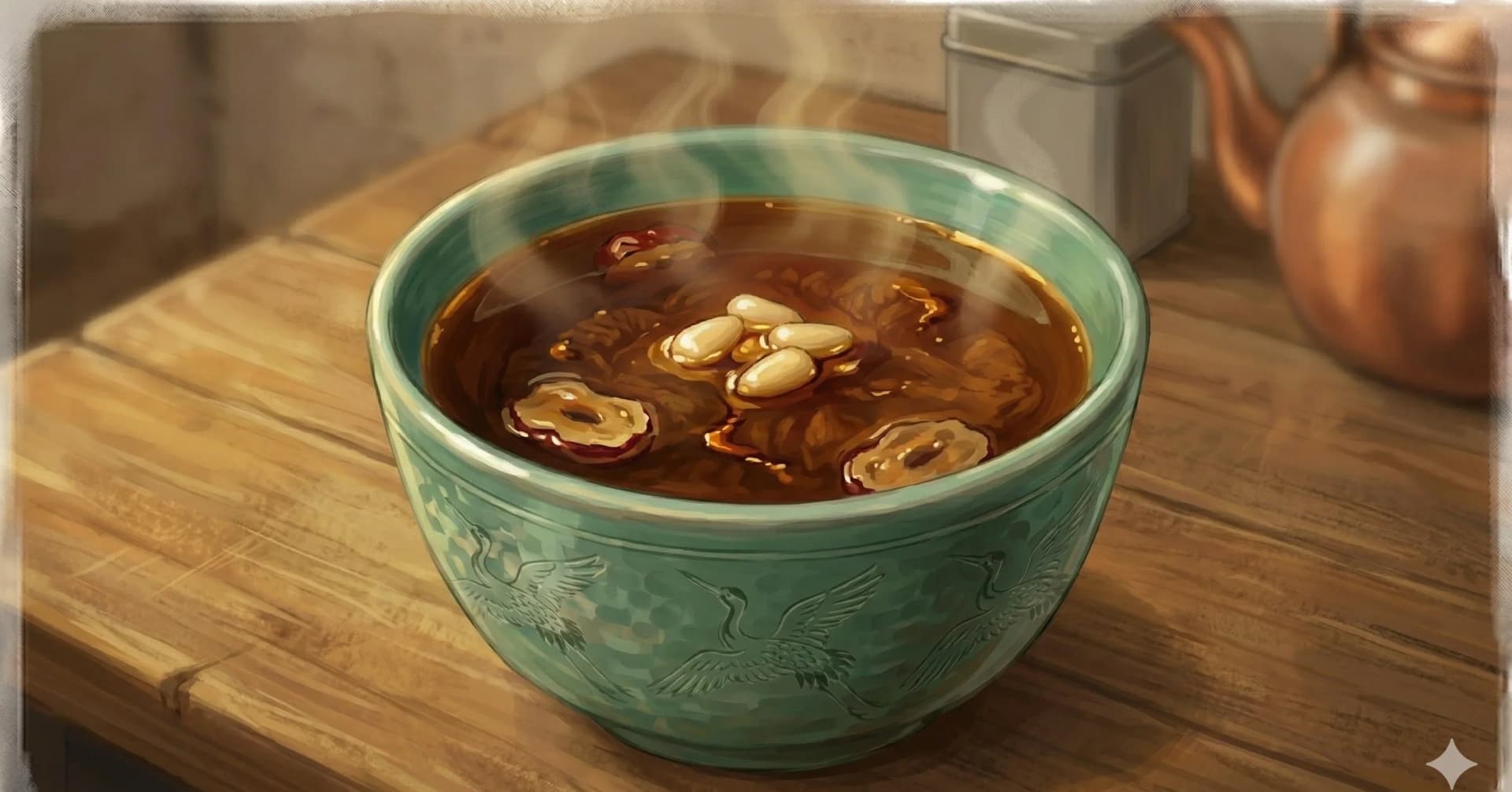
Daechu cha is one of the oldest and most beloved traditional teas in Korean culture. Daechu are dried jujubes, small reddish-brown fruits sometimes called Korean dates or Chinese dates, and when simmered slowly in water they release their natural sweetness, producing a tea that is deep amber in color and almost honey-like in flavor without any added sugar.
In Korean households, daechu cha appears most often in the colder months. It is the tea you make when winter settles in and the air turns cold enough to see your breath. It is what you offer to guests, what you drink before bed to settle the mind, and what you prepare for an elderly relative who needs something warming and gentle. In Korean traditional medicine, jujubes are considered a calming food that nourishes the blood, supports digestion, and promotes restful sleep.
The preparation requires patience but almost no effort. Dried jujubes go into a pot of water and simmer for about ninety minutes. The longer they cook, the more they break down, and the richer the tea becomes. Some recipes call for adding fresh ginger, cinnamon, or other aromatics, but the simplest and most traditional version is just jujubes and water, letting the fruit speak for itself.
When the tea is ready, strain out the softened jujubes (or mash them and press the pulp through a strainer for a thicker drink), pour into small cups, and float a few pine nuts on the surface. A drizzle of honey is optional and depends on the sweetness of the jujubes themselves. Fresh, high-quality dried jujubes may need no sweetener at all.
This is a tea to drink slowly, cup by cup, in the quiet part of the evening. It pairs naturally with saenggang cha for a warming duo, and with gentle foods like hobakjuk when something more substantial is needed.
At a Glance
Yield
4 cups
Prep
5 minutes
Cook
1 hour 30 minutes
Total
1 hour 35 minutes
Difficulty
Easy
Ingredients
- 20to 25 dried jujubes (about 85 g), rinsed
- 1½ qtwater
- —Honey or brown sugar to taste (optional)
- —Pine nuts for garnish
- 1cinnamon stick (optional)
Method
- 1
Rinse the jujubes. Wash the dried jujubes under cold running water to remove any dust or residue. If the jujubes are very hard, you can soak them in water for 30 minutes to soften slightly.
- 2
Simmer the tea. Place the jujubes in a medium pot with 6 cups of water. Add the cinnamon stick if using. Bring to a boil over medium-high heat, then reduce the heat to low. Cover and simmer gently for 1 hour to 1 1/2 hours. The jujubes will plump up, soften, and begin to break apart. The water will turn a deep amber-brown.
- 3
Mash and strain. Using a wooden spoon, press the softened jujubes against the side of the pot to release more of their pulp and flavor. Strain the tea through a fine mesh strainer into another pot or pitcher, pressing the solids to extract as much liquid as possible. Discard the skins and seeds.
- 4
Sweeten if desired. Taste the tea. Good quality jujubes often produce a tea that is sweet enough on its own. If you prefer more sweetness, stir in honey or brown sugar to taste.
- 5
Serve warm. Pour into small Korean tea cups or mugs. Float 2 to 3 pine nuts on the surface of each cup. Serve warm.
Key Ingredient Benefits
Jujubes (daechu, Ziziphus jujuba): One of the most widely used ingredients in East Asian traditional medicine. Dried jujubes contain significant amounts of vitamin C (much of which is preserved through drying), potassium, B vitamins, and dietary fiber. They also contain jujubosides and other saponins that have been studied in laboratory and animal models for their calming effects on the nervous system. Several studies have shown potential sleep-promoting and anxiolytic effects, though large-scale human clinical trials are still needed. In Korean tradition, jujubes are classified as a warming food that tonifies qi (vital energy) and nourishes blood. They appear in baeksuk and samgyetang as a complementary ingredient and in baek-kimchi as a filling component.
Pine nuts (jat): Rich in vitamin E, magnesium, and monounsaturated fats. They contain pinolenic acid, studied for potential effects on appetite regulation. In Korean food culture, pine nuts are a symbol of longevity and appear frequently in ceremonial and medicinal preparations.
Honey: Contains trace enzymes, amino acids, and antioxidants that vary depending on the floral source. In traditional Korean medicine, honey is considered a harmonizing ingredient that enhances the effects of other medicinal ingredients.
Why This Works
The long simmering time is essential. Jujubes release their sugars, flavors, and bioactive compounds slowly. A quick steep produces thin, weakly flavored tea. At 90 minutes, the jujubes have broken down enough to release their full sweetness and a thick, almost syrupy character.
Straining through a fine mesh strainer removes the fibrous skins and hard seeds while allowing the dissolved pulp and sugars to pass through. This produces a smooth, rich tea without any gritty texture.
Pine nuts floating on the surface are not just decorative. They release a tiny amount of oil that adds a subtle nuttiness and richness to each sip. In Korean tea tradition, pine nuts frequently garnish warm teas and porridges.
Substitutions & Variations
Ginger addition: Adding 4 to 5 slices of fresh ginger to the pot creates a warming blend that combines the calming properties of jujubes with the pungent heat of ginger. This is a popular winter variation. See saenggang cha for a dedicated ginger tea.
Jujube paste: The strained pulp can be collected and cooked down further with a little honey to make a thick jujube paste (daechu-cheong) that can be spooned into hot water for instant tea.
Cinnamon: A cinnamon stick added during simmering contributes a warm spiciness that complements the jujube sweetness.
Cold brew: In summer, daechu cha can be chilled and served over ice for a refreshing cold drink.
Serving Suggestions
Daechu cha is traditionally served in the evening as a calming drink before bed, or offered to guests with Korean rice cakes (tteok) or traditional sweets (hangwa). It pairs beautifully with saenggang cha for a two-tea spread. In winter, serve alongside hobakjuk for a warming, gentle meal.
Storage & Reheating
Refrigerator: Store the strained tea in a sealed container for up to 5 days. The flavor deepens slightly over time.
Reheating: Warm gently in a pot over medium heat or in the microwave. Do not boil vigorously.
Freezer: Can be frozen in ice cube trays or containers for up to 2 months. Thaw and reheat as needed.
Cultural Notes
Daechu cha (대추차) belongs to a Korean cha (차, tea) tradition that has almost nothing to do with the leaves of Camellia sinensis. Korean "teas" are an entire family of medicinal-and-pleasure infusions made from grains, roots, fruits, and tree bark. Saenggang cha (ginger). Yujacha (yuja citron). Ssanghwa cha (a multi-herb tonic). Omija cha (the five-flavor berry). They all sit at the intersection of Korean cooking and traditional Korean medicine (hanyak, 한약), and the line between drinking them for pleasure and drinking them for health was never really drawn.
Daechu, the jujube fruit, has been documented in Korean hanyak texts for more than a thousand years. The classical prescriptions cover fatigue, insomnia, weak digestion, and "blood deficiency," which is a traditional medicine concept rather than the biomedical kind. Modern phytochemical research has identified saponins and polysaccharides in jujubes that show mild sedative and immunomodulatory effects in laboratory studies, which gives the historical claims some scientific footing.
In daily Korean life, daechu cha shows up in homes during cold months, in tearooms called jeon-tong-chajip (전통차집) that specialize in traditional teas, at Buddhist temples as a meditation accompaniment, and in elegant glass jars given as gifts during Lunar New Year and Chuseok. The tea is often served with small bowls of pine nuts (jat, 잣) floating on top. The final cup from the pot is sometimes thickened with a spoonful of glutinous rice flour for a more substantial, porridge-like daechu juk finish. Many Korean families simmer a pot on Sunday morning and drink from it through the week, refrigerating between sittings.
Nutrition Facts
Calories: 117kcal (6%)|Total Carbohydrates: 30g (11%)|Protein: 1.5g (3%)|Total Fat: 0.2g (0%)|Saturated Fat: 0g (0%)|Cholesterol: 0mg (0%)|Sodium: 1mg (0%)|Dietary Fiber: 3.6g (13%)|Total Sugars: 0g
You Might Also Like

Ratings & Comments
Ratings & Comments
Ratings
Share your thoughts on this recipe.
Sign in to rate and comment