Korean Cuisine
Oi Muchim (Spicy Cucumber Salad)
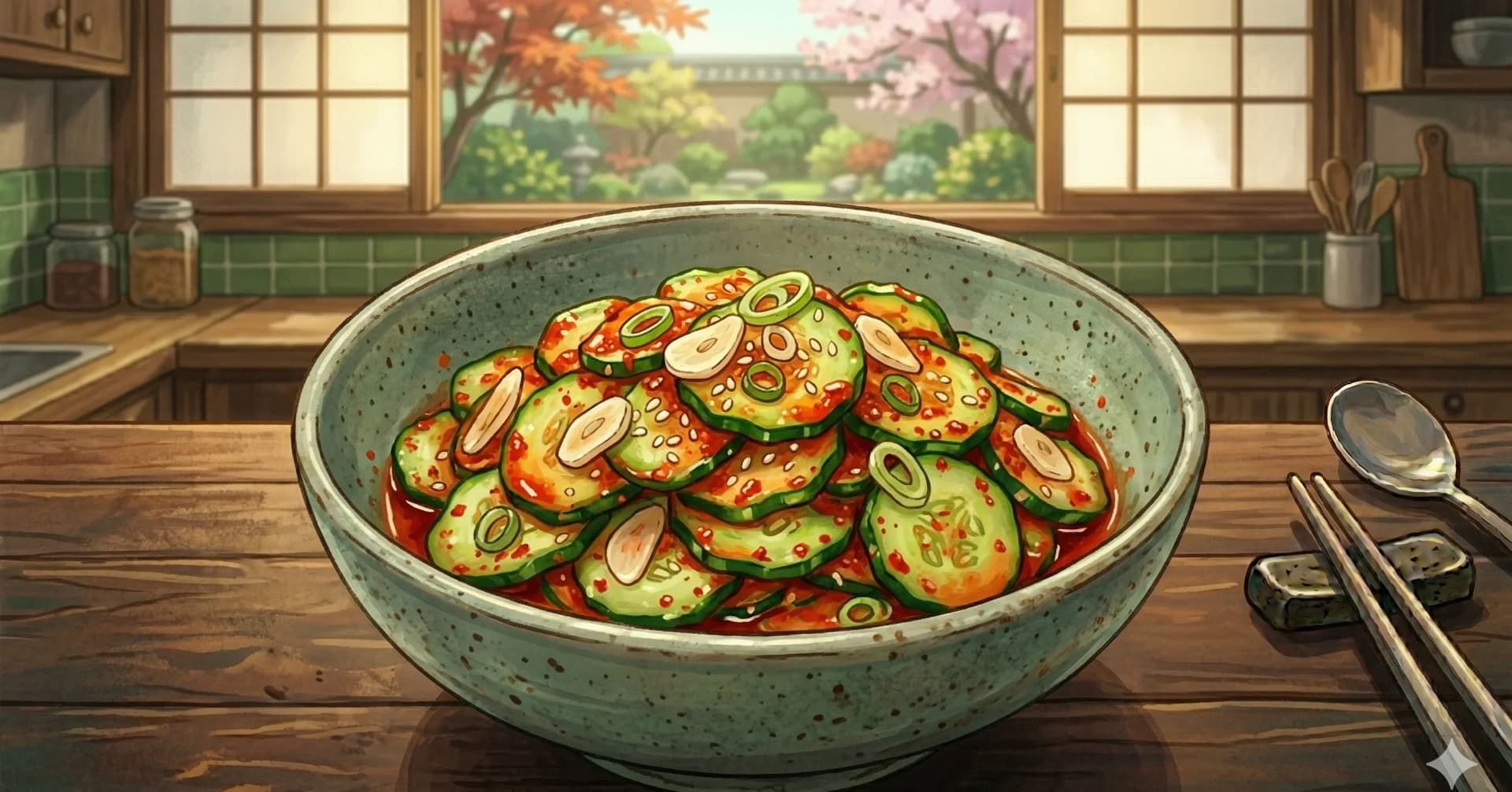
Thinly sliced cucumbers tossed in a tangy gochugaru dressing with sesame and garlic
Oi muchim is the banchan you reach for instinctively when the table is covered in rich, heavy, or spicy dishes. A few bites of cold, crunchy cucumber dressed in gochugaru and vinegar clears the palate and resets everything. It is the simplest dish in the Korean side dish repertoire, requiring nothing more than a cucumber, a few spoonfuls of seasoning, and about twenty minutes, most of which is hands-off time while the salt draws moisture from the slices.
The salting step is worth the brief wait. Sprinkling salt over the sliced cucumber and letting it sit for 15 minutes pulls out excess water, which means the dressing clings to the slices rather than pooling at the bottom of the bowl. It also concentrates the cucumber's flavor, giving each slice a firmer, more defined crunch.
Korean cucumbers are ideal for this dish. They are thinner-skinned, crunchier, and less watery than the standard English or American varieties. If Korean cucumbers are unavailable, Kirby (pickling) cucumbers are the closest substitute. English cucumbers will work in a pinch, though you may want to slice them slightly thicker so they hold up to the dressing.
The dressing itself is a study in balance. Gochugaru brings color and a warm, fruity heat. Vinegar adds brightness. Sugar tempers the acidity. Sesame oil provides a nutty richness, and the sesame seeds add a tiny pop of texture. Garlic and scallion round things out with their sharp, savory edge. Mixed together and tossed with the cucumbers, the whole thing comes together in a couple of minutes.
At a Glance
Yield
4 servings
Prep
5 minutes (plus 15 minutes salting)
Cook
0 minutes
Total
20 minutes
Difficulty
Easy
Ingredients
- 8 ozKorean cucumber (or 2 Kirby pickling cucumbers)
- 1 tspsalt
- 1½ tspgochugaru (Korean chili flakes)
- 1 tbspchopped scallion
- 1½ tspminced garlic
- 1 tsprice vinegar (or white vinegar)
- ½ tspsugar
- 1 tbsptoasted sesame seeds
- 1 tsptoasted sesame oil
Method
- 1
Slice the cucumber. Cut the cucumber into thin rounds, about 1/8 to 1/4 inch thick. A mandoline makes quick, even work of this, but a sharp knife is fine.
- 2
Salt and rest. Place the slices in a bowl and sprinkle with 1 teaspoon of salt. Toss gently to distribute. Set aside for about 15 minutes. The cucumber will release a noticeable amount of water.
- 3
Drain. Pour off the excess liquid. Do not squeeze the cucumbers, as they will bruise and lose their crunch.
- 4
Dress the salad. Add the gochugaru, chopped scallion, minced garlic, vinegar, sugar, sesame seeds, and sesame oil to the drained cucumbers. Mix gently but thoroughly until every slice is coated in the red dressing.
- 5
Taste and adjust. Sample a slice and adjust the seasoning. Add a pinch more salt if it needs it, a touch more sugar if the vinegar is too sharp, or extra gochugaru if you want more heat.
- 6
Serve immediately. Oi muchim is best eaten right away while the cucumbers are still cold and crisp.
Key Ingredient Benefits
Cucumber: Composed of more than 95% water, cucumbers are one of the most hydrating foods available. They provide vitamin K (important for blood clotting and bone health), potassium, and small amounts of vitamin C. The skin contains silica, a trace mineral associated with connective tissue health in traditional medicine.
Gochugaru: Korean chili flakes provide capsaicin along with significant amounts of vitamin A (from beta-carotene) and vitamin C. The moderate heat level makes gochugaru accessible even to those with lower spice tolerance.
Rice vinegar: Contains acetic acid, which preliminary research suggests may help moderate post-meal blood sugar spikes. In Korean food tradition, vinegar is considered a cooling agent that balances rich or oily foods.
Why This Works
Salting the cucumber slices before dressing them is the single most important step. The salt draws water out through osmosis, which does two things: it prevents the dressing from being diluted by cucumber juice, and it firms up the texture of the slices by removing some of their internal moisture. The result is a crunchier, more intensely flavored cucumber that holds the dressing well.
Not squeezing the salted cucumbers is equally important. Squeezing bruises the delicate flesh and creates a limp, waterlogged texture. Simply draining the liquid is enough.
Substitutions & Variations
Cucumber type: Korean cucumbers are best. Kirby cucumbers are a close second. English cucumbers work but are softer. Avoid regular slicing cucumbers, which are too watery and have thick, bitter skin.
Non-spicy version: Replace the gochugaru with 1 teaspoon of soy sauce for a milder sesame-soy dressing. Add a little extra vinegar and sugar.
With onion: Thinly sliced red onion adds color and a sharp bite. Add about 2 tablespoons of sliced red onion with the dressing.
Cucumber kimchi (oi-sobagi): For a fermented version, use whole or halved cucumbers stuffed with chive and radish filling, then ferment in brine. This is a different dish but uses similar flavors.
Serving Suggestions
Oi muchim appears on nearly every Korean table as a banchan. It is an ideal companion to grilled meats like bulgogi and galbi, where its cool crunch provides contrast. It pairs beautifully with bibimbap, japchae, and any of the Korean stews. Alongside kkakdugi and gyeran-jjim, it forms a simple but satisfying spread of banchan.
Storage & Reheating
Best fresh: Oi muchim should be eaten the same day it is made. The cucumbers will continue to release water and become soggy if stored.
Refrigerator: If necessary, store in a sealed container for up to 1 day. Drain any accumulated liquid before serving.
Freezer: Not suitable for freezing.
Cultural Notes
Oi muchim (오이무침) is the workhorse cucumber banchan of Korean home cooking. You can make it in minutes from raw cucumber, gochugaru, sesame oil, garlic, and a few accent seasonings. The dish belongs to the broader muchim (무침) family of seasoned-and-tossed preparations, which also includes kongnamul muchim (soybean sprouts), sigeumchi namul (spinach), and dozens of other Korean vegetable banchan. Where most muchim require blanching first, oi muchim is the fastest of all. It requires no cooking whatsoever, which has made it one of the most reliable summer dishes in the Korean home repertoire.
The role of oi muchim in a Korean meal is specifically structural. A Korean table, even an informal one, traditionally arranges its dishes along a sliding scale of intensity. Rich and spicy stews get anchored against light, cool, palate-cleansing banchan. Oi muchim almost always serves the latter function, sliced through bites of samgyeopsal, bulgogi, dak galbi, or any other rich, fatty, or spice-heavy main. The cucumber's high water content and clean vegetal snap reset the palate between bites of heavier food, much the way pickled ginger functions at a sushi counter.
A close relative of oi muchim is oi sobagi (오이소박이), stuffed cucumber kimchi, in which the cucumbers are split, salted, and stuffed with a seasoned chive and gochugaru filling for short fermentation. Oi sobagi is a step up in formality and preparation time, but it operates from the same cucumber base. Together, oi muchim and oi sobagi cover the summer cucumber repertoire in the Korean kitchen.
Many Korean households make a fresh bowl of oi muchim every few days from May through September, replenishing it as needed and serving it alongside virtually every meal of the season.
Nutrition Facts
Calories: 40kcal (2%)|Total Carbohydrates: 4.2g (2%)|Protein: 1g (2%)|Total Fat: 2.5g (3%)|Saturated Fat: 0.3g (2%)|Cholesterol: 0mg (0%)|Sodium: 604mg (26%)|Dietary Fiber: 1g (4%)|Total Sugars: 1.7g
You Might Also Like

Ratings & Comments
Ratings & Comments
Ratings
Share your thoughts on this recipe.
Sign in to rate and comment