Andhra · Indian Cuisine
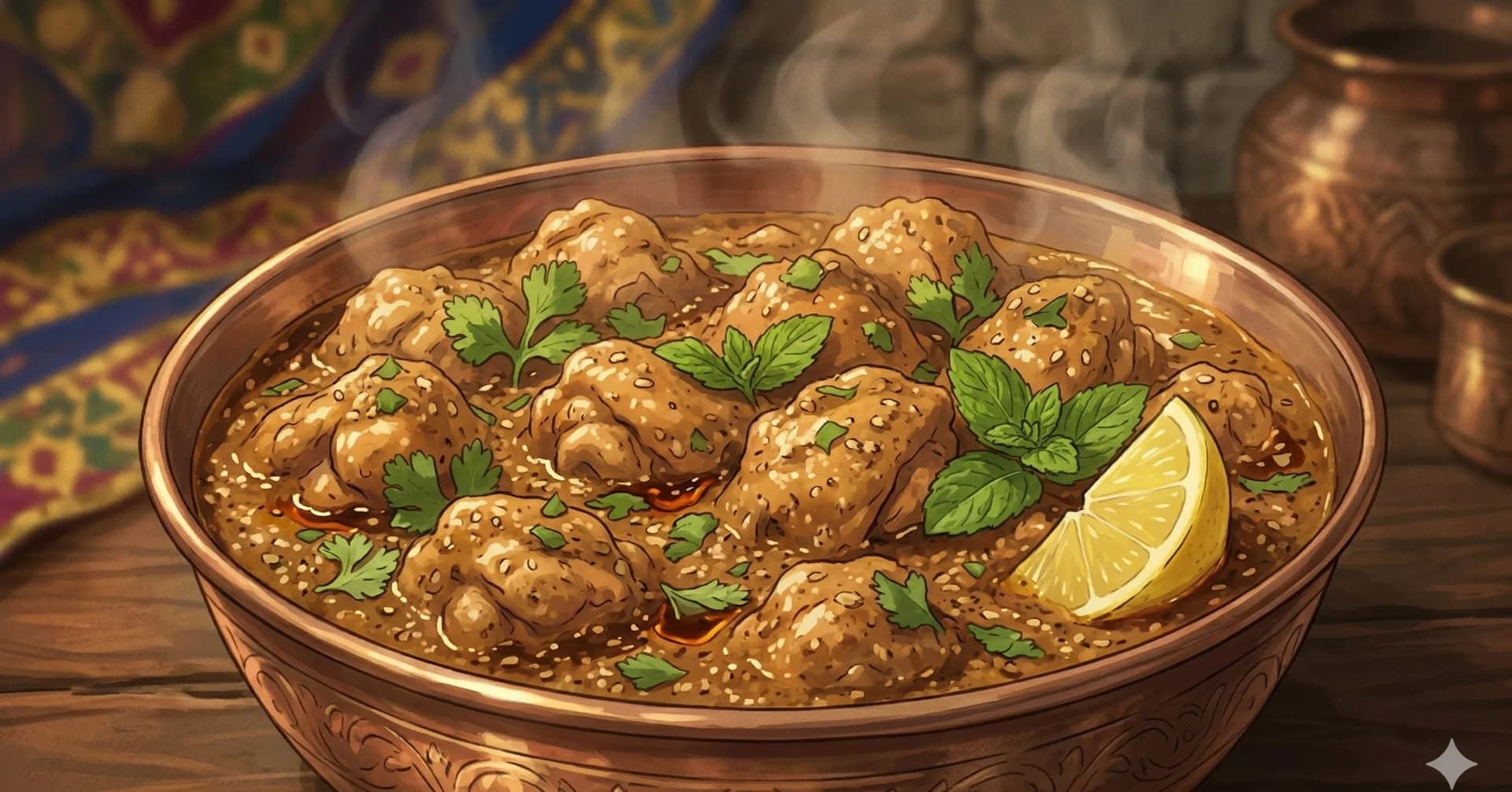
Hyderabadi Royal Chicken (Murgh Nizami)
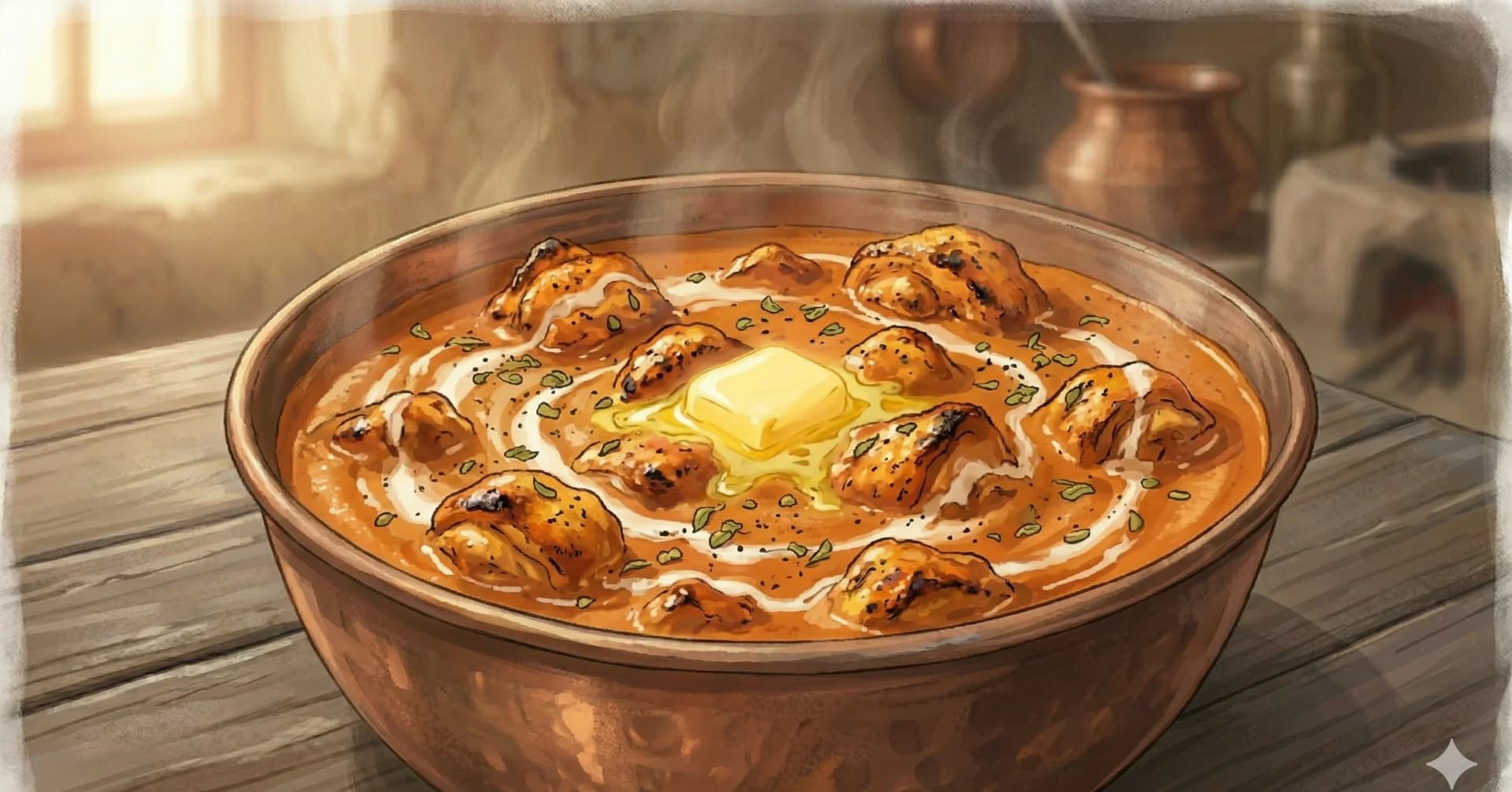
Hyderabadi chicken in a rich sauce of pounded nuts, seeds, and deep-fried coconut
Hyderabadi cooking is defined by its layering — not just of spices, but of textures, fats, and aromatics that arrive in sequence and build into something greater than the sum of the parts. Murgh Nizami demonstrates this logic through its sauce: peanuts, sesame seeds, and sunflower seeds pounded together, combined with deep-fried coconut and whisked yogurt cooked until the ghee separates. The result is a gravy with unusual depth — nutty, slightly sweet from the coconut, tangy from the yogurt, with a richness that sits differently from a cream-based dish.
The combination of these specific seeds and nuts is characteristic of the Deccan table, where Arabic, Persian, and local South Indian culinary traditions converged over centuries in the Nizam's kitchens. Peanuts weren't present in Indian cooking before the sixteenth century, but found their way into Hyderabadi cooking quickly once introduced; sesame and coconut were already ancient to the region. This recipe gathers them in the same pot.
The method is straightforward but requires patience at two points: the yogurt must be cooked long enough over high heat to lose its rawness and integrate with the nut paste, and the chicken must simmer long enough to become genuinely tender, absorbing the sauce rather than merely sitting in it. Fresh coriander and mint, added at the very end, lift everything with their green brightness. Essential against the richness of what came before.
At a Glance
Yield
Serves 4
Prep
20 minutes
Cook
45 minutes
Total
1 hour 5 minutes
Difficulty
Medium
Ingredients
- 1¾ lbchicken, curry cut (bone-in, skin-off pieces)
- ½ cupghee
- 3½ ozonion (about ½–1 onion), finely chopped
- 3¼ tbspginger paste
- 3¼ tbspgarlic paste
- 2½ tspgreen chillies (about 2–3 chillies), deseeded and finely chopped
- ¾ tspturmeric powder
- 1 ozraw peanuts, lightly crushed or coarsely ground
- 1 tbspsesame seeds, lightly crushed
- ¼ ozsunflower seeds, lightly crushed
- 1¾ ozfresh coconut, grated, then deep-fried until golden (see note)
- 5½ ozfull-fat yogurt, whisked smooth
- 1⅔ tspfine salt, to taste
- 1 tbspgaram masala
- 2 tbsplemon juice (about 1 large lemon)
- 1 cupfresh coriander leaves, roughly chopped
- 1¼ cupfresh mint leaves, roughly chopped
Method
- 1
Fry the coconut (50 g). In a small pan, heat enough oil to shallow-fry the grated coconut. Fry over medium-high heat, stirring frequently, until deep golden — it should be uniformly toasted and smell nutty, not burnt. Drain on kitchen paper and set aside.
- 2
Build the onion (100 g) base. Heat the ghee (100 g) in a heavy pot or handi over medium heat. Add the chopped onion and cook, stirring, for 12–15 minutes until a deep golden brown. Add the ginger paste (50 g) and garlic paste (50 g), stir for 2 minutes, then add the green chillies (2–3 chillies) and turmeric (½ teaspoon). Cook for another 2 minutes.
- 3
Add the nuts and seeds. Add the crushed peanuts (30 g), sesame seeds (10 g), sunflower seeds (10 g), and fried coconut. Stir everything together and fry for 3–4 minutes, until the nuts are fragrant and beginning to darken slightly.
- 4
Cook the yogurt. Increase the heat to high. Add the whisked yogurt in one go and stir vigorously and constantly — cooking on high heat prevents the yogurt from splitting. Continue stirring and cooking for 8–10 minutes until the yogurt is fully incorporated, the rawness is gone, and the ghee visibly separates and rises to the surface. This separation signals the masala is properly cooked.
- 5
Add chicken (800 g) and simmer. Add the chicken pieces and salt (2 teaspoons). Stir to coat well. Pour in enough hot water to just cover the chicken (about 200–250 ml). Bring to a boil, then reduce heat, cover, and simmer for 25–30 minutes until the chicken is completely tender and cooked through, the sauce has thickened, and the ghee has risen again.
- 6
Finish. Sprinkle over the garam masala (2 teaspoons) and lemon juice (1 large lemon). Stir through the fresh coriander (20 g) and mint (20 g). Taste and adjust salt. Serve immediately.
Key Ingredient Benefits
Peanuts (moongphali) are high in monounsaturated fats and protein, and contain significant amounts of niacin and folate. In South Indian and Deccan cooking, they appear as a sauce-thickening ingredient — ground into pastes — as frequently as cashews. Their flavour is earthier and less sweet than cashews, which gives this dish its distinctive savouriness.
Sesame seeds (til) are one of the oldest cultivated oilseeds, prominent across South Asian, Middle Eastern, and East Asian cooking traditions. In Hyderabadi cuisine they appear in both sweet and savoury preparations. Sesame is rich in calcium and contains sesamin and sesamolin, compounds that have been studied for their antioxidant properties.
Fresh mint and coriander together are a traditional Hyderabadi finishing combination — both herbs appear throughout the cuisine, from biryanis to kebabs. Their bright, volatile compounds break down quickly with heat, which is why they are always added at the end.
Why This Works
Frying the coconut before adding it to the sauce fundamentally changes its character — raw coconut is creamy and mild, fried coconut is intensely nutty, slightly caramelised, and far more aromatic. It provides both flavour and a textural presence in the final sauce.
Cooking yogurt on high heat while stirring constantly is the standard technique for bhuna-style curries. The quick evaporation prevents the proteins from curdling while allowing the liquid to cook off rapidly, concentrating the flavour and allowing the ghee to separate. If the yogurt starts to curdle at any point, increase heat and stir more vigorously.
The finishing herbs — coriander and mint added raw at the very end — are non-negotiable here. This dish's sauce is rich and heavy; the fresh herbs don't just garnish, they actively balance, their volatile compounds cutting through the fat and restarting the palate.
Substitutions & Variations
Coconut: Desiccated coconut can replace fresh coconut — toast it dry in a pan rather than deep-frying. The texture will be slightly less satisfying but the flavour is similar.
Sunflower seeds: Replace with an equal weight of poppy seeds (khus khus), which are more traditional to Hyderabadi nut pastes. Soak poppy seeds for 30 minutes before grinding.
Bone-in vs. boneless: Boneless chicken thighs work well and require 10 fewer minutes of simmering. The sauce will be slightly less gelatinous without the collagen from bones.
Serving Suggestions
Serve with roomali roti, naan, or a plain steamed rice. For a Hyderabadi-style spread, place alongside a biryani or a simple dal. A cucumber-onion raita alongside the richness of this sauce is welcome. Sliced raw onion and lemon wedges on the side are traditional accompaniments.
Storage & Reheating
Keeps refrigerated for up to 3 days, and the flavour improves overnight as the nuts and spices continue to develop in the sauce. Reheat gently on the stovetop over low heat, adding a splash of water if the sauce has thickened too much on cooling. Freezes well for up to 1 month; thaw overnight and reheat on the stovetop.
Cultural Notes
Murgh nizami (मुर्ग निज़ामी, "Nizami chicken") is the Hyderabadi chicken preparation associated with the Nizams of Hyderabad (the dynasty that ruled the princely state of Hyderabad from 1724 until 1948 and patronized the development of the Hyderabadi cuisine that fused Persian, Turkish, Telugu, and Marathi influences into a distinct regional tradition). The dish is built on a rich gravy of yogurt, cashew or almond paste, fried onions, ginger-garlic paste, green chilies, and Hyderabadi spices, typically finished with a drizzle of cream and a scatter of fresh cilantro.
The Hyderabadi culinary identity is the cultural anchor. Hyderabad was the largest and wealthiest of the princely states of British India, and the Nizami court maintained an extensive royal kitchen (shahi bawarchikhana) where Persian-trained chefs (bawarchi) developed elaborate preparations for daily royal meals and major court feasts. The court cuisine drew on Persian-Mughlai techniques (yogurt-based gravies, dum cooking, nut-thickened sauces), Turkish kebab traditions, and Telugu spice profiles (use of curry leaves, mustard seeds, and the regional preference for slightly tangier and slightly hotter preparations than the northern Mughlai standard). Pratibha Karan's Hyderabadi Cuisine (2003) and Bilkees I. Latif's The Essential Andhra Cookbook (1999) document the surviving Nizami repertoire from the Hyderabad of the early twentieth century.
The technique follows the standard Hyderabadi korma method with the rich Nizami additions. Chicken pieces are marinated in yogurt, ginger-garlic paste, salt, and turmeric for an hour or two. Onions are sliced thinly and deep-fried until dark brown and crisp (the birista that gives Hyderabadi gravies their sweet caramelized depth), then drained. Cashews or almonds are soaked in hot water and ground into a smooth paste. The marinated chicken is sautéed in ghee until lightly colored, then the cashew paste, fried onion paste, and Hyderabadi spice mix (cinnamon, cardamom, cloves, black pepper, Kashmiri red chili) are added with a small amount of water. The pot is covered and cooked over low heat for thirty minutes (the dum technique that allows the flavors to meld), then finished with a drizzle of cream and a scatter of cilantro before serving with hyderabadi-biryani or naan.
Nutrition Facts
Calories: 764kcal (38%)|Total Carbohydrates: 7.2g (3%)|Protein: 48.1g (96%)|Total Fat: 58.4g (75%)|Saturated Fat: 26.7g (134%)|Cholesterol: 247mg (82%)|Sodium: 2672mg (116%)|Dietary Fiber: 1.8g (6%)|Total Sugars: 3.6g
You Might Also Like
Ratings & Comments
Ratings & Comments
Ratings
Share your thoughts on this recipe.
Sign in to rate and comment