Parsi · Indian Cuisine
Parsi Cream Puff Pastry (Malai Nu Khaja)
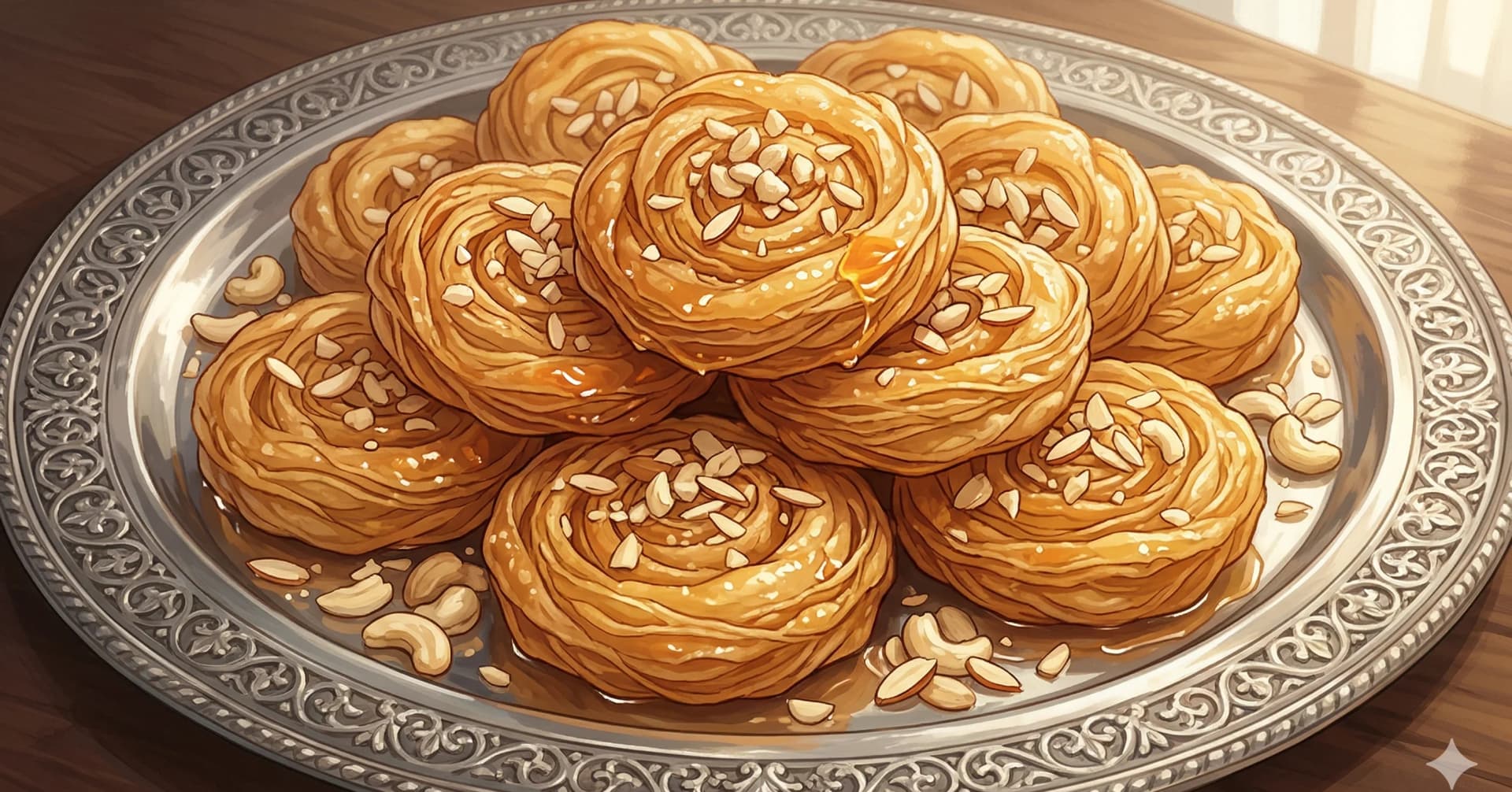
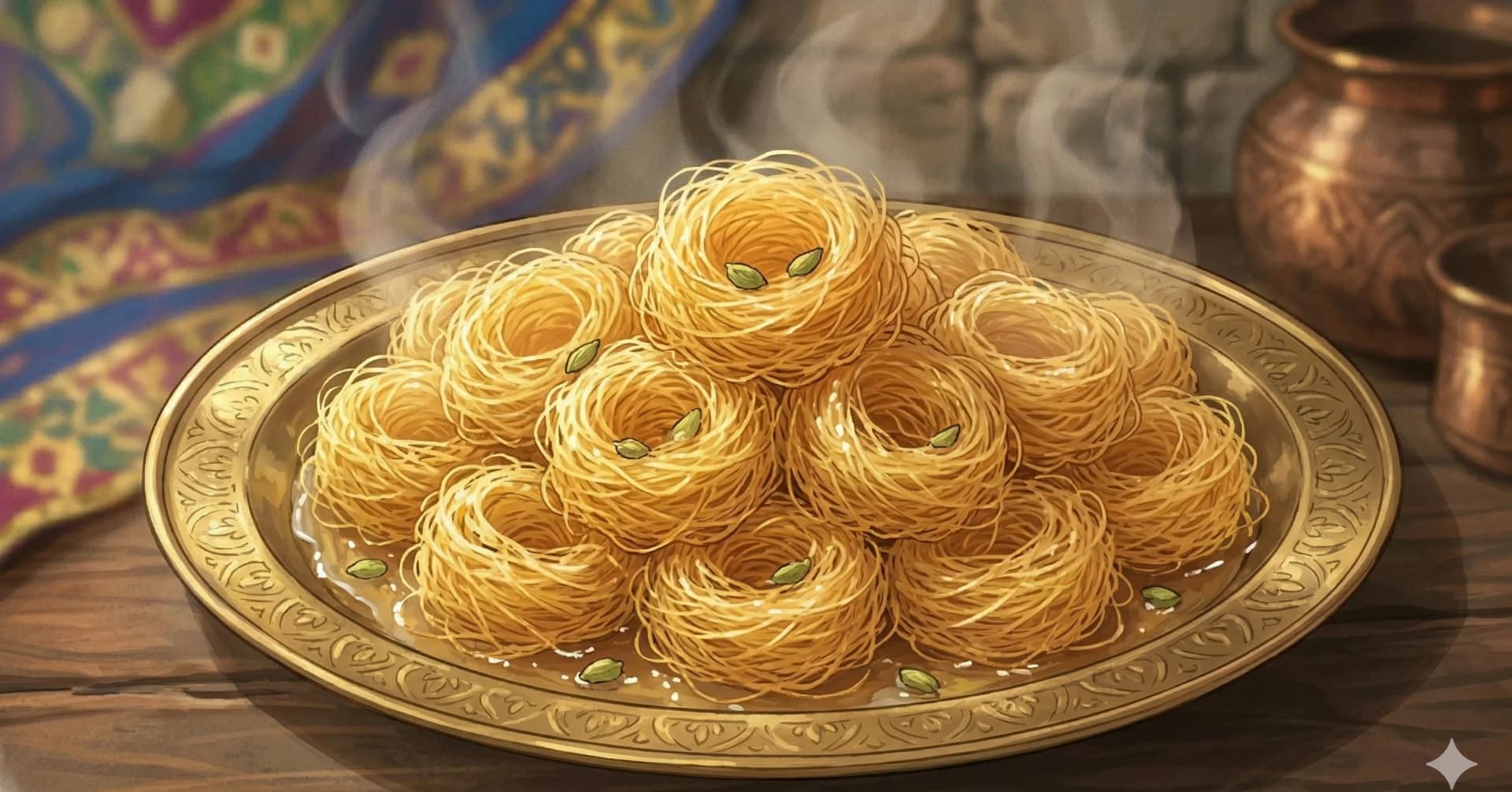
Parsi nut-stuffed khoya pastry cups fried golden and soaked in sugar syrup
Khaja, in various forms across India, refers to a family of sweet, fried pastries that are dipped in sugar syrup after frying. The Parsi malai nu khaja adds khoya (reduced, semi-solid milk) to the dough, producing a pastry that is slightly richer and more crumbly than a plain flour version. Shaped into small cups and filled with a mixture of chopped nuts, cardamom, and cucumber seeds, they are fried until the outside is golden and the dough has cooked through, then immediately dipped in hot syrup.
The single-string consistency of the syrup (tested by stretching a small amount between thumb and finger to produce exactly one fine thread) ensures the pastry absorbs enough syrup to be moist without becoming saturated. This is the most precise step in an otherwise forgiving recipe.
At a Glance
Yield
Makes 20–24 pieces
Prep
25 minutes
Cook
30 minutes
Total
55 minutes
Difficulty
Medium
Ingredients
Dough Ingredients
- 7 ozkhoya (unsweetened, crumbled)
- ⅓ cupplain flour (maida)
- —A pinch of bicarbonate of soda
- 1⅓ tbspghee
- —Water as needed (about 2–3 tablespoons)
Filling Ingredients
- 1 ozcashewnuts, finely chopped
- 1 ozalmonds, finely chopped
- ½ tspcardamom powder
- ¼ ozcucumber seeds (dried melon/cucumber seeds, available at Indian stores; substitute with melon seeds if needed)
For Frying
- —Neutral oil for deep-frying
Syrup Ingredients
- 2½ cupsugar
- ⅞ cupwater
Method
- 1
Make the dough. Combine khoya (200 g), flour (50 g), bicarbonate of soda, and ghee (20 g). Mix together, adding water (200 ml) a tablespoon at a time, until a soft, pliable dough forms. Not sticky, not dry. Cover and rest for 15 minutes.
- 2
Make the filling. Combine the finely chopped cashewnuts (30 g), almonds (30 g), cucumber seeds (5 g), and cardamom powder (¼ teaspoon). Mix well.
- 3
Make the sugar (500 g) syrup. Combine sugar and water in a small pot. Bring to a boil and simmer without stirring until it reaches single-string consistency. When a small amount stretched between thumb and forefinger forms exactly one thin thread. Keep warm.
- 4
Shape. Take a small ball of dough (about the size of a large marble). Flatten in your palm and press into a shallow cup shape. Place about half a teaspoon of nut filling in the centre. Fold the edges up and press to seal, then gently flatten into a compact round shape.
- 5
Fry. Heat oil in a kadhai to about 160°C (medium heat). Fry the shaped khaja in batches for 4–5 minutes, turning, until golden all over. Do not rush. They need to cook through to the filling.
- 6
Soak in syrup. Remove from oil, drain briefly, then immediately dip in the warm sugar syrup. Hold for 30 seconds, turning, then remove and place on a tray to set.
- 7
Cool completely before serving.
Key Ingredient Benefits
Khoya (mawa): The central ingredient. Concentrated milk solids made by simmering whole milk for hours until reduced to dense, fudge-like consistency. Khoya provides intense dairy richness, protein, and the dense interior of the pastry. Available pre-made at Indian groceries.
All-purpose flour (maida): The pastry's structural foundation. The flour is enriched with ghee and rolled thin to create the flaky outer shell. Provides about 30 g of carbohydrate per cup.
Ghee: Worked into the flour to create the layered, flaky pastry texture. The ghee also adds rich flavor and fragrance. Provides fat-soluble vitamins.
Mixed nuts (almonds, pistachios, cashews): Chopped finely and mixed into the khoya filling. The nuts contribute textural contrast, healthy fats, vitamin E, and additional flavor complexity.
Sugar: Used in both the filling and the sugar syrup that the cooked pastries are soaked in. Standard granulated sugar dissolves easily.
Cardamom: Freshly ground from green pods. The signature aromatic of Parsi sweet making.
Saffron (optional): A few threads bloomed in warm milk add color, aroma, and traditional festival association.
Rose water (optional): A few drops in the sugar syrup add the floral aromatic note characteristic of Parsi sweet making.
Oil or ghee for frying: Deep-frying oil should be neutral (vegetable or peanut). Ghee can be used for additional richness but is more expensive — many traditional Parsi households use ghee specifically for this celebration sweet.
Lemon juice (for sugar syrup): A small amount in the sugar syrup prevents crystallization and produces the proper consistency.
Why This Works
Khoya in the dough adds protein and fat from milk solids that produce a more tender, richer crumb than a plain flour dough. The reduced milk proteins also contribute to a slightly caramelised flavour on the surface during frying.
Single-string syrup provides enough concentration to coat and be absorbed by the hot pastry without either running off (too thin) or forming a hard candy shell (too thick). The pastry must be hot when dipped. This opens the pores and allows the syrup to penetrate.
Substitutions & Variations
Khoya: Cannot really be substituted authentically. Ricotta cheese mixed with milk powder approximates. Mascarpone provides similar richness. Skip if khoya is unavailable — the dish becomes essentially a different sweet.
All-purpose flour (maida): Cake flour produces a more delicate result. Whole wheat flour produces a heavier, less authentic result. A combination of all-purpose + 1 tablespoon rice flour produces a crispier shell.
Ghee: Butter substitutes but produces a slightly different flavor. Cultured butter is closer to ghee. Vegetable shortening works but lacks the flavor character.
Mixed nuts: Any combination works — almonds, pistachios, cashews, walnuts, pecans. Slivered or finely chopped. Toast briefly before adding for additional flavor. Macadamia nuts produce an interesting modern variation.
Sugar: Brown sugar produces a deeper, more caramel-flavored sweet. Jaggery (gud) is sometimes used in regional variations. Honey is not appropriate — wrong consistency for the sugar syrup.
Cardamom: Cannot really be substituted. Pre-ground cardamom works but loses aroma quickly.
Saffron: Optional. Skip if unavailable.
Rose water: Optional. Orange blossom water substitutes. Vanilla extract is not appropriate.
Frying oil: Neutral vegetable oil is most practical. Ghee produces the richest result but is expensive. Coconut oil produces a non-traditional flavor.
Without deep-frying: Some modern versions bake the pastries (at 175°C / 350°F for 20 to 25 minutes) instead of deep-frying. The result is less authentic but reduces the oil content significantly.
Filling variations: Some Parsi households add a few drops of rose water to the filling, raisins, or even small pieces of candied fruit. The basic khoya-nuts-sugar version is the most traditional.
Shape variations: Modern presentations make smaller, bite-sized pieces (about 1.5 inches) rather than the traditional larger 3-inch pieces. Both work; smaller pieces fry more quickly.
Serving Suggestions
Serve at room temperature as a sweet after a meal or at festivals and celebrations. Store in a single layer to prevent sticking.
Storage & Reheating
Keeps at room temperature for 3–4 days in an airtight container. Do not refrigerate.
Cultural Notes
Malai nu khaja is a Parsi celebration sweet that exemplifies the community's elaborate dessert tradition. The dish is reserved for major celebrations — Parsi weddings (lagan), Navjote ceremonies (Zoroastrian initiation rituals), Navroz (Parsi New Year), and other significant family events.
The name malai nu khaja translates roughly as "cream pastry" in Parsi-Gujarati. Malai refers to milk solids (here represented by khoya), and khaja refers to a category of layered fried pastries in Indian sweet making. The dish exists within a broader Indian khaja family that includes various regional variations (Andhra khaja, Odisha khaja, Bangladeshi khaja) — all sharing the basic concept of layered fried pastry soaked in sugar syrup.
The Parsi adaptation distinguishes itself through the khoya filling, which gives the dish its characteristic dense, rich interior. Other regional khajas are typically hollow or filled with sweet semolina; the Parsi version's khoya filling reflects the community's preference for rich, milk-based sweets.
The dish reflects the Parsi community's distinctive culinary heritage — Persian techniques (layered fried pastries are common in Persian baklava traditions), Indian ingredients (khoya, cardamom, ghee), and Parsi celebration sensibility (rich, festive, visually striking). The combination is uniquely Parsi.
In traditional Parsi cooking, malai nu khaja is one of several sweet preparations served at major celebrations. A typical Parsi wedding feast might include this alongside laganu custer (wedding custard), sev (sweet vermicelli), ravo (semolina pudding), and jardaloo (apricot stew). The variety of sweet preparations reflects the importance of dessert in Parsi celebration meals.
The dish requires considerable time and skill to prepare properly. The pastry dough must be rolled thin and layered correctly to produce the flaky texture; the khoya filling must be made or sourced; the deep-frying must be done at the right temperature; and the sugar syrup must be at the proper concentration. These technical demands position malai nu khaja as a "special occasion" sweet rather than a daily preparation — most Parsi families prepare it only for major celebrations or special-order from Parsi sweet makers (often called Parsi mithaiwallas).
The Parsi sweet shop tradition in Mumbai is particularly notable. Establishments like Parsi Dairy Farm (founded 1916) have been making traditional Parsi sweets for generations and continue to be the source of choice for Parsi celebration sweets. The community's commitment to maintaining these traditional preparations — even as they become labor-intensive and commercially less viable — reflects the importance of food in Parsi cultural identity.
Nutrition Facts
Calories: 272kcal (14%)|Total Carbohydrates: 50.3g (18%)|Protein: 3.7g (7%)|Total Fat: 7.3g (9%)|Saturated Fat: 3g (15%)|Cholesterol: 14mg (5%)|Sodium: 9mg (0%)|Dietary Fiber: 0.5g (2%)|Total Sugars: 46.1g
You Might Also Like
Ratings & Comments
Ratings & Comments
Ratings
Share your thoughts on this recipe.
Sign in to rate and comment