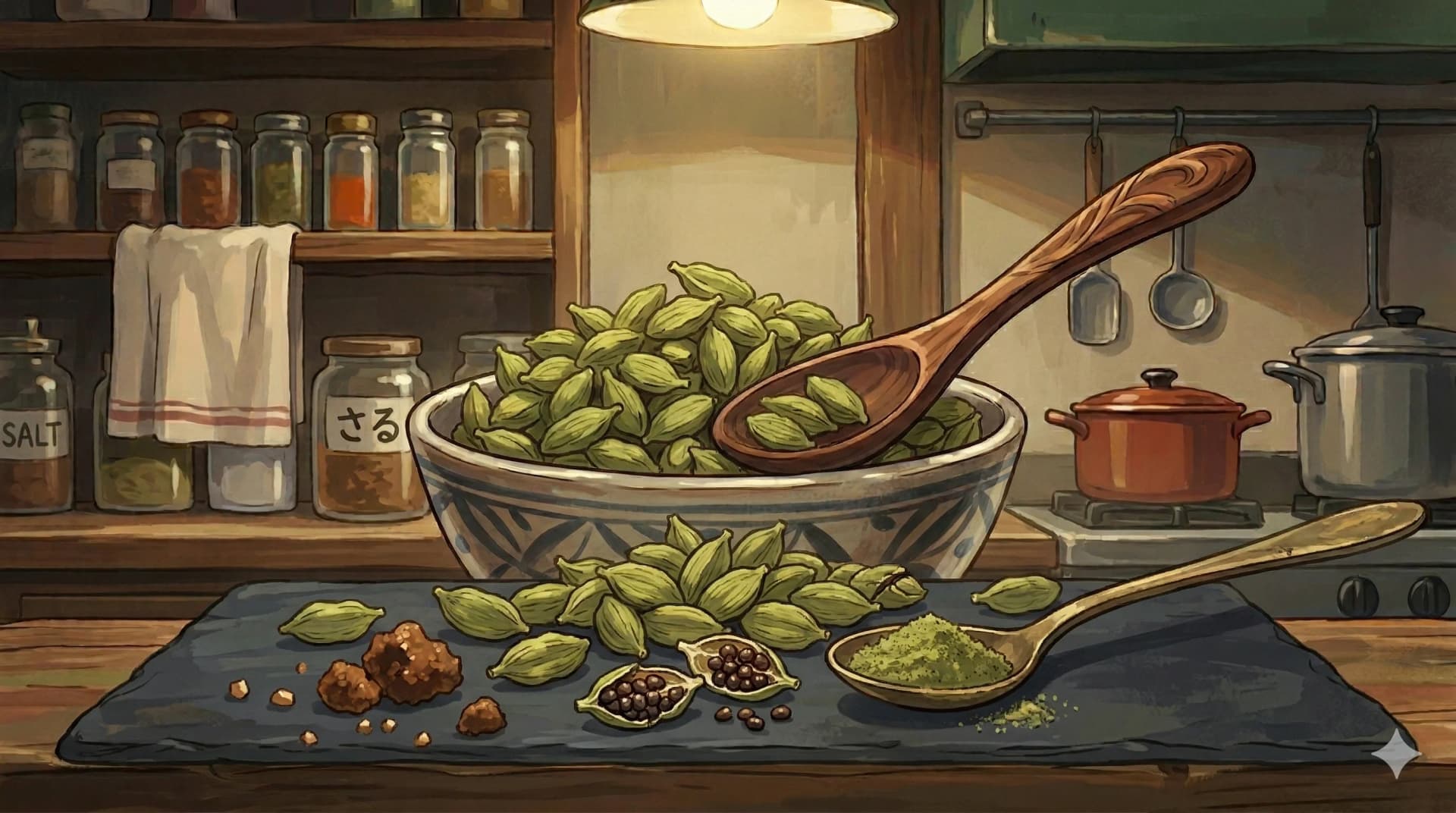
Cardamom
Also known as: Elaichi, Elettaria cardamomum, Queen of Spices
Cardamom is among the world's oldest spices, native to the forests of South India and used medicinally and culinarily for at least four thousand years. Its intensely aromatic pods contain seeds with a complex flavor — floral, citrusy, slightly camphoraceous, and deeply warming.
Flavor Profile
Origin
South India, Kerala, Guatemala, Sri Lanka
Traditional Medicine Perspectives
Ayurveda
Cardamom (Ela) is considered tridoshic — balancing for all three doshas. It is classified as a deepana (digestive stimulant) and is used to treat nausea, bad breath, and respiratory conditions. It is considered particularly beneficial for Kapha-type digestive sluggishness.
Traditional Chinese Medicine
In TCM, cardamom (Sha Ren) warms the Spleen and Stomach, moves Qi, and dispels dampness. It is prescribed for nausea, vomiting, diarrhea, and abdominal bloating caused by cold-damp obstructing the middle burner.
Modern Scientific Research
Cardamom shows promising anti-inflammatory and antioxidant properties in research. Studies suggest benefits for blood pressure reduction, with one randomized controlled trial showing significant reductions in hypertensive subjects after 12 weeks. Research also indicates potential anti-ulcer properties and blood sugar modulation effects.
Its volatile oils show antimicrobial activity against several pathogens.
Cultural History
Cardamom appears in ancient Ayurvedic texts as a remedy for digestive complaints and as an aromatic to freshen breath. It spread via trade routes to Persia and the Arab world, where it became essential to coffee and sweet preparations. In Scandinavia — an unusual endpoint for a tropical spice — it became central to baking through Viking-era trade networks.
Culinary Uses
Used in both sweet and savory preparations across South Asia, the Middle East, and Scandinavia. Green cardamom pods are used whole in biryanis and rice dishes, ground in spice blends and baking. Black cardamom (a different species) is smokier and used primarily in savory dishes.
Essential to chai, Arabic coffee, and many desserts.
Preparation Methods
Lightly crush pods to release seeds before use. Use whole pods in rice and braise dishes, remove before serving. For maximum flavor, toast pods briefly in a dry pan, then grind seeds fresh.
Ground cardamom loses potency quickly — buy small quantities.
Comments
Share your thoughts on this ingredient.
Sign in to comment0 Comments