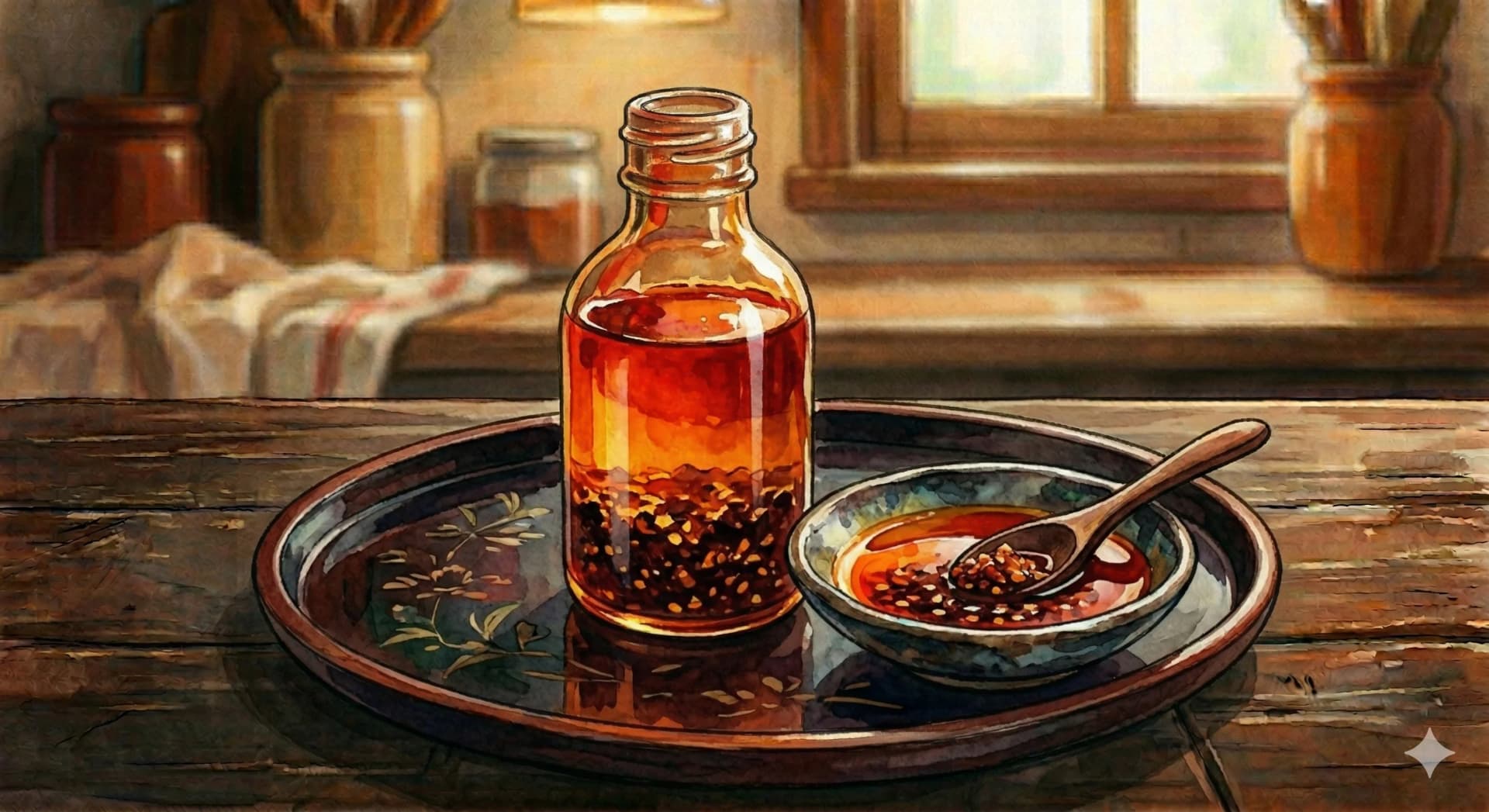
Chili Oil
Also known as: La You, Hong You, Chili Crisp Oil, Sichuan Chili Oil
Chinese chili oil is a deeply flavored, brick-red condiment made by infusing hot oil with dried chilies, Sichuan peppercorns, and aromatics. Unlike plain chili flakes or hot sauce, good chili oil has depth — layers of toasted spice, numbing heat, and a fragrance that transforms any dish it touches. It is one of the most widely used condiments in Chinese cuisine and the base of many Sichuan and Shanxi preparations.
Key facts at a glance:
- Chinese chili oil — A deeply flavored, brick-red condiment made by infusing hot oil with dried chilies, Sichuan peppercorns, and aromatics.
- Unlike plain chili flakes or hot sauce — Good chili oil has depth — layers of toasted spice, numbing heat, and a fragrance that transforms any dish it touches.
- It is one of — The most widely used condiments in Chinese cuisine and the base of many Sichuan and Shanxi preparations.
Flavor Profile
Origin
Sichuan, Shaanxi, China
Traditional Medicine Perspectives
Traditional Chinese Medicine
Dried chilies (La Jiao) are considered hot and acrid in TCM, associated with the Heart and Spleen meridians. They are said to warm the interior, dispel cold, and activate circulation. Sichuan peppercorn (Hua Jiao), commonly paired in chili oil, warms the middle burner and is used for cold-damp conditions. The combined heat of the two is considered strongly warming and is used cautiously in people with excess heat constitutions.
Modern Scientific Research
Capsaicin, the active compound in chilies, has been extensively studied. It shows analgesic properties (used topically for pain relief), potential metabolism-boosting effects, and anti-inflammatory activity. Research suggests capsaicin may trigger the release of endorphins, which partly explains the pleasurable sensation of eating spicy food. Hydroxy-alpha-sanshool, the compound in Sichuan peppercorn responsible for numbing, has been shown to activate specific tactile receptors rather than pain receptors.
Cultural History
Chili oil is intrinsic to Sichuan cooking, where it combines with Sichuan peppercorn to create the region's signature ma la (numbing-spicy) flavor profile. Chilies arrived in China via the Silk Road in the 16th century and were adopted with extraordinary enthusiasm by Sichuan and Hunan cooks. The combination of chili heat and Sichuan peppercorn numbing represents one of the most distinctive flavor innovations in culinary history.
Culinary Uses
Drizzle over dumplings, noodles, and rice as a condiment. Use as a base for cold sesame noodles, mapo tofu sauce, and dan dan noodles.
Stir into soups and congee. Use to dress vegetables. Mix with vinegar and soy sauce for a quick dipping sauce.
Preparation Methods
To make homemade chili oil: heat neutral oil to 200°C (400°F), add Sichuan peppercorn and aromatics, remove from heat, cool slightly, then pour over chili flakes and let steep. The temperature of the oil when it hits the chili flakes determines the color and depth — too hot burns, too cool doesn't bloom properly.
Traditional Dishes
- Dan dan noodles
- Mapo tofu
- Cold sesame noodles
- Wontons in chili oil
- Liangpi (cold skin noodles)
Comments
Share your thoughts on this ingredient.
Sign in to comment0 Comments