Japanese Cuisine
Sukiyaki (Japanese Beef Hot Pot)
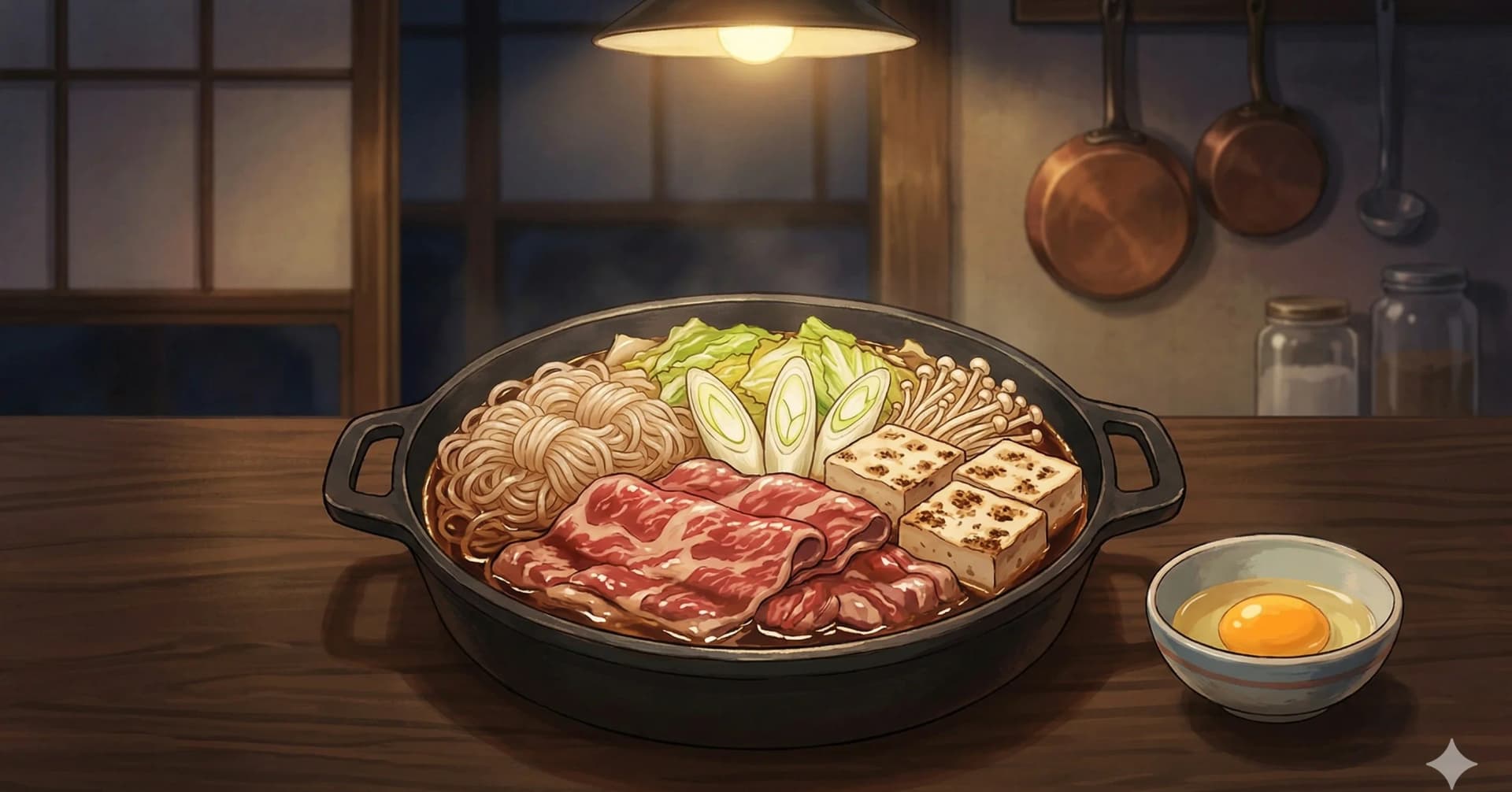
Thinly sliced beef and vegetables simmered tableside in a sweet soy and mirin broth, served with raw egg for dipping
Sukiyaki is one of Japan's great communal meals, a shallow pot of simmering broth set at the center of the table where everyone cooks and eats together at their own pace. The name likely comes from the words suki (plow) and yaki (to grill or cook), a reference to the dish's folk origins when field workers would heat thin slices of meat on the flat blade of a plowshare. Today the experience is more refined but no less direct. You build the broth in a heavy iron pot, sear the beef until its edges begin to color, then add vegetables, tofu, and noodles in batches, letting each ingredient absorb the sweet, soy-dark liquid as it simmers.
What makes sukiyaki distinct from other Japanese hot pots like shabu-shabu or oden is its concentrated, almost syrupy cooking sauce. The warishita, a blend of soy sauce, mirin, sake, and sugar, coats every surface and caramelizes where it meets the hot iron. There is no large volume of broth here. Instead, each ingredient picks up the glaze directly, and you temper that intensity by dipping your bite into a bowl of lightly beaten raw egg. The egg cools the food just enough, adds a silky richness, and softens the sweetness of the sauce into something remarkably balanced.
This recipe follows the Kanto style of sukiyaki, where the warishita sauce is premixed and poured into the pot. In the Kansai style (common in Osaka and Kyoto), the beef is seared first with sugar and soy sauce added directly to the pan in stages. Both methods are delicious. The Kanto approach is simpler to manage at home because the sauce ratios stay consistent throughout the meal. The dish also shares the spirit of Korean bulgogi in its love of thinly sliced beef with sweet soy, though the cooking method and eating ritual are entirely different.
At a Glance
Yield
2 to 3 servings
Prep
25 minutes (plus 30 minutes soaking)
Cook
15 minutes
Total
1 hour 10 minutes
Difficulty
Easy
Ingredients
Broth Ingredients
- 2 cupwater
- ¼ ozkombu (dried kelp), one piece about 10 cm square
Hot Pot Ingredients
- 4large napa cabbage leaves (about 200 g), cut into 5 cm pieces
- 1Tokyo negi or 2 large leeks (white and light green parts), sliced diagonally into 2 cm pieces
- 3½ ozenoki mushrooms, root end trimmed and separated into small clusters
- 3½ ozmaitake mushrooms, pulled apart into small clusters
- 2fresh shiitake mushrooms, stems removed, caps scored with a shallow cross
- 5½ ozgrilled tofu (yaki-dofu) or firm tofu, cut into 3 cm cubes
- 7 ozshirataki noodles (konnyaku noodles), drained and rinsed
- 1/2medium onion (about 80 g), sliced into 1 cm wedges
- 2 ozshungiku (chrysanthemum greens) or baby spinach, trimmed and cut into 5 cm lengths
- 8 ozthinly sliced well-marbled beef (rib eye or chuck roll), cut 2 to 3 mm thick
- 1 tbspneutral oil or 1 small piece of beef suet
To Serve
- 2to 3 large eggs, at room temperature (one per person)
To Finish
- 1serving cooked [udon](/recipes/udon) noodles (optional, for finishing)
Method
- 1
Make the kombu dashi. Place the kombu in a bowl with 480 ml of cool water and let it soak for at least 30 minutes, or up to several hours if you have the time. The water should turn a pale gold and develop a faintly oceanic, clean smell. Do not boil the kombu. Remove and discard the kelp before using the dashi. Set aside.
- 2
Prepare the warishita sauce. Pour the sake and mirin into a small saucepan and bring to a gentle boil over medium heat. Let it bubble for about 30 seconds so the alcohol vapors burn off and the raw edge softens. Add the sugar and stir until it dissolves completely. Add the soy sauce, stir to combine, and remove from the heat. The sauce should taste sweet, salty, and deeply savory. Let it cool to room temperature. This can be made up to a month ahead and refrigerated.
- 3
Blanch the shirataki noodles. Bring a small pot of water to a boil. Add the shirataki noodles and cook for 2 minutes to remove any residual odor. Drain, rinse under cold water, and cut into manageable lengths (about 15 cm). Set aside.
- 4
Arrange the vegetables and proteins on a large platter. Group each ingredient separately so they look inviting and are easy to add to the pot in stages: napa cabbage, negi, mushrooms, tofu, shirataki, onion, shungiku, and beef slices. This platter is part of the experience, so take a moment to make it look appealing.
- 5
Set up the table. Place a heavy cast iron skillet, sukiyaki pot, or wide shallow pot on a portable burner at the center of the table. Set out the platter of ingredients, the warishita sauce, the kombu dashi, and individual small bowls. Crack one egg per person into each bowl and beat lightly with chopsticks until just combined. The egg should be loose and silky, not frothy.
- 6
Start cooking. Heat the pot over medium-high heat and add the neutral oil or rub the beef suet across the surface until it melts and coats the bottom. Add a few slices of beef in a single layer. Let them sear for about 30 seconds on one side until the edges begin to turn golden and the fat starts to render. Flip and cook for another 15 to 20 seconds. The meat should still be slightly pink in the center. Push the beef to one side.
- 7
Add the sauce and begin building the pot. Pour in about one-third of the warishita sauce. It should sizzle and bubble immediately when it hits the hot iron. Add the slower-cooking ingredients first: napa cabbage stems, negi, onion, tofu, and shirataki noodles. Arrange them in neat sections so each ingredient keeps its identity. Add about 60 to 80 ml of the kombu dashi if the pot looks dry. The liquid should come about halfway up the ingredients, not submerge them.
- 8
Simmer and eat in rounds. Reduce the heat to a steady, gentle simmer. Cover partially and cook for 3 to 4 minutes until the napa cabbage stems turn translucent and the negi softens. Add the napa cabbage leaves, mushrooms, and shungiku. These cook quickly, needing only 1 to 2 minutes. As each ingredient finishes, pluck it from the pot, dip it into the beaten egg, and eat. The egg clings to the hot food in a thin, glossy coat and cools it just enough to handle.
- 9
Replenish and adjust. Add more beef, vegetables, sauce, and dashi in stages as the pot empties. If the broth becomes too salty or concentrated, add a splash of dashi to balance it. If it tastes thin, add more warishita. The flavor of the broth deepens with each round as the beef fat and vegetable juices meld into the sauce.
- 10
Finish with udon (optional). When the vegetables and beef are gone, the remaining broth in the pot will be deeply flavored and richly colored. Add cooked udon noodles directly to the pot and let them simmer for 1 to 2 minutes, turning them gently with chopsticks until they absorb the sauce and turn glossy. Divide among bowls and eat as a final course. This is the quiet, satisfying conclusion to a sukiyaki meal.
Key Ingredient Benefits
Thinly sliced beef (rib eye or chuck): Well-marbled beef is essential. The intramuscular fat melts during simmering, keeping each slice juicy and adding body to the broth. Beef provides complete protein, heme iron (which is significantly more bioavailable than non-heme iron from plant sources), zinc, and vitamin B12.
Kombu (dried kelp): One of the foundational ingredients in Japanese cooking, kombu is naturally rich in glutamic acid, the amino acid responsible for umami taste. It also provides iodine, which supports thyroid function, and dietary fiber in the form of alginate.
Shirataki noodles: Made from the corm of the konjac plant, shirataki are almost entirely glucomannan fiber and water. Glucomannan is a soluble fiber that has been studied for its effects on satiety and blood sugar regulation. The noodles have a firm, springy texture that absorbs the surrounding broth.
Shungiku (chrysanthemum greens): A traditional sukiyaki green with a distinctive herbal, slightly bitter flavor that cuts through the richness of the sauce. Shungiku contains beta-carotene, vitamin C, and chlorogenic acid. Baby spinach or watercress can substitute.
Raw egg: The dipping egg adds approximately 6 g of protein per serving plus fat-soluble vitamins A, D, and E. Use pasteurized eggs if consuming raw eggs is a concern, particularly for pregnant individuals, young children, or those with compromised immune systems.
Why This Works
The warishita sauce concentrates on the surface of ingredients rather than diluting into a large volume of broth, which is why sukiyaki has such an intense, lacquered flavor compared to other Japanese hot pots. Sake and mirin provide sweetness along with alcohol that helps carry volatile flavor compounds. Boiling the sake and mirin first drives off the harsh alcohol notes while preserving the deeper fermented sweetness underneath.
Kombu dashi adds glutamic acid, a natural source of umami, without introducing any competing flavors. Used sparingly to dilute the sauce as needed, it keeps the seasoning balanced across multiple cooking rounds.
Grilled tofu (yaki-dofu) holds up to simmering without falling apart because its surface has been firmed by broiling. Regular firm tofu can substitute but benefits from pressing and pan-searing before adding to the pot.
The raw egg dip tempers the heat and salt of each bite. The egg proteins do not fully cook, instead forming a thin emulsion that coats the food and adds a custard-like richness. This is a technique used across Japanese cuisine, from nikujaga to gyudon.
Substitutions & Variations
Beef: Rib eye with generous marbling gives the most authentic result. Chuck roll is a good alternative that costs less. For a leaner option, top sirloin works but will be firmer in texture. Pork belly or thinly sliced chicken thigh can replace beef entirely for a different take. Look for pre-sliced sukiyaki or shabu-shabu beef at Japanese or Korean markets, often sold frozen in neat stacks.
Tofu: Grilled tofu (yaki-dofu) is traditional because it holds its shape during simmering. If unavailable, press firm tofu for 15 minutes, then pan-sear the cubes in a dry skillet until golden on two sides before adding to the pot.
Negi: Tokyo negi (naganegi) has a milder, sweeter flavor when cooked than Western leeks, but the white and light green parts of leek are the closest substitute. Large scallions also work.
Shungiku: Baby spinach, watercress, or mitsuba are suitable replacements. Add them at the very end since they wilt quickly.
Mushrooms: Any combination of shiitake, enoki, maitake, king oyster, or bunashimeji works well. Use what looks freshest at the market.
Kansai-style variation: Skip the premixed warishita. Instead, sear the beef in suet, sprinkle sugar directly over the meat, then add soy sauce and a little sake in stages. Build the seasoning by taste as you cook. This method gives a slightly more caramelized, less uniform result that many cooks prefer.
Vegetarian: Replace the beef with extra firm tofu, sliced seitan, and additional mushrooms. Use a richer kombu and dried shiitake dashi for depth.
Serving Suggestions
Sukiyaki is a complete meal on its own, especially when finished with udon noodles in the remaining broth. Steamed Japanese short-grain rice on the side is traditional and helps balance the sweetness of the sauce. A simple dish of pickled vegetables, such as quick-pickled cucumber or takuan (pickled daikon), provides a crisp, tangy contrast.
For a larger spread, serve sukiyaki alongside chilled dishes that provide textural contrast. A lightly dressed salad of shredded daikon and carrot, or a small bowl of sunomono (vinegared cucumber), works well. If you enjoy the communal hot pot experience, you might also explore nabe for a lighter broth-based approach, or oden for a gentler, more simmered style.
Sukiyaki pairs naturally with cold beer or warm sake. A dry junmai sake complements the sweetness of the warishita without competing.
Storage & Reheating
Warishita sauce: Keeps in an airtight container in the refrigerator for up to 1 month. It will thicken slightly when cold. Bring to room temperature or warm gently before using.
Kombu dashi: Refrigerate in a sealed container for 4 to 5 days. Freeze for up to 1 month.
Cooked sukiyaki leftovers: Refrigerate the remaining broth and any cooked vegetables (excluding tofu, which becomes spongy) in an airtight container for up to 3 days. The broth makes an excellent base for reheating with fresh udon noodles or rice. Reheat gently in a saucepan over medium-low heat. Avoid boiling vigorously, as the tofu and noodles will break down.
Freezing: The cooked broth with vegetables (minus tofu) can be frozen for up to 1 month. Thaw overnight in the refrigerator before reheating. The raw beef and sauce can also be frozen separately for up to 1 month.
Cultural Notes
Sukiyaki (すき焼き) is one of the oldest hot-pot traditions in Japan and one of the most culturally weighted celebratory meals in the repertoire. The name's etymology is unsettled. One theory traces sukiyaki to suki (鋤), the blade of a plow, pointing to an Edo-period (1603-1868) habit of grilling meat on heated plow blades over outdoor fires. The other reads sukiyaki as suki (好き), "to like," plus yaki (焼き), "to grill," meaning roughly "grilled how you like it." Both are plausible. Japanese food historians have been arguing about it for a long time.
Regional traditions split sharply. Kanto-style sukiyaki (Tokyo and the east) is the broth-based version most foreigners encounter. You pour a sweet-savory warishita (割り下) of soy sauce, mirin, sake, and sugar into the pot first, then simmer the beef and vegetables in the liquid. Kansai-style (Osaka, Kyoto, and the west) does the opposite. The beef gets seared in beef tallow in a dry pot, sugar is sprinkled directly onto the searing meat, then soy sauce and vegetables join. The Kansai approach produces a richer, more caramelized dish with less liquid. The Kanto approach gives you something more like a stew. Each region defends its method.
The raw-egg dipping ritual is the part that throws non-Japanese diners. Each person gets a small bowl with one or two raw eggs lightly beaten. You pull cooked items from the pot and dip them in the egg before eating. The egg cools the bite a little and adds a creamy coating. This works because Japanese egg production runs on unusually strict standards. Required salmonella testing at the producer level, mandatory refrigerated storage, short permitted shelf-life dates. Raw egg consumption is safer in Japan than almost anywhere else, and the food culture grew up around that fact.
Sukiyaki belongs to celebrations. Family gatherings, year-end office parties (bōnenkai), New Year's Eve dinners. The 1963 hit song "Sukiyaki" (released in Japan as "Ue o Muite Arukou") made the word internationally famous, although the song itself has nothing to do with food at all.
Nutrition Facts
Calories: 561kcal (28%)|Total Carbohydrates: 40g (15%)|Protein: 24g (48%)|Total Fat: 20g (26%)|Saturated Fat: 7g (35%)|Cholesterol: 145mg (48%)|Sodium: 1150mg (50%)|Dietary Fiber: 4g (14%)|Total Sugars: 22g
You Might Also Like
Ratings & Comments
Ratings & Comments
Ratings
Share your thoughts on this recipe.
Sign in to rate and comment