Japanese Cuisine
Shabu-Shabu (Japanese Hot Pot)
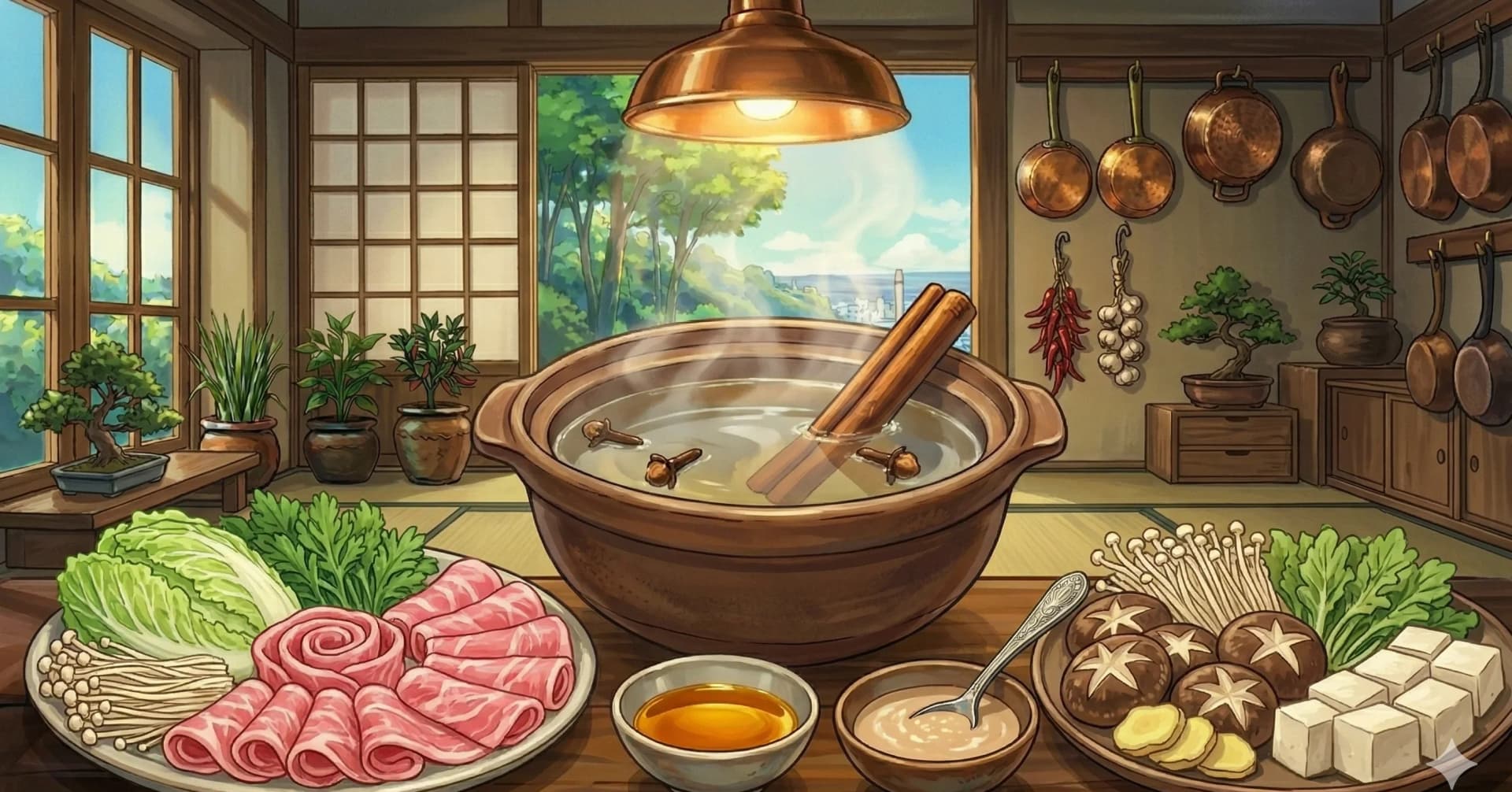
Paper-thin beef swished through kombu broth at the table, served with ponzu and sesame dipping sauces
Shabu-shabu takes its name from the sound of thin meat swishing through simmering broth. The onomatopoeia is playful, but the cooking itself is quiet and deliberate. Each person picks up a single slice of beef with chopsticks, dips it into the gently bubbling kombu stock, and swirls it back and forth for twenty or thirty seconds until it turns from raw pink to a pale, tender grey. The cooked slice goes straight into a small bowl of ponzu or sesame dipping sauce, and you eat it while it is still warm.
Unlike sukiyaki, where everything simmers together in a sweet soy broth, shabu-shabu keeps the cooking medium clean and neutral so each ingredient tastes distinctly of itself. The kombu stock contributes a subtle oceanic minerality without imposing flavor on the beef or the vegetables. This restraint is the whole point. You taste the marbling in the beef, the earthiness of shiitake caps, the tender crunch of napa cabbage, each in turn.
The meal unfolds in stages. Sturdier vegetables and tofu go in first. Meat is cooked piece by piece as you eat. Softer greens and mushrooms follow. When the platters are finally bare, the broth has absorbed layers of flavor from everything that passed through it. This enriched stock becomes the base for a final course of udon noodles, a tradition the Japanese call shime. It is the most satisfying bowl on the table, because the whole meal has been building toward it. Shabu-shabu belongs to the same family of communal hot pots as nabe and oden, and shares the swish-cooking principle with Korean bulgogi hot pot and Vietnamese pho, where diners cook raw protein in broth at the table. A small bowl of miso soup before the meal is a common accompaniment.
At a Glance
Yield
4 servings
Prep
30 minutes
Cook
15 minutes
Total
45 minutes
Difficulty
Easy
Ingredients
Broth Ingredients
- ¼ ozkombu (dried kelp), roughly 7 cm x 7 cm piece
- 1½ qtwater
To Assemble
- 1 lbthinly sliced beef (rib eye or sirloin), sliced 2 mm thick
- ¾ lbnapa cabbage (about 8 leaves), cut crosswise into 5 cm pieces
- 4 ozshungiku (chrysanthemum greens), cut into 5 cm lengths, stems and leaves separated
- 4 ozTokyo negi or large leek, white part only, sliced diagonally into 1 cm pieces
- 7 ozenoki mushrooms, root ends trimmed, separated into small clusters
- 3½ ozshimeji mushrooms, root ends trimmed, separated into small clusters
- 2¼ ozshiitake mushrooms, stems removed (about 4), caps scored with a cross
- 2¼ ozcarrot (about 1 carrot), peeled and sliced into 5 mm rounds
- ¾ lbmedium-firm tofu (1 block), cut into 2.5 cm cubes
- ½ lbudon noodles (frozen or dried), cooked according to package directions and drained
To Finish
- —Pinch of salt
- —Pinch of white pepper
Dipping Sauce Ingredients
- ½ cupponzu (store-bought or homemade)
- ½ cupsesame dipping sauce (store-bought or homemade)
To Garnish
- 5 ozdaikon radish, peeled and finely grated (about 1½–2 radishes), excess liquid gently squeezed out
- ½ cupscallions (about 2), sliced into thin rounds
- —Shichimi togarashi (Japanese seven spice), to taste
Method
- 1
Prepare the kombu broth. Place the kombu in a large donabe or heavy pot and cover with 1.5 litres of cold water. Let the kombu soak for at least 30 minutes while you prepare the remaining ingredients. The water will turn a faint greenish-yellow and smell lightly of the sea.
- 2
Prepare the vegetables. Cut the napa cabbage crosswise into 5 cm pieces, then halve or third each piece lengthwise. Keep the thicker white rib sections separate from the leafy tops, as they need more time. Cut the shungiku into 5 cm lengths, separating the thicker stems from the tender leaves. Slice the negi or leek diagonally into 1 cm pieces.
- 3
Prepare the mushrooms. Trim the root ends from the enoki and shimeji and separate them into small clusters. Remove the shiitake stems and score a shallow cross into each cap. This is decorative and also helps the mushrooms absorb broth.
- 4
Prepare the carrot and tofu. Slice the carrot into 5 mm rounds. If you have a small flower-shaped vegetable cutter, use it here for a traditional presentation. Cut the tofu into roughly 2.5 cm cubes and arrange on the platter alongside the vegetables.
- 5
Arrange the platters. Lay the thinly sliced beef on one plate, fanning the slices so they are easy to pick up with chopsticks. Arrange all the vegetables, mushrooms, and tofu on a large serving platter, grouping each ingredient together.
- 6
Prepare the garnishes. Peel and finely grate the daikon radish using a ceramic grater or the finest holes of a box grater. Gently squeeze out excess liquid and place in a small serving bowl. Slice the scallions into thin rounds and place in a separate bowl. Set out the shichimi togarashi.
- 7
Set the table. Place the donabe on a portable gas stove or induction burner at the center of the table. Give each person two small dipping bowls and fill one with ponzu and the other with sesame sauce. Place the platters of beef, vegetables, and garnish bowls within easy reach.
- 8
Heat the broth. Set the burner to medium heat and bring the kombu water to a gentle simmer. Watch carefully. Remove the kombu just before the water reaches a full boil. If the kombu stays in boiling water, it releases a slimy substance that clouds the broth. The liquid should be clear with a mild savory aroma.
- 9
Add the sturdy ingredients. Place the tofu, thick napa cabbage ribs, shungiku stems, negi, carrot rounds, and a portion of the mushrooms into the simmering broth. Cover and cook for about 10 minutes, until the carrots are tender and the tofu is heated through.
- 10
Customize the dipping sauces. While the pot simmers, each person adds a small mound of grated daikon, a pinch of scallion rounds, and shichimi togarashi to their ponzu bowl. Stir to combine. Add scallions to the sesame sauce as well.
- 11
Cook the beef. Pick up a single slice of beef with cooking chopsticks and swish it gently back and forth through the simmering broth for 20 to 30 seconds, until the meat turns pale and is just cooked through. A few seconds of pink at the center is fine for well-marbled cuts. Dip the cooked slice into ponzu or sesame sauce and eat immediately.
- 12
Continue cooking. Eat the simmered vegetables and tofu from the pot between slices of beef, dipping each piece into your preferred sauce. Skim any foam or scum from the surface of the broth as you go, especially after cooking meat. Add the softer leafy greens and remaining mushrooms to the pot as space opens up. Keep the broth at a gentle simmer, not a rolling boil, to maintain clarity.
- 13
Finish with udon. When the platters are empty, skim the broth one final time. Add the pre-cooked udon noodles to the pot and let them heat through for 1 to 2 minutes. Season the broth with a small pinch of salt and white pepper if needed. Ladle broth and noodles into individual bowls. You can thin your remaining ponzu with a splash of the hot broth and use it as a light soup base for the noodles.
Key Ingredient Benefits
Thinly sliced beef (rib eye or sirloin): Provides heme iron, zinc, and vitamin B12 in a highly bioavailable form. The brief cooking time at the table means the beef retains moisture and nutrients. Rib eye is traditional for shabu-shabu because its intramuscular fat melts quickly in hot broth, producing a silky texture.
Kombu (dried kelp): One of the richest natural sources of iodine, a mineral essential for thyroid function. Kombu also contains fucoidan, a polysaccharide studied for anti-inflammatory properties. In Japanese cooking, kombu is the foundation of dashi and provides glutamic acid, the amino acid responsible for umami taste.
Shungiku (chrysanthemum greens): A distinctively aromatic green rich in beta-carotene, potassium, and calcium. The slightly bitter, herbaceous flavor is characteristic of Japanese hot pot dishes and becomes milder with brief cooking.
Shiitake mushrooms: Contain lentinan and other beta-glucans that have been studied for immune-modulating activity. They also provide vitamin D when exposed to sunlight. The scored cross pattern on the cap is both traditional and functional, increasing surface area for broth absorption.
Tofu: A source of plant-based protein, calcium (when set with calcium sulfate), and isoflavones such as genistein and daidzein, which are subjects of ongoing research related to cardiovascular and bone health.
Why This Works
The kombu broth is deliberately simple. Kombu releases glutamic acid into the water during the long soak, providing a foundation of umami without competing with the natural flavors of the beef and vegetables. Removing the kombu before the water boils prevents the release of alginic acid, which would make the broth viscous and cloudy.
Cooking the beef in paper-thin slices for only seconds preserves its tenderness and prevents the proteins from seizing up and turning tough. The brief swishing motion keeps the slice in constant contact with hot liquid, ensuring even cooking without overcooking. This technique is essentially a rapid poach, and it produces a texture that is softer and more delicate than grilling or pan-frying.
The two dipping sauces cover complementary flavor profiles. Ponzu is bright and citrusy, cutting through the richness of well-marbled beef. Sesame sauce is creamy and nutty, pairing well with milder vegetables and tofu. Having both sauces available lets each person adjust the flavor of every bite.
Substitutions & Variations
Beef: Pork loin sliced paper-thin is the most common alternative and is sometimes labeled buta-shabu. For seafood shabu-shabu, use thinly sliced yellowtail (buri), sea bream (tai), or peeled shrimp. Slice fish slightly thicker than beef, about 3 mm, and cook for a few seconds longer until opaque.
Shungiku: If chrysanthemum greens are unavailable, watercress or baby spinach can take their place. Both wilt quickly in hot broth and offer a similarly pleasant bitterness, though the herbal aroma will differ.
Negi: Substitute with the white and light-green parts of large leeks. Regular scallions can be used in a pinch, but cut them into larger pieces since they soften faster.
Mushrooms: Any combination of fresh mushrooms works. King oyster, maitake, and bunapi (white beech) are all good additions. Dried mushrooms are not ideal here because they darken the broth.
Dipping sauces: For a quick ponzu, combine equal parts soy sauce and fresh citrus juice (yuzu, sudachi, lemon, or lime) with a splash of rice vinegar. For a simple sesame sauce, whisk together 60 ml Japanese sesame paste (nerigoma), 30 ml soy sauce, 15 ml rice vinegar, 15 ml mirin, and thin with a little dashi or water until pourable.
Noodle finish: Substitute cooked rice for the udon to make zosui (rice porridge). Add cooked rice to the enriched broth, stir in a beaten egg, and season with salt and a few drops of soy sauce.
Serving Suggestions
Shabu-shabu is a complete meal in itself, but a few small dishes before or alongside it make the table feel more generous. A bowl of miso soup to start, a plate of lightly pickled vegetables, or a simple salad dressed with rice vinegar and sesame oil all work well. Steamed short-grain rice is optional since the udon finish serves as the starch course, but some people like having rice alongside the meat.
For drinks, a dry junmai sake served slightly warm complements the clean flavors of the broth and dipping sauces. Light Japanese beer is another natural pairing. Green tea, especially hojicha (roasted green tea), is a good non-alcoholic option that echoes the toasty notes of the sesame dipping sauce.
Storage & Reheating
Raw prepared ingredients: The sliced vegetables, mushrooms, and tofu can be prepped and refrigerated on their platters, covered tightly, for up to 1 day. Keep the beef on a separate plate, well wrapped, and bring it to room temperature for about 10 minutes before serving so the slices separate easily.
Leftover broth: Strain and refrigerate the enriched broth in an airtight container for up to 3 days, or freeze for up to 1 month. Use it as a base for miso soup, udon soup, or rice porridge.
Cooked leftovers: If vegetables and meat remain in the pot at the end of the meal, store them in the broth in an airtight container and refrigerate for up to 2 days. Reheat gently on the stove. The texture of the tofu and noodles will soften further, but the flavor of the broth deepens overnight.
Cultural Notes
Shabu-shabu (しゃぶしゃぶ) gets its name from a sound. The word is onomatopoeia for the swishing noise paper-thin slices of meat make moving through hot broth. Compared to other Japanese hot-pot traditions like sukiyaki or nabe, shabu-shabu is a recent addition to the canon. The dish was invented in the early 1950s by Yutaka Miyake, head chef at the Suehiro restaurant in Osaka, who had encountered the Mongolian instant-boiled lamb dish shuan yang rou (涮羊肉) during travels in northern China and decided to adapt it. He swapped Mongolian lamb for thinly sliced premium Japanese beef. The Mongolian sesame-paste dipping sauce became the now-standard pair of ponzu and gomadare.
Suehiro trademarked the name "shabu-shabu" in 1955, and the dish spread fast through Japan's post-war economic miracle, when premium beef finally became affordable and tabletop cooking equipment got standardized. It became a high-status group meal almost immediately: corporate entertainment, family celebrations, special-occasion date nights. Dedicated shabu-shabu shops (shabu-shabu jōzō, しゃぶしゃぶ専門店) opened in major Japanese cities and built reputations on three things: beef quality, broth depth, and serving technique.
The beef-quality requirement has tied shabu-shabu permanently to Japan's elaborate beef-grading systems. The premium Wagyu (和牛) breeds, especially Kobe beef, Matsusaka beef, and Omi beef, are the most prized, because their high intramuscular fat content gives a cream-tender mouthfeel when briefly swished through hot broth and pulled out before they overcook.
The slicing itself is a specialized skill. To cut beef thin enough for shabu-shabu you need partially frozen meat and an extremely sharp blade, and Japanese butchers consider proper shabu-shabu cutting a craft that takes years to learn. Globally, the dish has become an ambassador for Japanese beef culture. High-end Japanese restaurants worldwide put shabu-shabu forward as their signature beef preparation.
Nutrition Facts
Calories: 444kcal (22%)|Total Carbohydrates: 21g (8%)|Protein: 27g (54%)|Total Fat: 22g (28%)|Saturated Fat: 7g (35%)|Cholesterol: 75mg (25%)|Sodium: 850mg (37%)|Dietary Fiber: 4g (14%)|Total Sugars: 4g
You Might Also Like
Ratings & Comments
Ratings & Comments
Ratings
Share your thoughts on this recipe.
Sign in to rate and comment