Japanese Cuisine
Nabe (Japanese Hot Pot)
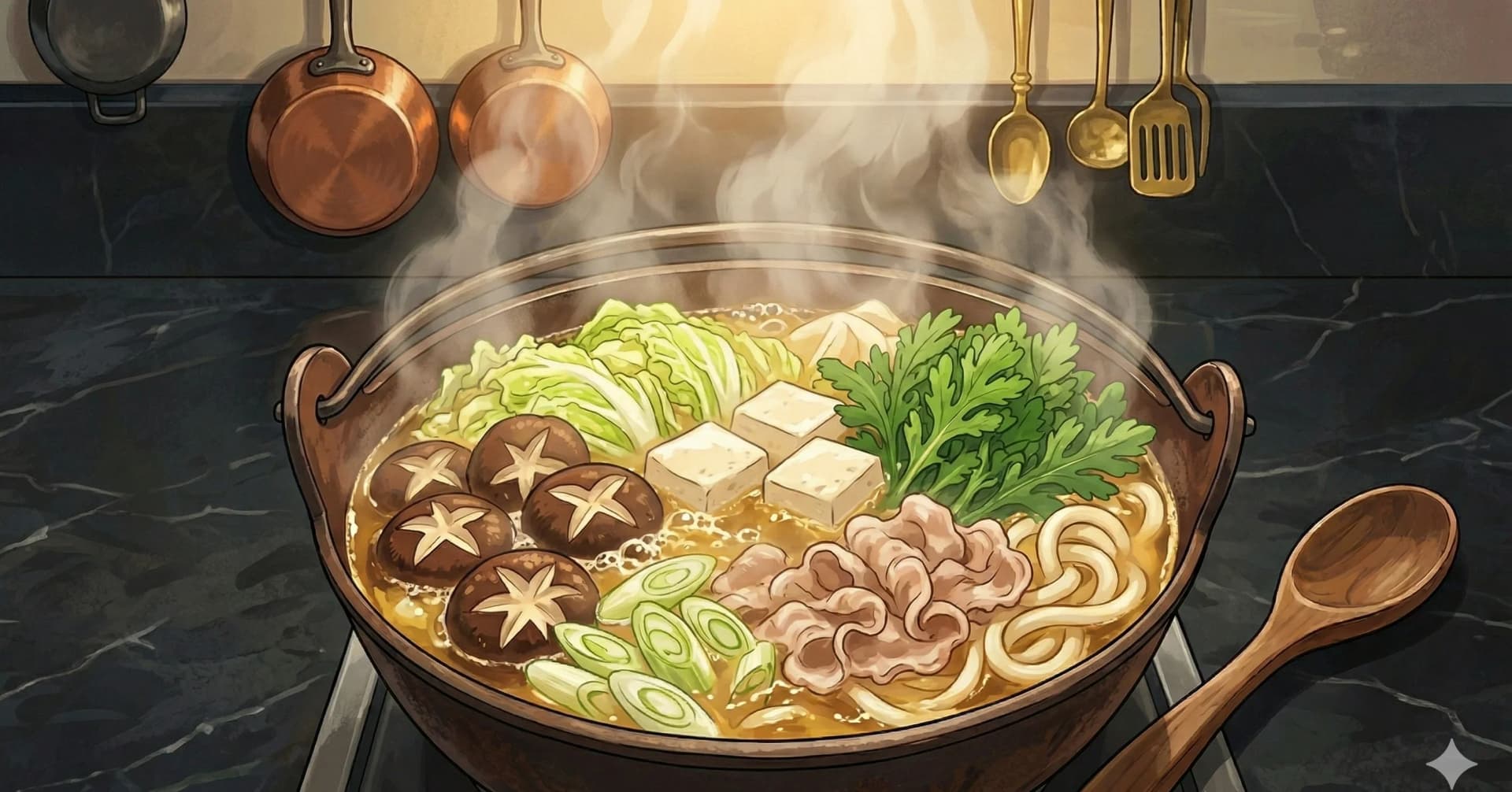
A communal pot of simmered proteins, vegetables, mushrooms, and tofu in a gentle dashi broth, served tableside and eaten as you go
Nabe means pot. In practice, it means gathering around one. The word covers an entire category of Japanese cooking where ingredients are simmered together in a shared vessel, usually a donabe clay pot set on a portable burner at the center of the table. Everyone picks from the same pot, eating at whatever pace suits them, adding more ingredients as space opens up. There is no plating. There is no rush. It is one of the most naturally social ways to eat.
Yosenabe, the version given here, is the most open-ended style of nabe. The name translates roughly to "everything gathered together," and it lives up to that description. You start with a seasoned dashi broth, arrange whatever proteins and vegetables you have on platters, and cook them in the simmering broth a few pieces at a time. Seafood, chicken, pork, tofu, mushrooms, leafy greens, root vegetables: all are welcome. The only rule is to cook denser ingredients first and add delicate greens near the end.
Nabe belongs to the same family of communal hot pot cooking as sukiyaki and shabu-shabu, though each has its own broth and rhythm. Sukiyaki uses a sweet soy-based sauce. Shabu-shabu involves swishing paper-thin slices of meat through plain kombu broth and dipping them in sauce. Yosenabe sits in between, with a broth that is already seasoned and flavorful enough to eat on its own. It is also closely related to heartier pots like oden, where ingredients simmer low and slow in broth for hours.
The final course, called shime, is part of the ritual. Once the proteins and vegetables are gone, you cook udon noodles or rice directly in the enriched broth that remains. By this point the liquid has absorbed the flavors of everything that came before it, and the shime is often the best part of the meal.
At a Glance
Yield
4 servings
Prep
25 minutes
Cook
20 minutes
Total
45 minutes
Difficulty
Easy
Ingredients
Broth Ingredients
Hot Pot Ingredients
- 1 lbwhite fish fillets (cod, sea bream, or sablefish), cut into 5 cm pieces
- 8 ozshrimp (about 8), peeled and deveined
- 4½ ozchicken tenders or boneless thigh, sliced on the diagonal into bite-sized pieces
- 1 lbmedium-firm tofu, cut into 2.5 cm cubes
- 1¼ lbnapa cabbage (about half a head), cut into 5 cm pieces (about ½–1 head), stems and leaves separated
- 4½ ozshungiku (chrysanthemum greens) or spinach, cut into 5 cm lengths
- 2 ozcarrot (about ½–1 carrot), peeled into thin ribbons or sliced into 3 mm half-moons
- 1negi (Japanese long onion) or 2 large leeks, cut diagonally into 2.5 cm pieces
- 6 ozenoki mushrooms, root end trimmed and separated into small clusters
- 3½ ozshimeji mushrooms, root end trimmed and separated
- 3¼ ozshiitake mushrooms, stems removed (about 4), caps scored with a cross if desired
To Serve
- 2scallions, thinly sliced, for garnish
- ¼ ozyuzu zest or a few drops of yuzu juice (optional)
- —Shichimi togarashi (Japanese seven-spice)
- —Ponzu sauce
- 4servings cooked udon noodles or steamed rice, for shime
Method
- 1
Prepare the broth. Combine the dashi, sake, mirin, soy sauce, and salt in a donabe or large, heavy pot. Bring to a gentle simmer over medium heat. Taste the broth. It should be savory and slightly sweet, with enough salt to season the ingredients as they cook. Adjust with a little more soy sauce or salt if needed. Set aside.
- 2
Prepare the ingredients. Arrange the fish, shrimp, chicken, tofu, vegetables, and mushrooms on one or two large platters. Keep each ingredient in its own section so diners can identify and choose what they want. This can be done up to an hour ahead and kept covered in the refrigerator.
- 3
Start the first round. Bring the broth back to a simmer on the portable burner at the table (or on the stovetop if serving from the kitchen). Add the napa cabbage stems, carrot, and negi first, as these take the longest to cook. Nestle the fish, chicken, tofu, and shiitake mushrooms into the broth alongside the harder vegetables. Cover and simmer gently for 8 to 10 minutes. The cabbage stems should be translucent and tender, the fish should flake easily when pressed with chopsticks, and the chicken should show no pink when cut.
- 4
Add the delicate ingredients. Add the shrimp, enoki mushrooms, shimeji mushrooms, napa cabbage leaves, and shungiku. Cover and simmer for another 3 to 4 minutes. The shrimp will curl and turn pink. The greens will wilt but should still hold some color and texture.
- 5
Serve from the pot. Let each person pick ingredients directly from the pot, dipping pieces into ponzu before eating. Scatter sliced scallions and yuzu zest over the pot. Pass the shichimi togarashi for anyone who wants a little heat.
- 6
Continue cooking. Replenish the pot with more ingredients from the platters as space opens up. If the broth reduces, add a splash of water or dashi and let it return to a simmer before adding more food. Skim any foam that collects on the surface.
- 7
Finish with shime. When the proteins and vegetables are gone, taste the enriched broth. It will have deepened considerably from all the ingredients that cooked in it. Add cooked udon noodles or a bowl of steamed rice directly to the pot. Simmer for 2 to 3 minutes until the noodles are heated through and have absorbed some of the broth. Ladle into bowls and eat as the final course.
Key Ingredient Benefits
Dashi. The backbone of Japanese cooking, made from kombu (dried kelp) and katsuobushi (dried bonito flakes). It is naturally rich in glutamate and inosinate, the two primary umami compounds. Making dashi from scratch takes about 15 minutes, but instant dashi granules (hondashi) work in a pinch. For a vegetarian version, use kombu and dried shiitake mushroom dashi.
Shungiku (chrysanthemum greens). A leafy green with a distinctive herbal, slightly bitter flavor that is prized in Japanese hot pots. If unavailable, spinach or watercress makes a reasonable substitute, though neither has the same complexity.
Negi. Japanese long onion, sometimes called Tokyo negi, is milder and sweeter than Western leeks. It becomes silky and sweet when simmered in broth. Leeks are the closest substitute, though they are denser and take a bit longer to cook through.
Tofu. Medium-firm (momen) tofu holds its shape in the simmering broth without falling apart. Silken tofu can be used but requires very gentle handling. Tofu is a traditional plant protein valued in Japanese Buddhist cuisine (shojin ryori) for its mild flavor and ability to absorb surrounding seasonings.
Why This Works
The layered addition of ingredients is not just practical but also builds flavor progressively. Dense vegetables and proteins go in first, releasing their juices and fats into the broth over a longer cooking time. Delicate greens and quick-cooking mushrooms go in later, absorbing the enriched broth without turning to mush. By the time you reach the shime course, the broth has become a concentrated distillation of every ingredient that passed through it.
Dashi provides a clean umami foundation without competing with the ingredients. The combination of inosinate from the katsuobushi and glutamate from the kombu creates a synergistic umami effect that amplifies the natural flavors of the proteins and vegetables rather than masking them. The sake and mirin add sweetness and depth, while the light soy sauce seasons without darkening the broth.
Keeping the broth at a gentle simmer rather than a rolling boil is important. A hard boil will break fish apart, turn shrimp rubbery, and cloud the broth with emulsified fats. The slow, steady bubbling of a proper nabe allows proteins to cook through gently and vegetables to soften without losing their structure.
Substitutions & Variations
Chanko nabe (sumo stew). For a heartier, protein-rich version inspired by the stew eaten daily by sumo wrestlers, add chicken meatballs to the pot. Mix 225 g ground chicken with 1 beaten egg, 30 ml soy sauce, 10 ml ginger juice, 45 g panko, and 8 g cornstarch. Roll into small balls and add them to the broth alongside the first round of ingredients. Use a miso-enriched broth by whisking 75 g white miso into the base.
Miso nabe. Replace the soy sauce seasoning with 60 to 75 g white or red miso dissolved into the dashi. This creates a richer, creamier broth that pairs especially well with pork belly slices and root vegetables. If you enjoy miso-based soups, see also miso shiru.
Kimchi nabe. Add 200 g chopped kimchi and 60 ml kimchi juice to the broth for a Japanese-Korean crossover that bridges nabe and kimchi jjigae. Use pork belly as the primary protein.
Seafood-only nabe. Omit the chicken entirely and increase the fish and shrimp. Add clams, scallops, or squid for variety.
Vegetarian nabe. Omit all animal proteins. Use kombu-shiitake dashi as the broth base. Increase the tofu and mushrooms, and add kabocha squash, daikon, and potato for substance.
Udon noodle variation. For a simpler weeknight version that skips the communal table setup, cook all the ingredients in the broth on the stovetop and serve in deep bowls over udon noodles, ladling the broth over everything.
Serving Suggestions
Nabe is a complete meal in itself, needing little more than the shime course of noodles or rice to round it out. If you want to set a fuller table, a few small dishes before the hot pot begins are traditional.
A bowl of miso shiru as a starter bridges nicely into the hot pot. Simple pickled vegetables, a small plate of edamame, or a light salad dressed with rice vinegar and sesame work well.
For dipping, ponzu is the classic choice, but you can also set out goma dare (sesame dipping sauce) for variety. Both pair well with the mild broth.
Nabe shares a wintertime spot on the Japanese table with oden, and the two make an excellent pairing for a larger gathering. Where nabe is interactive and quick, oden is patient and slow-simmered, and the contrast is appealing.
Storage & Reheating
Nabe is best eaten fresh, as the communal cooking process is part of the experience. However, leftover broth with any remaining ingredients can be stored in an airtight container in the refrigerator for up to 2 days.
Reheat gently on the stovetop over medium-low heat. Add a splash of water or dashi if the broth has reduced. Fish and shrimp may become slightly firmer upon reheating, but the broth itself will be even more flavorful the next day.
Do not freeze the assembled hot pot, as tofu, fish, and leafy vegetables all suffer in texture after freezing. If you want to freeze something, strain and freeze the enriched broth on its own for up to 1 month. It makes an excellent base for a quick soup or noodle broth.
Cultural Notes
Nabe (鍋) is not really one dish. The word literally just means "pot," and Japanese cooks use it to name an entire category of cooking where a shared pot simmers at the table while everyone eats from it. Ingredients go in throughout the meal. Diners pull cooked pieces out with chopsticks and shared serving spoons. It is winter food at its core, and the warmth of the pot does both literal and social work in the colder months.
The family has dozens of regional members. Yose-nabe (寄せ鍋, "gathering pot") is the everyday version, mixed proteins and vegetables in a light dashi. Chankonabe (ちゃんこ鍋) comes from sumo stables, where it was invented to feed wrestlers in serious quantities. Mizutaki (水炊き) from Kyushu runs on chicken broth and chicken parts. Motsunabe (もつ鍋) from Fukuoka builds itself around beef offal. Shabu-shabu and sukiyaki are technically in the same family too, and so is oden, even though oden usually comes out of a fixed shop pot rather than a tabletop burner.
The social weight of nabe in Japan goes well beyond what the food itself does. Winter family dinners in Japanese homes often build around a single pot, three generations sitting close around it, and the format almost forces the kind of slow communal eating that holiday meals are supposed to produce. Year-end corporate parties (bōnenkai, 忘年会) lean on nabe for the same reason, as a metaphor for the team eating together. Rural wedding receptions often include a nabe course.
Then there is the etiquette. You use the shared serving utensils when you pull something from the pot, not your personal chopsticks. The negotiation over the last piece of meat is half the meal. These small social rituals are why nabe reads as a category of community rather than a category of cooking.
Nutrition Facts
Calories: 476kcal (24%)|Total Carbohydrates: 34g (12%)|Protein: 53g (106%)|Total Fat: 10g (13%)|Saturated Fat: 2g (10%)|Cholesterol: 155mg (52%)|Sodium: 1080mg (47%)|Dietary Fiber: 4g (14%)|Total Sugars: 5g
You Might Also Like
Ratings & Comments
Ratings & Comments
Ratings
Share your thoughts on this recipe.
Sign in to rate and comment