Korean Cuisine
Yukgaejang (Spicy Beef and Vegetable Soup)
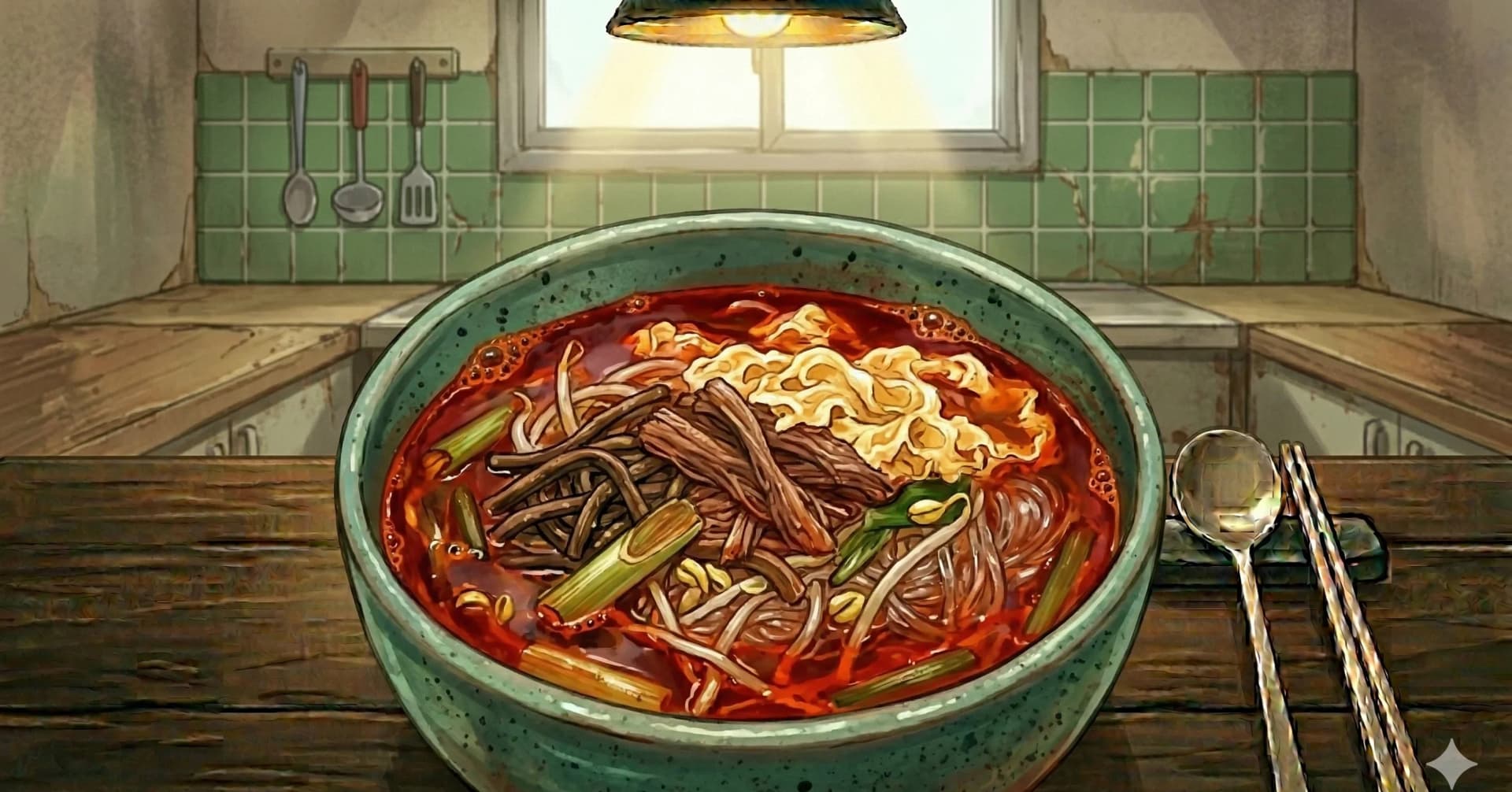
A fiery, deeply flavored beef soup loaded with shredded meat, fernbrakes, bean sprouts, and scallions in a chili-red broth
If seolleongtang is the quiet, meditative side of Korean soups, yukgaejang is the loud one. It is unapologetically spicy, deeply savory, and absolutely loaded with things to eat. Every spoonful brings up a tangle of shredded beef, dark fern bracken, crunchy bean sprouts, and long pieces of scallion, all swimming in a broth that glows a fierce orange-red from the gochugaru.
The foundation is a beef broth made by simmering brisket until it is tender enough to pull apart into shreds. The vegetables go through their own preparation: gosari (dried fernbrakes) need to be soaked and cooked until tender, bean sprouts get a quick blanch, and the scallions are cut into long pieces that soften into silky ribbons in the broth.
What ties everything together is the dadaegi step, where gochugaru is bloomed in sesame oil until the oil turns red and fragrant. The shredded beef and vegetables are tossed in this chili oil mixture before going into the broth, which is what gives yukgaejang its characteristic deep color and layered heat. The spice is not just hot. It is warm, slightly sweet, and smoky in the way that only good gochugaru can be.
This is a substantial soup, closer to a stew in its generosity. It is the kind of meal that makes you break a sweat and feel better for it. Serve it with a big bowl of rice and let the rice soak up that red broth.
At a Glance
Yield
4 servings
Prep
30 minutes
Cook
1 hour 30 minutes
Total
2 hours
Difficulty
Medium
Ingredients
- 1 lbbeef brisket or flank steak
- 1/2medium onion, left in one piece
- 8 ozKorean radish (mu) (about 2½–3 radishes), cut into large chunks (optional)
- 3½ qtwater
- 1 ozdried gosari (fernbrakes), about 240 g when rehydrated
- 8 ozsoybean sprouts (kongnamul) or mung bean sprouts (sukju)
- 3dried shiitake mushrooms, or 60 g fresh shiitake or oyster mushrooms
- 2to 3 bunches scallions or Korean daepa, cut into 10 cm lengths
- 2 tbspsesame oil
- 10to 15 g gochugaru (Korean red chili flakes)
- 1½ tbspminced garlic
- 2 tbspsoup soy sauce (guk ganjang), divided
- ⅓ tbspgochujang (optional)
- ¼ ozdoenjang (optional)
- —Salt and pepper to taste
- 2eggs, lightly beaten
- 3 ozdangmyeon (sweet potato starch noodles) (about ½–1 potato), soaked for 20 minutes
Method
- 1
Cook the gosari. Place the dried fernbrakes in a pot with 1 L (4 cups) of water. Bring to a simmer over medium heat, cover, and cook until tender, about 30 minutes. Let cool in the cooking liquid, then drain, rinse, and cut into 10 cm (4 inch) lengths.
- 2
Simmer the beef. Place the brisket in a large stockpot with the onion, optional radish, and 14 cups of water. Bring to a boil over high heat, skimming the foam as it rises. Reduce heat to medium-low, cover, and simmer for about 1 hour until the meat shreds easily when pulled with a fork. Remove the meat and let it cool slightly. Discard the onion and radish. Reserve 1.7 to 1.9 L (7 to 8 cups) of the broth and skim off visible fat.
- 3
Shred the beef. Pull the cooled meat apart into strips about 7 to 10 cm (3 to 4 inches) long, following the grain of the meat.
- 4
Blanch the sprouts. Bring a small pot of water to a boil, add the bean sprouts, and blanch for 30 seconds. Drain immediately and rinse with cold water. If using dried shiitake, soak in warm water for 20 minutes, then slice thinly. Fresh mushrooms can be sliced directly.
- 5
Bloom the chili. Heat the sesame oil in a large pot or deep skillet over low heat. Add the gochugaru and stir for just a few seconds until the oil turns red and the chili flakes become slightly pasty. Do not let them burn.
- 6
Combine. Add the shredded beef, gosari, mushrooms, 1 tablespoon of the soy sauce, and the minced garlic to the chili oil. Toss everything to coat evenly.
- 7
Simmer in broth. Add the reserved beef broth to the pot along with the remaining 1 tablespoon of soy sauce and the gochujang and doenjang if using. Bring to a boil over medium-high heat, cover, and boil for 10 minutes.
- 8
Add remaining vegetables. Add the bean sprouts and scallions. Return to a boil and cook for another 10 minutes. Season with salt and pepper. If using glass noodles, add them 3 to 4 minutes before finishing.
- 9
Finish. If using eggs, drizzle the beaten eggs in a thin stream over the boiling soup and immediately turn off the heat. The egg will cook in delicate ribbons. Serve immediately with rice.
Key Ingredient Benefits
Gosari (Dried Fernbrakes). Also called bracken fern or fiddlehead fern. The dried form needs soaking and cooking to become tender. They have a distinctive earthy, slightly smoky flavor and a chewy texture that is unique in this soup. Sold at Korean and Asian grocery stores in dried bundles. If unavailable, the soup can be made without them, though it loses some of its traditional character.
Gochugaru. Korean red chili flakes are not interchangeable with standard crushed red pepper. Gochugaru is made from sun-dried peppers that are deseeded and coarsely ground, giving them a fruity sweetness and moderate heat that is very different from the sharp, concentrated heat of Italian red pepper flakes. This is the same ingredient that gives kimchi jjigae and sundubu-jjigae their characteristic warmth.
Soybean Sprouts (Kongnamul). Larger and sturdier than mung bean sprouts, with a fat yellow head and a crunchy texture that holds up well in soups. They are also the star of kongnamul guk. Either type works here, though soybean sprouts are more traditional.
Why This Works
Blooming the gochugaru in sesame oil before adding the other ingredients is the technique that sets yukgaejang apart from simply adding chili flakes to broth. The fat-soluble flavor compounds in the chili dissolve into the oil, creating a more rounded, deeper heat that permeates the entire soup rather than sitting on top. The sesame oil also contributes its own toasty richness.
Coating the shredded meat and gosari in the chili oil before adding the broth ensures that the seasoning is distributed evenly through the solid ingredients, not just the liquid. Each bite of beef carries its own spice.
The order of vegetable addition matters. The tougher ingredients (gosari, mushrooms) go in first with the broth, while the more delicate ones (bean sprouts, scallions) go in later. This ensures everything reaches the right texture at the same time rather than having overcooked sprouts and undercooked fern bracken.
Substitutions & Variations
No gosari? The soup is still very good without it. You lose some earthy depth, but the combination of beef, sprouts, and scallions carries the dish. Sweet potato or taro stems are sometimes used as alternatives.
Mung bean sprouts. More widely available than soybean sprouts. They are thinner and softer, so reduce the final cooking time to 5 minutes to keep them from getting mushy.
Flank steak or shank. Both work well in place of brisket. Shank has more connective tissue and produces a richer broth. Flank shreds more easily.
Toned down heat. Use 1 tablespoon of gochugaru instead of 2 to 3 for a milder version. The soup will still have color and flavor, just less fire.
Glass noodles. Adding soaked dangmyeon makes the soup heartier and more filling. They absorb the spicy broth beautifully.
Serving Suggestions
Yukgaejang demands a large bowl of steamed white rice. The rice absorbs the spicy broth and cools the heat slightly with each bite. Some people add rice directly to the soup bowl.
A cooling side of oi-muchim provides relief between fiery spoonfuls. Baek-kimchi works the same way, offering crunch and freshness without adding more heat.
For a bold Korean dinner spread, serve yukgaejang alongside doenjang-jjigae and gyeran-jjim. The steamed egg cushion is mild and silky, a perfect counterpoint to the intensity of the soup.
Storage & Reheating
Yukgaejang stores beautifully and many people say it tastes even better the next day, after the flavors have had time to meld. Keep in an airtight container in the refrigerator for up to 4 days.
Reheat on the stovetop over medium heat until bubbling. The chili color may deepen slightly as it sits, which is normal and desirable. Add a splash of water if the broth has thickened from the noodles or vegetables absorbing liquid.
The broth without noodles freezes well for up to 3 months. Add fresh noodles and scallions when reheating from frozen.
Cultural Notes
Yukgaejang (육개장) is the assertive, fiery red counterpart to seolleongtang's quiet milky white in the Korean beef-soup canon. Yuk (육) means "meat." Gaejang (개장) traces back to gaejangguk (개장국), a historical Korean dog-meat soup that was once a regional summer dish. As Korean dietary tastes shifted away from dog meat over the 19th and 20th centuries, the same intense, deep-red gochugaru-and-aromatic broth was adapted to use beef instead, and the modern yukgaejang ("beef gaejang") was born. The dish has now entirely displaced its historical predecessor in modern Korean cooking.
Yukgaejang is the dish most strongly associated with the Korean sambok (삼복) summer-heat tradition, alongside samgyetang and baeksuk. The iyeolchiyeol (이열치열, "fight heat with heat") principle that prescribes hot, spicy, deeply nourishing food during the hottest weeks of summer applies as strongly to yukgaejang as to any other dish in the Korean canon. The combination of chili heat, beef richness, and the multiple layers of aromatic vegetables (gosari fernbrake, taro stems, scallions, soybean sprouts) is considered uniquely restorative for a body taxed by extreme summer heat.
The dish also occupies a specific role in Korean funeral and memorial culture. At traditional Korean jangsa (장사, funeral) services, a large pot of yukgaejang is typically the central dish served to mourners and visitors throughout the three-day wake period. The soup's strong protein content, its ability to be served at near-room temperature without much quality loss, and its association with comforting communal eating all make it ideal for the context.
Many Korean adults have a primary cultural memory of yukgaejang as the dish eaten in the company of relatives in the long, sad hours of a family funeral. That memory lends the dish a real emotional weight in Korean life.
Nutrition Facts
Calories: 585kcal (29%)|Total Carbohydrates: 41.7g (15%)|Protein: 41.2g (82%)|Total Fat: 29.3g (38%)|Saturated Fat: 8.9g (45%)|Cholesterol: 216mg (72%)|Sodium: 2112mg (92%)|Dietary Fiber: 5g (18%)|Total Sugars: 6.4g
You Might Also Like
Ratings & Comments
Ratings & Comments
Ratings
Share your thoughts on this recipe.
Sign in to rate and comment