Chinese Cuisine
Yangzhou Chao Fan (Yangzhou Fried Rice)
China's most celebrated fried rice with shrimp, char siu, egg, and a colorful array of vegetables
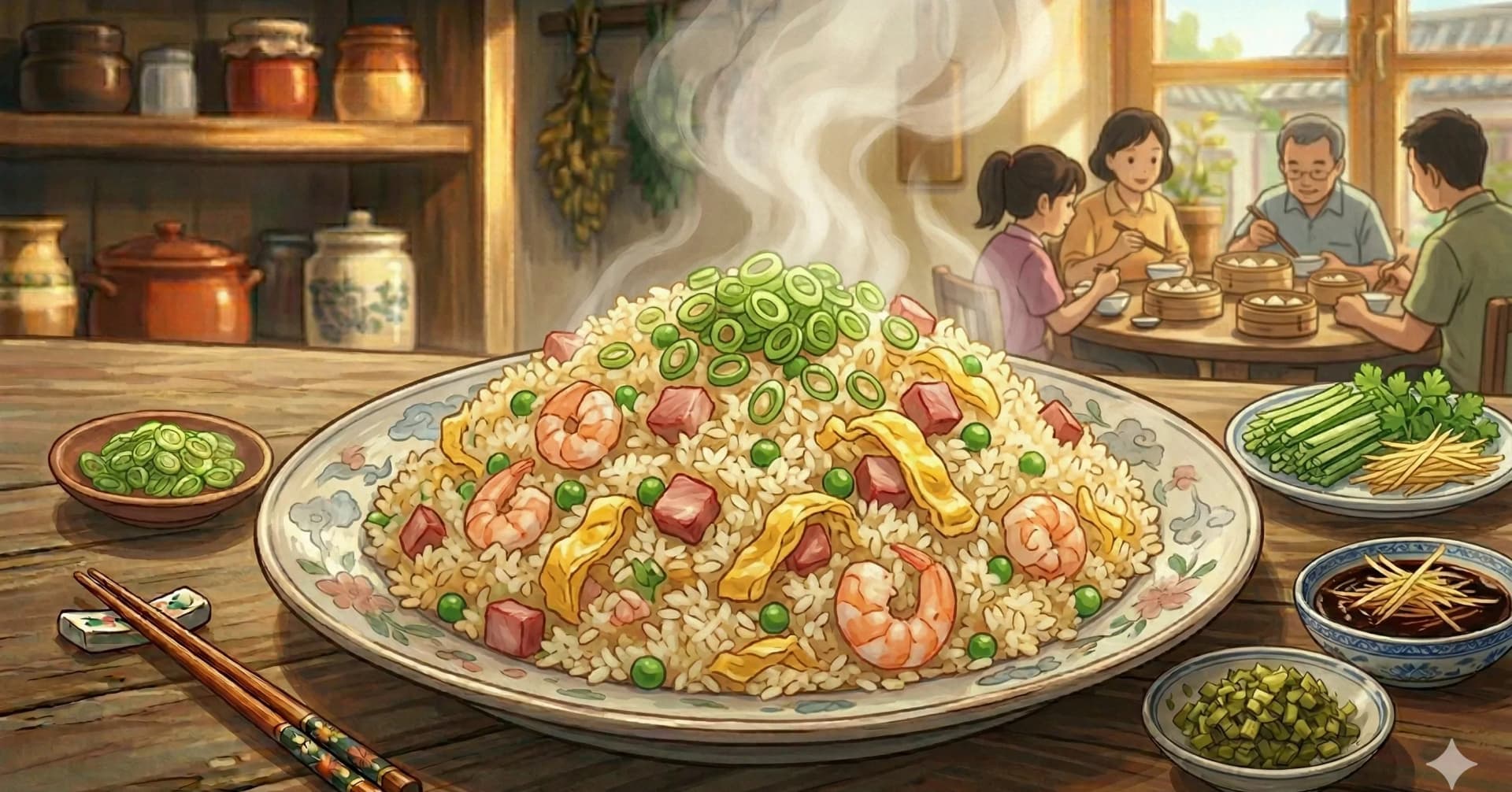
Yangzhou fried rice is the gold standard, the version against which all other fried rice is measured. It arrives at the table looking like a mosaic: pink shrimp, red char siu, golden egg, bright green peas, and white rice grains, each element distinct and visible. There is a reason it appears on the menu of nearly every Chinese restaurant in the world. When made well, it is a study in balance, with each bite offering a different combination of flavors and textures, each grain of rice separate and coated in a whisper of egg and oil.
The dish takes its name from Yangzhou, a city in Jiangsu province with a culinary history that stretches back to the Sui Dynasty. Yangzhou was once the wealthiest city in China, a crossroads of trade and culture, and its food tradition reflects that prosperity. Yangzhou fried rice is not a simple leftover dish but a considered preparation, one where the quality and variety of the ingredients matter as much as the wok technique.
What distinguishes Yangzhou fried rice from simpler versions is the diversity of its components. The combination of shrimp and char siu provides both sweetness and savory depth. The peas and scallions add color and freshness. The egg, cooked in two stages (some mixed with the rice and some scrambled separately), provides richness and binds the whole dish together.
The practical key is mise en place. Every ingredient must be cut to a similar small size, prepped and ready before the wok heats up. This dish comes together in minutes, and there is no time to dice anything once cooking begins.
At a Glance
Yield
4 servings
Prep
15 minutes
Cook
10 minutes
Total
25 minutes
Difficulty
Easy
Ingredients
- 1¼ lbcold cooked jasmine rice (day-old)
- 5½ ozmedium shrimp, peeled, deveined, and cut into 1 cm pieces
- 3½ ozchar siu (Chinese BBQ pork), diced into 1 cm cubes
- 3large eggs
- 2 ozfrozen peas, thawed
- 3scallions, finely sliced, white and green parts separated
- 2 clovesgarlic, minced
- 3 tbspvegetable oil, divided
- 1 tbsplight soy sauce
- 1 tspsesame oil
- ½ tspsalt
- ⅞ tspwhite pepper
- ⅓ tspsalt
- 1⅞ tspcornstarch
Method
- 1
Toss the diced shrimp with salt and cornstarch. Set aside. Break up the cold rice with your hands until the grains are separate and loose.
- 2
Beat the eggs lightly. Pour about one-third of the beaten egg into the rice and mix with your hands until the grains are evenly coated. This technique, called "golden coating" (jin bao yin), gives each grain a golden color and rich flavor.
- 3
Heat a wok over high heat until smoking. Add 15 ml of vegetable oil. Add the shrimp pieces and stir-fry for 45 seconds, until pink and barely cooked through. Transfer to a plate.
- 4
Add another 15 ml of vegetable oil to the wok. Pour in the remaining beaten egg. Let it set for 3 seconds, then scramble quickly into small pieces. When just set, transfer to the plate with the shrimp.
- 5
Add the remaining 15 ml of vegetable oil to the wok over high heat. Add the garlic and scallion whites. Stir for 5 seconds.
- 6
Add the egg-coated rice. Spread it across the wok surface and press gently. Let it sear for 15 seconds, then toss. Repeat this pressing and tossing for 2 to 3 minutes. Each grain should become dry, separate, and lightly golden from the egg coating.
- 7
Add the diced char siu and toss for 30 seconds, allowing it to warm through and lightly caramelize at the edges.
- 8
Add the thawed peas and toss for another 30 seconds. They should be warm but still bright green.
- 9
Return the shrimp and scrambled egg to the wok. Toss to distribute evenly.
- 10
Drizzle the light soy sauce along the edge of the wok. Toss to incorporate. Season with salt and white pepper.
- 11
Add the scallion greens and toss for 10 seconds.
- 12
Remove from heat. Drizzle with sesame oil and give one final toss.
- 13
Taste and adjust seasoning. The rice should be savory but not heavy, with each component clearly identifiable.
- 14
Mound onto a serving plate or press into a bowl and invert for a dome shape. Serve immediately.
Key Ingredient Benefits
Char siu is a Cantonese roasted pork that typically contains maltose or honey in its glaze. While it adds flavor and richness, it is also higher in sugar and sodium than plain roasted pork. Some research suggests that regularly consuming charred or glazed meats should be balanced with ample vegetable intake.
Peas provide plant protein, fiber, and a range of vitamins and minerals including vitamin K, vitamin C, and manganese. Their bright green color indicates high chlorophyll content and carotenoid presence.
Jasmine rice provides the carbohydrate base of the dish. The day-old cooling process increases resistant starch content, which research associates with improved gut health and blood sugar management.
Why This Works
Coating the rice with raw egg before frying is the defining technique of Yangzhou fried rice. Each grain becomes individually wrapped in a thin layer of egg that sets on contact with the hot wok, creating the "golden coating" effect. This adds richness, color, and flavor to every bite while also helping to keep the grains separate. The egg acts as a moisture barrier, preventing the soy sauce from making the rice soggy.
Cutting all the ingredients to a similar small size ensures that each bite is balanced. You should be able to pick up a clump of rice with chopsticks and find a piece of shrimp, a cube of char siu, a pea, and a bit of egg in a single mouthful.
Char siu, with its sticky, sweet glaze, caramelizes slightly when it hits the hot wok, adding pockets of sweetness that contrast with the savory soy sauce. This interplay of sweet and savory is characteristic of Yangzhou cuisine.
Substitutions & Variations
- Char siu: Diced ham, lap cheong (Chinese sausage), or roast duck can substitute. For a quick option, thinly sliced deli ham works in a pinch.
- Shrimp: Diced chicken, crab meat, or additional char siu can replace the shrimp. The key is maintaining a variety of flavors and textures.
- Peas: Diced carrots, corn kernels, or edamame are common additions or substitutions.
- Luxury version: Add diced sea cucumber, dried scallops, or abalone for a premium rendition. This upscale approach is common at banquets.
- Vegetarian: Replace the char siu with diced baked tofu and the shrimp with diced water chestnuts for crunch.
Serving Suggestions
Yangzhou fried rice can stand alone as a complete meal, especially for lunch. At a Chinese banquet or multi-course dinner, it traditionally appears toward the end of the meal as a rice course. Pair it with a simple soup, such as egg drop soup or tomato egg soup, and a cold appetizer like dressed jellyfish or marinated cucumber.
Storage & Reheating
Store leftovers in an airtight container in the refrigerator for up to 2 days. Reheat in a hot wok, tossing frequently, until piping hot. The rice may need a splash of water and a drizzle of oil to restore its texture. Microwave reheating is acceptable but will not produce the same quality. Freezes well for up to 1 month. Cool rice quickly after cooking and reheat thoroughly to minimize food safety risks.
Cultural Notes
Yangzhou fried rice (扬州炒饭, Yangzhou chao fan) is the canonical Chinese fried rice, named for the city of Yangzhou in Jiangsu province, on the Grand Canal in eastern China. The dish has been documented in Chinese cooking texts since at least the Qing dynasty, and a formal recipe specification was published by the Yangzhou municipal government in 2002, then updated in 2015, to define what may legally be sold under the name. The official version specifies day-old jasmine rice stir-fried in lard with scrambled egg, diced cha-siu pork, peeled shrimp, scallops or sea cucumber, diced bamboo shoots, peas, diced carrots, dried mushroom, and scallion greens.
The technical demands of the dish are real even though the form looks simple. The rice has to be cooked the day before and refrigerated overnight, so the grains dry out enough to fry separately without clumping. The wok has to be heated until it just begins to smoke before the oil goes in, then cooled briefly and re-heated so the cooking surface is at the right temperature for the wok hei (breath of the wok) to develop. Each ingredient gets cooked in the right order so all the textures finish at once: egg first, then the proteins, then the firm vegetables, then the rice, then the soft vegetables and scallion greens at the end. A well-made Yangzhou fried rice has rice grains that are separate and slightly shiny, with a faint smoky aroma from the wok and small visible flecks of every component evenly distributed.
The dish has a long history of being heavily adapted outside China. Cantonese-American Chinese restaurants developed a simplified version with just egg, peas, carrots, scallions, and one or two proteins (often called "house special fried rice" or "combination fried rice"), and the version called "Yangzhou fried rice" on many Western Chinese menus typically follows that simplified template rather than the official specification. The strict version with all eight specified ingredients remains the standard at upscale Huaiyang and Jiangsu cuisine restaurants in Shanghai, Beijing, and Yangzhou itself, where the dish often appears as the rice course at the end of a multi-course banquet.
Nutrition Facts
Calories: 417kcal (21%)|Total Carbohydrates: 51g (19%)|Protein: 23g (46%)|Total Fat: 13g (17%)|Saturated Fat: 3g (15%)|Cholesterol: 217mg (72%)|Sodium: 943mg (41%)|Dietary Fiber: 1.9g (7%)|Total Sugars: 3.8g
You Might Also Like
Ratings & Comments
Ratings & Comments
Ratings
Share your thoughts on this recipe.
Sign in to rate and comment