Chinese Cuisine
Shui Zhu Yu (Sichuan Boiled Fish)
Silky fish fillets poached in a fiery, numbing broth and finished with sizzling spice oil
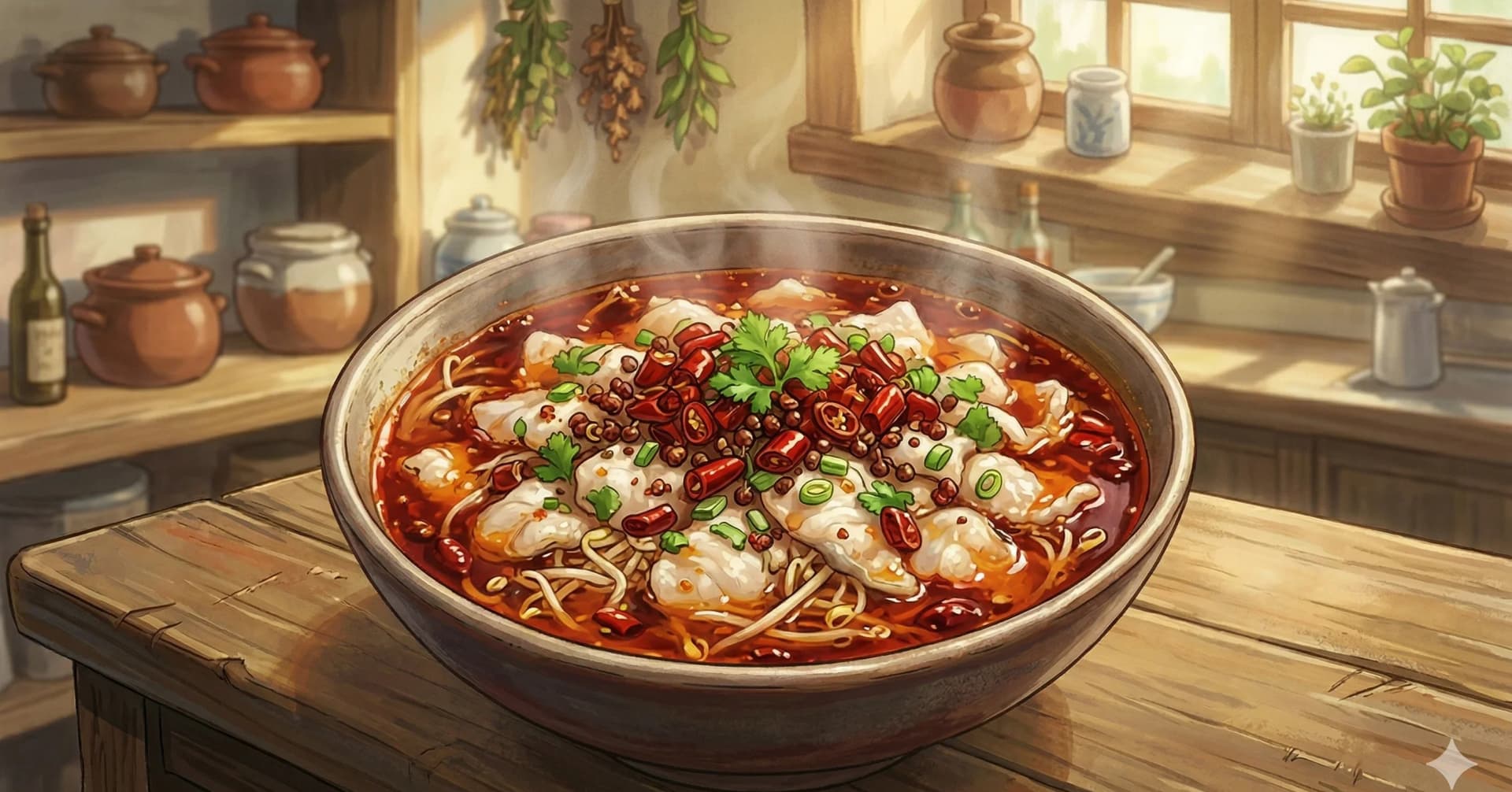
The name translates as "water-boiled fish," which is misleading in the best way. There is nothing plain about this dish. Thin slices of white fish are velveted in egg white and cornstarch, then poached gently in a broth laced with doubanjiang, ginger, and garlic. They come out silky and barely set, almost trembling on the chopstick. Then comes the dramatic finish: a heap of dried chilis and Sichuan peppercorns is piled on top of the fish, and smoking-hot oil is poured over them. The oil sizzles and crackles, blooming the dried spices and releasing a wave of fragrance that fills the room.
Shui zhu yu is one of the defining dishes of Sichuan cuisine, the kind of plate that converts people to the ma la (numbing-spicy) flavor profile. The heat here is layered. Doubanjiang provides a deep, fermented chili base. Dried chilis add a lighter, more direct heat. And Sichuan peppercorns deliver the signature numbing tingle that makes your lips buzz. Together they create something genuinely addictive.
The fish itself is the gentlest element in the bowl. Velveting protects the delicate flesh during poaching, keeping it impossibly tender. You eat the fish and the vegetables from the broth, using the liquid more as a seasoning medium than something you drink. The oil content is high by design. It is essential for extracting the full flavor of the dried spices, and it keeps the fish warm at the table.
Do not let the length of the ingredient list intimidate you. Once everything is prepped, the actual cooking moves fast. Have all your components lined up before you start, because from the moment the broth boils, you are working in minutes.
At a Glance
Yield
2 to 4 servings
Prep
20 minutes
Cook
15 minutes
Total
35 minutes
Difficulty
Medium
Ingredients
Fish Ingredients
- 1 lbskinless, boneless white fish fillets (sea bass, catfish, snapper, or cod)
- 1 pinchsalt
- 1 pinchwhite pepper
- 1 tspShaoxing wine
- 1egg white
- 1¼ tbspcornstarch
Spice Blend Ingredients
- 15dried red chili peppers, halved and seeds shaken out
- 1⅓ tspSichuan peppercorns (a mix of red and green is ideal)
- 0 tbspcooking oil (for toasting)
Vegetable Ingredients
- ½ lbbean sprouts or celery, cut into thin strips
- 1 tspcooking oil
Broth Ingredients
- 2 tbspcooking oil
- 2 clovesgarlic, minced
- 2½ tspfresh ginger, minced
- 1 stalkscallion, chopped (white and green parts separated)
- 1 ozdoubanjiang (Pixian chili bean paste), coarsely chopped
- ½ tspchili powder (plain ground dried chili, not blended)
- 1 tbspShaoxing wine
- 1¾ cuphot water or chicken stock
- 1 tspsugar
- 1 tsplight soy sauce
- ¼ tspwhite pepper
To Finish
- 3 tbspcooking oil (for the final sizzle)
- —Fresh cilantro, chopped
- 1½ tspcornstarch mixed with 5 ml water (optional, for thickening)
Method
- 1
Slice and marinate the fish. Slice the fillets diagonally into pieces about 5 mm (1/4 inch) thick, angling the knife to maximize surface area. Place in a bowl and add the salt, white pepper, Shaoxing wine, egg white, and cornstarch. Mix gently until every piece is coated and the surface feels slippery. Refrigerate for 15 to 20 minutes while you prepare the remaining ingredients.
- 2
Toast the spice topping. Heat 1/2 teaspoon oil in a wok or dry pan over low heat. Add the halved dried chilis and Sichuan peppercorns. Stir constantly until fragrant and slightly darkened, about 2 minutes. Do not let them burn or they will taste bitter. Transfer to a plate to cool, then chop coarsely with a knife or pulse briefly in a food processor. Set aside.
- 3
Cook the vegetables. In the same wok, heat 1 teaspoon oil over medium heat. Add the bean sprouts (or celery strips) and stir-fry for 30 seconds to 1 1/2 minutes, until just barely softened. Transfer to the bottom of a large, heat-proof serving bowl. This will be the bed for the fish.
- 4
Build the broth. Heat 2 tablespoons oil in the wok over medium heat. Add the garlic, ginger, and scallion whites. Stir for about 30 seconds until fragrant. Add the chopped doubanjiang and chili powder. Stir for 2 to 3 minutes, allowing the paste to darken and release its red oil. If it sticks, add a splash of water and reduce the heat slightly. Pour in the Shaoxing wine and scrape up any browned bits. Add the hot water (or stock), sugar, soy sauce, and white pepper. Bring to a full boil, then reduce to a simmer for 3 to 5 minutes to let the flavors develop.
- 5
Poach the fish. Reduce the heat so the broth is at a gentle simmer. Add the fish slices one at a time, using chopsticks to separate them as they go in. Poach for 30 seconds to 1 minute, just until the fish turns opaque and is barely cooked through. Do not stir aggressively or the slices will break.
- 6
Assemble. Pour the fish and broth over the vegetables in the serving bowl. The broth should mostly cover the fish. If using the optional cornstarch slurry, stir it into the broth just before pouring to thicken slightly.
- 7
The sizzle. Spread the toasted spice topping evenly over the fish. Scatter the cilantro on top. Heat 3 tablespoons of oil in a small pot until just beginning to smoke. Carefully pour the hot oil over the spices. It will sizzle, pop, and release an intense aroma. Serve immediately with steamed rice.
Key Ingredient Benefits
Doubanjiang (Pixian Chili Bean Paste). A fermented paste of chili peppers and broad beans, aged for months or years. Pixian douban from Sichuan province is considered the gold standard. It is naturally salty and deeply savory, containing significant amounts of glutamic acid from the fermentation process. Different brands vary in saltiness and heat, so taste and adjust. It should be coarsely chopped before cooking to release its full flavor.
Sichuan Peppercorns. Not true peppercorns but the dried husks of the prickly ash berry. They contain hydroxy-alpha sanshool, a compound that triggers a tingling, numbing sensation on the lips and tongue. This is the "ma" in ma la. Both red and green varieties exist. Green Sichuan peppercorns are more intensely numbing and fragrant. Using both types together produces the most complex sensation.
White Fish Fillets. Any firm-fleshed white fish works. Sea bass, catfish, snapper, tilapia, and cod are all good options. The fish should be fresh rather than frozen if possible, as frozen fillets tend to release more water during cooking and can become mushy.
Why This Works
Velveting the fish in egg white and cornstarch creates a thin, protective barrier around each slice. When the fish meets the hot broth, this coating sets almost instantly, sealing in moisture and preventing the delicate flesh from overcooking or falling apart. The result is fish that is impossibly tender, almost custard-like in texture. This is the same technique used to protect proteins in dishes like Gong Bao Ji Ding.
The two-stage spice approach creates depth. Doubanjiang in the broth provides fermented, slow-burning heat and umami. The dried chilis and peppercorns on top, activated by the hot oil, deliver a brighter, more aromatic layer on top. These two sources of heat work on different parts of the palate and at different speeds, which is why the dish feels complex rather than simply hot.
Pouring smoking-hot oil over the dried spices is not just theatrical. The heat extracts fat-soluble flavor compounds from the chilis and peppercorns that water-based cooking cannot reach. The hydroxy-alpha sanshool in Sichuan peppercorns, responsible for the numbing sensation, is particularly well extracted by hot oil.
Substitutions & Variations
Shui zhu beef. Replace the fish with thinly sliced beef (flank or sirloin), velveted the same way. The beef version is equally traditional and popular in Sichuan.
Milder version. Reduce the dried chilis by half and use only 1 teaspoon of Sichuan peppercorns. You can also reduce the doubanjiang to 1 tablespoon. The dish will still have character.
Vegetable additions. Napa cabbage, enoki mushrooms, and sliced lotus root are all common additions. Cook hardier vegetables in the broth before adding the fish. Add delicate vegetables like enoki at the same time as the fish.
No doubanjiang? This is difficult to substitute authentically. A combination of fermented chili paste (like gochujang) and fermented black bean paste can approximate the flavor, but the dish will taste noticeably different.
Serving Suggestions
Shui zhu yu is a main course that demands steamed white rice alongside it. The rice tempers the heat and gives you something to pair with each bite of fish. A simple, cooling side like a cold cucumber salad helps balance the intensity.
Avoid serving this alongside other very spicy dishes. Instead, pair with something clean and mild like Bai Qie Ji or Congee. For a Sichuan-themed meal, Mapo Tofu at a lower spice level and a plate of stir-fried greens round out the table without overwhelming anyone's palate.
Storage & Reheating
This dish is best eaten immediately. The fish becomes overcooked as it sits in the hot broth, and the spice topping loses its freshly sizzled aroma.
If you have leftovers, store them in the refrigerator for up to 1 day. Reheat gently on the stovetop. The fish will be softer but still edible. You can refresh the dish with a small amount of freshly toasted spices and a drizzle of fresh hot oil.
Do not freeze.
Cultural Notes
Shui zhu yu (水煮鱼, "water-boiled fish") is the dramatic Sichuan dish in which slices of white fish are poached in a flood of red chili-laden broth and then crowned at the table with a sizzling final pour of hot oil over heaped chilies and Sichuan peppercorns. The name is technically descriptive (the fish is poached in liquid rather than fried or stir-fried) but spectacularly misleading: the water in question is a stock layered with doubanjiang, dried chilies, and so much hot oil that the surface of the bowl is invisible beneath a half-inch of bright red. The dish belongs to the Chongqing branch of Sichuan cooking, which leans hotter and more aggressive than the Chengdu style, and it crystallized in its modern form in Chongqing in the 1980s.
The presentation is the dish's signature theatrical element. Cooked fish slices, bean sprouts or napa cabbage, and the seasoned broth go into a deep bowl. The top is covered with a heap of dried chilies, whole Sichuan peppercorns, sliced garlic, and minced ginger. The cook then heats a small wok of oil to smoking, carries it to the table, and pours it over the heaped aromatics, which sizzle, foam, and release a cloud of fragrance that announces the dish across the dining room. The diner fishes the fish slices out from beneath the layer of chilies (which are mostly aromatics rather than something to eat directly), and the broth itself is often spooned over rice as the dish progresses.
The protein varies. The traditional fish for shui zhu yu is grass carp (cao yu), a freshwater fish abundant in Sichuan rivers and reservoirs, sliced thin against the grain and velveted with cornstarch and egg white so the slices stay tender during the brief poaching. Modern restaurants outside China often substitute tilapia, sole, or basa, and the same technique works for sliced beef (shui zhu niu rou) and sliced pork (shui zhu rou pian). The dish has become a fixture of upscale Sichuan restaurant menus globally and is often cited alongside mapo tofu as the dish that introduces non-Sichuan diners to the full intensity of the má la flavor profile.
Nutrition Facts
Calories: 251kcal (13%)|Total Carbohydrates: 9.8g (4%)|Protein: 24.5g (49%)|Total Fat: 12.1g (16%)|Saturated Fat: 1.2g (6%)|Cholesterol: 87mg (29%)|Sodium: 764mg (33%)|Dietary Fiber: 1.5g (5%)|Total Sugars: 4.1g
You Might Also Like
Ratings & Comments
Ratings & Comments
Ratings
Share your thoughts on this recipe.
Sign in to rate and comment