Chinese Cuisine
Suan Rong Zheng Xia (Cantonese Steamed Shrimp with Garlic)
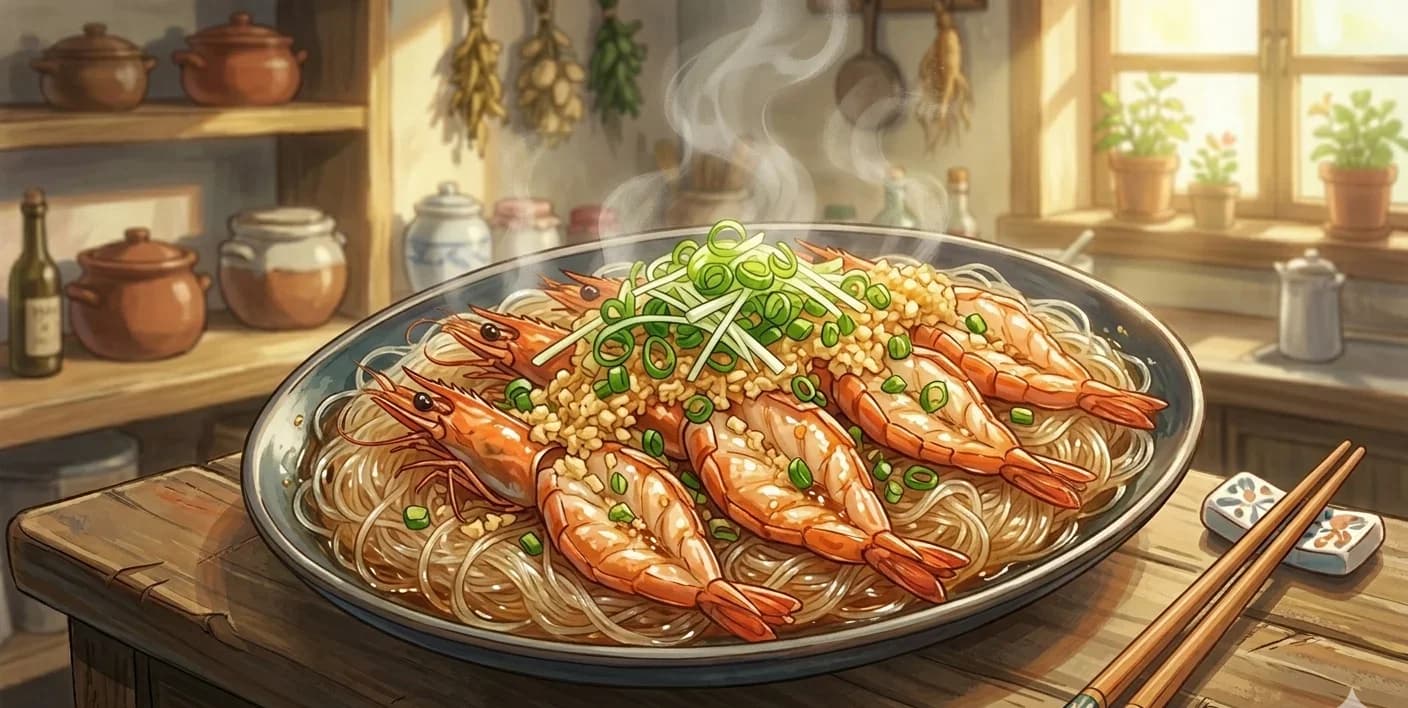
Shell-on shrimp steamed on glass noodles with a generous garlic-soy oil topping
In Cantonese seafood restaurants, the arrival of a plate of steamed shrimp signals something important: the seafood is fresh enough to require nothing more than heat and a few well-chosen aromatics. The shrimp come to the table still in their shells, curved into tight pink crescents, each one topped with a small mound of fragrant, golden garlic that has softened in the steam. Beneath them, a nest of glass noodles has absorbed the shrimp juices and garlic oil, turning from translucent threads into a savory, slippery tangle that is almost better than the shrimp themselves.
This dish represents the Cantonese cooking philosophy at its purest: respect the ingredient, enhance but do not mask, and cook precisely. The preparation takes minutes. The cooking takes under ten. The result is a dish that tastes like the sea, with the warmth of garlic and the richness of a small amount of seasoned oil providing depth without heaviness.
The glass noodles beneath the shrimp are not an afterthought. They serve a dual purpose: they absorb the juices released by the shrimp during steaming, creating a flavorful base, and they keep the shrimp slightly elevated, allowing the steam to circulate evenly. Every Cantonese home cook knows that the noodles are the best part, soaked through with shrimp essence and garlic.
The practical key is the freshness of the shrimp. This is not a dish that can compensate for subpar ingredients. Use the freshest, sweetest shrimp you can find, and the simplicity of the preparation will let them shine.
At a Glance
Yield
4 servings
Prep
15 minutes
Cook
8 minutes
Total
23 minutes
Difficulty
Easy
Ingredients
- 1 lblarge shell-on shrimp (head-on if available), about 16 to 20 pieces
- 1¾ ozglass noodles (mung bean vermicelli)
- 8 clovesgarlic, minced
- 2scallions, finely sliced
- 2 tspShaoxing wine
- 2 tsplight soy sauce
- 1 tspfish sauce (optional)
- ¾ tspsugar
- 2 tbspvegetable oil
- 1 tspsesame oil
- —Pinch of white pepper
Method
- 1
Soak the glass noodles in hot water for 5 minutes until soft and pliable. Drain and cut into shorter lengths with scissors, about 10 cm. Toss the noodles with a splash of the light soy sauce and arrange them in an even layer on a heatproof plate that fits your steamer.
- 2
Prepare the shrimp. If using head-on shrimp, leave the heads attached for flavor and presentation. Use kitchen scissors to cut along the back of each shrimp through the shell, from head to tail. Remove the vein. Press each shrimp open gently to butterfly it. This allows the garlic topping to sit directly on the flesh.
- 3
Arrange the butterflied shrimp in a circular pattern on top of the glass noodles, cut side up, with the shells forming a base. They should be slightly overlapping.
- 4
Sprinkle the Shaoxing wine evenly over the shrimp.
- 5
Heat the vegetable oil in a small pan over medium heat. Add the minced garlic and cook gently for 1 to 2 minutes, stirring frequently, until the garlic is fragrant and just turning golden. Do not let it brown too deeply, as it will continue to cook during steaming.
- 6
Remove from heat. Stir in the remaining light soy sauce, fish sauce (if using), sugar, sesame oil, and white pepper. The mixture should be a loose, fragrant paste.
- 7
Spoon the garlic oil mixture evenly over each butterflied shrimp, placing a small mound on each one.
- 8
Bring water in your steamer or wok to a vigorous boil.
- 9
Place the plate of shrimp in the steamer. Cover tightly.
- 10
Steam over high heat for 5 to 6 minutes for large shrimp, or until the shells are bright pink and the flesh is opaque and firm. Do not overcook. The shrimp should be just set, slightly translucent at the very center, as the residual heat will finish them.
- 11
Carefully remove the plate from the steamer. The glass noodles will have absorbed the shrimp juices and garlic oil, turning savory and slightly colored.
- 12
Scatter the sliced scallions over the top.
- 13
If desired, heat an additional tablespoon of vegetable oil until smoking and drizzle it over the scallions for a final aromatic sizzle.
- 14
Serve immediately on the steaming plate, with the noodles and shrimp together.
Key Ingredient Benefits
Shrimp are a lean protein source rich in selenium, iodine, and astaxanthin. Research suggests that regular consumption of shellfish may support thyroid function and provide anti-inflammatory benefits from astaxanthin.
Garlic contains allicin when crushed, a compound that has been extensively studied for its potential cardiovascular, immune, and antimicrobial benefits. Cooking garlic converts allicin into other sulfur compounds, which retain some but not all of the raw compound's properties.
Glass noodles are naturally gluten-free and low in fat. They provide easily digestible carbohydrates and take on the flavor of whatever they are cooked with, making them an excellent vehicle for sauces and broths.
Why This Works
Steaming shell-on shrimp preserves their moisture and natural sweetness. The shells act as a protective barrier, insulating the delicate flesh from direct steam and preventing it from drying out. Head-on shrimp release additional fats and juices from their heads during steaming, which enrich the glass noodles beneath.
The garlic is pre-cooked briefly in oil before steaming. This step mellows its raw harshness and begins the Maillard reaction, developing a sweeter, nuttier flavor. If raw garlic were placed on the shrimp, the brief steaming time would not be enough to cook it through, and it would taste sharp and pungent.
Glass noodles are made from mung bean starch, which has a remarkable capacity to absorb liquid without becoming mushy. They soak up the concentrated shrimp juices like a sponge, becoming a concentrated delivery system for flavor. This is why experienced diners often reach for the noodles first.
Substitutions & Variations
- Shrimp: Large scallops, prepared the same way, are an elegant alternative. Place each scallop on a half shell if available. Adjust steaming time to 3 to 4 minutes.
- Garlic vermicelli style: Some restaurants use vermicelli rice noodles instead of glass noodles for a slightly different texture.
- Spicy version: Mix a teaspoon of sambal or chopped fresh chili into the garlic oil for a spicier preparation.
- Without noodles: The shrimp can be steamed directly on the plate without the noodle bed. The juices will pool on the plate and can be spooned over rice instead.
- Crab or lobster: The same garlic steaming technique works beautifully with halved crabs or lobster tails, though the steaming time will need to be adjusted upward.
Serving Suggestions
This is a centerpiece seafood dish, best served as part of a Cantonese-style meal with steamed rice, a stir-fried vegetable, and a light soup. It works equally well as a simple dinner for two with just rice alongside. The glass noodles make the dish more substantial and reduce the need for additional starch courses. A chilled white wine or light beer complements the delicate flavors.
Storage & Reheating
Steamed shrimp are best eaten immediately. The shells become difficult to peel when cold, and the shrimp will toughen if overcooked during reheating. If you have leftovers, peel the shrimp, toss them with the glass noodles, and refrigerate for up to 1 day. Eat cold as a noodle salad or reheat gently in a steamer for 2 minutes. Not recommended for freezing.
Cultural Notes
Suen yung jing ha (蒜蓉蒸蝦, "garlic-paste steamed shrimp") is the Cantonese seafood dish in which whole large prawns are split lengthwise, topped with a generous spoonful of finely chopped garlic and oil, and steamed briefly until the shells turn coral pink and the flesh is just cooked through. The dish belongs to the Cantonese culinary principle that the freshest seafood should be cooked as briefly and simply as possible so the diner tastes the seafood itself rather than the sauce, and it represents one of the standard ways that Cantonese restaurants present a freshly killed live shrimp from the tank.
The technique demands two specific decisions. The shrimp has to be split butterfly-style along the back so the flesh opens flat and accepts the garlic topping, but the shell on the underside has to stay intact so the prawn holds its curve and doesn't unfurl into a flat piece during steaming. The garlic has to be finely chopped (not minced into a paste, which burns easily, and not sliced thick, which stays raw) and lightly bloomed in hot neutral oil before being spooned over the prawns, so the garlic carries its aromatic compounds into the flesh during the brief steam. A small amount of light soy sauce is sometimes drizzled over the finished dish just before serving, but many traditional preparations use no soy at all.
The dish appears at Cantonese banquets, family meals, and dim sum tables across Hong Kong, Guangdong, and the global Cantonese diaspora. It is especially common at dai pai dong (open-air street kitchens) and at the seafood-tank restaurants of Hong Kong's outer islands, including Sai Kung and Lamma Island, where diners can choose live prawns from holding tanks and have them prepared on the spot. The garlic-steam preparation works equally well with scallops, razor clams, lobster, and crab, and is one of the foundational Cantonese seafood techniques that scales from a single small prawn to a multi-tier banquet platter.
Nutrition Facts
Calories: 243kcal (12%)|Total Carbohydrates: 14.9g (5%)|Protein: 23.7g (47%)|Total Fat: 9.4g (12%)|Saturated Fat: 0.9g (5%)|Cholesterol: 201mg (67%)|Sodium: 290mg (13%)|Dietary Fiber: 0.4g (1%)|Total Sugars: 1.1g
You Might Also Like
 Medium
Chinese Cuisine
Bai Qie Ji (White Cut Chicken)
4 hours 30 minutes
 Easy
EasyTraditional Chinese Medicine · China
Bok Choy in Ginger Sauce (姜汁白菜)
6 minutes
 Medium
Chinese Cuisine
Char Siu (Chinese BBQ Pork)
9 hours (including marinating)
 Medium
Chinese Cuisine
Niu Rou Yang Cong Jiaozi (Beef and Onion Dumplings)
60 minutes
Ratings & Comments
Ratings & Comments
Ratings
Share your thoughts on this recipe.
Sign in to rate and comment