Vietnamese Cuisine
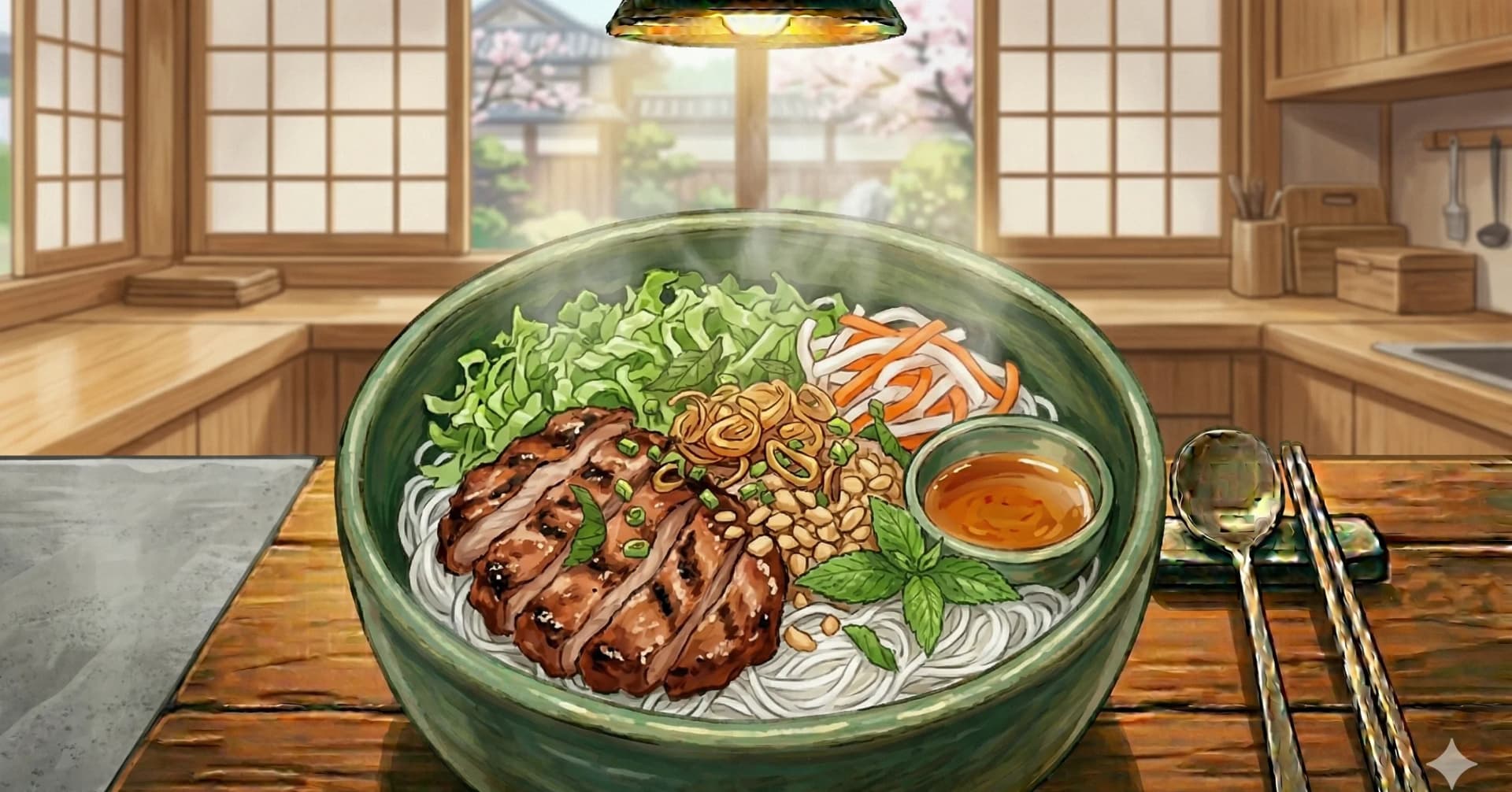
Grilled Pork Noodle Bowl (Bún Thịt Nướng)
Cool rice vermicelli topped with chargrilled lemongrass pork, fresh herbs, pickled vegetables, and nuoc cham
There is something deeply refreshing about this dish that goes beyond temperature. Bun thit nuong arrives as a composition of contrasts: room-temperature rice vermicelli at the base, cool lettuce and raw herbs layered above, then strips of searing-hot, just-off-the-grill pork arranged on top, the meat still sizzling and fragrant with caramelized lemongrass and fish sauce. You pour the nuoc cham over everything, and the cold dressing meets the hot pork, releasing a rush of sweet-sour-spicy steam. Then you toss, mixing everything together, and each forkful delivers a different combination of textures and temperatures.
Bun thit nuong is one of the defining dishes of Southern Vietnamese cooking, though you will find it across the country in various forms. It belongs to the bun (rice vermicelli) family of dishes that also includes bun cha, bun bo hue, and bun rieu, each built on the same noodle base but taken in completely different directions. What sets bun thit nuong apart is its emphasis on grilled meat and raw garnishes. There is no broth, no soup. The nuoc cham dressing and the pork juices are the only liquids, and the herbs and vegetables do the heavy lifting of keeping the dish light and vibrant.
This is a practical everyday meal. The pork marinates while you prep the other components, and the grilling takes minutes. The noodles are boiled and rinsed. The herbs are washed and torn. Assembly is a matter of layering and pouring. What you end up with is a bowl that looks generous and colorful and tastes like summer regardless of the season.
At a Glance
Yield
4 servings
Prep
30 minutes (plus 2 hours marinating)
Cook
15 minutes
Total
2 hours 45 minutes
Difficulty
Easy
Ingredients
Pork Ingredients
- 1 lbpork shoulder, sliced into thin strips (about 5 mm thick) or pork chops
- 2 stalkslemongrass, white parts only, finely minced
- 3shallots, finely minced
- 3 clovesgarlic, minced
- 2 tbspfish sauce
- 1 tbspsoy sauce
- 2½ tbspsugar
- 1 tbsphoney
- 1 tbspneutral oil
- 1/2 tspblack pepper
Dipping Sauce Ingredients
- 3 tbspfish sauce
- 3 tbspwarm water
- 2½ tbspsugar
- 2 tbspfresh lime juice
- 1 clovegarlic, finely minced
- 1bird's eye chili, finely sliced
To Serve
- ¾ lbdried rice vermicelli
- 1head butter lettuce or romaine, shredded
- 4 ozbean sprouts
- 1cucumber, halved and sliced
- —Fresh mint leaves
- —Fresh cilantro sprigs
- —Fresh Thai basil leaves (optional)
- 2 ozroasted peanuts, roughly chopped
- —Fried shallots (store-bought or homemade)
- —Pickled daikon and carrot (do chua)
Method
- 1
Marinate the pork. Combine the lemongrass, shallots, garlic, fish sauce, soy sauce, sugar, honey, oil, and black pepper in a bowl. Add the pork slices, toss to coat thoroughly, and refrigerate for at least 2 hours. Overnight is better.
- 2
Make the nuoc cham. Dissolve the sugar in the warm water, then add the fish sauce, lime juice, garlic, and chili. Stir well. The dressing should taste balanced: sweet, sour, salty, and mildly spicy. Set aside.
- 3
Cook the rice vermicelli. Bring a large pot of water to a boil. Add the noodles and cook for 3 to 4 minutes until tender but not mushy. Drain and rinse thoroughly under cold running water, using your hands to separate the strands and wash away excess starch. The noodles should feel cool, slippery, and separate. Drain well.
- 4
Prepare the fresh components. Shred the lettuce, slice the cucumber, wash and dry the herbs, chop the peanuts, and drain the pickled vegetables. Arrange everything within reach for easy assembly.
- 5
Grill the pork. Preheat a grill, grill pan, or broiler to high heat. Thread the pork strips onto skewers if desired, or lay them directly on a well-oiled grill grate. Cook for 2 to 3 minutes per side. The marinade should caramelize into a dark, sticky glaze with charred edges. The lemongrass will smell intensely fragrant as it hits the heat. The pork is done when the edges are crispy and blackened and the center is just cooked through.
- 6
Let the pork rest for 2 minutes, then slice or chop into bite-sized pieces if needed.
- 7
Assemble the bowls. Place a portion of rice vermicelli in each bowl. Top with shredded lettuce, bean sprouts, cucumber slices, and pickled vegetables. Arrange the hot grilled pork on top. Scatter chopped peanuts, fried shallots, and torn herb leaves generously over everything.
- 8
Pour the nuoc cham over each bowl, about 60 ml per serving. The dressing should pool at the bottom and begin soaking into the noodles.
- 9
Toss everything together before eating. The goal is to get a bit of every element in each bite: noodle, pork, herb, vegetable, peanut, and dressing. The contrast of hot pork, cool noodles, raw herbs, and tangy dressing is what makes the dish work.
Key Ingredient Benefits
Rice vermicelli: Thin noodles made from rice flour and water, naturally gluten-free and low in fat. They provide primarily carbohydrates and digest easily. The cool noodle format makes this dish particularly appealing in warm weather.
Lemongrass: Contains citral, geraniol, and myrcene, compounds studied for antimicrobial and anti-inflammatory properties. In Vietnamese traditional medicine, lemongrass is considered warming and is often used in preparations intended to support digestion.
Peanuts: Provide monounsaturated fats, plant protein, vitamin E, and magnesium. The chopped peanuts in bun thit nuong add both flavor and textural crunch. Research associates regular nut consumption with cardiovascular benefits.
Why This Works
The lemongrass-fish sauce marinade creates a twofold effect during grilling. The sugar and honey caramelize rapidly over high heat, producing Maillard compounds and a sticky, lacquered surface. Meanwhile, the fish sauce penetrates the thin pork slices with glutamate, boosting the savory depth beyond what salt alone could achieve. Slicing the pork thin ensures the marinade reaches the center and the grilling time stays short, keeping the meat tender.
Serving the noodles at room temperature rather than hot is deliberate. Cool noodles do not absorb the nuoc cham as aggressively as hot noodles would, which means the dressing remains present as a distinct liquid element throughout the meal. Hot noodles would soak up the dressing immediately, leaving the bottom of the bowl dry.
The raw herbs are not garnish. They are a structural component of the dish, providing volatile aromatic compounds that refresh the palate between bites of rich, grilled pork. Mint contributes menthol for a cooling sensation. Cilantro adds citrusy brightness. Thai basil provides anise-like warmth. Together, they create a fresh, herbaceous layer that keeps the dish feeling light.
Substitutions & Variations
Protein: Chicken thigh, shrimp, or tofu can replace the pork. Use the same marinade. Shrimp grill in 2 minutes per side.
Bun thit nuong cha gio: Add a halved cha gio (fried spring roll) to each bowl. This is a popular Saigon variation that adds a crispy, fried element.
Noodle swap: Cold somen noodles or even shredded cabbage can stand in for the rice vermicelli for a lower-carb version.
Vegan version: Marinate thick slices of king oyster mushroom or extra-firm tofu in the same lemongrass mixture. Grill until charred. Replace fish sauce with soy sauce in both the marinade and the nuoc cham.
Serving Suggestions
Bun thit nuong is a complete one-bowl meal. It needs nothing else, and eating it with side dishes is uncommon.
For a Vietnamese noodle spread, serve alongside bun cha for a Hanoi vs. Saigon grilled pork comparison. Both feature grilled lemongrass pork and noodles, but bun cha comes with a dipping broth rather than a poured dressing, creating a different eating experience.
Pair with goi cuon (fresh spring rolls) as a starter for a fully herbaceous, fresh-focused Vietnamese meal.
If you want to make the pickled daikon and carrot (đồ chua) yourself, a single jar keeps for weeks and turns up in half the Vietnamese dishes you'll cook next.
Storage & Reheating
Pork: Refrigerate cooked pork for up to 3 days. Reheat on a grill pan or under the broiler to restore the charred surface.
Noodles: Best cooked fresh. If prepared ahead, toss with a tiny drizzle of oil and refrigerate for up to 1 day. Rinse briefly under warm water before serving to separate the strands.
Nuoc cham: Keeps in the refrigerator for up to 1 week. Add fresh lime juice before serving if the flavor has dulled.
Assembly: Always assemble just before serving. The fresh herbs and vegetables lose their crunch quickly once dressed.
Cultural Notes
Bún thịt nướng is the iconic noodle bowl of southern Vietnam, particularly Saigon and the Mekong Delta. The dish reflects the broader southern Vietnamese style: bright herbal flavors, raw vegetables, room-temperature serving, and the contrast between cool noodles and warm grilled meat. The northern tradition centered in Hanoi tends toward hot broth-based noodle soups like bún thang and bún chả. The south developed a whole family of assembled cold-and-warm noodle bowls instead, and bún thịt nướng is the most popular member of that family.
The dish belongs to the bún (rice vermicelli) category, and it shares its DIY-assembly logic with gỏi cuốn fresh spring rolls, bánh xèo, and most of the composed dishes of southern Vietnamese cooking. You receive the components separately. Noodles. Grilled pork. Raw vegetables. Pickled vegetables. Herbs. Fried shallots. A small dish of nước chấm. The combination happens in your bowl, the way you want it. Some diners pour the nước chấm directly into the bowl and toss everything together. Others use the sauce as a dip for individual ingredients. Most do both, depending on which component they are focused on at that moment.
The lemongrass-marinated pork is the heart of the dish. The marinade and the cooking technique together belong to the larger Vietnamese tradition of thịt nướng (grilled meat), which also gave Vietnam thịt nướng on its own and bún chả further north. Charcoal is the only correct fuel. Gas-grilled pork is a noticeable step down, and any serious bún thịt nướng cook will tell you so. The slight char on the marinade edges is what people remember from the dish.
Bún thịt nướng exists at every register of Vietnamese eating. Sidewalk vendors with portable charcoal grills. Neighborhood quán cơm (rice restaurants). Upscale Vietnamese restaurants in Saigon's tourist districts. And, outside Vietnam, Vietnamese-American restaurants have made it one of the most recognized Vietnamese dishes globally. It often appears on menus simply as "Vietnamese grilled pork over noodles." That undersells it.
Nutrition Facts
Calories: 430kcal (22%)|Total Carbohydrates: 48g (17%)|Protein: 28g (56%)|Total Fat: 15g (19%)|Saturated Fat: 4g (20%)|Cholesterol: 60mg (20%)|Sodium: 950mg (41%)|Dietary Fiber: 1g (4%)|Total Sugars: 8g
You Might Also Like
Ratings & Comments
Ratings & Comments
Ratings
Share your thoughts on this recipe.
Sign in to rate and comment