Chinese Cuisine
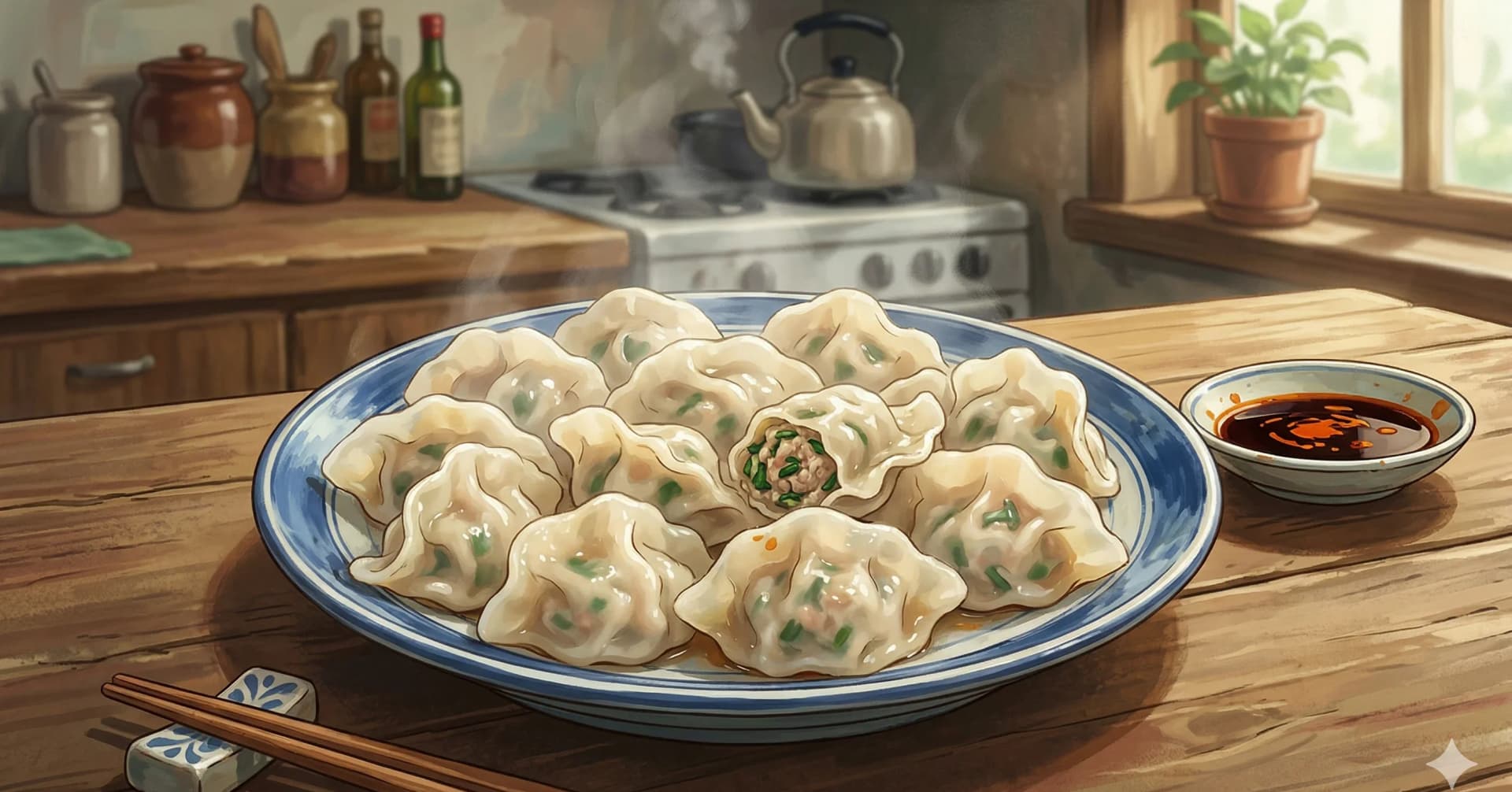
Jiaozi (Pork and Chive Dumplings)
The northern Chinese family dumpling, made with infused oil and a ginger-scallion puree
In northern China, jiaozi are not a restaurant dish. They are a family ritual. You make them on New Year's Eve, on cold weekday evenings, and whenever the house needs filling with the smell of something good. Everyone gathers around the table. Someone kneads the dough, someone rolls the circles, someone folds, and the children are allowed to press the edges shut with their thumbs. By the time the pot boils, the dumplings are already half the meal.
The filling is where cooks make their mark. At its simplest, it is ground pork and Chinese garlic chives seasoned with sesame oil, soy sauce, and salt. But this version goes further, borrowing a technique from Beijing cooks who infuse neutral oil with Sichuan peppercorns, star anise, and garlic before adding it to the meat. The effect is subtle but unmistakable: a roundness and fragrance that plain sesame oil cannot provide on its own.
The other key step is the ginger-scallion puree. Rather than adding chopped ginger and scallion to the filling, you blend them with water into a smooth liquid and work that liquid into the ground pork in three additions, beating in one direction until the meat is slightly sticky and paste-like. This technique is traditional and critical. The pork absorbs the liquid fully, becoming tender and juicy rather than coarse and dry. What looks like too much liquid going in will vanish completely into the meat.
Chinese garlic chives, also called garlic chives or flowering chives, are more pungent than Western chives. Their flavor is garlicky and assertive, which is exactly what the fatty pork needs. Chop them finely so the filling holds together when wrapped.
Once folded, these freeze beautifully. Make a full batch, freeze what you do not cook immediately, and you will have one of the most satisfying meals imaginable waiting in the freezer at any hour.
At a Glance
Yield
48 dumplings (8 servings)
Prep
1 hour 35 minutes
Cook
25 minutes
Total
2 hours
Difficulty
Medium
Ingredients
Aromatic Oil Ingredients
- ¼ cupneutral oil (vegetable, canola, or avocado)
- 1⅔ tspSichuan peppercorns
- 1star anise
- 5 clovesgarlic, lightly smashed
Filling Ingredients
- ¾ cupwater
- 1¼ tbspfresh ginger, roughly chopped
- ⅓ cupscallion, roughly chopped
- 1 lbground pork (80/20 meat-to-fat ratio)
- ¾ ozoyster sauce
- 1 tbsplight soy sauce
- 2 tspdark soy sauce
- ½ tbspsesame oil
- 1 tspsugar
- ⅓ tspwhite pepper
- ¼ ozfive spice powder
- —1.5 to 3 g salt
- ⅔ cupChinese garlic chives, finely chopped
Wrappers
- 1to 2 packs store-bought round dumpling wrappers (or homemade)
Dipping Sauce Ingredients
- —Chinkiang (black) vinegar
- —Chili oil or chili garlic sauce (optional)
Method
- 1
Make the infused oil. In a small saucepan over medium heat, combine the oil, Sichuan peppercorns, star anise, and garlic. Heat gently for about 5 minutes until the garlic is lightly golden and the oil is fragrant. Remove from heat and let cool completely. Do not rush this step.
- 2
Make the ginger-scallion puree. Add the water, ginger, and scallions to a food processor and blend until smooth.
- 3
Build the pork filling. Place the ground pork in a large mixing bowl. Add the ginger-scallion puree in three additions, beating vigorously in one direction with a pair of chopsticks or a spoon after each addition. The pork must fully absorb the liquid before you add more. This takes a few minutes per batch. When done, the filling should look slightly sticky, not wet or soupy.
- 4
Season the filling. Add the oyster sauce, light soy sauce, dark soy sauce, sesame oil, sugar, white pepper, five spice powder, and salt. Continue to mix in one direction until the filling resembles a smooth, uniform paste. Taste a small cooked piece and adjust salt.
- 5
Add the chives. In a separate bowl, combine the finely chopped garlic chives with the cooled infused oil, poured through a strainer to remove the solids. Stir the chive mixture into the pork filling and mix until evenly combined. If time allows, refrigerate the filling for 1 hour to firm it slightly before wrapping.
- 6
Set up your work station. Line a sheet pan with parchment paper. Fill a small bowl with water. Keep your dumpling wrappers covered with a damp paper towel to prevent drying.
- 7
Wrap the dumplings. Take one wrapper and moisten the outer edge with water. Place about 1 tablespoon of filling in the center. Fold the wrapper over the filling and seal by pleating the front edge against the flat back edge, pressing firmly to ensure a tight seal. Place on the parchment-lined pan with dumplings spaced slightly apart.
- 8
Cook the dumplings. To boil: bring a large pot of water to a rolling boil. Drop dumplings in batches, stirring once to prevent sticking. Cook until they float and remain floating for about 2 minutes more, roughly 5 to 6 minutes total. To steam: line a bamboo steamer with parchment and steam over boiling water for 8 to 10 minutes. To pan-fry (potsticker-style): heat oil in a non-stick pan, fry flat-side down until golden, then add a splash of water, cover, and steam until cooked through.
- 9
Serve immediately with Chinkiang vinegar and chili oil on the side.
Key Ingredient Benefits
Chinese garlic chives: These are related to common chives but have a distinctly garlicky, sulfurous aroma from allicin compounds. In traditional Chinese medicine, garlic chives are classified as warm and considered beneficial to the kidney and liver systems. Research on allicin in general suggests antimicrobial properties, though the concentrations in garlic chives specifically are not well studied in clinical settings. These claims reflect traditional use and general allium research.
Sichuan peppercorns: Not a true pepper but the dried husk of the Zanthoxylum plant. They contain hydroxy-alpha-sanshool, the compound responsible for the distinctive numbing tingle. Used in small amounts in infused oil as here, the numbing effect is subtle but the floral, citrusy fragrance comes through clearly.
Ground pork fat ratio: Lean pork (90/10 or higher) will produce a noticeably drier, tighter filling. The 80/20 ratio is traditional and functional. The fat renders slightly during cooking and keeps the filling moist.
Why This Works
The most important thing in this filling is the liquid ratio. A cup of ginger-scallion puree going into one pound of pork sounds excessive, but ground pork has the capacity to absorb a remarkable amount of moisture when it is beaten in one direction. The motion aligns the protein strands and helps them bind the liquid. The result is a filling that stays juicy after cooking, rather than the dense, dry filling you get when seasoning is simply stirred in.
The infused oil serves two functions. First, the fat coats the garlic chives and helps distribute their flavor throughout the filling. Second, the Sichuan peppercorn and star anise leave a gentle warmth and fragrance in the oil that lifts the entire filling without announcing itself as a single ingredient. Buying pre-infused oil would not achieve the same result because the fresh garlic browned directly in the oil contributes its own mellow depth.
Dark soy sauce contributes color as much as flavor. Without it, the filling can look pale and unappetizing. A small amount gives the interior a warm, slightly amber tone. Oyster sauce adds umami without making the filling taste oceanic. Together they replace the job that a larger amount of soy sauce alone might do, but with more complexity and less sodium.
Finely chopping the chives is not optional. Coarsely chopped chives do not incorporate evenly and can prevent the filling from binding properly when wrapped. You want the chive texture present but not intrusive.
Substitutions & Variations
Wrappers: If store-bought wrappers are unavailable, mix 2 cups all-purpose flour with 3/4 cup warm water, knead into a smooth dough, rest for 30 minutes, then roll and cut into circles about 3 inches in diameter.
Filling vegetables: Napa cabbage (salted and thoroughly squeezed of water) is the other classic pairing for pork. A ratio of about 1:1 pork to cabbage gives a lighter, more delicate filling. See the notes for Wonton Soup for a similar flavor approach to a pork filling.
Protein: Lamb and scallion is a popular variation in northern China, particularly in Beijing and Xinjiang. Turkey or chicken can also be used, though they are drier and benefit from added oil in the filling.
Five spice: If you do not have five spice, a pinch of ground cinnamon and ground cloves will approximate it.
Cooking method: Boiling produces the most delicate, tender texture. Pan-frying produces a crispy bottom with a chewy, steamed top. Steaming falls in the middle. Har Gow offers a useful comparison point for understanding how cooking method affects dumpling texture.
Serving Suggestions
Jiaozi are complete as a meal on their own, served with a simple dipping sauce of Chinkiang vinegar and a drizzle of chili oil. In northern China, they are often eaten alongside a light millet porridge or a simple soup. Congee makes a gentle counterpoint to a plate of rich, meaty dumplings. Wonton Soup serves a similar purpose at the Cantonese table.
For a wider dim sum spread, pair with Har Gow and Lo Bak Go. The contrast of pan-fried turnip cake with delicate boiled dumplings covers very different textural ground.
Storage & Reheating
Freezing (uncooked): Arrange dumplings on a parchment-lined sheet pan, spaced so they do not touch. Freeze solid, then transfer to freezer bags. They keep well for up to 2 months. Cook from frozen without thawing: boil for 7 to 8 minutes, or steam for 12 to 15 minutes.
Refrigerating (uncooked): Dumplings can be refrigerated on a tray for up to 4 hours before cooking, though the wrappers will begin to absorb moisture from the filling over time.
Reheating (cooked): Leftover boiled dumplings reheat best in a pan with a little oil. Add a splash of water, cover, and steam for 2 to 3 minutes to warm through. Microwaving works but can make the wrappers rubbery.
Cultural Notes
Jiaozi (饺子) is the family of crescent-shaped Chinese dumplings that anchors northern Chinese home cooking and holds particular cultural weight during Lunar New Year. The dish dates back to the Eastern Han dynasty (roughly 25-220 CE) and is traditionally attributed to the physician Zhang Zhongjing, who is said to have prepared early dumplings as a winter remedy for ear frostbite among the poor (the dumplings, shaped like ears and filled with warming mutton and herbs, were given out at his clinic). Whether the attribution is historical or legendary, jiaozi appear in Chinese cooking texts continuously from the Tang dynasty onward and have been a staple of northern Chinese cuisine for at least fifteen hundred years.
The wheat-based wrapper is the technical heart of the dish. Northern Chinese cooks make the dough from flour and warm water (no yeast, no egg, no fat), rest it briefly to relax the gluten, then roll out small rounds about three inches across with a thin-handled wooden pin that thins the edges while leaving the center thicker, so the dumpling holds its shape during cooking. The filling traditionally combines ground pork with finely chopped napa cabbage, garlic chives, or Chinese leek, seasoned with ginger, soy sauce, Shaoxing wine, sesame oil, and white pepper. The folding technique varies by region and family, but the most common northern style produces a pleated half-moon with twelve to sixteen pleats along the curved edge.
The cultural significance of jiaozi peaks at Lunar New Year, when families across northern China gather to fold dumplings together on New Year's Eve and eat them at midnight. The shape of the dumpling resembles ancient Chinese silver ingots (yuanbao), and the act of folding and eating dumplings together symbolizes the gathering of wealth and family for the coming year. Some families hide a single coin in one dumpling during the folding session; whoever bites into the coin is said to have good fortune for the year. The cooking methods vary across regions: northern Chinese typically boil jiaozi (shui jiao), Beijing favors pan-fried potstickers (guo tie, listed separately), and Shanghai-area cooks often steam them, with each method producing a distinctly different texture from the same dough and filling.
Nutrition Facts
Calories: 330kcal (17%)|Total Carbohydrates: 28g (10%)|Protein: 14.5g (29%)|Total Fat: 17g (22%)|Saturated Fat: 4.9g (25%)|Cholesterol: 46mg (15%)|Sodium: 537mg (23%)|Dietary Fiber: 1.1g (4%)|Total Sugars: 1.1g
You Might Also Like
 Medium
Chinese Cuisine
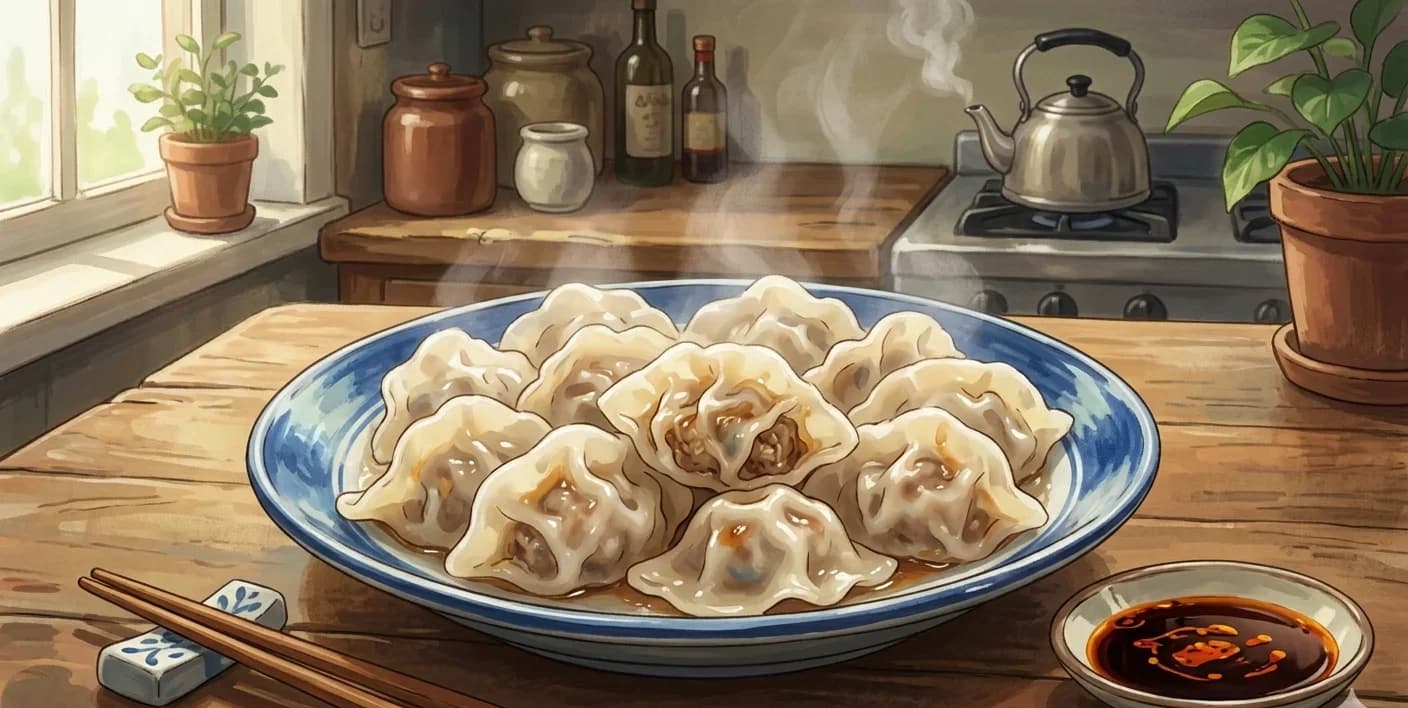
Niu Rou Yang Cong Jiaozi (Beef and Onion Dumplings)
60 minutes
 Involved
Vietnamese Cuisine
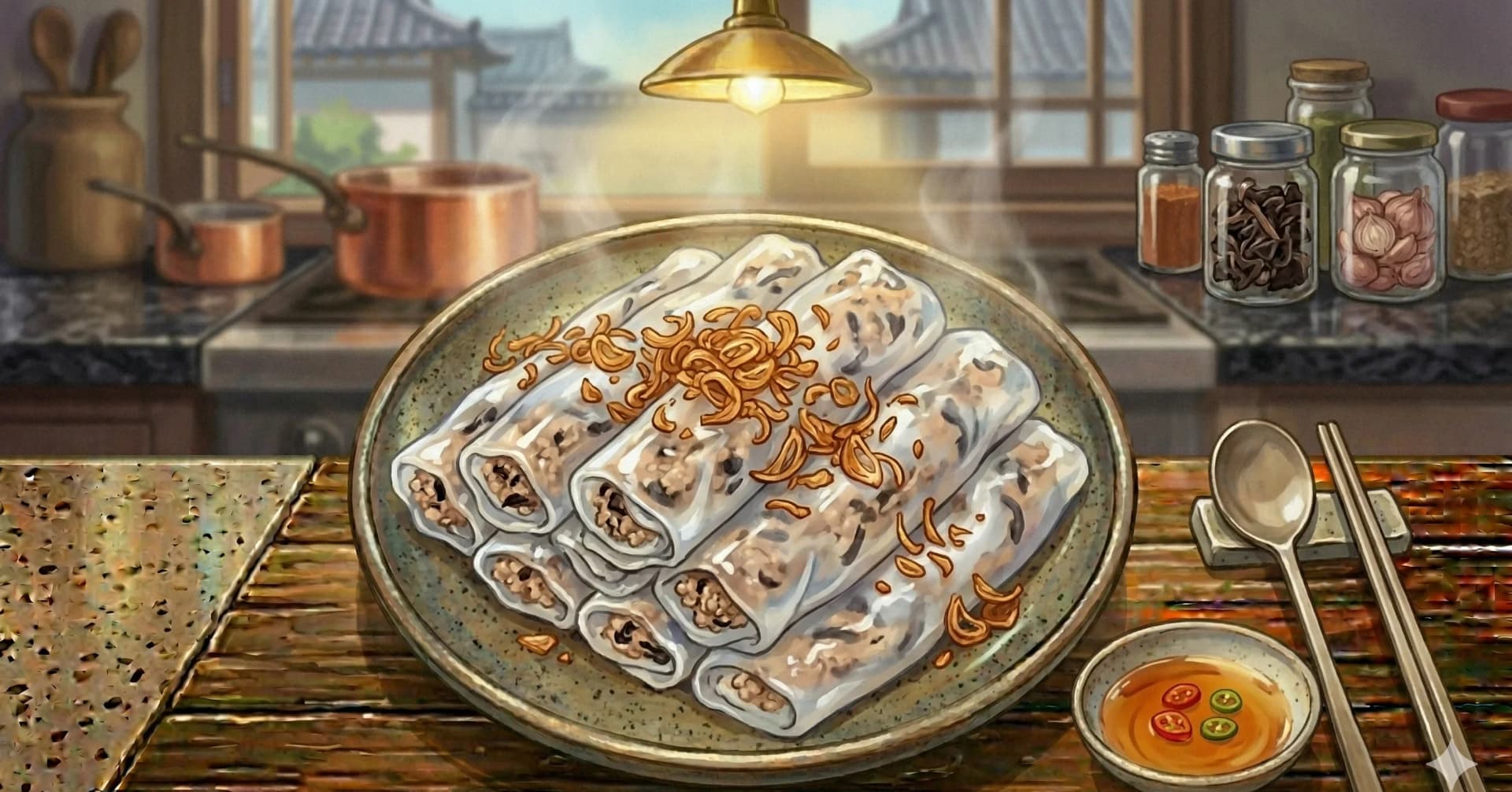
Steamed Rice Rolls (Bánh Cuốn)
3 hours 10 minutes
 Medium
Chinese Cuisine
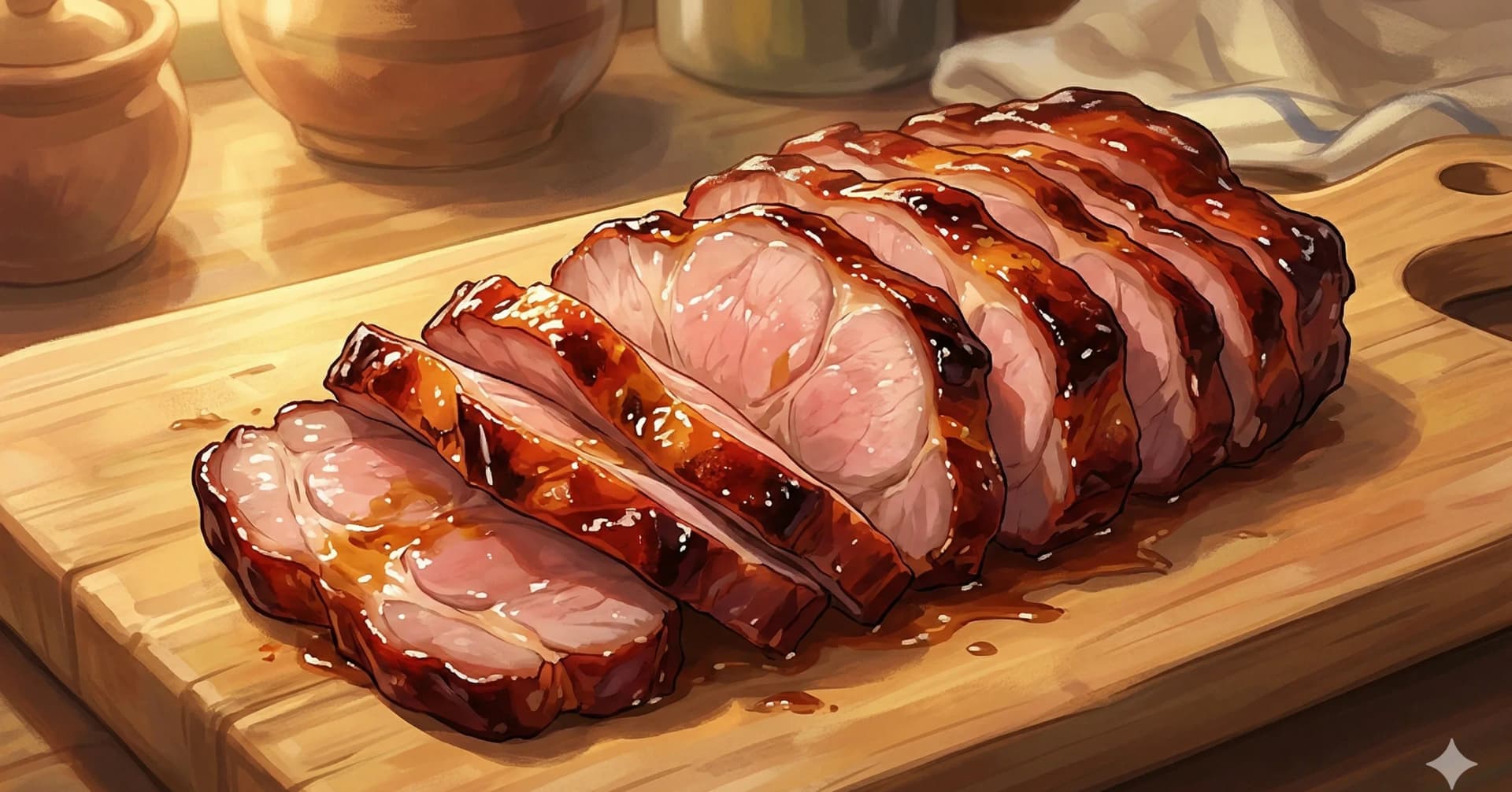
Char Siu (Chinese BBQ Pork)
9 hours (including marinating)
 Easy
EasyVietnamese Cuisine
Grilled Lemongrass Pork (Thịt Nướng)
2 hours 30 minutes
Ratings & Comments
Ratings & Comments
Ratings
Share your thoughts on this recipe.
Sign in to rate and comment