Thai Cuisine
Red Pork on Rice (Khao Moo Daeng / ข้าวหมูแดง)
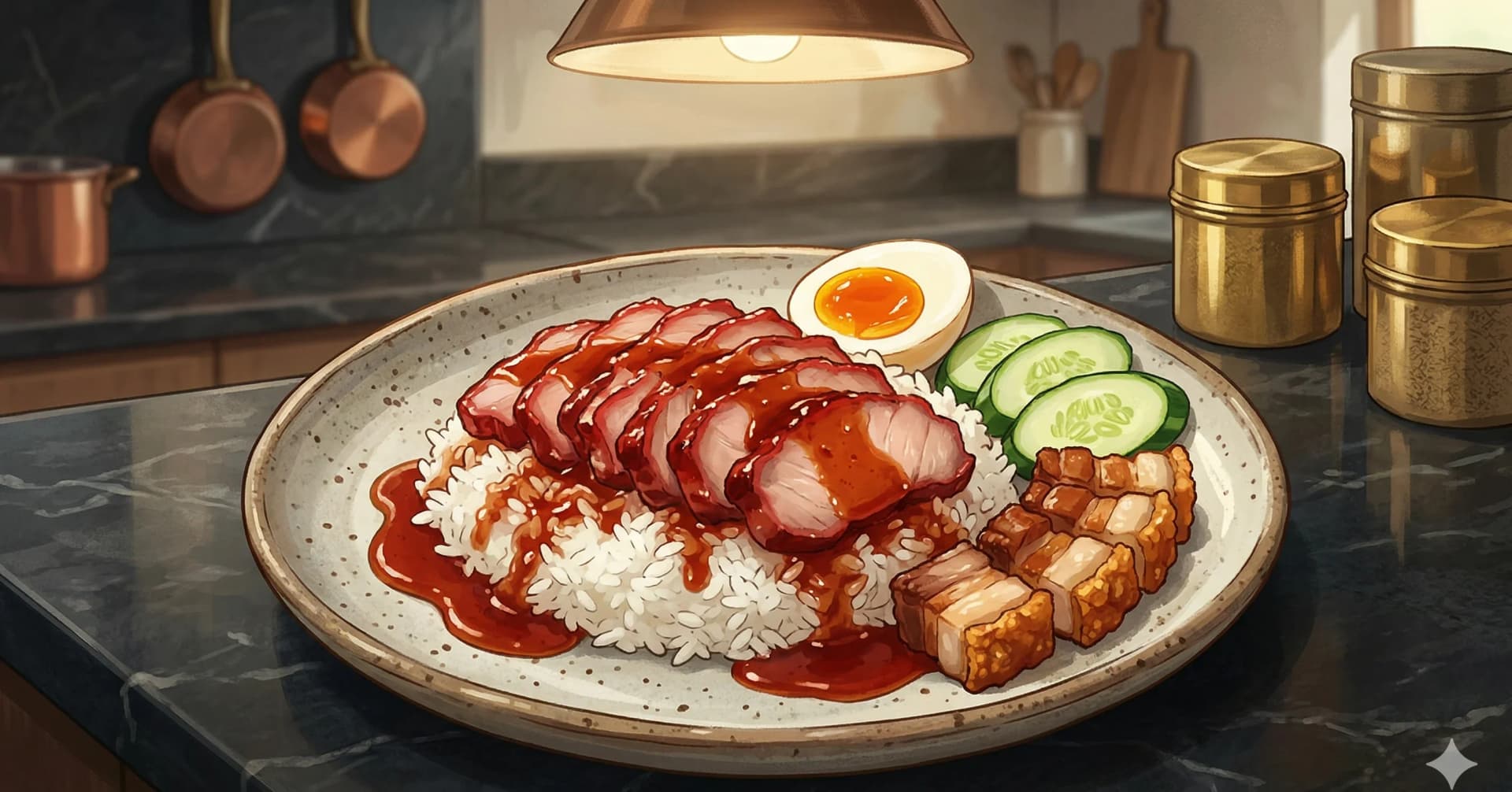
Thai red BBQ pork sliced over rice with a sweet red gravy, hard-boiled egg, and Chinese sausage
The slicing is where you see the skill. A vendor at a Bangkok moo daeng stall lifts a slab of roast pork from its hanging hook, and the cross-section reveals the telltale signature: crimson-red edges fading into pink, then pale center, all glistening with a sweet, caramelized glaze. The knife moves in rapid, even strokes, laying thin slices across a mound of white rice. Then comes the gravy, a thick, sweet-savory red sauce ladled generously over everything, pooling around the rice and turning the plate into something that looks as vivid as it tastes.
Khao moo daeng is the Thai interpretation of Cantonese char siu, the barbecued pork that Chinese immigrants brought to Thailand and that Thai cooks adapted into one of the country's most beloved quick meals. The Thai version differs from its Cantonese ancestor in several ways. The marinade often includes red fermented tofu (nam yee) for color and a subtle funkiness, the meat tends to be roasted rather than traditionally barbecued, and the accompanying gravy is uniquely Thai, a sweet, slightly tangy sauce thickened with starch and dyed red to match the pork.
What khao moo daeng delivers is satisfaction with remarkable efficiency. It is a complete rice plate: protein from the pork, richness from the sliced Chinese sausage, a quiet egg for balance, and that sweet, glossy gravy that turns plain rice into something you cannot stop eating. The pickled green chilies served alongside are not optional. Their sharp vinegar bite is the counterpoint that prevents the sweetness from becoming overwhelming. This is street food that rewards precision in the marinade and patience in the roasting, but asks very little else.
At a Glance
Yield
4 servings
Prep
30 minutes (plus 4 hours marinating)
Cook
40 minutes
Total
5 hours 10 minutes
Difficulty
Medium
Ingredients
Marinade Ingredients
- 1¼ lbpork shoulder (pork collar/pork butt), in one piece
- 1 ozred fermented tofu (nam yee), about 2 cubes
- 2 tbsphoisin sauce
- 1 tbspoyster sauce
- 1 tbsplight soy sauce
- 1 tbspChinese rice wine (Shaoxing) or dry sherry
- 1 ozhoney
- 1¼ tbspsugar
- 1/2 tspfive-spice powder
- 2 clovesgarlic, minced
- 1/2 tspred food coloring (optional, for the traditional vivid color)
Sauce Ingredients
- 1 cupwater or pork stock
- 2 tbsplight soy sauce
- 2½ tbspsugar
- 1 tbspred vinegar or rice vinegar
- 1/2 tspfive-spice powder
- 1/2 tspred food coloring (optional)
- 1¾ tbspcornstarch mixed with 30 ml water
- —Drippings from the roasted pork
- 1 ozhoney mixed with 15 ml warm water
To Serve
- —Steamed jasmine rice
- 4hard-boiled eggs, halved
- 2lap cheong (Chinese sausage), steamed and sliced diagonally
- —Pickled green chilies in vinegar
- —Sliced cucumber
Method
- 1
If the pork shoulder is thick, butterfly it open to create a flatter piece about 3 cm thick. This ensures the marinade penetrates evenly and the pork roasts more uniformly. Score the surface in a crosshatch pattern, cutting about 5 mm deep.
- 2
Mash the red fermented tofu cubes to a paste. Combine with the hoisin sauce, oyster sauce, soy sauce, rice wine, honey, sugar, five-spice powder, garlic, and food coloring if using. Mix into a smooth marinade.
- 3
Coat the pork thoroughly with the marinade, working it into the score marks. Place in a sealed bag or covered container and refrigerate for at least 4 hours, or ideally overnight. Turn the meat once or twice during marinating.
- 4
When ready to cook, preheat the oven to 200C (400F). Set a wire rack over a sheet pan lined with foil. Remove the pork from the marinade, letting excess drip off. Reserve any remaining marinade for basting. Place the pork on the wire rack.
- 5
Roast for 15 minutes at 200C to develop color and char. Then reduce the oven temperature to 170C (340F) and continue roasting for another 20 to 25 minutes. Baste with the reserved marinade every 10 minutes. The pork is done when the internal temperature reaches 65C (150F) and the surface is deeply caramelized with charred spots at the edges.
- 6
In the last 5 minutes of roasting, brush the pork generously with the honey glaze. Return to the oven and watch closely. The honey should bubble and form a glossy, sticky lacquer on the surface without burning.
- 7
Remove the pork from the oven and let it rest for 10 minutes before slicing. Collect any drippings from the sheet pan for the gravy.
- 8
While the pork rests, make the gravy. Combine the water or stock, soy sauce, sugar, vinegar, five-spice powder, and food coloring in a small saucepan. Bring to a simmer over medium heat. Add any collected pork drippings. Stir in the cornstarch slurry and cook, stirring constantly, for 1 to 2 minutes until the gravy thickens to the consistency of warm honey. It should be glossy, translucent, and lightly coat the back of a spoon.
- 9
Steam the Chinese sausages for 10 minutes until they plump and soften, then slice diagonally into thin ovals.
- 10
Slice the pork thinly against the grain, about 5 mm thick. The edges should show a red-pink ring from the marinade, fading to cooked white-pink at the center.
- 11
Assemble each plate: a mound of steamed jasmine rice, slices of red pork fanned over one side, sliced Chinese sausage on the other, a halved hard-boiled egg, and a few cucumber slices. Ladle the warm red gravy generously over the pork and rice.
- 12
Serve with pickled green chilies in vinegar on the side. The sharp, sour bite of the chilies is essential for cutting through the sweetness of the gravy and the richness of the pork.
Key Ingredient Benefits
Red fermented tofu (nam yee): Tofu fermented with red yeast rice (Monascus purpureus), salt, and rice wine. The fermentation process produces monacolin K, a compound that research has associated with cholesterol-lowering effects, though the amounts in culinary use are modest. The fermented tofu also provides probiotics and a distinctive savory-sweet flavor.
Five-spice powder: A blend of star anise, cinnamon, cloves, fennel, and Sichuan pepper. The combination provides a range of bioactive compounds including anethole, cinnamaldehyde, eugenol, and hydroxy-alpha-sanshool. In traditional Chinese medicine, five-spice is considered a balanced blend of warming and cooling elements.
Honey: Provides fructose and glucose along with trace amounts of antioxidant compounds including flavonoids and phenolic acids. In Thai and Chinese traditional medicine, honey is considered a neutral sweetener that helps harmonize other flavors.
Why This Works
Red fermented tofu is the ingredient that gives khao moo daeng its distinctive Thai character, separating it from straight Cantonese char siu. The fermented tofu contributes a subtle umami funkiness and a natural red tint that deepens the color beyond what hoisin sauce alone can achieve. It also contains enzymes from the fermentation process that tenderize the meat slightly during marinating.
Roasting at a high initial temperature sears the exterior and begins the Maillard reactions that create the charred, caramelized crust. Reducing the temperature for the remaining cooking time allows the interior to cook gently and evenly without drying out. The final honey glaze adds a layer of glossy sweetness that caramelizes in the hot oven, creating the sticky, lacquered surface that is the hallmark of good moo daeng.
The red gravy is thickened with cornstarch rather than reduced from drippings, which gives it its characteristic glossy, translucent appearance. The addition of vinegar provides a subtle acidity that balances the sweetness and prevents the sauce from tasting cloying.
Substitutions & Variations
Red fermented tofu: If unavailable, increase the hoisin sauce to 45 ml and add 1 teaspoon of miso paste for a similar fermented depth. The color will be less red.
Pork cut: Pork loin can be used for a leaner result, but the marbling in shoulder keeps the meat juicier. Pork tenderloin works but dries out more easily.
Charcoal method: For a more authentic char siu flavor, grill the marinated pork over charcoal, turning and basting frequently, for about 20 minutes. The smoke adds a dimension the oven cannot replicate.
With crispy pork belly (moo krob): Some Bangkok stalls serve khao moo daeng with both red pork and a piece of crispy pork belly, offering a textural contrast between the soft, glazed char siu and the shattering-crisp belly.
Serving Suggestions
Khao moo daeng is a standalone rice plate, complete as served. In Bangkok, it is an everyday lunch, ordered at dedicated moo daeng stalls or rice shops.
For a Thai Chinese rice plate spread, serve alongside khao kha moo for a comparison of Thai braised versus roasted pork traditions. Both are Chinese-influenced, both are served over rice, and they complement each other beautifully.
The red pork also works sliced into a bowl of egg noodle soup (ba mee moo daeng), a popular Bangkok variation where the same meat is served over blanched egg noodles in a light broth.
Storage & Reheating
Refrigerator: The roasted pork keeps for up to 4 days in a sealed container. Slice just before serving for the best texture. The gravy stores separately for up to 3 days.
Freezer: The whole roasted pork (unsliced) freezes well for up to 2 months. Thaw overnight in the refrigerator. The gravy also freezes well.
Reheating: Warm the sliced pork briefly in a hot oven (180C for 5 minutes) or microwave gently. Reheat the gravy in a small saucepan, adding a splash of water if it has thickened too much.
Marinating ahead: The pork can be marinated for up to 2 days in the refrigerator, which deepens the flavor and color.
Cultural Notes
Khao moo daeng (ข้าวหมูแดง, "red pork rice") is the Bangkok Chinese-Thai roast pork rice that traces a direct line back to Cantonese char siu, the lacquered, sweet-savory roast pork that is one of the signature dishes of southern China. Cantonese immigrants brought the technique to Bangkok in the 19th century and adapted it for local palates and ingredients, producing a Thai-style version that is sweeter, more deeply colored, and served in a distinct format unique to Thailand.
The pork itself is marinated in a mixture of red fermented bean curd (nam ree), soy sauce, oyster sauce, five-spice powder, honey or palm sugar, garlic, and Chinese rose wine, then roasted at high heat until the surface caramelizes to a dark crimson lacquer. The signature red color, which is far more vivid in Thai versions than in mainland Cantonese char siu, traditionally came from the red fermented bean curd; modern street vendors often supplement with red food coloring for an even brighter appearance. The roasted pork is sliced thin and arranged over rice with a sweet dark gravy, halved boiled egg, sliced cucumber, and a small dish of clear broth (nam soup) on the side.
In Bangkok, the most famous khao moo daeng establishment is Nai Soei (also known as Nai Soei Daeng) on Phadungdao Road in Yaowarat, which has been operated by the same Chinese-Thai family since the 1940s. The shop earned a Michelin Bib Gourmand recommendation and routinely sells out by mid-afternoon. Khao moo daeng is also commonly served alongside its sibling dish khao moo grob (crispy pork with rice), and many shops sell both as a combination plate (khao moo daeng moo grob) that lets diners taste both preparations on a single visit.
Nutrition Facts
Calories: 582kcal (29%)|Total Carbohydrates: 36.8g (13%)|Protein: 39.4g (79%)|Total Fat: 29.2g (37%)|Saturated Fat: 10.1g (51%)|Cholesterol: 218mg (73%)|Sodium: 1438mg (63%)|Dietary Fiber: 0.6g (2%)|Total Sugars: 29g
You Might Also Like
 Medium
Thai Cuisine
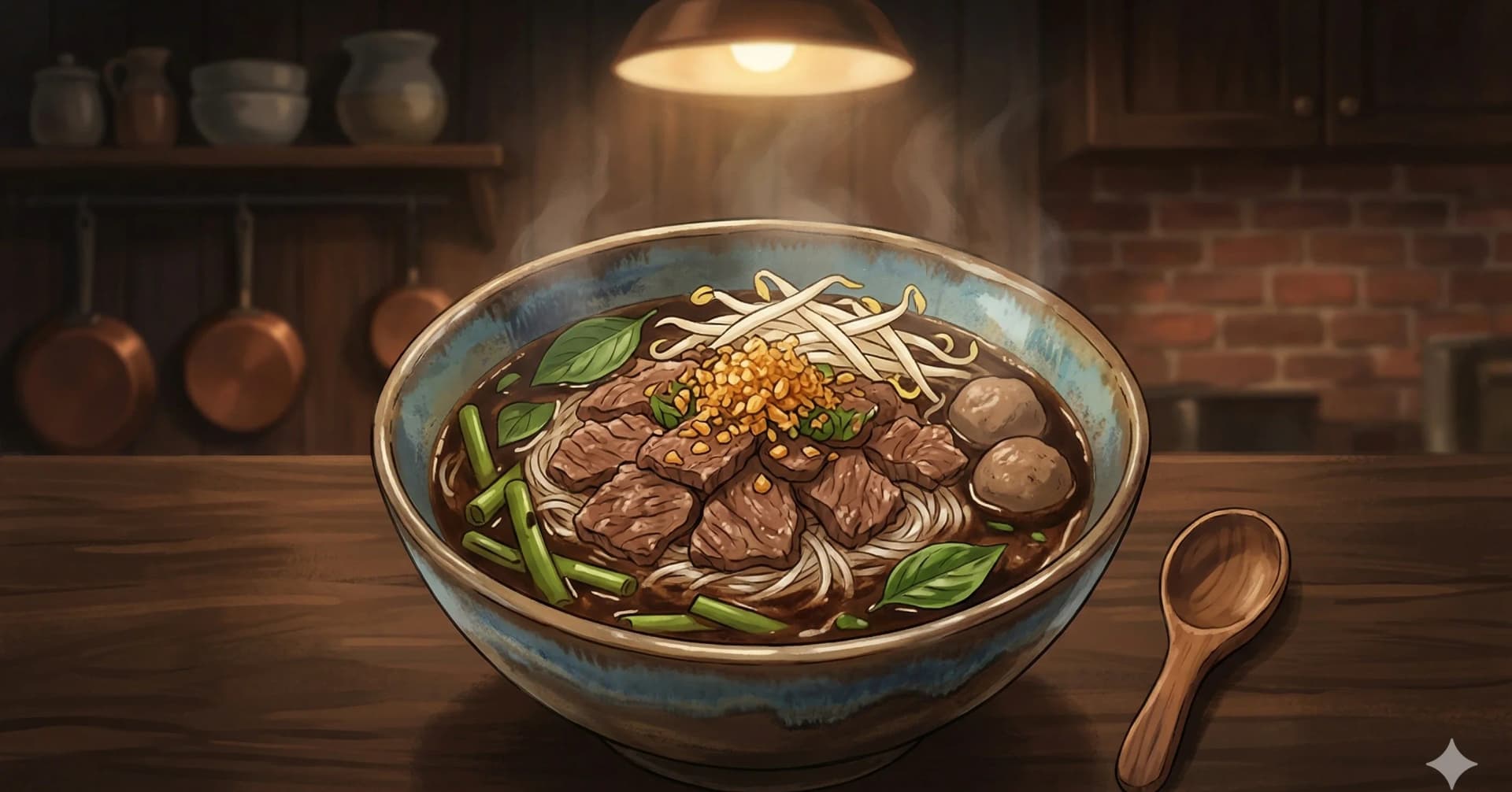
Boat Noodles (ก๋วยเตี๋ยวเรือ)
3 hours 15 minutes
 Medium
Chinese Cuisine
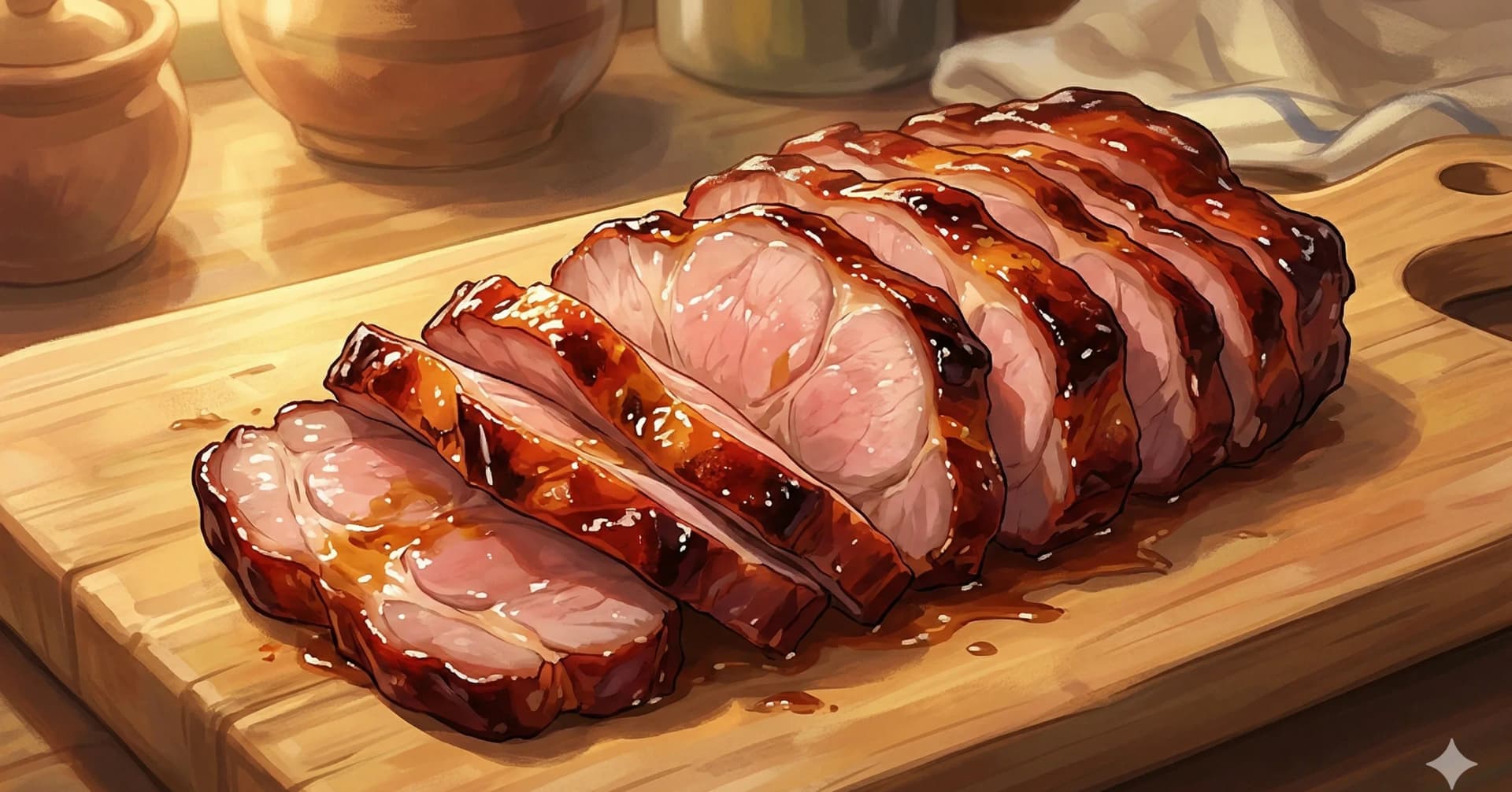
Char Siu (Chinese BBQ Pork)
9 hours (including marinating)
 Medium
Vietnamese Cuisine
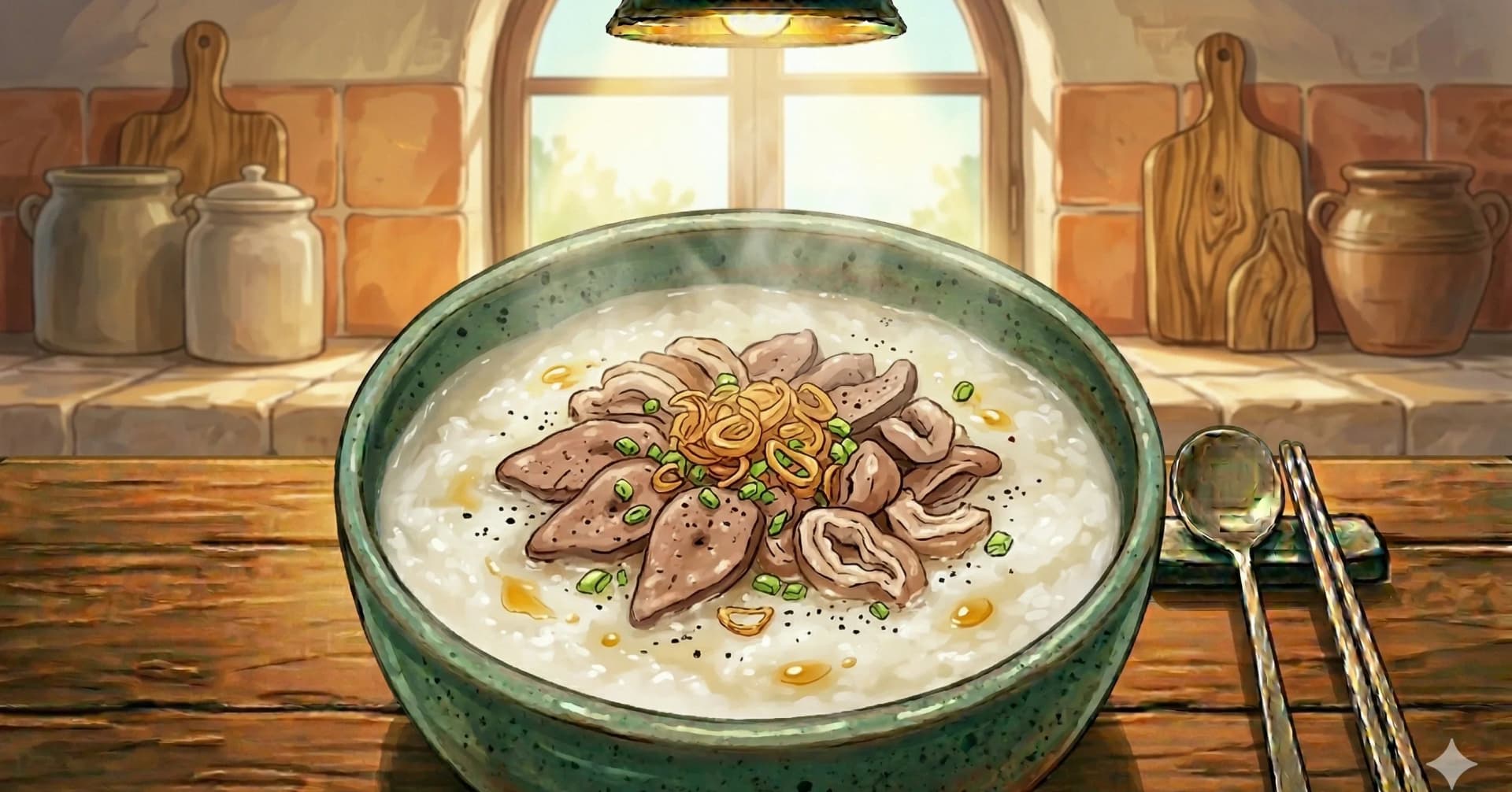
Cháo Lòng (Vietnamese Pork Organ Rice Porridge)
2 hours 15 minutes
 Easy
EasyVietnamese Cuisine
Grilled Lemongrass Pork (Thịt Nướng)
2 hours 30 minutes
Ratings & Comments
Ratings & Comments
Ratings
Share your thoughts on this recipe.
Sign in to rate and comment