Vietnamese Cuisine
Shaking Beef (Bò Lúc Lắc)
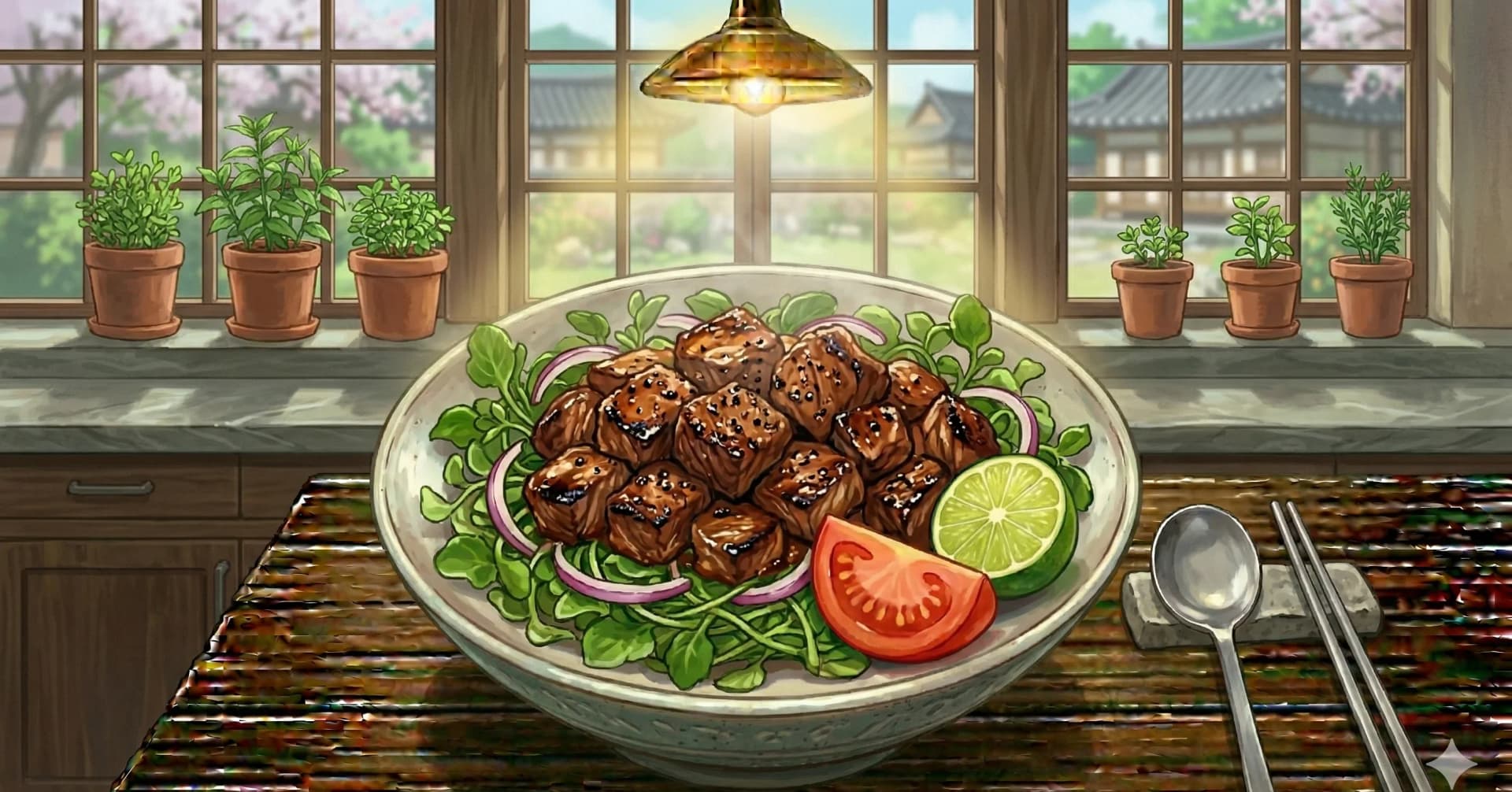
Seared cubes of marinated beef tossed in a sizzling wok, served on a bed of watercress with a lime-pepper dipping sauce
The name tells you how to cook it. "Luc lac" means "shaking," and that is what you do with the wok: toss the beef cubes in rapid, shaking motions so they sear on all sides without steaming or stewing. The heat must be ferocious. The oil must be smoking. The cubes must hit the wok and sizzle immediately, forming a dark, caramelized crust in seconds while the interior stays pink and tender. When it works, and it is a dish that rewards confidence rather than caution, the result is cubes of beef so deeply savory on the outside and so juicy within that each one feels like a small, concentrated steak.
Bo luc lac sits at the intersection of French and Vietnamese cooking, a meeting point that produced some of the most distinctive dishes in the Vietnamese repertoire. The French brought the practice of eating beef (largely uncommon in traditional Vietnamese cuisine before colonization) and the sensibility of serving meat on a salad of watercress. Vietnamese cooks took the concept and transformed it with their own seasonings: soy sauce, oyster sauce, fish sauce, garlic, and sugar, creating a marinade that caramelizes beautifully at high heat. The lime-pepper-salt dipping sauce is a purely Vietnamese addition that amplifies the beef's flavor while cutting through its richness.
This is a dish of celebration. It appears at dinner parties and family gatherings, always greeted with excitement, because beef remains a special-occasion protein in Vietnamese cooking. But it is also remarkably quick and simple, the kind of dish that looks impressive on the plate but takes less than 10 minutes of actual cooking. The key is high heat, a short cooking time, and the discipline to leave the beef alone long enough to develop a crust before shaking.
At a Glance
Yield
4 servings
Prep
15 minutes (plus 1 hour marinating)
Cook
8 minutes
Total
1 hour 23 minutes
Difficulty
Easy
Ingredients
Beef Ingredients
- 1¼ lbbeef sirloin or tenderloin, cut into 2.5 cm cubes
- 3 clovesgarlic, minced
- 1 tbspsoy sauce
- 1 tbspoyster sauce
- 2 tspfish sauce
- 2⅓ tspsugar
- 1 tspblack pepper, freshly cracked
- 1 tbspneutral oil (for the marinade)
- 2 tbspneutral oil (for the wok)
Dipping Sauce Ingredients
- —Juice of 2 limes
- 1 tspfine salt
- 1 tspblack pepper, freshly cracked
To Serve
- 5½ ozwatercress, tough stems removed
- 1small red onion, thinly sliced into rings
- 2ripe tomatoes, cut into wedges
Method
- 1
Combine the garlic, soy sauce, oyster sauce, fish sauce, sugar, black pepper, and 15 ml of oil in a bowl. Add the beef cubes and toss to coat evenly. Cover and refrigerate for 1 hour. Do not marinate longer than 4 hours, as the soy sauce and fish sauce will cure the surface and make it tough.
- 2
Make the dipping sauce. Stir together the lime juice, salt, and pepper in a small bowl. The simplicity of this sauce is deliberate. It is meant to amplify the beef, not compete with it. Set aside.
- 3
Arrange the watercress on a large serving platter. Scatter the onion rings and tomato wedges over and around the greens. Set aside.
- 4
Remove the beef from the refrigerator 20 minutes before cooking. Pat the cubes dry with paper towels. Excess moisture on the surface prevents searing and causes steaming. This step makes the difference between a crusty sear and a grey, overcooked exterior.
- 5
Heat a wok or heavy skillet over the highest heat possible. Add 30 ml of oil. Wait until the oil begins to smoke lightly and the surface shimmers.
- 6
Add half the beef cubes in a single layer. Do not crowd the wok. Let them sear undisturbed for 45 seconds to 1 minute. The bottoms should develop a dark brown, almost black crust. Then shake the wok vigorously, tossing the cubes so they land on a new face. Sear for another 30 seconds. Repeat one more time. Total cooking time for medium-rare is about 2 minutes. For medium, cook for 30 seconds longer.
- 7
Transfer the first batch to the watercress platter immediately. Wipe the wok clean, return to high heat, add a splash of oil, and repeat with the second batch. Working in batches ensures the wok stays hot enough to sear properly.
- 8
Arrange all the seared beef over the watercress. The residual heat from the beef will gently wilt the watercress underneath, which is intentional. The leaves should soften slightly but not go limp.
- 9
Serve immediately with the lime-pepper-salt sauce on the side. Each diner picks up a cube of beef, dips it into the sauce, and eats it with a bit of the watercress, onion, and tomato. The lime and pepper cut through the richness of the seared beef, and the peppery watercress adds a fresh, bitter note that balances the savory meat.
Key Ingredient Benefits
Beef sirloin: Provides high-quality protein, heme iron (the most bioavailable form of dietary iron), vitamin B12, zinc, and creatine. Heme iron absorption is further enhanced by the vitamin C in the lime dipping sauce and the watercress.
Watercress: Ranked among the most nutrient-dense foods by the CDC, watercress provides vitamins A, C, and K, calcium, and glucosinolates, sulfur-containing compounds that research has associated with potential anticancer properties. Its peppery, slightly bitter flavor pairs naturally with rich, fatty meats.
Lime: Provides citric acid and vitamin C. The acidity brightens the rich, savory beef and enhances iron absorption from the meat. In Vietnamese traditional medicine, lime is considered cooling and digestive.
Why This Works
Searing beef in very small batches at extremely high heat is the fundamental technique. When too many pieces crowd the wok, the temperature drops below the threshold for Maillard reactions, and the beef releases its juices faster than they can evaporate. The result is steamed, grey beef instead of seared, crusty beef. Working in two batches keeps the wok hot enough to develop a crust in under a minute.
Patting the beef dry before cooking removes surface moisture that would create steam and prevent browning. This simple step dramatically improves the quality of the sear.
The marinade is designed for high-heat cooking. The sugar and oyster sauce provide Maillard fuel for rapid browning. The soy sauce and fish sauce contribute salt and glutamate that penetrate the beef surface during the short marinating time. The oil in the marinade helps the cubes release from the wok surface.
The lime-pepper-salt dipping sauce works because acid (citric acid from lime) and salt amplify the perception of umami and meaty flavor. The freshly cracked pepper adds a pungent, aromatic warmth that lifts each bite. This three-ingredient sauce punches far above its weight.
Substitutions & Variations
Beef cut: Tenderloin produces the most tender result. Sirloin offers more beef flavor. Flank steak, sliced against the grain and cut into cubes, is a more economical option. For any cut, high heat and short cooking time are essential to avoid toughness.
Watercress: Arugula (rocket) provides a similar peppery bitterness. Butter lettuce is milder but works as a bed.
Bo luc lac on rice: Serve the seared beef over steamed rice instead of watercress for a heartier, rice-plate version. Add a fried egg on top.
With french fries: Some Vietnamese restaurants serve bo luc lac on a bed of thin french fries, a nod to the French influence. The combination of seared beef and crispy fries is indulgent and satisfying.
Vegetarian: Firm tofu pressed, cubed, and marinated in the same sauce can be seared in a very hot wok. The crust develops well on tofu if it is thoroughly dried.
Serving Suggestions
Bo luc lac is often the centerpiece of a Vietnamese dinner party. Its dramatic presentation, the dark, glistening cubes arranged over bright green watercress, makes it a natural conversation piece.
Pair it with com tam components (broken rice, egg cake, pickled vegetables) for a surf-and-turf Vietnamese rice plate. Or serve alongside canh chua for a light, sour soup contrast to the rich beef.
For a Vietnamese-French fusion dinner, serve bo luc lac with a simple green salad dressed in a light vinaigrette and crusty bread. The dish bridges both culinary traditions gracefully.
Storage & Reheating
Refrigerator: Store leftover beef for up to 2 days. The sear will soften, and the beef will continue to cook in residual heat, so it will be more well-done when reheated.
Reheating: Briefly sear in a very hot skillet for 30 seconds per side to warm through. Do not microwave, as this steams the crust.
The salad bed: Prepare fresh each time. Watercress wilts quickly once dressed or warmed by the beef.
Marinade: The raw marinade can be mixed up to 2 days ahead and refrigerated.
Cultural Notes
Bò lúc lắc, "shaking beef," is named after how you cook it. You toss (lúc lắc) cubed beef repeatedly in a screaming-hot wok rather than stirring it, which sears all sides quickly enough to lock in juices while building a deep mahogany crust. The technique is one of the few distinctively Vietnamese applications of the wok. It produces a textural contrast you do not get from braised beef: crispy outside, rare and tender inside.
The dish is one of the clearest examples of French colonial influence shaping Vietnamese restaurant cooking. Butter as the cooking fat (rather than the lard or peanut oil more typical of Vietnamese kitchens). Cubed sirloin in a French cut (rather than the thin slicing of most Asian beef preparations). A watercress bed. Cherry tomatoes. A salt, pepper, and lime dipping sauce. All of those moves came from French bistro cooking, absorbed and transformed during the colonial period (1858-1954). The result feels French and Vietnamese at the same time. It sits in roughly the same cultural position as bánh mì and bò kho inside the broader Vietnamese-French hybrid tradition.
In modern Vietnamese restaurants, bò lúc lắc is the elevated-but-accessible meat course. More refined than bún thịt nướng or a grilled-pork rice plate. Less ceremonial than the seven-course beef banquets some Saigon steakhouses still put on.
The dish travels especially well. It is everywhere in Vietnamese-American restaurants in the United States and Vietnamese restaurants in France, where the French-Vietnamese hybrid identity carries weight. Inside Vietnam, you mostly find it at quán nhậu, the drinking restaurants where people order food alongside cold bia hơi draft beer, and at family-celebration dinners, where the tableside cooking theater is part of the meal.
Nutrition Facts
Calories: 340kcal (17%)|Total Carbohydrates: 4g (1%)|Protein: 33g (66%)|Total Fat: 17g (22%)|Saturated Fat: 5g (25%)|Cholesterol: 93mg (31%)|Sodium: 535mg (23%)|Dietary Fiber: 0g (0%)|Total Sugars: 1g
You Might Also Like
Ratings & Comments
Ratings & Comments
Ratings
Share your thoughts on this recipe.
Sign in to rate and comment