Vietnamese Cuisine
Broken Rice Plate (Cơm Tấm)
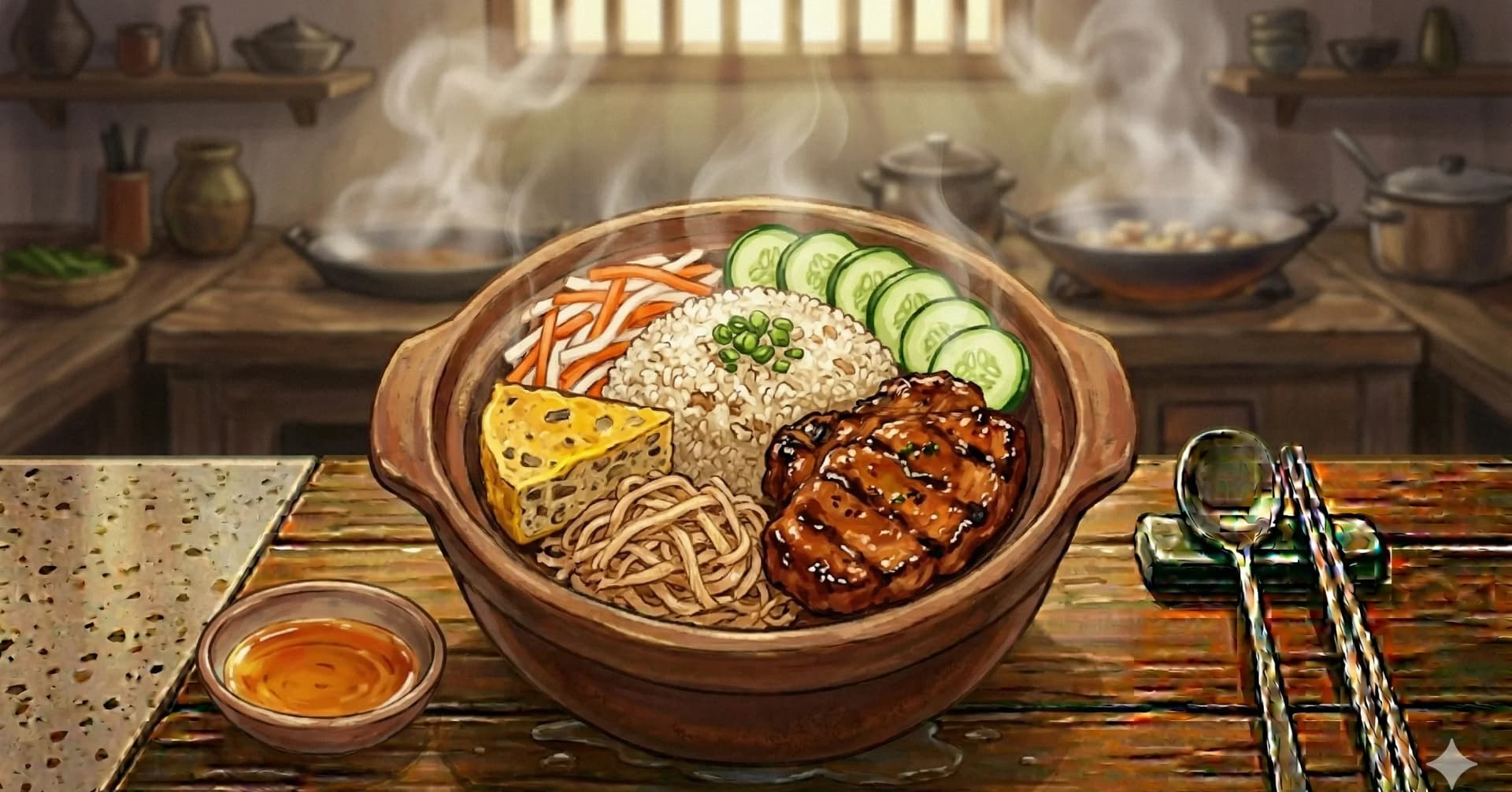
Broken rice topped with a caramelized grilled pork chop, a fluffy egg cake, and a sweet fish sauce dressing
The smell of a com tam cart in Saigon is one of the city's defining morning aromas: lemongrass-marinated pork chops sizzling over white-hot charcoal, the fat dripping and flaring, sending up plumes of caramelized, fragrant smoke that drift down the sidewalk. The pork arrives on a plate of broken rice, the fractured grains slightly stickier and more absorbent than whole rice, perfectly suited to catching the sweet-salty nuoc cham that gets drizzled over everything. Beside the pork sits a wedge of cha trung, a savory steamed egg cake studded with ground pork and mung bean, and a scattering of pickled daikon and carrot for contrast.
Com tam, meaning "broken rice," is the breakfast and lunch of Saigon. The name refers to the rice itself, the fractured grains left over from the milling process that were once considered inferior but have become the preferred base for this dish precisely because of their unique texture. Broken rice is softer, slightly stickier, and more absorbent than whole grains, which means it soaks up the nuoc cham and pork juices beautifully.
The dish is greater than the sum of its parts. Each component is straightforward, but together they create a plate with remarkable range. The pork chop is sweet, smoky, and deeply caramelized from the lemongrass-fish sauce marinade. The egg cake is gentle and custard-like, a quiet foil to the bold pork. The pickled vegetables provide acid and crunch. The nuoc cham ties everything together with its perfect balance of sweet, sour, salty, and spicy. It is a complete meal on a single plate, the kind of food that Saigonese eat every day without ever tiring of it, because the balance is simply right.
At a Glance
Yield
4 servings
Prep
30 minutes (plus 2 hours marinating)
Cook
30 minutes
Total
3 hours
Difficulty
Medium
Ingredients
Marinade Ingredients
- 4bone-in pork chops (about 600 g total), 1.5 cm thick
- 2 stalkslemongrass, white parts only, finely minced
- 3shallots, finely minced
- 3 clovesgarlic, minced
- 2 tbspfish sauce
- 1 tbspsoy sauce
- 2½ tbspsugar
- 1 tbsphoney
- 1 tbspneutral oil
- 1/2 tspblack pepper
Egg Cake Ingredients
- 4eggs
- 3½ ozground pork
- 1 ozdried mung beans, soaked for 2 hours and steamed until soft
- 1 tbspfish sauce
- 1/2 tspblack pepper
- 1shallot, finely minced
Dipping Sauce Ingredients
- 3 tbspfish sauce
- 3 tbspwarm water
- 2½ tbspsugar
- 2 tbspfresh lime juice
- 1 clovegarlic, finely minced
- 1bird's eye chili, finely sliced
Rice Ingredients
- 1 lbbroken rice (com tam), cooked according to package directions
To Serve
- —Pickled daikon and carrot (do chua, see [banh mi](/recipes/banh-mi) recipe)
- —Sliced cucumber
- —Sliced tomato
Method
- 1
Marinate the pork chops. Combine the lemongrass, shallots, garlic, fish sauce, soy sauce, sugar, honey, oil, and black pepper in a bowl. Mix well. Add the pork chops, turning to coat thoroughly. Cover and refrigerate for at least 2 hours, or overnight for deeper flavor.
- 2
Make the steamed egg cake. Mash the steamed mung beans roughly with a fork. Beat the eggs in a bowl, then add the ground pork, mashed mung beans, fish sauce, pepper, and shallot. Mix until evenly combined. Pour into a lightly oiled loaf pan or small baking dish.
- 3
Steam the egg cake over boiling water for 20 to 25 minutes until set and a toothpick inserted in the center comes out clean. The surface should be pale yellow and slightly puffed. Let it cool for 5 minutes, then slice into wedges or rectangles.
- 4
While the egg cake steams, make the nuoc cham. Dissolve the sugar in the warm water, then add the fish sauce, lime juice, garlic, and chili. Stir well. Taste and adjust: it should be sweet, sour, salty, and mildly spicy in roughly equal proportion.
- 5
Cook the pork chops. Preheat a grill, grill pan, or broiler to high heat. Remove the pork chops from the marinade, letting excess drip off. Grill for 4 to 5 minutes on the first side without moving. The surface should develop dark, caramelized char marks and the lemongrass should smell deeply fragrant.
- 6
Flip and grill for another 3 to 4 minutes on the second side. The pork is done when the internal temperature reaches 63C (145F) and the surface has a sticky, lacquered appearance with blackened spots at the edges where the sugar has caramelized. Let the chops rest for 3 minutes before serving.
- 7
Cook the broken rice according to package directions, using slightly less water than you would for whole grain rice (about a 1:1 ratio by volume). Broken rice absorbs water faster and becomes mushy with too much liquid. It should be tender but with individual grains that retain some structure.
- 8
Assemble each plate. Place a mound of broken rice on one side. Lean a grilled pork chop against the rice. Place a wedge of egg cake alongside. Add a small pile of pickled daikon and carrot, a few cucumber slices, and a tomato slice.
- 9
Spoon or pour the nuoc cham generously over the pork and rice. The sauce should pool around the rice, which will absorb it eagerly.
- 10
Eat by cutting pieces of the pork chop and mixing them with spoonfuls of rice, pickled vegetables, and the nuoc cham-soaked grains. Each bite should include the sweetness of the caramelized pork, the acid of the pickles, the gentle richness of the egg cake, and the balanced dressing of the nuoc cham.
Key Ingredient Benefits
Broken rice: Nutritionally similar to whole grain white rice, with comparable calorie, carbohydrate, and protein content. The fragmented grains cook faster and have a softer, slightly stickier texture. Once considered a byproduct of milling, broken rice is now cultivated and sold specifically for com tam.
Lemongrass: The primary aromatic compound, citral, has been studied for antimicrobial and anti-inflammatory properties in laboratory settings. In Vietnamese traditional medicine, lemongrass is considered warming and digestive.
Mung beans: A legume rich in plant protein, fiber, folate, and magnesium. Research suggests mung beans contain antioxidant compounds (vitexin and isovitexin) that may support cardiovascular health. In Vietnamese and Chinese traditional medicine, mung beans are considered cooling and detoxifying.
Why This Works
The lemongrass-fish sauce marinade serves multiple purposes. The sugar and honey in the marinade caramelize rapidly over high heat, creating the characteristic dark, sticky glaze. The fish sauce penetrates the meat with umami and salt. The lemongrass contributes citral and other terpenes that are fat-soluble, meaning they dissolve into the pork fat during marinating and release their aroma during grilling. Together, these elements create a pork chop that is far more flavorful and aromatic than one marinated in a simple salt-and-pepper preparation.
Broken rice absorbs liquid more readily than whole grains because the fractured surfaces expose more starch to the nuoc cham. This makes the rice a more effective flavor carrier, each grain picking up the sweet-sour-salty dressing and delivering it with each bite. It is the reason whole rice, while perfectly edible, does not produce the same experience.
The egg cake (cha trung) provides a textural and flavor contrast that rounds out the plate. Where the pork is bold, smoky, and sweet, the egg cake is gentle, savory, and custardy. The mung beans add a starchy softness and a mild, earthy sweetness that complements rather than competes with the other components.
Substitutions & Variations
Pork chop: Boneless chicken thigh or firm tofu steaks marinated in the same lemongrass mixture work well. Adjust grilling time accordingly.
Broken rice: If unavailable, use jasmine rice cooked slightly softer than usual. The texture will differ but the flavors work the same.
Egg cake: Can be omitted for simplicity. Some com tam plates substitute fried egg instead.
Bi (shredded pork skin): Traditional com tam often includes bi, a mixture of shredded boiled pork skin and toasted rice powder. It adds a chewy, crunchy element. It is optional and mainly found at specialized com tam stalls.
Oven method: If grilling is not possible, broil the pork chops on a rack set over a sheet pan, 10 cm from the heating element, for 5 to 6 minutes per side. Watch closely for burning.
Serving Suggestions
Com tam is a one-plate meal, complete as described. In Saigon, it is the default breakfast and lunch, served at dedicated com tam restaurants that line the streets of every neighborhood.
For a Vietnamese meal at home, serve com tam alongside a pot of canh chua (sweet and sour soup) for a satisfying combination of a dry grilled dish and a brothy, tangy counterpoint.
The flavors of com tam also bridge well into a broader Southeast Asian spread. The lemongrass pork shares flavor territory with satay and bun thit nuong, making any of these natural companions at a multicuisine dinner.
Storage & Reheating
Pork chops: Refrigerate cooked chops for up to 3 days. Reheat briefly on a hot grill pan or under the broiler to warm through and re-crisp the caramelized surface.
Egg cake: Refrigerate for up to 3 days. Reheat by steaming for 5 minutes or microwaving gently.
Nuoc cham: Keeps in the refrigerator for up to 1 week. The lime flavor fades slightly over time, so add a fresh squeeze before serving.
Broken rice: Best cooked fresh. Leftover rice can be refrigerated and used for fried rice the next day.
Marinade: The raw pork can be marinated for up to 2 days in the refrigerator. Longer marinating deepens the flavor.
Cultural Notes
Cơm tấm, literally "broken rice," is the signature breakfast and lunch of Saigon and southern Vietnam. The dish started as a poverty food in the early 20th century. Rice milling in that era sent the premium whole-grain rice to wealthier urban markets and left behind the small broken grains that fragmented during processing. Those broken grains were considered substandard and sold cheaply to working-class consumers. Mekong Delta farmers and Saigon street vendors cooked the broken rice and served it with whatever simple grilled protein they could afford and a fried-egg-cake topping. That improvisation became cơm tấm.
Over the course of the 20th century, the cultural status of the dish reversed completely. The "substandard" broken rice turned out to have a useful texture. More granular than whole-grain rice. More absorptive. Better at carrying the marinade liquids from the grilled pork on top. Modern Saigon cơm tấm restaurants now intentionally seek out broken rice rather than substituting whole grain when broken rice runs short. From a humble survival food, cơm tấm became one of Saigon's defining culinary identifiers. The restaurant versions have grown elaborate. A grilled pork chop. Shredded pork skin (bì). Vietnamese pork roll (chả). A poached or fried egg. Pickled vegetables. A small saucer of nước chấm.
The dish belongs especially to morning eating in Saigon. Cơm tấm stalls open as early as 5 AM and serve commuters, students, and office workers through the breakfast and mid-morning hours. The smell of grill smoke and lemongrass-marinated pork chop is one of the defining sensory characteristics of the city itself.
The most famous Saigon addresses (Cơm Tấm Ba Ghiền, Cơm Tấm Cali, Cơm Tấm Phúc Lộc Thọ) have multiple generations of family operation behind them and draw lines that stretch around the block during peak breakfast hours. Cơm tấm has also become one of the most exported Vietnamese dishes to diaspora communities, especially in Australia and the United States.
Nutrition Facts
Calories: 480kcal (24%)|Total Carbohydrates: 58g (21%)|Protein: 34g (68%)|Total Fat: 16g (21%)|Saturated Fat: 5g (25%)|Cholesterol: 180mg (60%)|Sodium: 1200mg (52%)|Dietary Fiber: 1g (4%)|Total Sugars: 6g
You Might Also Like
 Easy
EasyVietnamese Cuisine
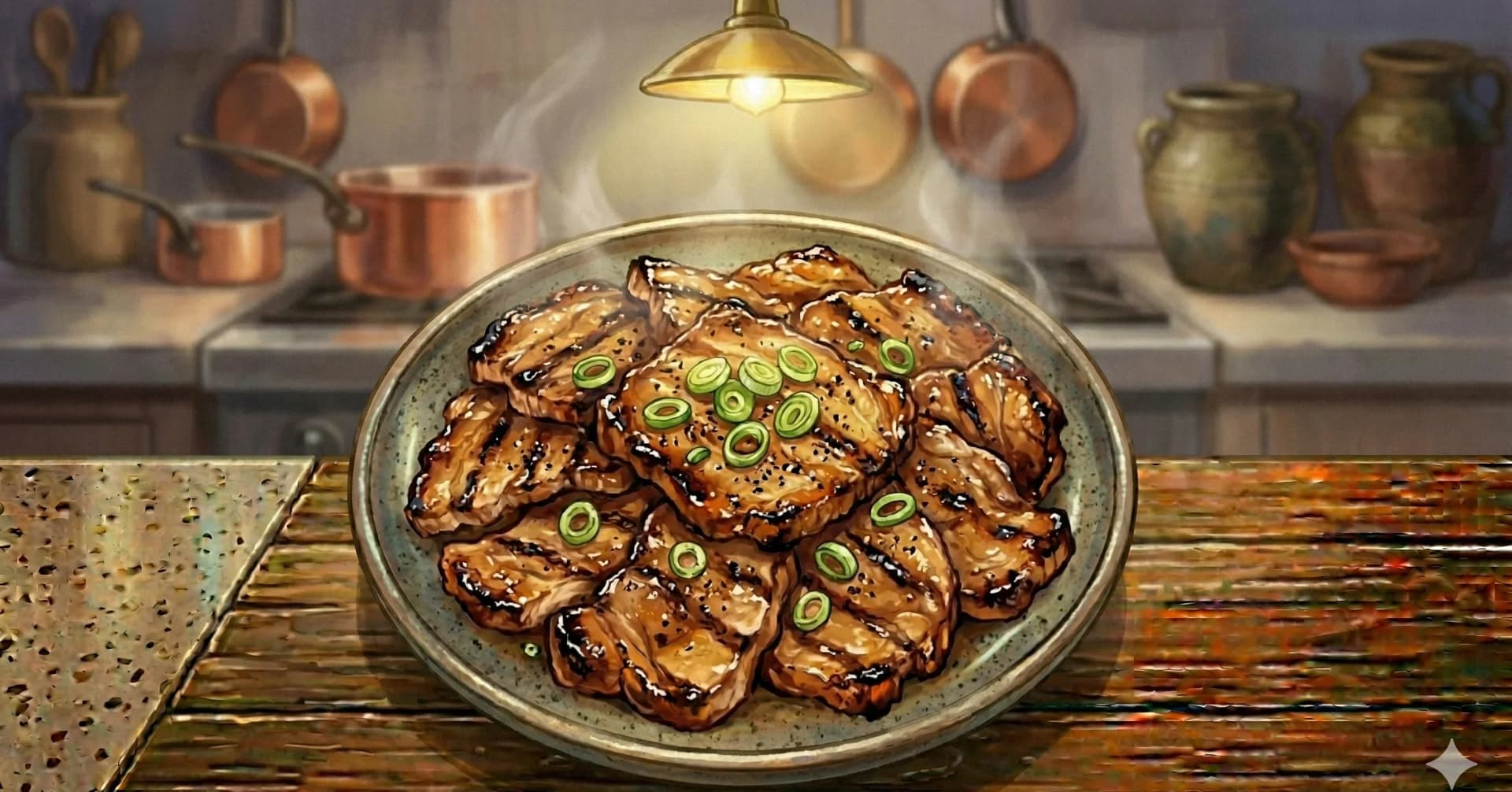
Grilled Lemongrass Pork (Thịt Nướng)
2 hours 30 minutes
 Easy
EasyVietnamese Cuisine
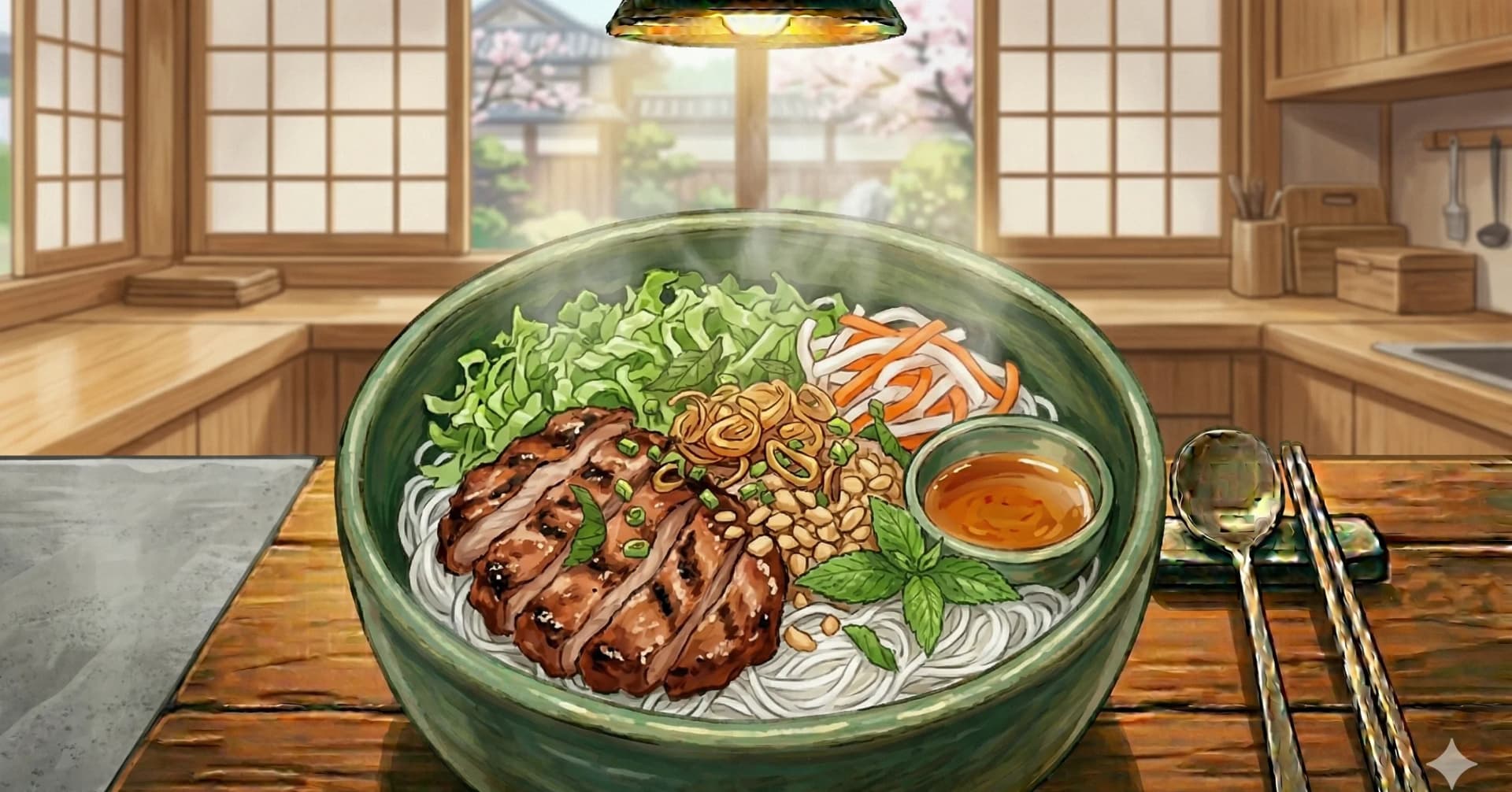
Grilled Pork Noodle Bowl (Bún Thịt Nướng)
2 hours 45 minutes
 Medium
Vietnamese Cuisine
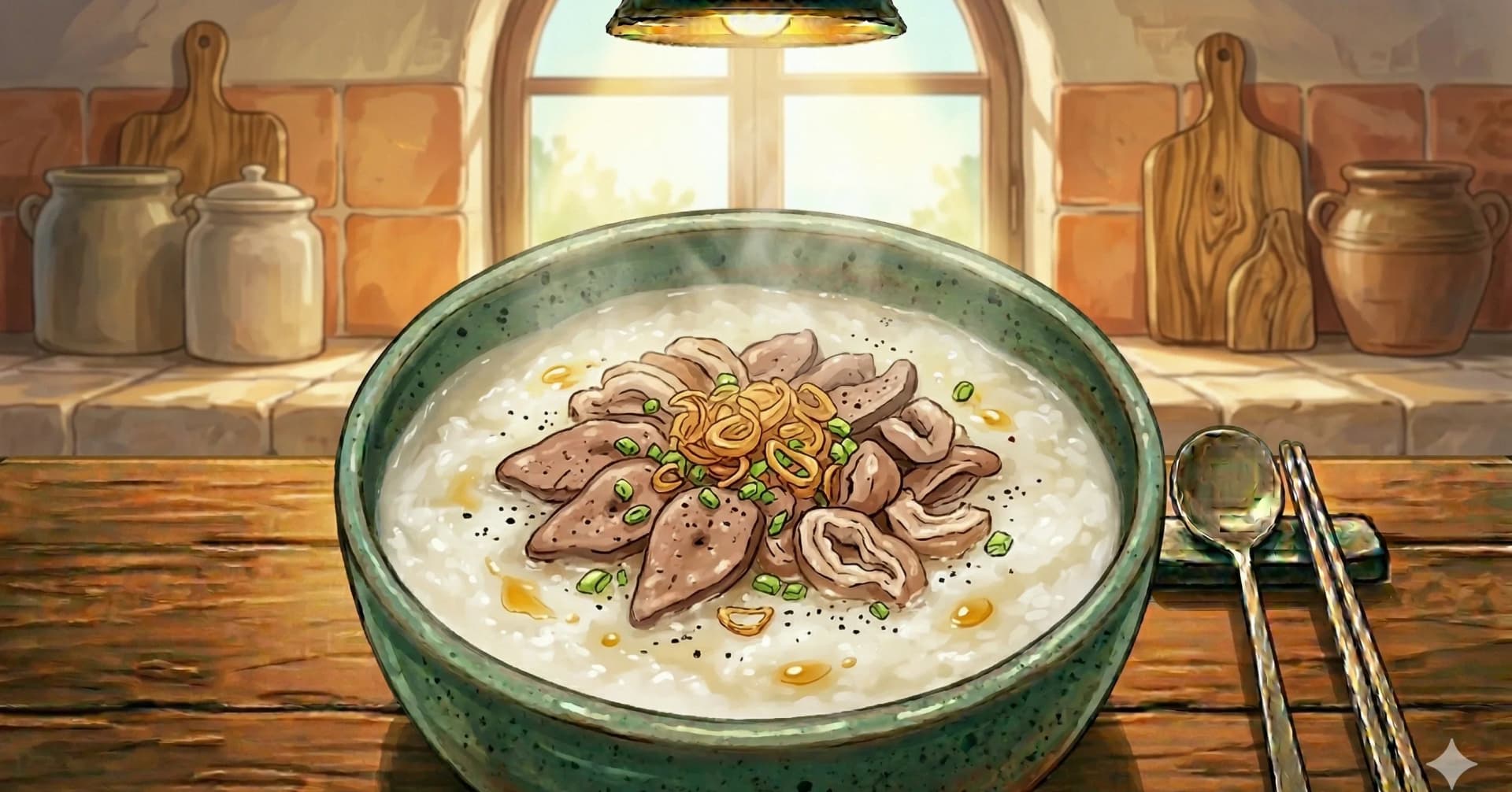
Cháo Lòng (Vietnamese Pork Organ Rice Porridge)
2 hours 15 minutes
 Easy
EasyVietnamese Cuisine
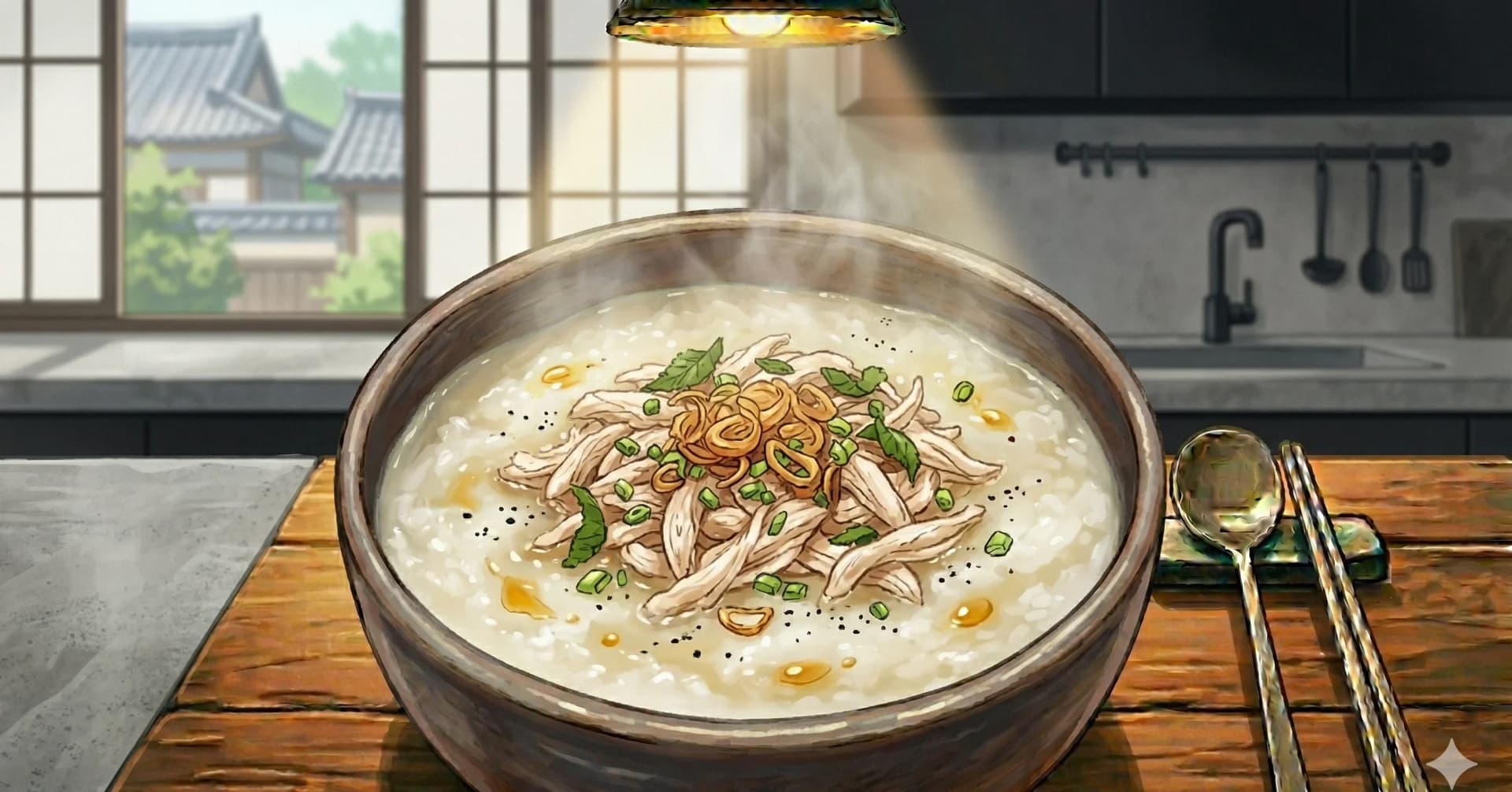
Cháo Gà (Vietnamese Chicken Rice Porridge)
1 hour 30 minutes
Ratings & Comments
Ratings & Comments
Ratings
Share your thoughts on this recipe.
Sign in to rate and comment