Punjabi · Indian Cuisine
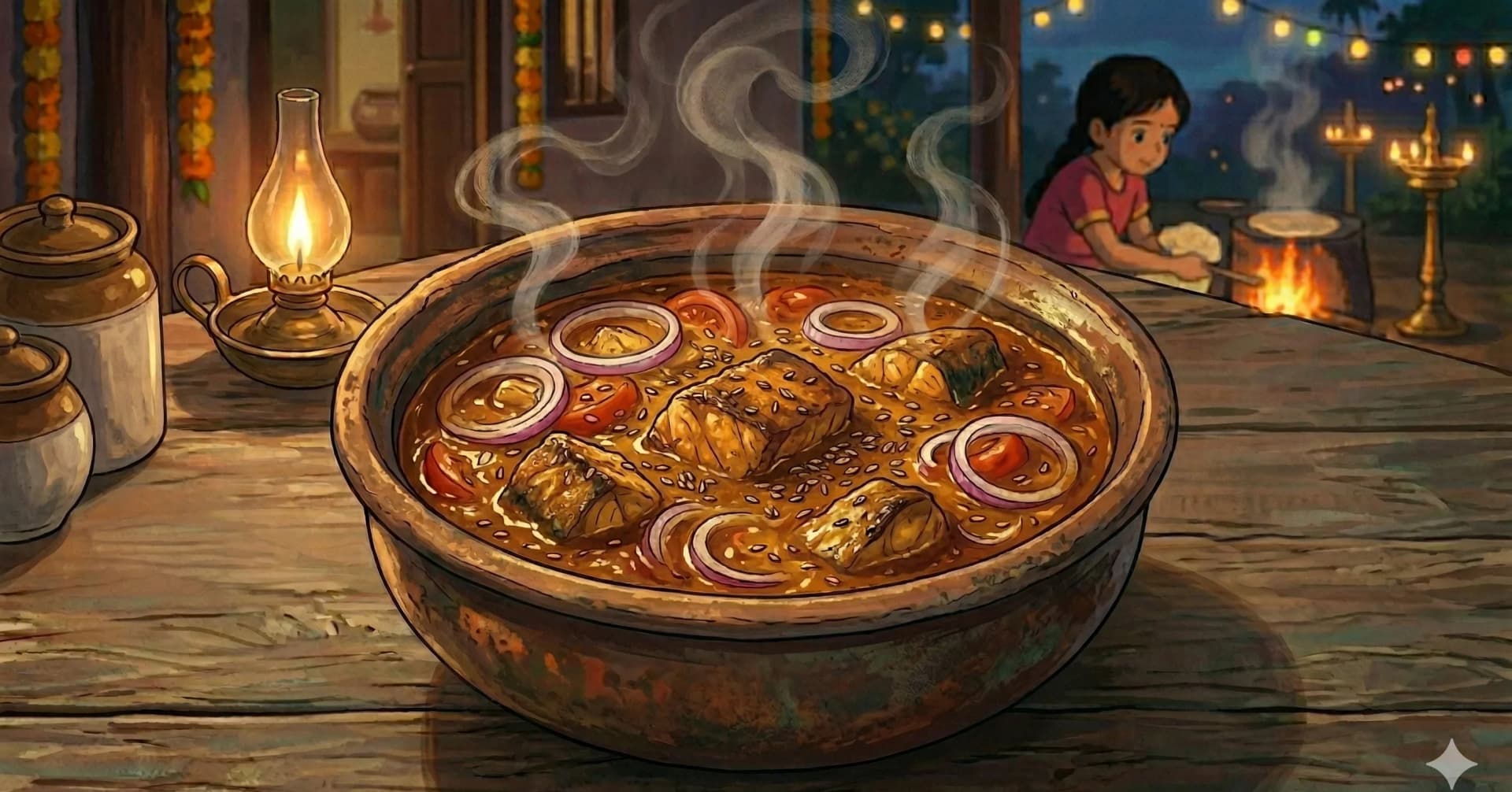
Carom-Spiced Fish Curry (Ajwaini Machi Curry)
Punjabi fish curry with carom seeds, besan-coated fried fish in a tomato-onion masala
Ajwain (carom seeds) brings a particular sharpness to this Punjabi fish curry, a flavour somewhere between thyme and oregano that cuts through the richness of mustard oil and balances the acidity of the tomato base. The fish is twice-seasoned with ajwain: first in the marinade alongside besan, lemon juice, and spices, and again in the tempering oil that begins the masala. The besan in the marinade creates a coating that crisps when fried and helps the fish hold together in the subsequent simmer.
Smoking the mustard oil before using it is a traditional technique that removes its raw pungency. It is the step that most differentiates this from a neutral-oil preparation.
At a Glance
Yield
Serves 4–6
Prep
20 minutes + 30 minutes marinating
Cook
35 minutes
Total
1 hour 25 minutes
Difficulty
Medium
Ingredients
Marinade Ingredients
- 2¼ lbfirm fish (bhetki, tilapia, or any firm white fish), cut into 4 cm pieces
- 1 tbspginger paste
- 2 tspgarlic paste
- 2½ tbspKashmiri chilli powder
- 1⅞ tspturmeric
- 1¼ tbspajwain (carom seeds)
- 1⅛ cupbesan (gram flour)
- 3½ tbsplemon juice
- —Salt to taste
Curry Ingredients
- ¾ cupmustard oil
- 1¼ tbspajwain (carom seeds)
- ¾ lbonions (about 2 onions), finely chopped
- 3¼ tbspginger, finely chopped
- 1¾ tbspgarlic, finely chopped
- 1¾ tbspgreen chillies, finely chopped
- 7 oztomatoes (about 1½–2 tomatoes), finely chopped
- —Salt to taste
Method
- 1
Marinate the fish. Combine all marinade ingredients with the fish. Toss to coat thoroughly. Leave for 30 minutes.
- 2
Smoke the mustard oil (200 ml). Heat the mustard oil in a wide pan until it begins to smoke. Remove from heat and let cool for 2 minutes. This removes the raw pungency.
- 3
Deep-fry the fish. Return the oil to high heat. Deep-fry the besan-coated fish pieces until golden and crisp, about 4–5 minutes. Drain on kitchen paper. Set aside.
- 4
Make the curry. In 3 tablespoons of the same oil, add the ajwain (10 g) seeds. Stir for 30 seconds. Add the chopped onions (300 g) and fry over medium heat to golden brown, about 12 minutes. Add ginger (15 g), garlic (10 g), and green chillies (10 g). Stir for 2 minutes. Add Kashmiri chilli powder (15 g) and salt dissolved in a little water. Add chopped tomatoes (200 g) and cook until oil surfaces, about 8 minutes.
- 5
Add fish and simmer. Add the fried fish pieces to the masala. Pour in enough hot water to cover (about 300 ml). Bring to a boil, then simmer for 15–20 minutes until the gravy is thick and the fish has absorbed the masala. Adjust seasoning.
- 6
Serve with rice or chapatti.
Key Ingredient Benefits
Ajwain (Trachyspermum ammi, carom or bishop's weed) contains thymol, the same volatile compound responsible for thyme's character, but in higher concentration. It has a sharp, almost medicinal warmth. In Ayurvedic tradition, ajwain is strongly associated with digestive support. It's the classic addition to fried foods precisely because it's thought to counteract the heaviness of frying. That combination of sharpness and digestive purpose is exactly why it belongs in this recipe, not just once but twice.
Why This Works
Toasting the carom seeds (ajwain) briefly in hot oil before anything else goes in is the technique that defines this dish. Ajwain has a strong, almost thymol-like aromatic compound that is heat-sensitive — brief toasting (about 10 seconds) releases the volatile oils into the cooking fat, but extended cooking destroys the character. The aromatic foundation must be built first.
The fish is coated in seasoned chickpea flour (besan) before frying. The besan coating serves multiple purposes: it creates a crispy exterior, prevents the fish from breaking apart in the curry, and absorbs some of the gravy during the brief final simmer, integrating the fish into the dish rather than sitting on top.
Frying the fish before adding it to the curry produces dramatically better results than poaching directly in the gravy. The fried fish has a textural integrity that holds up to the brief simmer; poached fish would fall apart and produce a muddy curry. This frying-then-saucing technique is borrowed from Bengali fish cookery and applied to Punjabi flavors.
The tomato-onion masala base is built slowly. Onions are caramelized to a deep brown, tomatoes are added and cooked until they break down completely (about 8 to 10 minutes), then the spices are added. This long-cooked base provides the gravy's depth — shortcuts produce a thinner, less complex result.
The fried fish goes into the curry for only 3 to 5 minutes at the end — just long enough to absorb some flavor and warm through. Extended simmering would break down the besan coating and make the fish mushy. The timing is critical.
Garnishing with fresh cilantro and a final pinch of ajwain (off-heat) reinforces the carom seed character that defines this preparation. The fresh cilantro provides bright contrast to the deeply-flavored curry.
Substitutions & Variations
Fish: Firm white fish works best — surmai (kingfish), rohu, pomfret, or any other firm-fleshed fish. Cod, tilapia, snapper, or sea bass all substitute well. Avoid delicate fish (sole, flounder) that fall apart easily.
Ajwain (carom seeds): The defining ingredient — cannot really be substituted. A combination of dried thyme + cumin approximates the flavor profile but doesn't capture the unique character. Skip if unavailable, but the dish loses its identity (it would just be a generic fish curry).
Besan (chickpea flour): Cannot really be substituted for the proper coating. Rice flour works but produces a different texture. All-purpose flour is heavier. A combination of besan + rice flour (3:1) produces a crispier result.
Onions: Yellow or red work. The amount is generous — Punjabi cooking uses substantial onions in curry preparation. Pre-fried birista (crispy fried onions) can substitute for the onion paste in a shortcut version.
Tomatoes: Fresh ripe Roma or vine-ripened tomatoes are best. Canned crushed tomatoes work — adjust the acidity (canned is usually more acidic). Tamarind paste (a small spoonful) can substitute for tomato in winter when fresh tomatoes are poor.
Spice variations: Some versions add a pinch of garam masala at the end, ground fennel for additional sweetness, or kasuri methi (dried fenugreek leaves) for North Indian character. The minimalist version (ajwain + turmeric + cayenne + tomato + onion) is the most authentic Punjabi style.
Heat level: The traditional version is moderately spicy. Reduce cayenne for milder versions; increase for spicier. Kashmiri chili powder provides color without aggressive heat.
Cooking fat: Mustard oil is traditional Punjabi — produces an authentic sharp character. Vegetable oil works for a milder result. Ghee produces a richer, slightly different curry.
Yogurt addition (regional variation): Some Amritsari versions add 2 to 3 tablespoons of yogurt for additional richness. Whisk well before adding and incorporate slowly to prevent curdling.
Serving Suggestions
Ajwaini machi curry is a Punjabi home-cooking favorite, typically served as the main protein course in a traditional Punjabi meal. The dish appears at family dinners, casual gatherings, and increasingly at Punjabi restaurants.
Traditional Punjabi meal: Serve with hot tandoori roti, naan, or paratha. The bread is the primary accompaniment — pieces are torn off and used to scoop up the curry. Steamed basmati rice or jeera rice also works.
Side dishes: Pair with dal makhani (creamy lentils) for a vegetarian protein contrast, aloo gobi (potatoes and cauliflower) for a vegetable, and a raita (cooling yogurt sauce) to balance the spice.
Garnishes: Finish with fresh chopped cilantro, thin slices of fresh ginger, and a final pinch of ajwain seeds for aromatic impact. A squeeze of lemon juice brightens the curry at the moment of serving.
Beverages: Pair with lassi (sweet or savory), masala chai, or cold beer. Punjab is one of India's beer-loving regions, and the pairing of spicy fish curry with cold Kingfisher beer is a classic combination.
Restaurant presentation: Plate in a wide bowl with the gravy generously surrounding the fish pieces. Garnish prominently with cilantro and lemon wedges. Some restaurants serve in traditional copper bowls (kandi) for visual impact.
Casual home meal: Serve over rice with a simple cucumber salad and yogurt for a complete weeknight dinner. The dish is substantial enough to anchor a 3-element meal.
Restaurant pairings: At Punjabi restaurants, ajwaini machi curry often appears alongside butter chicken, tandoori chicken, and seekh kebab as one of several main protein options.
Storage & Reheating
Curry keeps refrigerated for 2 days. Reheat gently; the fish will continue to soften.
Cultural Notes
Ajwaini machi curry is a Punjabi fish preparation that exemplifies the distinctive use of ajwain (carom seeds) in Punjabi cuisine. While ajwain appears across Indian cooking, it has particular prominence in Punjabi tradition — used in breads (especially paratha), pickles, savory snacks, and certain protein preparations like this fish curry.
Fish cooking in Punjab is not as widely associated with the region as butter chicken or tandoori preparations, but it has its own distinct tradition. The state of Punjab includes the Indus river system, and the historic Punjab region (now split between India and Pakistan) has been a fish-eating area for centuries. Rivers like the Beas, Ravi, Chenab, and Jhelum have supported freshwater fish populations and corresponding culinary traditions.
The preparation reflects Punjab's broader culinary character: bold spices, generous use of oil/ghee, slow-cooked tomato-onion base, and finishing with fresh herbs. The use of besan (chickpea flour) as a coating is also characteristic of Punjabi cooking — the same technique appears in pakora (chickpea-battered fritters) and kadhi (yogurt-chickpea curry).
Ajwain itself has a particularly important role in Indian (and especially Punjabi) cooking and traditional medicine. The seeds contain thymol, the same active compound found in thyme, which has well-documented antimicrobial properties. In traditional Ayurvedic and home medicine, ajwain is used to treat digestive complaints, particularly bloating and indigestion. Pairing ajwain with fish (which can be harder to digest for some people) reflects this traditional understanding of the seed's digestive properties.
The dish is typical of Punjabi home cooking rather than restaurant-famous Punjabi food. While restaurants outside Punjab tend to focus on the more dramatic dishes (butter chicken, tandoori, dal makhani), Punjabi households eat a wider variety of preparations including this fish curry, various vegetable preparations, and lighter daily meals.
The dish has spread through Punjabi diaspora communities worldwide — particularly in the UK, Canada, and California, where large Punjabi populations have maintained their culinary traditions. The dish appears at Indian restaurants serving regional Punjabi food and at home dinners of the global Punjabi community.
The recipe also reflects the cross-regional influences in modern Indian cooking. The fish-frying-then-saucing technique is borrowed from Bengali cuisine, while the ajwain-besan-tomato-onion base is fundamentally Punjabi. This kind of regional fusion is common in modern Indian home cooking as cooks combine techniques from multiple regional traditions.
Nutrition Facts
Calories: 679kcal (34%)|Total Carbohydrates: 33g (12%)|Protein: 51g (102%)|Total Fat: 40g (51%)|Saturated Fat: 5.2g (26%)|Cholesterol: 103mg (34%)|Sodium: 513mg (22%)|Dietary Fiber: 7.6g (27%)|Total Sugars: 8.1g
You Might Also Like
Ratings & Comments
Ratings & Comments
Ratings
Share your thoughts on this recipe.
Sign in to rate and comment