Parsi · Indian Cuisine
Sweet-Sour Parsi Stew (Khattu Meethu Estew)
Parsi sweet-and-sour vegetable stew with vinegar, sugar, and seasonal vegetables
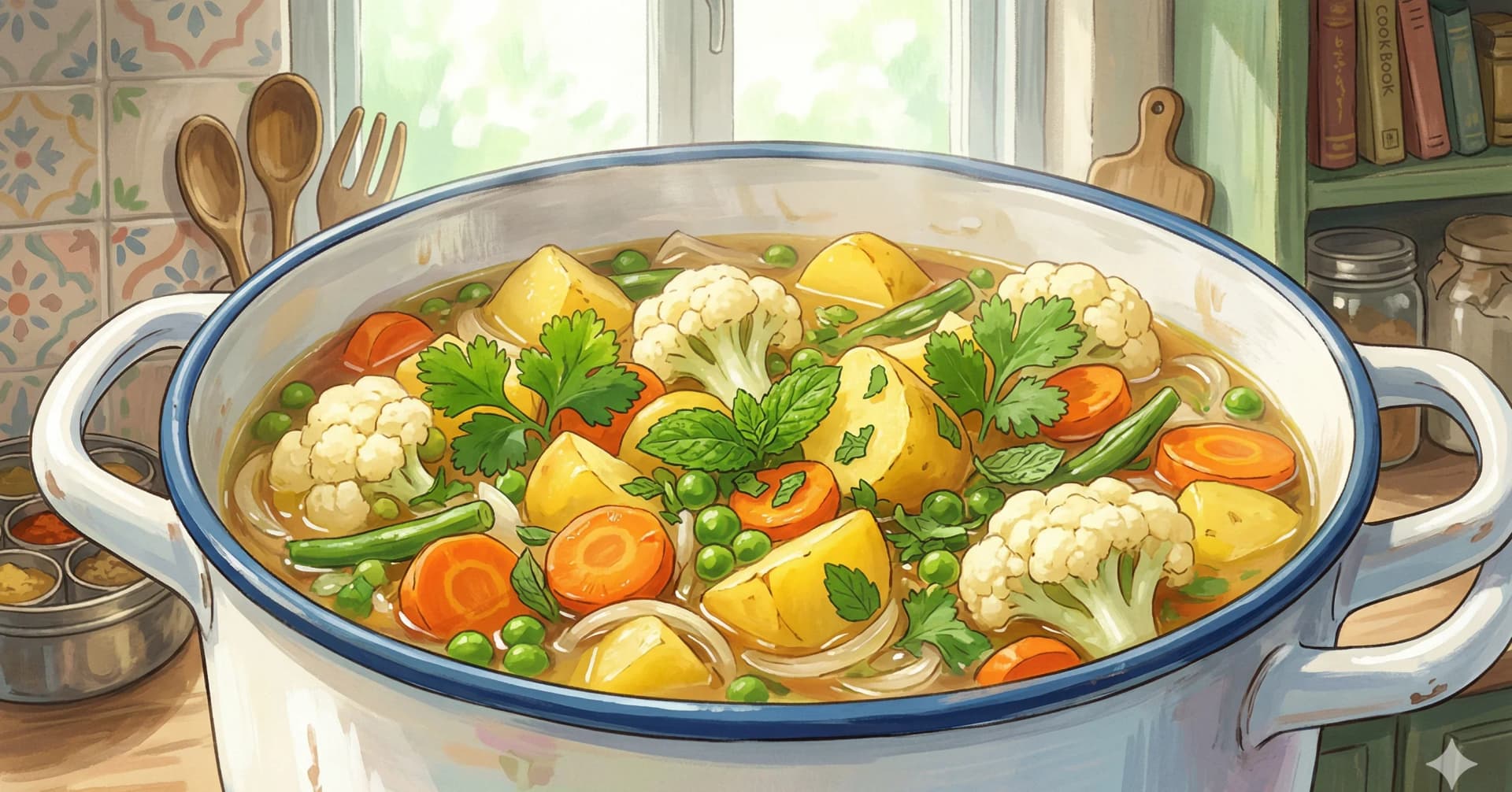
Khattu means sour and meethu means sweet. This Parsi vegetable stew is named for its defining flavour principle: the balance between vinegar's acidity and sugar's sweetness that runs through Parsi cooking as a consistent thread. The vegetables (peas, French beans, carrot, cauliflower, baby potato, yam, and sweet potato) are individually shallow-fried before being combined, a technique that builds independent character in each element before the stew brings them together.
What results is a dish with particular depth: each vegetable is already slightly caramelised at its edges before it meets the sweet-sour broth, and the broth itself is completed quickly, with the vinegar and sugar added at the very end so their freshness is preserved. Mint and coriander in the base provide herbal warmth.
At a Glance
Yield
Serves 6
Prep
25 minutes
Cook
30 minutes
Total
55 minutes
Difficulty
Easy
Ingredients
- ½ lbpeas, shelled
- 5½ ozFrench beans, diced
- ¾ lbpickling onions (small whole onions) (about 2 onions), peeled
- 3½ ozcarrots (about 1½–2 carrots), peeled and diced
- ¾ lbcauliflower (about ½–1 head), cut into florets
- ¾ lbbaby potatoes (about 2 potatoes), peeled
- ¾ lbyam, peeled and diced
- 3½ ozsweet potatoes (about ½–1 potato), peeled and diced
- 5½ ozonions (about 1 onion), sliced
- 2 tbspwhite vinegar
- 2⅓ tspsugar
- 1⅔ tspfine salt
- 5½ oztomatoes (about 1–1½ tomatoes), roughly chopped
- 1¾ tbspgreen chillies, finely chopped
- 1 cupfresh coriander leaves, chopped
- 1¾ cupfresh mint leaves
- ⅓ cupfresh ginger, grated
- 1¾ tbspgarlic, minced
- —Oil for shallow-frying
Method
- 1
Individually fry the vegetables. In a wide pan with enough oil for shallow-frying, fry each vegetable separately over medium-high heat until lightly golden on the outside, roughly 3–5 minutes each depending on size. Set each aside. The peas (250 g) and fresh herbs do not need frying.
- 2
Make the base. Heat 2 tablespoons of oil in a wide pot. Add the sliced onions (150 g) and fry until light golden, about 8 minutes. Add the ginger (30 g), garlic (10 g), green chilli, and mint (30 g). Stir for 2 minutes. Add the chopped tomatoes (150 g) and cook for 5 minutes until softened.
- 3
Combine. Add all the individually fried vegetables to the pot and stir gently to coat. Add the coriander leaves (20 g). Mix well.
- 4
Season. Add the vinegar (30 ml), sugar (2 teaspoons), and salt (2 teaspoons). Stir and simmer over low heat for 5 minutes until everything is warmed through and the flavours have integrated. Taste: the stew should be pleasantly sour-sweet-savoury.
- 5
Serve with roti, rice, or bread.
Key Ingredient Benefits
Mixed vegetables: The traditional choice includes potato, carrot, sweet potato, drumstick, and pumpkin. The variety provides different textures and nutritional profiles. Root vegetables contribute complex carbohydrates and fiber; pumpkin adds vitamin A and beta-carotene; drumsticks (moringa) are rich in vitamin C and iron.
Jaggery (gud): The sweet half of the khattu meethu (sour-sweet) profile. Unrefined cane sugar with a deeper, more molasses-like character than refined sugar. Contains trace minerals and produces a more complex sweetness.
Vinegar: The sour half. Traditional Parsi cooking uses sirka (sugarcane vinegar) or palm vinegar. The acid balances the jaggery's sweetness and brightens the vegetable flavors. Provides the dish's signature tangy backbone.
Cumin and coriander: The two-spice aromatic base. Cumin bloomed in hot oil at the start; coriander powder added with the vegetables. Together they provide the warm, slightly citrusy foundation typical of Parsi vegetable cookery.
Curry leaves: Provide the signature South Indian aromatic note that distinguishes Parsi cooking from broader North Indian traditions. The leaves are bloomed in the tempering oil to release their volatile aromatic compounds.
Tamarind paste (optional, in some versions): Some Parsi households use tamarind alongside or instead of vinegar for the sour element. Tamarind contributes a more complex, fruity sourness.
Coconut milk or grated coconut (optional): Some southern Parsi variations include coconut for additional richness, reflecting the cuisine's southern Gujarat coastal origins.
Why This Works
Individual frying of each vegetable before combining them is characteristic of Parsi cooking and produces a stew where each ingredient retains its own character within a shared broth. A single-pot cook would average out the textures. The individually fried approach preserves distinction.
Adding vinegar and sugar at the end rather than cooking them in prevents the acid from boiling off and the sugar from caramelising. Both flavours remain bright and readable in the finished dish.
Substitutions & Variations
Any seasonal vegetables can be substituted in this framework. Green papaya, raw banana, courgette, or turnip all work well.
More sour: Increase vinegar by 10 ml for a more pronounced tang.
Serving Suggestions
Serve with soft Indian bread or alongside a simple dal and rice. This is a vegetarian centrepiece for a Parsi family meal.
Storage & Reheating
Keeps refrigerated for 2 days. Reheat gently, adding a splash of water if needed.
Cultural Notes
Khattu meethu estew (sweet-and-sour stew, often spelled estew in Parsi vernacular reflecting the Portuguese-Indian English transliteration of "stew") is one of the everyday vegetable preparations in Parsi cuisine. The khattu meethu flavor profile — sweet balanced with sour — is a defining feature of Parsi cooking and reflects the community's Persian culinary heritage filtered through centuries of Indian adaptation.
The dish belongs to the patio family of Parsi sweet-sour preparations, which includes patra ni machi (fish in banana leaf), various meat patios, and several vegetable variations. All share the same balanced sweet-sour-spicy character that traces back to Persian/Iranian cooking traditions.
The Parsi community settled in Gujarat after fleeing religious persecution in Persia in the 8th-10th centuries CE. They were granted refuge by the local Hindu ruler under the condition that they would not eat beef, adopt the Gujarati language, and integrate peacefully into local life. The resulting cuisine reflects this integration — Persian techniques (sweet-sour balance, slow stewing, specific spice combinations) applied to Indian vegetables, herbs, and rice.
In modern Parsi cooking, khattu meethu estew is a weeknight staple — quick to prepare, vegetarian (suitable for the regular fast days of the Zoroastrian calendar), and adaptable to whatever vegetables are in season. The dish is typically served with steamed rice or chapati, and often appears alongside dhansak or other meat preparations as the vegetable course in larger meals.
The dish also reflects a broader Parsi culinary philosophy of santhokh (contentment) and gantar (moderation) — the idea that food should be balanced, nourishing, and never excessive. Khattu meethu estew embodies these principles: simple vegetables, balanced flavors, modest portions.
Nutrition Facts
Calories: 219kcal (11%)|Total Carbohydrates: 48.2g (18%)|Protein: 7.1g (14%)|Total Fat: 0.7g (1%)|Saturated Fat: 0.1g (1%)|Cholesterol: 0mg (0%)|Sodium: 127mg (6%)|Dietary Fiber: 9.5g (34%)|Total Sugars: 11.3g
You Might Also Like


Ratings & Comments
Ratings & Comments
Ratings
Share your thoughts on this recipe.
Sign in to rate and comment