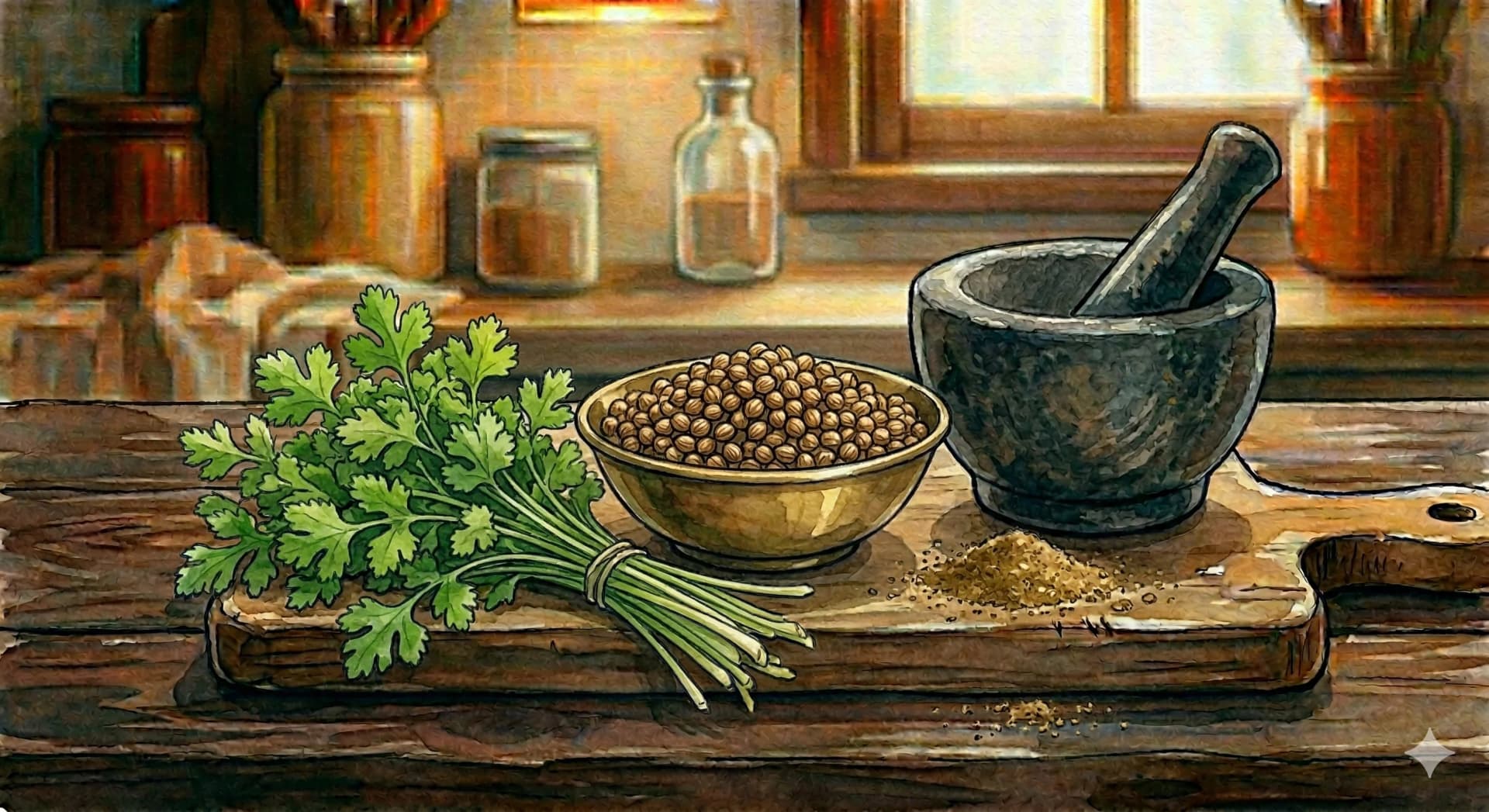
Coriander
Also known as: Dhania, Cilantro (leaves), Coriandrum sativum, Chinese Parsley
Coriander is unusual among culinary plants in that both its seeds and its leaves are used as distinct ingredients with quite different flavor profiles. The seeds are warm, citrusy, and slightly sweet — a foundational spice in South Asian, Middle Eastern, and Latin American cooking. The fresh leaves (cilantro) are bright, herbaceous, and polarizing — a phenomenon linked to a specific genetic variant that makes the compound 2E-alkenal smell soapy to some people.
Key facts at a glance:
- Coriander is unusual among — Culinary plants in that both its seeds and its leaves are used as distinct ingredients with quite different flavor profiles.
- The seeds are warm — Citrusy, and slightly sweet — a foundational spice in South Asian, Middle Eastern, and Latin American cooking.
- The fresh leaves (cilantro) — Bright, herbaceous, and polarizing — a phenomenon linked to a specific genetic variant that makes the compound 2E-alkenal smell soapy to some people.
Flavor Profile
Origin
Eastern Mediterranean, Middle East, South Asia
Traditional Medicine Perspectives
Ayurveda
Coriander (Dhania) is classified in Ayurveda as cooling, sweet, and pungent. It is used to balance Pitta — the fiery constitution prone to inflammation and excess heat. The seeds are used as a digestive and diuretic, and to reduce excessive thirst. Coriander water (seeds boiled and strained) is a common Ayurvedic home remedy for heat-related digestive complaints.
Traditional Chinese Medicine
In TCM, coriander is classified as acrid, warm, and aromatic. It promotes the release of measles rash to the surface (helping the body complete an immune response), warms the Stomach and Spleen, and promotes Qi movement. Fresh coriander leaf is used to treat indigestion, nausea, and as a carminative in mild digestive formulas.
Modern Scientific Research
Coriander seeds and leaves contain linalool, a terpene with documented anxiolytic, sedative, and anti-inflammatory properties. Research shows coriander may help lower blood sugar by stimulating insulin secretion and improving glycogen storage. Animal studies suggest potential benefits for heavy metal chelation — particularly lead. Coriander leaf extract shows significant antibacterial activity against food-borne pathogens including Salmonella.
Cultural History
Coriander seeds have been found in ancient Egyptian burial sites and are referenced in the Ebers Papyrus (1550 BCE) as a medicinal plant. Sanskrit texts include it in early Ayurvedic formulations. The spice traveled from its origins in the eastern Mediterranean and South Asia outward to all major culinary traditions. In South Asia, coriander and cumin are treated as a paired duo (dhania-jeera), rarely used apart.
Culinary Uses
Ground coriander is essential to curry powders, garam masala, ras el hanout, and chili blends. Whole seeds are used in pickling, brines, and some bread recipes. Fresh cilantro is used as a finishing herb in South Asian, Southeast Asian, Mexican, and Latin American dishes. Coriander pairs naturally with cumin, chili, garlic, lime, and ginger.
Preparation Methods
Toast whole coriander seeds before grinding for significantly deeper flavor. Coriander releases its aromatic compounds quickly after grinding — buy whole and grind as needed. For coriander water, toast 1 tablespoon of seeds, boil in 2 cups of water for 5 minutes, strain, and drink warm.
Comments
Share your thoughts on this ingredient.
Sign in to comment0 Comments