Chinese Cuisine
Taiwanese Beef Noodle Soup (紅燒牛肉麵)
A rich, deeply braised noodle soup with doubanjiang, tomato, and fall-apart beef shank
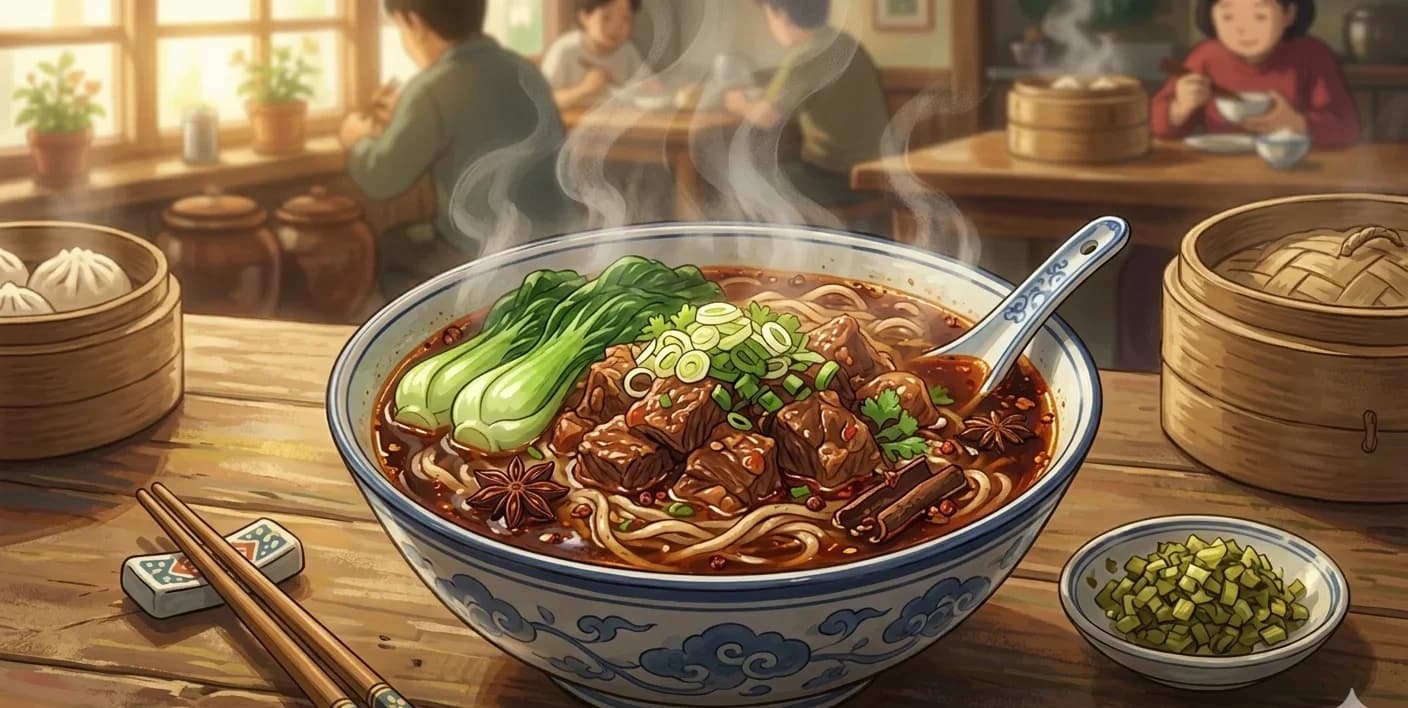
The smell of Taiwanese beef noodle soup is unmistakable. It is dark and meaty, with a sweet-savory warmth that drifts out of kitchens and noodle shops across the island. The broth carries the deep color of soy sauce and doubanjiang, brightened by tomato and softened by rock sugar. The beef, braised for hours in that same liquid, is so tender it barely holds together on the spoon.
This is one of Taiwan's most iconic dishes. Despite its name, it draws from mainland Chinese traditions, particularly the red-braised cooking style of Sichuan and northern China, brought to Taiwan by military families in the mid-twentieth century. Over time, Taiwanese cooks made it their own, adding tomato for acidity and sweetness, refining the spice balance, and always serving it with a small dish of sauteed pickled mustard greens on the side.
Where Lanzhou Beef Noodle Soup is built on a clear broth and delicate spice, Taiwanese beef noodle soup leans into boldness. The doubanjiang, a fermented chili bean paste from Sichuan, brings salt, heat, and deep umami to the base. Shaoxing wine deglazes the aromatics and contributes a rich, slightly sweet complexity. The broth that results is opaque, reddish-brown, and intensely savory. It stains the noodles the moment they hit the bowl.
The pickled mustard greens are a quiet but essential accompaniment. Sauteed with garlic, ginger, and a pinch of sugar, they offer a salty, tangy crunch that cuts through the richness of every spoonful. Without them, the soup can feel one-note. With them, it becomes balanced.
At a Glance
Yield
10 servings
Prep
30 minutes
Cook
2 hours 30 minutes
Total
3 hours
Difficulty
Medium
Ingredients
Broth Ingredients
- 3 lbbeef shank, cut into 5 cm chunks
- 2 tbspneutral oil
- 5½ ozonion (about 1 onion), cut into wedges
- 4scallions, cut into 5 cm segments
- 6 clovesgarlic, smashed
- 5 cmpiece fresh ginger, smashed
- 1tomato, cut into wedges
- 4dried red chilies, ripped in half
- 1¼ ozspicy doubanjiang (chili bean paste)
- 2¼ tsptomato paste
- ½ cupsoy sauce
- ½ cupShaoxing wine
- 1⅞ tspsugar (or 2 pieces rock sugar)
- 2 qtwater
- 4star anise
- 1cinnamon stick
- 3bay leaves
- 1 tbspfennel seeds
- 1 tspSichuan peppercorns
- ¼ ozfive spice powder
- ⅓ tspblack pepper
Pickle Ingredients
- 8 ozpickled mustard greens, rinsed and diced
- 3 clovesgarlic, minced
- 2Thai bird's eye chilies, sliced (optional)
- 1 tbspneutral oil
- 2 tbspsugar
Method
- 1
Blanch the beef. Place the beef shank chunks in a large pot and cover with cold water. Bring to a boil over high heat and let it roll for 3 to 5 minutes. A thick foam will rise to the surface. Drain the beef, rinse each piece under running water, and set aside. This removes impurities and ensures a cleaner, less cloudy broth.
- 2
Build the aromatic base. Heat the oil in a Dutch oven or heavy-bottomed pot over medium-high heat. Add the onion, scallions, garlic, and ginger. Cook for 4 to 5 minutes, stirring occasionally, until the onion is softened and lightly charred at the edges. Add the tomato wedges and dried chilies and cook for another minute until the tomato begins to break down.
- 3
Toast the paste. Push the aromatics to the side and add the doubanjiang directly to the hot surface of the pot. Stir it into the oil for 30 seconds until it darkens slightly and becomes very fragrant. This step blooms the fermented flavors and deepens the color of the finished broth.
- 4
Deglaze and combine. Pour in the Shaoxing wine and scrape up any browned bits from the bottom of the pot. Add the blanched beef, soy sauce, tomato paste, sugar, and 8 cups of water. Tie the spice bundle ingredients in cheesecloth and add to the pot. Stir to combine.
- 5
Braise the beef. Bring the liquid to a boil, then reduce the heat to low. Cover with a lid and simmer gently for 2 hours, or until the beef is extremely tender and breaks apart easily when pressed with a spoon. Check occasionally and skim any foam that rises.
- 6
Strain the broth. Transfer the beef chunks to a plate. Remove and discard the spice bundle. Strain the broth through a fine mesh strainer into a clean pot, pressing on the solids to extract all the liquid. Discard the aromatics. Taste the broth and adjust with salt or soy sauce if needed.
- 7
Prepare the mustard greens. Heat 1 tablespoon of oil in a wok or small skillet over medium heat. Add the garlic and chilies, if using, and stir for 30 seconds until fragrant. Add the diced pickled mustard greens and cook for 2 minutes until the excess moisture evaporates. Stir in the sugar until dissolved. Set aside.
- 8
Cook the noodles and bok choy. Bring a large pot of water to a rolling boil. Cook the noodles according to package directions, then drain. In the same water, blanch the bok choy halves for 30 to 60 seconds until bright green and just tender. Drain.
- 9
Assemble the bowls. Divide the noodles among serving bowls. Arrange a few pieces of braised beef and blanched bok choy over the noodles. Ladle the hot broth over everything. Top each bowl with a spoonful of sauteed mustard greens and a scattering of sliced scallions and cilantro.
Key Ingredient Benefits
Doubanjiang: A fermented paste made from broad (fava) beans and chilies, originating in Pixian, Sichuan. The fermentation process produces natural glutamates, which are responsible for its intense umami character. As a fermented food, it contains beneficial enzymes and probiotics, though most are destroyed during cooking. High in sodium, so the total salt in the recipe should be adjusted accordingly.
Beef shank: The connective tissue in beef shank is primarily collagen, which converts to gelatin during slow cooking. This gives the braising liquid a rich body that water alone cannot achieve. Beef shank is also a good source of iron, zinc, and B vitamins, particularly B12.
Pickled mustard greens (suan cai): A lacto-fermented vegetable that, when eaten in its uncooked form, provides probiotics and is rich in fiber and vitamin C. Cooking destroys most live cultures but preserves the tangy flavor and adds textural contrast. In traditional Chinese medicine, pickled vegetables are associated with aiding digestion.
Why This Works
The doubanjiang is the engine of this soup. Unlike adding plain chili flakes, doubanjiang brings fermented depth. It is made from broad beans and chilies that have been salted and aged, producing a complex savory intensity that raw spices cannot match. Toasting it briefly in hot oil before adding liquid activates its aromatic compounds and distributes its red color evenly through the broth.
Blanching the beef before braising it is a technique shared with Lanzhou Beef Noodle Soup and serves the same purpose: removing blood proteins that would cloud the broth and create off-flavors. The result is a broth that is deeply colored from soy sauce and doubanjiang but still clean-tasting, not muddy.
The tomato is a distinctly Taiwanese addition to what is otherwise a mainland Chinese braising technique. Its natural acidity cuts through the richness of the beef fat and soy sauce, providing brightness without adding vinegar. Combined with the tomato paste, which concentrates that effect, the broth achieves a rounded sweetness that balances the salt and heat.
Rock sugar dissolves slowly and produces a gentler sweetness than granulated sugar. It also contributes a subtle gloss to the broth. If you cannot find it, brown sugar is the closest substitute in both flavor and effect.
Substitutions & Variations
Beef cut: Boneless short ribs, chuck roast, or brisket can replace the shank. All braise well, though they will produce slightly less gelatin in the broth. For a version that leans into tendon and collagen, see Beef Tendon Noodle Soup.
Instant Pot method: Use the saute function for steps 2 through 4. After adding water and spices, seal and pressure cook on high for 45 minutes, then allow a natural pressure release for 15 minutes. The beef will be fully tender.
Doubanjiang: If unavailable, substitute 1 tablespoon of gochujang mixed with 1 tablespoon of miso paste. The flavor profile will differ, but the fermented depth will be approximated.
Heat level: For a milder soup, reduce the doubanjiang to 1 tablespoon and omit the dried chilies. Add chili oil at the table for those who want more heat.
Noodles: Fresh knife-cut noodles are excellent here, as their thick, irregular shape holds the heavy broth well. Dried wheat noodles or even udon can substitute in a pinch.
Serving Suggestions
This is a one-bowl meal. The noodles, beef, vegetables, and broth together are complete. Serve the pickled mustard greens on the side or directly on top. A small dish of chili oil and a cruet of black vinegar on the table allow each person to adjust their bowl.
For a fuller Taiwanese table, serve alongside Gong Bao Ji Ding or a plate of Ginger Scallion Beef. Congee the following morning, made with leftover broth, extends the meal beautifully.
Storage & Reheating
Broth and beef: Store separately in airtight containers. The broth keeps in the refrigerator for up to 4 days and freezes for up to 3 months. The beef keeps refrigerated for 3 days. The flavor of the broth improves noticeably on the second day as the spices continue to meld.
Pickled mustard greens: Store in a separate container in the refrigerator for up to 5 days. They do not freeze well.
Noodles: Always cook fresh. Leftover cooked noodles absorb broth and become soft and starchy.
Reheating: Warm the broth on the stovetop over medium heat. Add the beef to the broth for the final 2 minutes of reheating so it warms through without overcooking.
Cultural Notes
Niu rou mian (牛肉麵, "beef noodle soup") is the Taiwanese beef noodle soup that anchors the country's national food identity, served in thousands of dedicated niu rou mian shops across Taiwan, with annual festivals and competitions in Taipei to crown the best version. The dish has a documented Chinese mainland origin: the modern Taiwanese form was developed by Chinese veterans from Sichuan and other mainland provinces who arrived in Taiwan with the Kuomintang in 1949, and who adapted their home-region noodle traditions to the ingredients available on the island. The most famous Taiwanese version, called hong shao niu rou mian (red-braised beef noodle soup), traces directly to the cooking of Sichuan veterans in the military villages around Taipei.
The two main Taiwanese variants reflect this layered history. The hong shao (red-braised) version uses doubanjiang (Sichuan fermented bean paste) as the seasoning foundation, with the broth dark and rich from soy sauce, sugar, star anise, cassia, and the bean paste. The qing dun (clear-simmered) version is older and closer to the original mainland Chinese form, with a clear broth seasoned only with ginger, scallion, daikon, and salt, and the beef showing through as the central flavor without the chili and bean paste of the red-braised style. Both versions use beef shank or beef brisket braised separately until tender, sliced and laid over wheat noodles in the hot broth, topped with chopped pickled mustard greens (suan cai), scallion, and cilantro.
The annual Taipei Beef Noodle Festival (Taipei City Beef Noodle Soup Festival) has been held since 2005 and crowns winners in multiple categories: traditional red-braised, traditional clear-soup, creative interpretation, and best noodles. The festival, along with the dish's appearance on every street corner in Taipei, has cemented niu rou mian as the dish most strongly associated with Taipei's food identity. Famous Taipei shops including Lin Dong Fang (林東芳) in Zhongshan, Yong Kang Beef Noodle in Da'an, and Liu's Noodles in Datong have served the dish for decades and continue to draw long lunchtime lines from both locals and tourists making the food pilgrimage to taste the city's most representative bowl.
Nutrition Facts
Calories: 607kcal (30%)|Total Carbohydrates: 59.7g (22%)|Protein: 52.6g (105%)|Total Fat: 16g (21%)|Saturated Fat: 4.4g (22%)|Cholesterol: 124mg (41%)|Sodium: 1365mg (59%)|Dietary Fiber: 3g (11%)|Total Sugars: 6.5g
You Might Also Like
 Medium
Chinese Cuisine
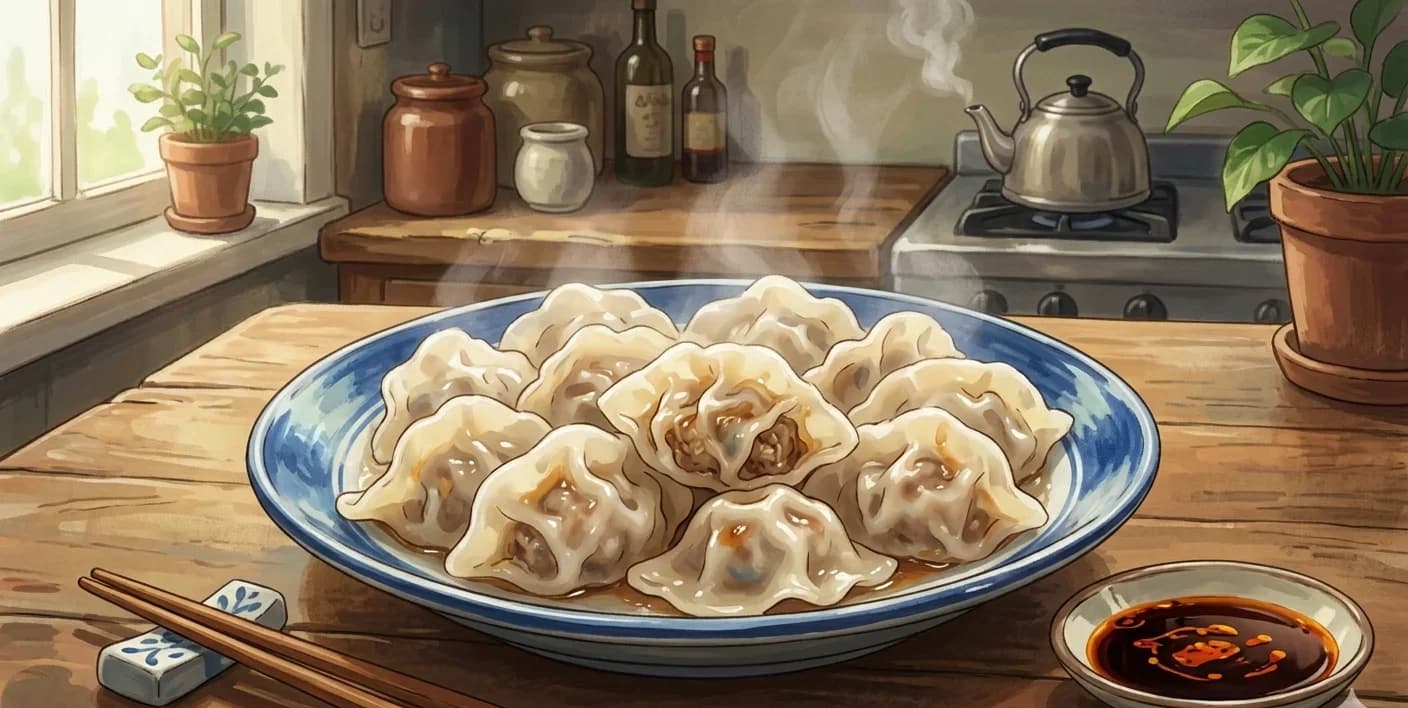
Niu Rou Yang Cong Jiaozi (Beef and Onion Dumplings)
60 minutes
 Easy
EasyCross-Cultural · China
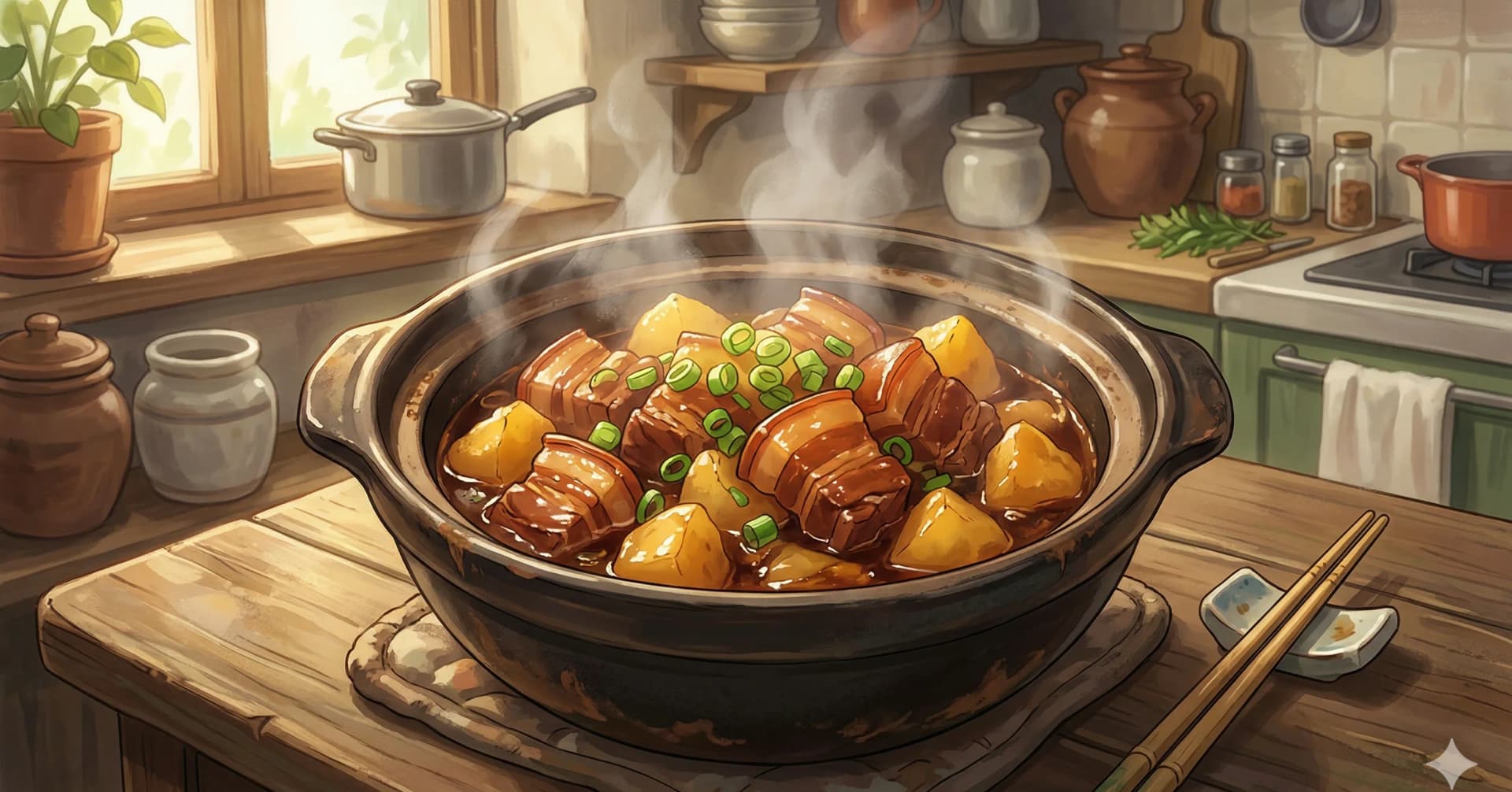
Braised Pork with Potatoes (薯仔炆豬肉)
40 minutes
 Easy
EasyTraditional Chinese Medicine · China
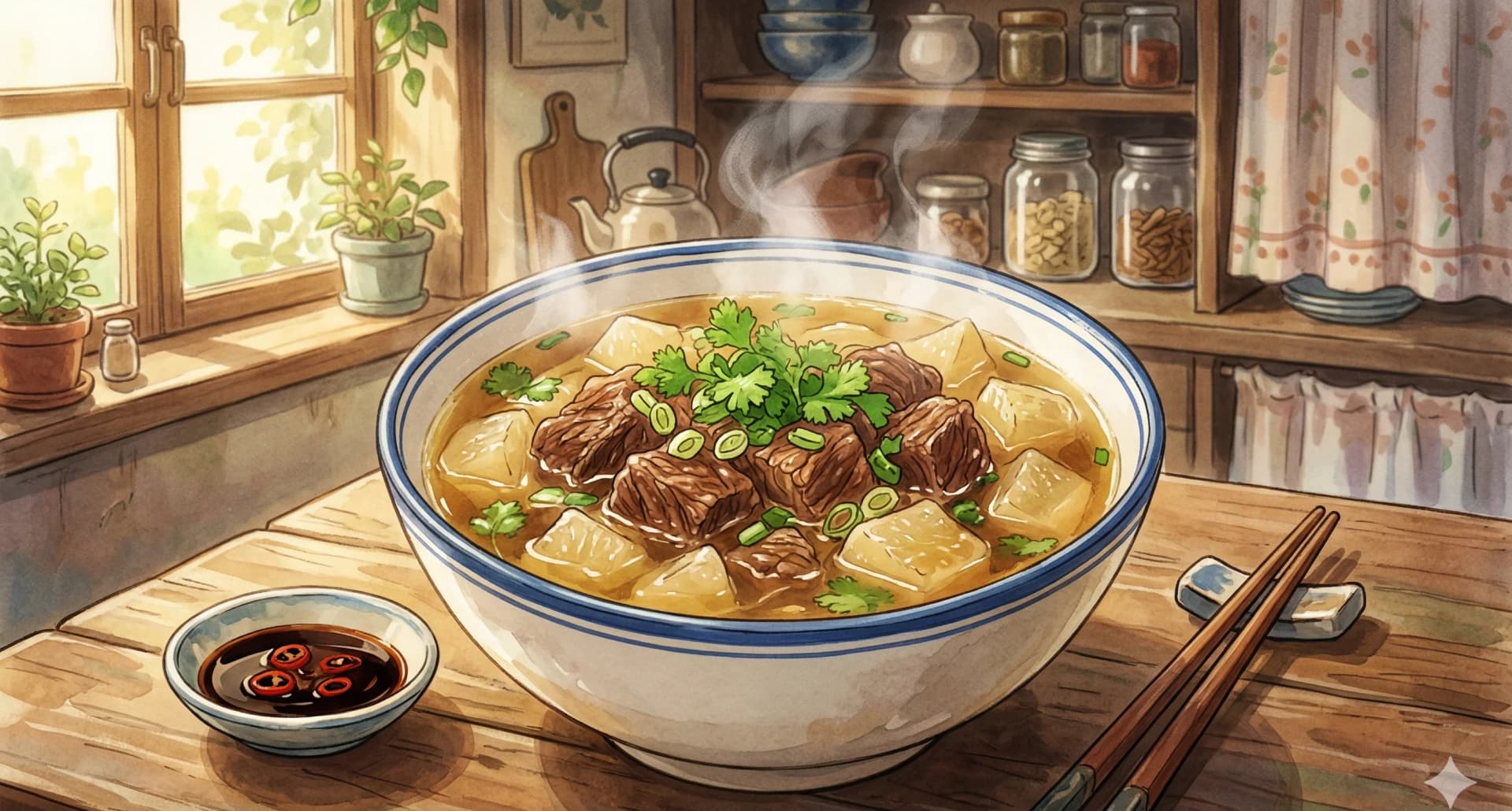
Beef Brisket Soup (清湯牛腩)
145 minutes
 Medium
Vietnamese Cuisine
Bun Rieu (Vietnamese Crab and Tomato Noodle Soup)
2 hours
Ratings & Comments
Ratings & Comments
Ratings
Share your thoughts on this recipe.
Sign in to rate and comment