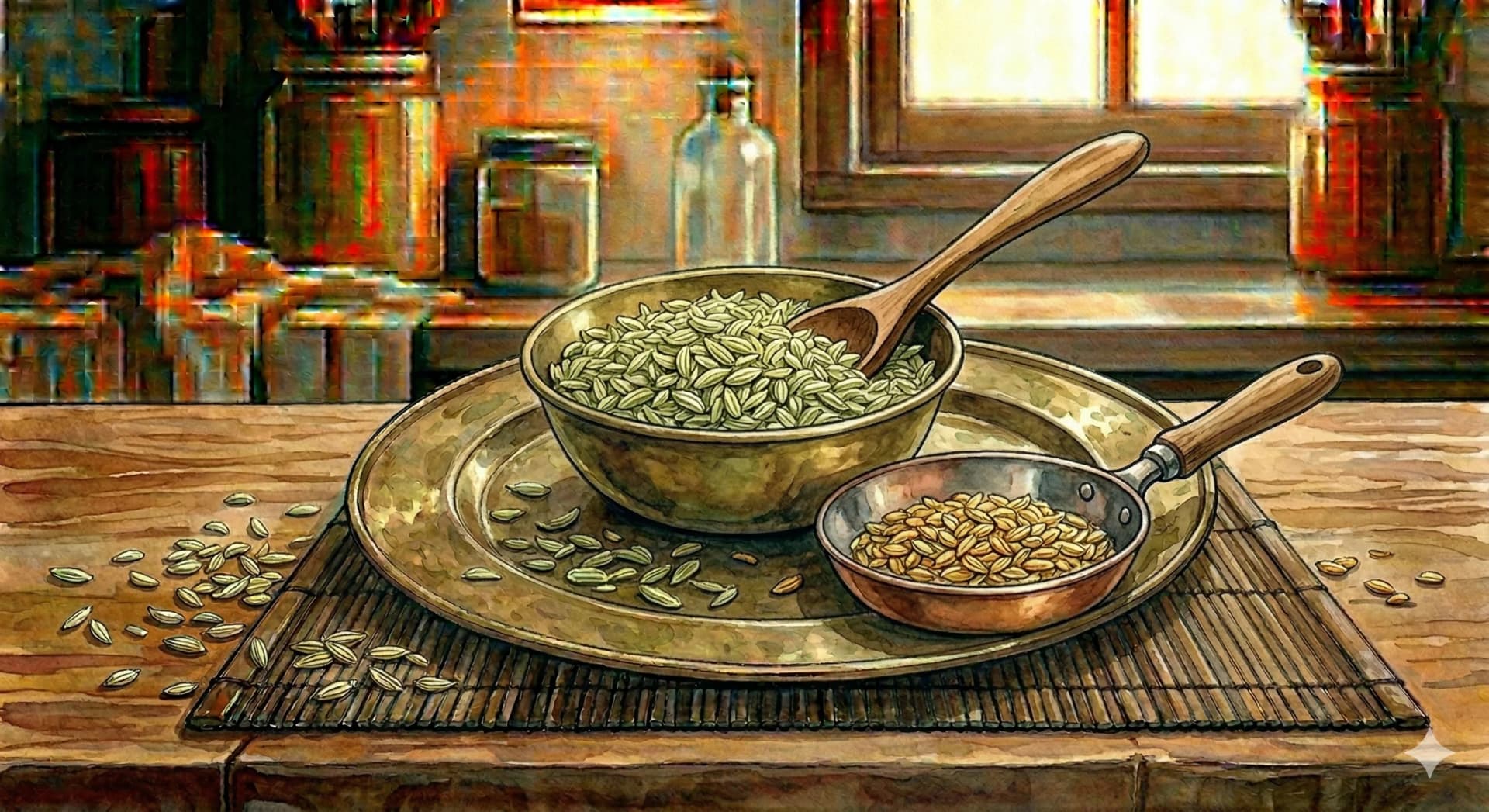
Fennel Seeds
Also known as: Xiao Hui Xiang, Chinese Fennel, Foeniculum vulgare, Small Fennel
Fennel seeds used in Chinese cooking are the same species as Western fennel (Foeniculum vulgare), but the culinary application is entirely different. In China, fennel seeds (xiao hui xiang, meaning 'small fennel') are used primarily as a warm spice in braises, master stocks, and five-spice powder, rather than as a vegetable or fresh herb. Their sweet, anise-like flavor is milder than star anise and provides a gentler background note that rounds out spice blends without dominating.
Key facts at a glance:
- Their sweet, anise-like flavor — Milder than star anise and provides a gentler background note that rounds out spice blends without dominating.
- Fennel seeds used in Chinese cooking — The same species as Western fennel (Foeniculum vulgare), but the culinary application is entirely different.
- In China, fennel seeds (xiao hui xiang — Meaning 'small fennel') are used primarily as a warm spice in braises, master stocks, and five-spice powder, rather than as a vegetable or fresh herb.
Flavor Profile
Origin
Mediterranean (origin), China, Sichuan, Northern China
Traditional Medicine Perspectives
Traditional Chinese Medicine
Fennel seed (Xiao Hui Xiang) is classified as warm and acrid in TCM, associated with the Liver, Kidney, Spleen, and Stomach meridians. It is one of the primary herbs used to warm the Kidney, regulate Qi, and relieve pain. It is commonly prescribed for cold-type hernia, abdominal pain, dysmenorrhea, and digestive complaints including bloating, gas, and nausea from cold patterns. It is often combined with ginger and cinnamon for menstrual pain.
Modern Scientific Research
Anethole, the primary aromatic compound in fennel seeds, shows antimicrobial, antifungal, and anti-inflammatory properties in research. Studies support fennel's traditional use as a carminative — it reduces intestinal spasms and gas production. Research also shows potential estrogenic activity from anethole at high doses, relevant to its traditional use in women's health. Fennel seeds are a good source of dietary fiber, manganese, and antioxidants.
Cultural History
Fennel has been cultivated in China for over a thousand years, arriving along ancient trade routes from the Mediterranean. In Chinese culinary tradition it is used almost exclusively as a dried seed spice rather than a fresh vegetable — the reverse of its use in Italian and French cooking. In TCM, fennel seed (Xiao Hui Xiang) is one of the most commonly prescribed digestive herbs. It is paired with other warm spices in the five-spice blend and used in braising liquids for pork and lamb across northern and Sichuan cooking.
Culinary Uses
Add to braising liquids for pork, lamb, and duck. Use in five-spice powder and spice blends.
Toast and grind for use in spice rubs. Add whole to master stock preparations.
Pair naturally with star anise, cassia, and Sichuan peppercorn. In northern Chinese cooking, combine with lamb for dumplings and stir-fries.
Preparation Methods
Toast briefly in a dry pan before using to deepen flavor. Use whole in long-cooked dishes and remove before serving, or grind for spice blends. Store whole seeds in an airtight container — they retain flavor much longer than ground.
Traditional Dishes
- Five-spice preparations
- Braised pork hock
- Lamb dumplings (northern Chinese)
- Master stock
- Sichuan cold cuts
- Fennel, Cumin & Coriander Digestive Tea
Recipes Using Fennel Seeds
- Chicken Chettinad
- Ayam Percik (Malaysian Flame-Grilled Coconut Chicken)
- Malaysian Mutton Soup (Sup Kambing)
- Chicken Pho (Phở Gà)
- Lentil Fritters (Parrupu Vada)
- Slow-Cooked Quail, Green Spices (Dum Ka Bateyr Hara Masala)
- Vegetable Ishtu
- Beef Pho (Phở Bò)
- Beef Tendon Noodle Soup (牛筋面)
- Lanzhou Beef Noodle Soup (兰州牛肉面)
- Taiwanese Beef Noodle Soup (紅燒牛肉麵)
- Bak Kut Teh (Pork Bone Tea)
Comments
Share your thoughts on this ingredient.
Sign in to comment0 Comments