Vietnamese Cuisine
Ga Nuong Xa (Vietnamese Grilled Lemongrass Chicken)
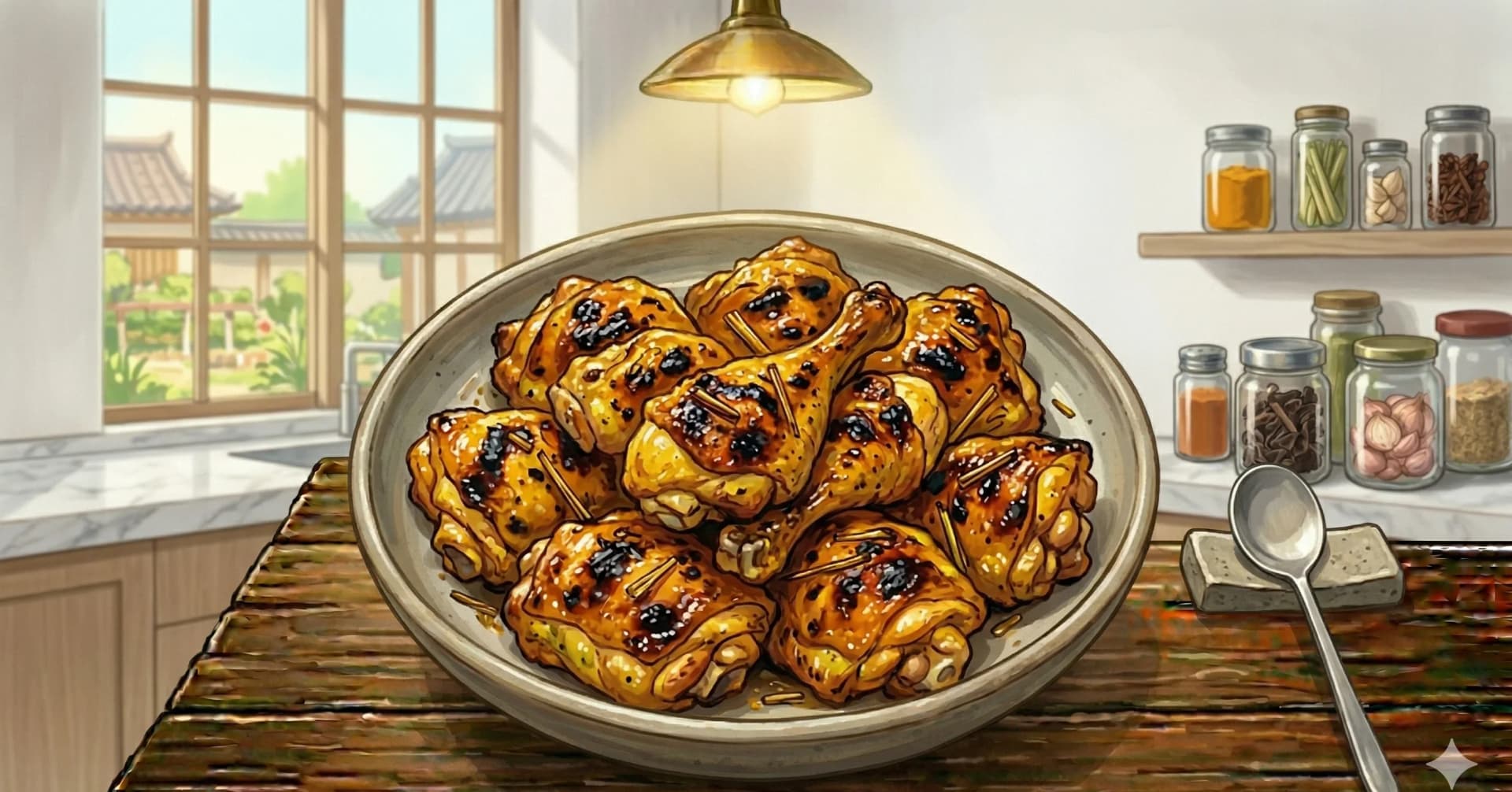
Charred, fragrant lemongrass chicken thighs with nuoc cham and fresh herbs
Ga nuong xa belongs to the family of Vietnamese grilled dishes where a simple marinade does nearly all the work. The name means "grilled chicken with lemongrass," and the formula has not changed much across generations: chicken pieces are rubbed with a paste of minced lemongrass, garlic, shallots, fish sauce, and sugar, left to absorb the flavors for a few hours, then grilled over charcoal until the surface turns deeply caramelized and the edges carry the kind of char that only direct flame produces. The aroma of lemongrass hitting hot coals is one of the defining scents of Vietnamese street cooking.
The dish is closely related to gai yang, its Thai cousin, though the Vietnamese version leans harder on shallots and fish sauce where the Thai favors white peppercorns and coriander seeds. Both traditions understand that the marriage of citrusy lemongrass and grilled poultry is something worth building a meal around. In Vietnamese kitchens, ga nuong xa appears in a few different settings. It can be served simply over steamed rice with a side of pickled daikon and carrot. It can anchor a vermicelli noodle bowl, the kind sold at bun restaurants across Saigon, piled over cool noodles with shredded lettuce, bean sprouts, herbs, crushed peanuts, and a generous pour of nuoc cham. Or it can be wrapped in rice paper alongside herbs and pickled vegetables, much like goi cuon.
The marinade here draws primarily from Vicky Pham's approach, with a sambal-spiked chile sauce technique borrowed from Hungry Huy's spicy lemongrass stir-fry, and the noodle bowl assembly informed by Nagi Maehashi's bun ga nuong. The result is a recipe that works as a standalone grilled chicken or as the centerpiece of a full vermicelli bowl spread. Either way, have nuoc cham ready. The chicken is good without it; it is something else entirely with it.
At a Glance
Yield
4 servings
Prep
25 minutes (plus 2 hours marinating)
Cook
15 minutes
Total
2 hours 40 minutes
Difficulty
Easy
Ingredients
Chicken Ingredients
- 2 lbbone-in (about 6 thighs), skin-on chicken thighs
Marinade Ingredients
- 3 stalkslemongrass, bottom 10 cm only, outer layers removed, thinly sliced
- 4 clovesgarlic, peeled
- 2medium shallots (about 60 g total), roughly chopped
- 2 tbspfish sauce
- 1 tbspsoy sauce
- 2½ tbspsugar
- 1 tspsesame oil
- 1 tbspneutral oil (such as rice bran or grapeseed)
- 1/2 tspfreshly ground black pepper
- 1 tbspsambal oelek or 1 fresh red chili, minced (optional, for heat)
Dipping Sauce Ingredients
- ¼ cupfish sauce
- ¼ cuprice vinegar
- 2½ tbspsugar
- ½ cupwarm water
- 2 clovesgarlic, finely minced
- 1red bird's eye chili, thinly sliced
- 3 tbspfresh lime juice (about 2 limes)
To Assemble
- 7 ozdried rice vermicelli noodles
- 2medium carrots, julienned
- 1large cucumber, halved, seeded, and julienned
- 5½ ozbean sprouts
- 4large lettuce leaves, finely shredded
- 1small bunch fresh mint, leaves picked
- 1small bunch fresh cilantro, leaves and tender stems
- 1½ ozroasted peanuts, lightly crushed
- —Lime wedges, for serving
Method
- 1
Prepare the lemongrass by peeling away the tough outer leaves until you reach the pale, tender inner core. Slice the bottom 10 cm crosswise into very thin rounds. Discard the woody upper stalks or save them for stock. The thinner you slice before pounding, the easier the next step will be.
- 2
Combine the sliced lemongrass, garlic, and shallots in a mortar and pestle. Pound to a rough, fibrous paste. Some visible texture is fine and even desirable; you are not looking for a smooth puree. Alternatively, pulse in a small food processor, scraping down the sides as needed, until finely minced but not liquefied.
- 3
Transfer the paste to a bowl. Add the fish sauce, soy sauce, sugar, sesame oil, neutral oil, black pepper, and sambal oelek if using. Stir until the sugar dissolves. Taste the marinade. It should be salty, sweet, and aromatic with a strong lemongrass perfume. It will mellow as it sits with the chicken.
- 4
Score the chicken thighs on the skin side with two or three shallow cuts, about 5 mm deep. This helps the marinade penetrate and the heat reach the bone more evenly. Place the thighs in a large zip-top bag or shallow dish. Pour the marinade over the chicken and work it into every surface, pressing paste into the score marks. Seal and refrigerate for at least 2 hours, or overnight for the deepest flavor. Turn the bag once during marinating.
- 5
Make the nuoc cham while the chicken marinates. Dissolve the sugar in the warm water, stirring until clear. Add the fish sauce, rice vinegar, lime juice, minced garlic, and sliced chili. Stir to combine. Taste and adjust: it should balance salty, sour, sweet, and spicy in roughly equal measure, with sourness leading slightly. Let the sauce rest at room temperature for at least 20 minutes so the garlic and chili infuse the liquid. The nuoc cham will keep, covered and refrigerated, for up to 5 days.
- 6
Pull the chicken from the refrigerator 30 minutes before cooking. Prepare a charcoal grill for two-zone cooking, banking coals to one side, or preheat a gas grill with one burner on medium-high and the other on medium-low. If using a grill pan or broiler indoors, preheat on medium-high for 5 minutes.
- 7
Lift the chicken from the marinade, letting excess drip off but leaving the bits of lemongrass and shallot that cling to the surface. These will char and become part of the flavor. Place the thighs skin-side down over moderate direct heat. Cook without moving for 5 to 6 minutes, until the skin is deeply golden with patches of dark char and releases easily from the grate. The sugars in the marinade will caramelize quickly, so stay close.
- 8
Flip the thighs and move them to the cooler zone if flare-ups occur. Continue cooking for another 6 to 8 minutes. The chicken is done when an instant-read thermometer inserted near the bone reads 78 to 80C (172 to 176F) and the juices run clear when pierced. If the skin needs more color, return briefly to the hot zone for 30 seconds per side.
- 9
Transfer the chicken to a cutting board and rest for 5 minutes. The internal temperature will climb a few more degrees during this time and the juices will settle back into the meat.
- 10
If serving as a vermicelli bowl, prepare the noodles while the chicken rests. Bring a pot of water to a rolling boil. Add the dried rice vermicelli and cook for 2 to 3 minutes, until the noodles are just tender and pliable but not mushy. Drain immediately and rinse under cold running water, tossing gently, until completely cool. Shake off excess water and divide among serving bowls.
- 11
To assemble the bowls, layer the cool vermicelli noodles with shredded lettuce, julienned carrots, cucumber, and bean sprouts. Slice the rested chicken off the bone or into thick strips and arrange on top. Scatter with mint leaves, cilantro, and crushed peanuts. Serve with lime wedges and a generous pour of nuoc cham, about 60 ml per bowl. Each person can toss everything together before eating.
- 12
If serving the chicken simply with rice, slice or chop through the bone and arrange on a plate with a bowl of nuoc cham for dipping and lime wedges on the side.
Key Ingredient Benefits
Lemongrass: The tender inner core of the lower stalk holds the highest concentration of citral and geraniol. In Vietnamese traditional medicine, lemongrass is associated with digestive comfort and is commonly brewed as a tea. Laboratory studies have explored its antimicrobial properties, though culinary use provides flavor rather than therapeutic effect.
Fish sauce (nuoc mam): A cornerstone of Vietnamese cooking, made by fermenting anchovies or other small fish with salt for months or years. The fermentation breaks proteins into free amino acids, particularly glutamate, which is why fish sauce provides intense umami despite containing no added MSG. Quality varies widely; look for brands listing only fish and salt, with a reddish-amber color and a clean, briny aroma.
Shallots: Preferred over yellow onions in Vietnamese marinades for their gentler, slightly sweet flavor and their higher concentration of quercetin and other flavonoid compounds compared to most allium varieties. They break down more readily when pounded, distributing evenly through the paste.
Sambal oelek: A simple Indonesian-origin chili paste of ground fresh red chilies, vinegar, and salt. It adds clean heat without the complexity of fermented chili pastes, letting the lemongrass remain the dominant flavor. In Hungry Huy's stir-fried lemongrass chicken, sambal combined with fish sauce and coconut juice creates a quick chile sauce that deepens the savory-spicy balance.
Rice vermicelli (bun): Naturally gluten-free noodles made from rice flour and water. They cook in minutes, absorb dressing readily, and provide a neutral starchy base that lets the grilled chicken and nuoc cham stand out. Unlike wheat noodles, they remain pleasant at room temperature, which is why they appear in so many Vietnamese cold noodle bowls.
Why This Works
The marinade achieves its depth through two mechanisms. The pounded lemongrass, garlic, and shallots release essential oils that penetrate the chicken during the long marination, while the fish sauce and sugar on the surface promote aggressive caramelization on the grill. Scoring the skin accelerates both processes by creating channels for the paste and increasing the surface area exposed to heat.
Lemongrass contains citral, the same compound that gives lemon zest its aroma, but paired here with geraniol and myrcene, it reads as more herbal and grassy than citrus. Pounding rather than blending preserves the fibrous texture, and those lemongrass fibers char beautifully on the grill, producing aromatic compounds that a smooth paste would not generate.
The combination of fish sauce and soy sauce in the marinade provides overlapping umami from different fermentation traditions. Fish sauce delivers glutamate-rich depth from protein hydrolysis, while soy sauce adds amino acid complexity and a touch of color. The optional sambal introduces capsaicin, which heightens the perception of the other flavors without dominating.
Nuoc cham works as a dressing and a dip because its acidity from lime and vinegar cuts through the richness of the grilled skin, its sweetness echoes the caramelized sugars, and its raw garlic and chili provide a sharp contrast to the mellow, cooked aromatics in the marinade. The sauce effectively rebalances the dish with every bite.
Substitutions & Variations
Chicken cut: Boneless, skin-on chicken thighs reduce grilling time to about 8 to 10 minutes total. Drumsticks work well but need longer cooking, about 20 to 25 minutes over indirect heat with frequent turning. Bone-in breast halves are an option if you prefer white meat; reduce the target temperature to 72C (162F) and watch carefully for drying.
Lemongrass: Frozen pre-sliced lemongrass is a reliable substitute, using the same quantity. Lemongrass paste from a tube works in a pinch; use about 1 tablespoon per stalk called for. Supplement with a strip of lime zest to recover some of the brightness.
Fish sauce: Soy sauce can replace fish sauce for a vegetarian adaptation, though the flavor profile shifts considerably. Use the same volume and add a pinch of sugar to compensate for the lost sweetness.
Sambal oelek: Sriracha, gochujang thinned with a little vinegar, or simply minced fresh chilies all work. For a milder version, omit the chili entirely; the dish is still excellent without heat.
Grill alternatives: A cast-iron grill pan set over high heat on the stove produces good char marks. A broiler set to high with the rack 15 cm from the element works well; watch closely after 5 minutes and flip when the surface looks deeply bronzed. An air fryer at 200C for 18 to 20 minutes, flipping once, produces surprisingly crisp skin.
Stir-fry variation: For a quicker weeknight version inspired by Hungry Huy's ga xao sa ot, cut boneless thighs into bite-sized pieces, marinate for 15 minutes, and stir-fry in a hot pan or wok with extra oil. Saute shallots until golden, add garlic and lemongrass until fragrant, then add the chicken and cook through. Finish with the fish sauce-sambal mixture and a splash of coconut water. Serve over steamed rice.
Noodle bowl additions: Pickled daikon and carrot (do chua) are a traditional addition. Quick-pickle julienned daikon and carrot in a mixture of 120 ml rice vinegar, 60 g sugar, 5 g salt, and 120 ml warm water for at least 30 minutes.
Serving Suggestions
The most common way to eat ga nuong xa in Vietnam is as bun ga nuong, a vermicelli noodle bowl assembled as described in the method. Each person gets a bowl layered with cool noodles, raw vegetables, herbs, and hot grilled chicken, then dresses it with nuoc cham and tosses everything together. The contrast of temperatures, textures, and flavors is what makes the dish so satisfying.
For a simpler presentation, serve the grilled thighs over steamed jasmine rice with a side of pickled vegetables and a dipping bowl of nuoc cham. A plate of raw herbs, lettuce leaves, and sliced cucumber on the side lets each person wrap bites as they go, much like the setup for bun cha in Hanoi.
Ga nuong xa also makes an excellent filling for rice paper rolls. Slice the chicken thinly, wrap with vermicelli, herbs, lettuce, and pickled carrot inside dampened rice paper, and serve with nuoc cham for dipping, following the same spirit as goi cuon.
For a Southeast Asian grill spread, serve alongside gai yang and let guests compare the Vietnamese and Thai approaches to lemongrass chicken. Add som tam for a sharp, crunchy counterpoint, or bring larb to the table for an herbal, toasty salad. Vietnamese ga kho gung, the caramelized ginger-braised chicken, makes a good companion for those who want a saucier, gentler option alongside the char of the grill.
Storage & Reheating
Refrigerator: Store cooked chicken and nuoc cham in separate sealed containers. The chicken keeps for up to 3 days. Nuoc cham keeps for up to 5 days; its flavor actually improves after a day as the garlic and chili mellow. Prepared vermicelli noodles and raw vegetables are best used within 1 day, as the noodles stiffen slightly and the vegetables lose their crispness.
Freezer: Wrap cooled chicken pieces tightly in plastic wrap, then place in a freezer bag with the air pressed out. Freeze for up to 1 month. Thaw overnight in the refrigerator. Nuoc cham does not freeze well due to the fresh lime juice and garlic.
Reheating: For the best results, reheat chicken skin-side down in a hot skillet over medium heat for 3 to 4 minutes, then flip and cook for another 2 minutes. This re-crisps the skin and warms the meat through without drying it out. Alternatively, place on a rack over a sheet pan in a 190C (375F) oven for 8 to 10 minutes. If assembling a noodle bowl with leftover chicken, slicing it thin and serving at room temperature is perfectly acceptable, as the cool noodles and fresh vegetables keep the dish balanced.
Marinade: The raw marinade (before contact with chicken) can be prepared up to 2 days ahead and refrigerated. This is helpful for weeknight cooking if you want to start the marination as soon as you get home.
Cultural Notes
Gà nướng xả, Vietnamese grilled lemongrass chicken, belongs to the broader family of Vietnamese nướng (grilled) dishes that also gave the country thịt nướng, bún chả, and bún thịt nướng. The thread running through all of them is lemongrass. Vietnamese cooks treat lemongrass as basically required for any grilled protein. The citrus oils cut through the smoky char that grilling produces, and they complement the natural sweetness of a fish-sauce-based marinade.
The dish also illustrates a broader Vietnamese principle: build flavor through the marinade, not through a finishing sauce. Korean grilled-meat traditions like galbi and bulgogi lean hard on thick sweet-soy marinades that caramelize dramatically during grilling. Vietnamese grilled chicken goes a different direction. The marinade is thinner. Lemongrass, fish sauce, sugar, garlic, shallot. It penetrates the meat overnight rather than coating the surface, and the result is intensely aromatic but visually less dramatic than its Korean cousins.
Gà nướng xả shows up at every register of Vietnamese eating. Street-side grilling carts cook butterflied half-chickens over portable charcoal in late afternoon. Neighborhood quán cơm restaurants build lunch combination plates around it over rice. Backyard family grills run it on weekends. Upscale Vietnamese restaurants plate it more carefully. The standard accompaniment is cool white rice, a plate of fresh herbs, pickled vegetables, and a small dish of fish-sauce dipping sauce. Each diner builds bites their own way, which is the same DIY-assembly logic that defines bún chả and bánh xèo.
Outside Vietnam, gà nướng xả has become one of the most popular Vietnamese chicken preparations on Western menus. Diners reaching for a perceived healthier alternative to fried chicken find their way to it.
Nutrition Facts
Calories: 430kcal (22%)|Total Carbohydrates: 42g (15%)|Protein: 29g (58%)|Total Fat: 17g (22%)|Saturated Fat: 4.5g (23%)|Cholesterol: 110mg (37%)|Sodium: 1050mg (46%)|Dietary Fiber: 1g (4%)|Total Sugars: 6g
You Might Also Like
Ratings & Comments
Ratings & Comments
Ratings
Share your thoughts on this recipe.
Sign in to rate and comment