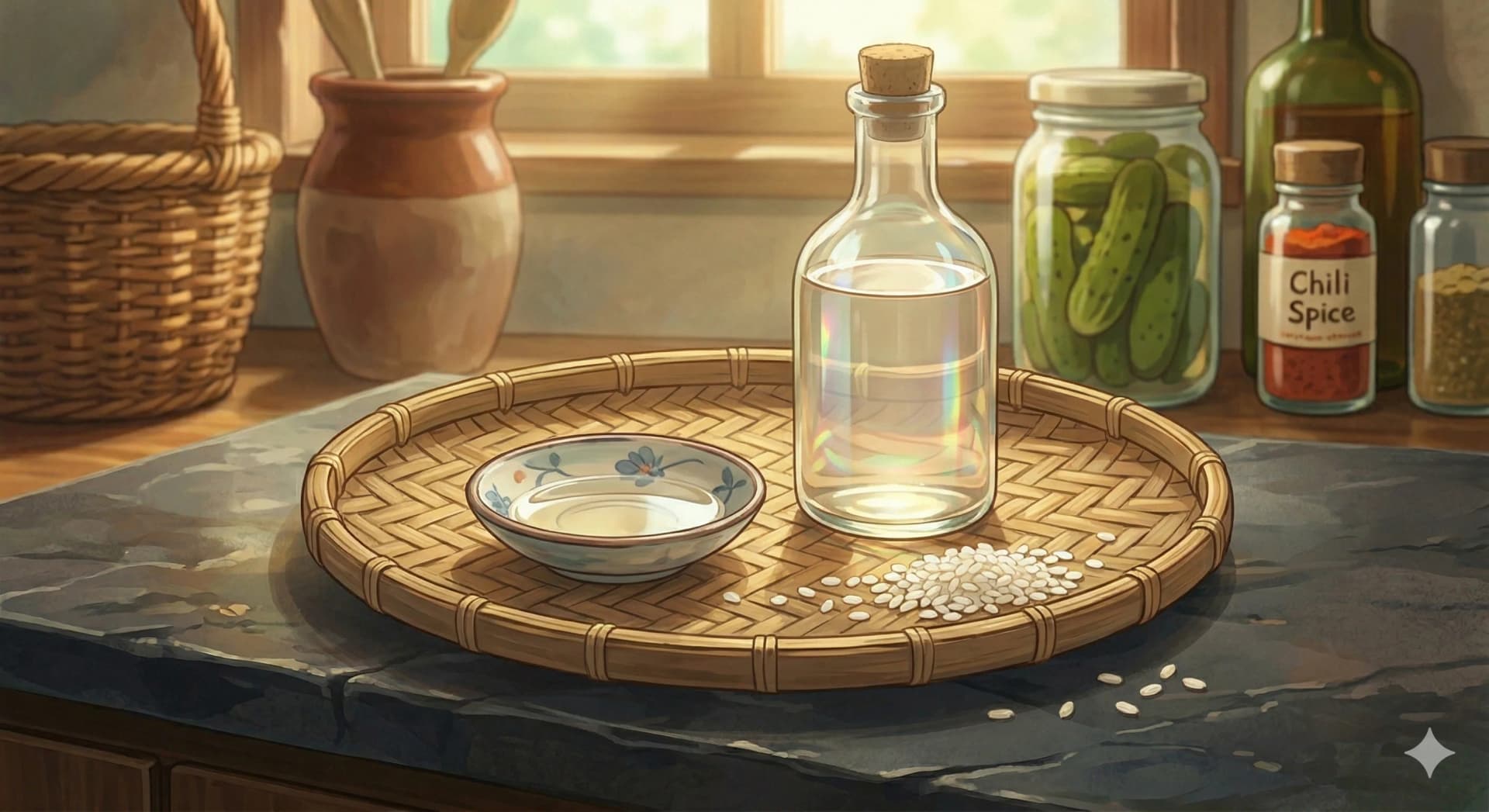
Rice Vinegar
Also known as: Rice Wine Vinegar, Mi Cu, White Rice Vinegar
Rice vinegar is the mildest, most delicate of the Asian vinegars — a pale golden liquid with a clean, gently sour flavor and none of the sharpness of distilled white vinegar.
Made from fermented rice wine, it is gentler and slightly sweeter than Western vinegars, which makes it ideal for dressings, pickles, dipping sauces, and dishes where acidic brightness is wanted without aggressiveness.
Key facts at a glance:
- Mildest Asian vinegar — gentler and slightly sweeter than Western vinegars
- Made from fermented rice wine — produced across China, Japan, and Korea for thousands of years
- Essential to sushi rice — its balance of acidity and sweetness seasons the rice
- Lower in acetic acid — than apple cider or distilled vinegars
- Potential blood sugar benefits — acetic acid improves insulin sensitivity
Flavor Profile
Origin
China, Japan, Korea, East Asia
Traditional Medicine Perspectives
Traditional Chinese Medicine
Like all vinegars in TCM, rice vinegar is sour, bitter, and warm in nature. It is associated with the Liver and is said to move Blood, resolve stasis, and aid digestion. The milder, sweeter quality of rice vinegar makes it one of the gentler medicinal vinegars in Chinese tradition.
Modern Scientific Research
Rice vinegar contains acetic acid, organic acids produced during fermentation, and small amounts of amino acids.
Research on vinegar in general suggests potential benefits for blood sugar management — acetic acid appears to improve insulin sensitivity and slow gastric emptying. Rice vinegar is lower in acetic acid concentration than apple cider or distilled vinegars, which may reduce these effects but also makes it gentler on digestion.
Cultural History
Rice vinegar has been produced across China, Japan, and Korea for thousands of years wherever rice agriculture took hold. In Japan, rice vinegar (komezu) is essential to sushi rice preparation, where its precise balance of acidity and sweetness seasons the rice.
In China, it is used more broadly as a general cooking vinegar. Korean rice vinegar (ssal-sikcho) has similar applications across Korean cuisine.
Culinary Uses
Use in sushi rice preparation, cucumber pickles, ponzu sauce, salad dressings, stir-fry sauces, and cold noodle dishes.
Pair with soy sauce, ginger, and sesame oil for a versatile Asian dressing. Use seasoned rice vinegar (which contains added sugar and salt) as a convenient shortcut for sushi rice.
Preparation Methods
Use at room temperature. Season with sugar and salt when using for sushi rice.
Combine with sugar and salt in hot water to make a quick pickling brine for cucumbers, daikon, or vegetables.
Traditional Dishes
- Sushi rice
- Sunomono (Japanese pickled cucumber)
- Agrodolce variations
- Sweet and sour sauce
- Korean cucumber salad
Recipes Using Rice Vinegar
- Bibim Naengmyeon (Spicy Mixed Cold Noodles)
- Gobi Manchurian
- Pan-Fried Cod Fillets (Daegu-jeon / 대구전)
- Bun Cha (Vietnamese Grilled Pork with Rice Noodles)
- Gochujang Chicken (Spicy Korean Glazed Chicken)
- Hobak Jeon (Pan-Fried Zucchini)
- Vietnamese Pickled Daikon and Carrot (Đồ Chua)
- Ga Nuong Xa (Vietnamese Grilled Lemongrass Chicken)
- Kimchijeon (Kimchi Pancake)
- Mul Naengmyeon (Cold Buckwheat Noodles in Broth)
- Asian Coleslaw with Miso-Ginger Dressing
- Chinese Stuffed Eggplant (釀茄子)
- Sesame Beef (芝麻牛肉)
- Yangnyeom Chicken (Korean Fried Chicken)
- Walnut Shrimp (核桃虾)
- Liang Ban Mu Er (Wood Ear Mushroom Salad)
- Re Gan Mian (Hot Dry Noodles)
- Pajeon (Korean Scallion Pancake)
Comments
Share your thoughts on this ingredient.
Sign in to comment0 Comments