Cross-Cultural · China
Walnut Shrimp (核桃虾)
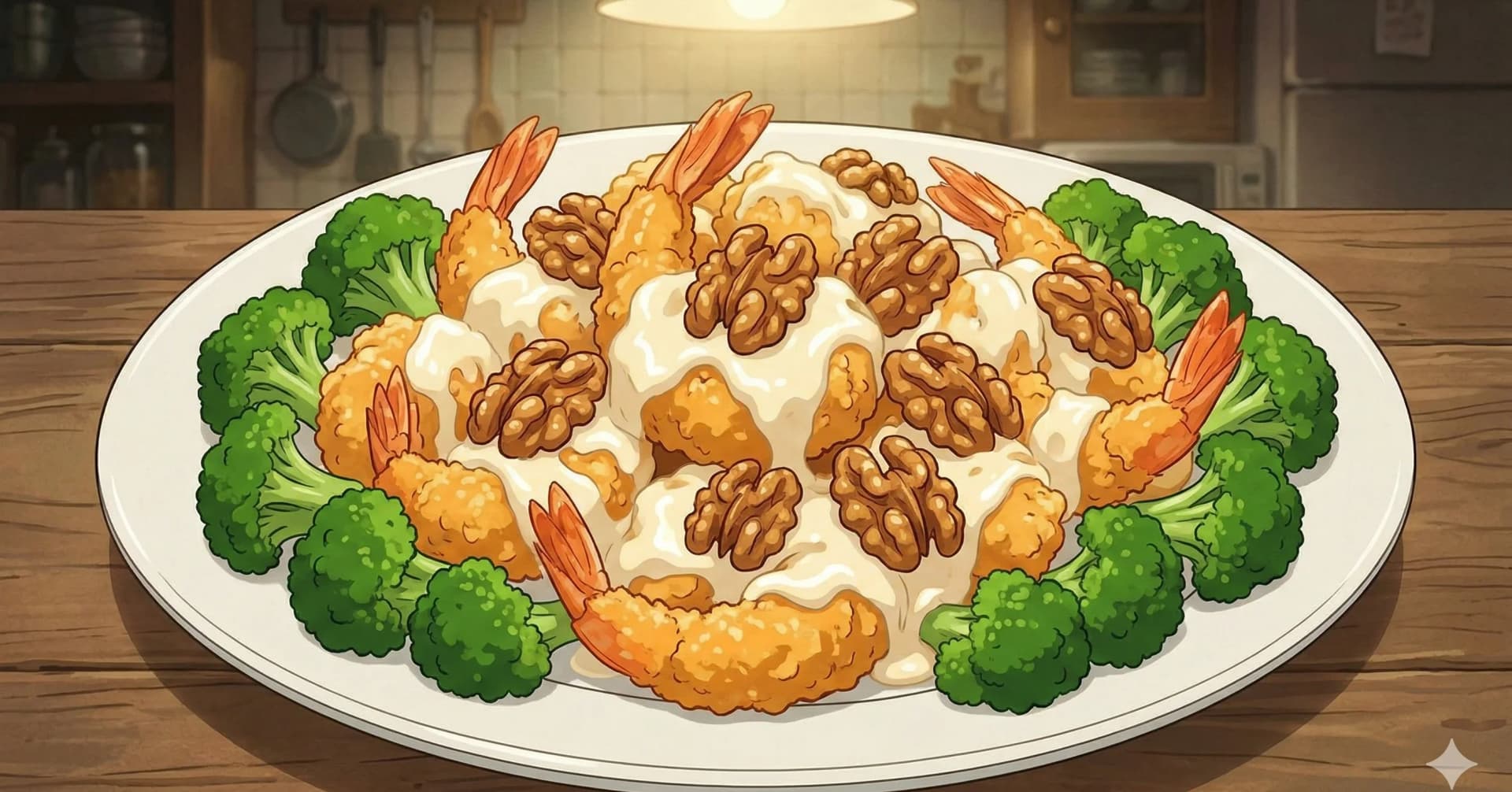
Crispy cornstarch-coated shrimp tossed in a creamy mayo-condensed milk sauce with candied walnuts and blanched broccoli, the Chinese banquet classic
Walnut shrimp is banquet food. It appears at Chinese wedding dinners and New Year celebrations, on tables laden with whole steamed fish and Peking duck, and it is always one of the first dishes to disappear. The combination sounds improbable on paper: fried shrimp, mayonnaise sauce, and candy-coated walnuts. But the combination works because each element provides something the others lack.
The shrimp are coated in cornstarch only, not battered, which gives them a lighter, more delicate crunch than the heavy breaded versions many restaurants serve. The candied walnuts require patience. They are fried first at a moderate temperature, then tossed in a simple syrup that is cooked down until it crystallizes into a thin, hard candy shell. The sauce is mayonnaise, sweetened condensed milk, a drop of rice vinegar for balance, and optionally honey. It comes together in a bowl in thirty seconds and goes onto the hot shrimp right before serving.
At a Glance
Yield
6 servings
Prep
35 minutes
Cook
25 minutes
Total
1 hour
Difficulty
Medium
Ingredients
Candied Walnut Ingredients
- 30walnut halves
- 2 tbspgranulated sugar, for candying
- 2 tbspwater, for candying
Sauce Ingredients
- 1/4 cupmayonnaise
- 3 tbspsweetened condensed milk
- 1/4 tsprice vinegar
- 2 tsphoney (optional)
Shrimp Ingredients
- 1 lblarge shrimp (16/20 count), peeled and deveined
- 1/3 cupcornstarch
- 8 ozbroccoli florets, 225g
- 3-4 cupsneutral oil, for frying
Method
- 1
Candy the walnuts. Fry at 160°C (325°F) for 4 minutes. Toss in sugar-water syrup over low heat until crystallized. Spread on parchment.
- 2
Mix sauce: mayo, condensed milk, rice vinegar, honey, pinch of salt.
- 3
Deepen cuts on shrimp backs. Double-dredge in cornstarch (once during prep, once before frying).
- 4
Blanch broccoli 30 seconds, shock in cold water, arrange on plate edge.
- 5
Fry shrimp at 175°C (350°F) in batches, 2-3 minutes until golden.
- 6
Toss hot shrimp with sauce in a bowl. Pour onto broccoli plate, top with candied walnuts. Serve immediately.
Key Ingredient Benefits
Shrimp: The structural protein of the dish. Shrimp contains about 24 g of protein per 100 g, very low fat, and high concentrations of selenium, B12, iodine, and astaxanthin (the carotenoid that turns shrimp pink when cooked). Fresh shrimp is essential — frozen-thawed shrimp produces a softer, less crispy result. Larger shrimp (16/20 or 21/25 count) work best for the visual impact.
Walnuts: Loaded with omega-3 alpha-linolenic acid, walnuts are one of the most nutritious nuts. Even after candying, they retain most of their fatty acid profile. They contribute crunch, toasted-nut flavor, and visual appeal. Walnuts are also a traditional Chinese symbol of brain health (the resemblance is intentional in Chinese folk medicine).
Mayonnaise: The defining ingredient of the modern dish. Japanese-style mayonnaise (Kewpie brand is the most famous) is richer, sweeter, and more umami-forward than Western mayonnaise. American mayonnaise works but produces a slightly different flavor. The mayonnaise provides the rich, creamy mouthfeel that distinguishes walnut shrimp from generic fried shrimp.
Sweetened condensed milk: Adds the characteristic sweetness and additional creamy richness. Just 2 to 3 tablespoons is enough — too much makes the sauce cloying. Condensed milk also helps the sauce cling to the shrimp without dripping off.
Sugar (for the candied walnuts): Creates the hard candy shell that coats each walnut. The technique requires patience: walnuts are fried first at moderate heat, then tossed in a simple syrup cooked down until it crystallizes. Pull them out too early and the coating is chewy; pull them out at the right moment and it shatters when you bite.
Cornstarch: A heavy coating produces the crispy exterior on the shrimp. Cornstarch produces a lighter, more delicate crust than wheat flour or batter — exactly the texture this dish wants.
Broccoli: Provides the green border and a fresh, slightly bitter contrast to the rich, sweet dish. Blanched briefly to retain a crisp texture and bright color. Broccoli is high in vitamin C, K, and fiber.
Rice vinegar: A small amount in the mayonnaise sauce balances the sweetness. Without acid, the dish becomes overly rich and one-note. Lemon juice substitutes.
Why This Works
The cornstarch-only coating (rather than batter) produces a lighter, more delicate crust that becomes a perfect canvas for the creamy sauce. Heavy battered coatings absorb too much oil and overwhelm the shrimp's natural sweetness. A thin cornstarch coat fries to a delicate, almost lacy crispness that holds its texture even after being coated in mayonnaise sauce.
Deepening the cuts along the back of each shrimp (called butterflying or kāi bèi in Chinese) makes the shrimp curl into an attractive shape during frying and creates significantly more surface area for the sauce to cling to. A round, untouched shrimp would resist the sauce; a butterflied one practically embraces it.
Candied walnuts must be fried before being candied. The initial fry at moderate heat (160°C / 325°F) for 3 to 4 minutes drives moisture out of the walnut interior and toasts the natural oils. The candy syrup then forms a thin, hard, shattering coating that contrasts beautifully with the rich, toasty walnut inside. Skipping the pre-fry produces softer, less crisp candied walnuts.
The sauce comes together in 30 seconds in a bowl: mayonnaise, sweetened condensed milk, a few drops of rice vinegar, optional honey. No heat, no cooking. The cold sauce is added to the hot shrimp at the very end, just enough to coat. The contrast between hot crispy shrimp and cold creamy sauce is part of the appeal — like a fried chicken sandwich with a chilled aioli, the temperature contrast amplifies the textural one.
Blanching the broccoli briefly (60 to 90 seconds in boiling salted water, then immediate ice bath) preserves both the bright green color and the crisp texture. Over-blanched broccoli loses both visual appeal and crunch. The broccoli is added to the plate as a border around the shrimp, not mixed in — it functions as a visual frame and palate refresher, not a primary ingredient.
The dish is plated, not served family-style. The shrimp goes in a tight pile in the center, walnuts scattered on top, broccoli florets ringing the perimeter. This visual arrangement is what makes the dish photograph well and feel celebratory — which matters because this is banquet food.
Substitutions & Variations
Shrimp size: Large (21/25 count) or extra-large (16/20) shrimp work best. Smaller shrimp lose impact and are harder to butterfly. Jumbo (12/15) shrimp work but require slightly longer frying time and become very expensive.
Without butterflying: Just split along the back without going all the way through. Slightly less dramatic but works fine.
Walnuts: Pecans work identically and are a popular substitute. Cashews work but the flavor is different. Skip if not desired — the dish remains good without candied nuts.
Without candied walnuts (shortcut): Buy pre-candied walnuts from a Chinese grocery, or use plain toasted walnuts (drop them in a 175°C/350°F oven for 5 to 7 minutes until fragrant). The dish loses some impact but saves significant time.
Mayonnaise: Kewpie (Japanese) is the gold standard. American mayonnaise works. Vegan mayonnaise substitutes for a dairy-free version. Greek yogurt mixed with a little oil produces a lighter version (not authentic, but enjoyable).
Sweetened condensed milk: Can be replaced with honey + heavy cream (2 tablespoons honey + 1 tablespoon cream). The flavor is slightly different but the texture is close. Skipping entirely produces a sharper, less sweet sauce.
Cornstarch: Potato starch substitutes 1:1 and produces an even crispier crust. Tapioca starch works. Wheat flour produces a heavier result.
Broccoli: Asparagus, green beans, snow peas, or gai lan all work. Some restaurants use a bed of shredded iceberg lettuce for visual contrast.
Spice variation: A tablespoon of sriracha or sambal oelek added to the mayonnaise produces a spicy walnut shrimp — popular in modern Chinese-American restaurants.
Serving Suggestions
Walnut shrimp is banquet food — designed to appear at celebrations, Lunar New Year dinners, wedding receptions, and special-occasion family meals. The visual impact (crispy golden shrimp, glossy creamy sauce, scattered walnuts, bright green broccoli) is part of the dish's appeal, and serving it any way that diminishes the presentation undermines the dish.
For a proper Chinese banquet, serve as one of the main proteins in a 6 to 10 course meal. Walnut shrimp typically appears alongside whole steamed fish, Peking duck, and other high-status banquet dishes. The order of dishes in Chinese banquet tradition matters: walnut shrimp usually arrives in the middle of the meal, after the cold appetizers and before the rice/noodle course.
For a more casual home dinner, serve as the centerpiece of a 4-dish meal with steamed rice, a vegetable, and a soup. The dish is rich enough to feel celebratory without needing a full banquet supporting it.
Pair with hot Chinese tea (jasmine, oolong, or pu-erh). Cold light beer or sparkling wine works well — the carbonation cuts through the rich sauce. Crisp white wine (Chenin Blanc, off-dry Riesling) pairs beautifully with the sweet-savory profile.
In Lunar New Year tradition, the round shape of walnuts symbolizes completeness, and the shrimp's bright pink color symbolizes happiness. The dish appears at many New Year's Eve dinners specifically for these auspicious associations.
Storage & Reheating
Refrigerator: Best eaten immediately. If you must store, refrigerate the shrimp and walnuts separately from the sauce for up to 2 days. The mayonnaise sauce should be stored on its own and not combined with the fried shrimp until reheating.
Reheating: Crisp the shrimp in a 200°C (400°F) oven on a wire rack for 5 to 6 minutes. Toss with the cold sauce just before serving. Microwaving makes the shrimp rubbery and the sauce separated.
Make-ahead components: The shrimp can be cleaned, butterflied, and held refrigerated up to 24 hours in advance. The walnuts can be candied up to 1 week ahead and stored in an airtight container at room temperature. The sauce can be mixed days in advance.
Restaurant trick: Many Cantonese restaurants par-fry the shrimp earlier in the day, hold them at room temperature, and finish to order with a fresh quick fry. This works at home too — fry the shrimp once in the morning, drain well, and refry just before serving.
Freezing: The candied walnuts freeze well for up to 2 months (re-crisp briefly in a hot oven after thawing). The shrimp can be frozen after the initial fry. The sauce should not be frozen.
Quality decline timeline: The shrimp's crispness declines noticeably within 30 minutes of plating. For dinner parties, plan to serve walnut shrimp last in the cooking sequence so it goes to the table immediately after frying.
Cultural Notes
Walnut shrimp (核桃蝦, hé táo xiā in Mandarin, hut tou ha in Cantonese) is one of the great inventions of mid-20th century Chinese-American banquet cuisine. The dish is not traditional Chinese — it appears in no classical Chinese cookbooks and was unknown in China before the late 20th century. It was invented in Hong Kong or California (sources disagree) in the 1960s or 1970s by a chef looking to create a luxurious-feeling dish using Western dairy ingredients (mayonnaise, condensed milk) within a Chinese flavor framework.
The dish quickly became a signature item at high-end Chinese-American banquet halls, particularly Cantonese-style restaurants in California, New York, and the Pacific Northwest. By the 1990s, walnut shrimp had appeared on virtually every Chinese banquet menu in North America and had become one of the most-ordered dishes at Chinese wedding receptions. The dish has since spread back to Hong Kong and mainland China, where it appears on banquet menus as a "Chinese-Western fusion" dish.
The integration of mayonnaise into Chinese cooking traces to Hong Kong's colonial history. British mayonnaise and Western dairy ingredients arrived in Hong Kong in the 19th century, and Hong Kong chefs began incorporating them into Cantonese cooking in dishes like Macanese curry, Western-style ham, and eventually walnut shrimp. The dish represents one of the more successful experiments in Chinese-Western fusion cuisine.
Walnuts have deep significance in Chinese culture. The Chinese word for walnut, hé táo (核桃), contains the character táo (peach), which is itself associated with longevity. The walnut's resemblance to a brain is intentional in Chinese folk medicine — walnuts are traditionally believed to support cognitive function, an idea that has some modern scientific support due to walnuts' omega-3 fatty acid content.
The dish's Lunar New Year associations are particularly strong. The shrimp's bright pink color symbolizes happiness; the round walnuts symbolize completeness and family unity; the creamy white sauce symbolizes wealth (associated with the color silver in Chinese tradition). Together, these symbolic elements make walnut shrimp an auspicious dish for celebrating the new year and for major family events like weddings and birthdays.
The dish also represents a broader cultural pattern of Chinese cuisine adapting to and incorporating elements from the cultures of the Chinese diaspora. Chinese-American banquet halls developed an entire distinct cuisine over the 20th century that has influenced Chinese cooking globally — walnut shrimp is one of the most prominent examples of this back-influence.
Nutrition Facts
Calories: 419kcal (21%)|Total Carbohydrates: 21.5g (8%)|Protein: 20.1g (40%)|Total Fat: 29.6g (38%)|Saturated Fat: 3.5g (18%)|Cholesterol: 128mg (43%)|Sodium: 174mg (8%)|Dietary Fiber: 2.4g (9%)|Total Sugars: 10.9g
You Might Also Like
Ratings & Comments
Ratings & Comments
Ratings
Share your thoughts on this recipe.
Sign in to rate and comment