Korean Cuisine
Mul Naengmyeon (Cold Buckwheat Noodles in Broth)
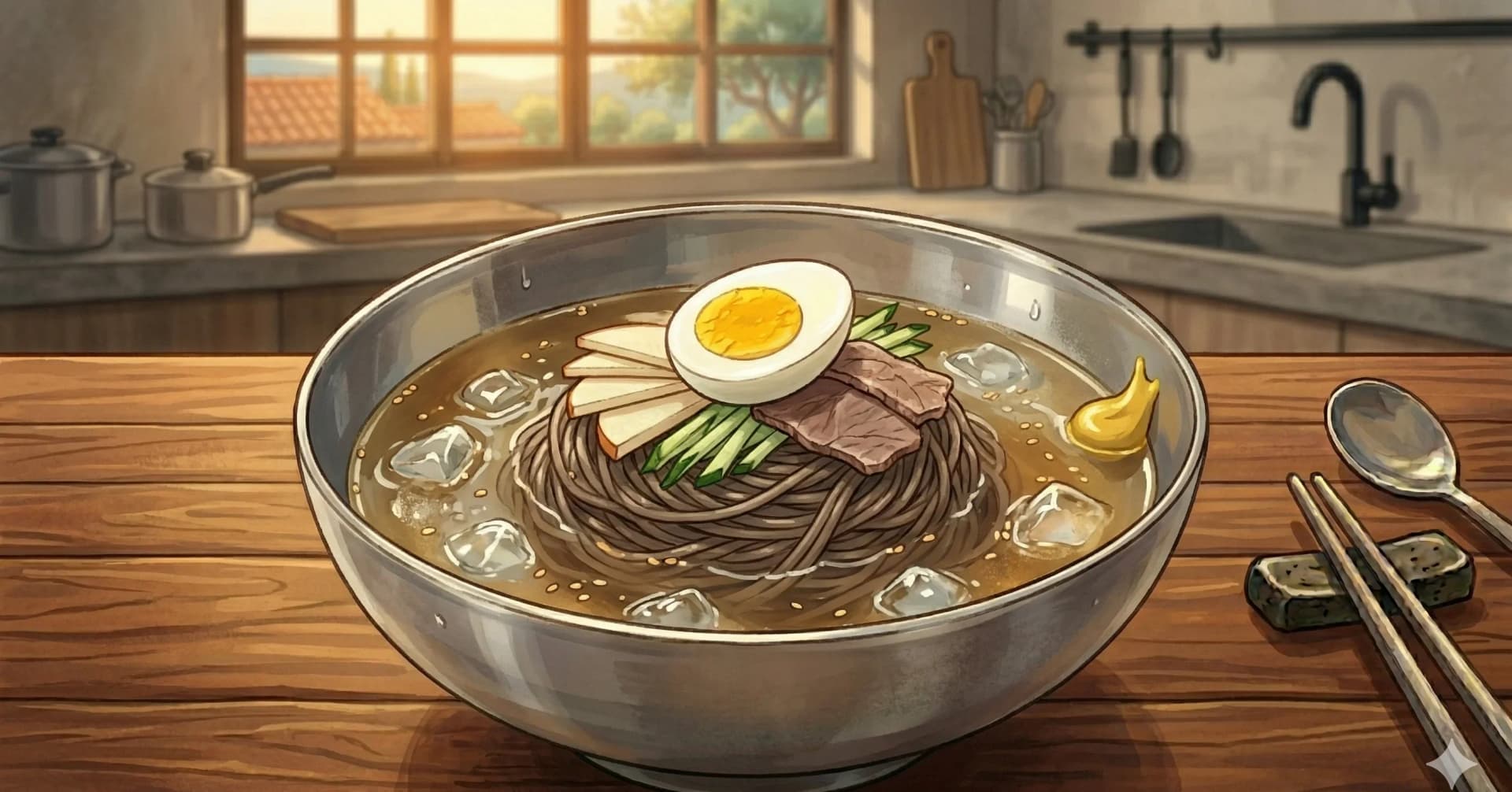
Icy buckwheat noodles in a tangy, chilled beef broth, crowned with sliced pear and a hard-boiled egg
The first mouthful is a shock of cold, the broth arriving at your lips just above freezing, with tiny ice crystals still floating on the surface. Then come the noodles, dark, thin, and extraordinarily chewy, resisting the teeth with a springy tension that is unlike any other noodle. The broth is simultaneously beefy and tangy, the tang coming from dongchimi (radish water kimchi) that has been blended in and sharpened with mustard and vinegar. It is a dish that makes summer bearable.
Mul naengmyeon originates from the Pyongyang region of North Korea, where the cold winters paradoxically gave birth to a cold noodle tradition. Originally a winter dish, it was served when outdoor temperatures kept the broth naturally chilled. After the Korean War divided the peninsula, refugees from the North brought the dish south, where it became one of Korea's most beloved summer foods.
What this dish delivers is pure, clean refreshment. The broth should taste clear and bright, not heavy. The buckwheat noodles add an earthy, nutty undertone. The toppings, sliced Korean pear, cucumber, a halved egg, thin slices of beef, provide sweetness, crunch, protein, and visual elegance.
The practical insight is that the broth must be genuinely cold, not cool, not room temperature, but teeth-achingly cold. Preparing it a day ahead and chilling it thoroughly, then adding ice or a frozen broth slush just before serving, is not optional. Mul naengmyeon served at anything above near-frozen temperatures loses its defining character.
At a Glance
Yield
4 servings
Prep
30 minutes (plus overnight chilling)
Cook
2 hours
Total
2 hours 30 minutes (plus overnight)
Difficulty
Medium
Ingredients
Broth Ingredients
- 1 lbbeef brisket
- 1½ qtwater
- 1medium onion, halved
- 5garlic cloves, smashed
- 1¾ tbspfresh ginger, sliced
- 5 wholeblack peppercorns
- 2⅛ cupdongchimi broth (or a mixture of 300 ml beef broth and 200 ml radish water kimchi brine)
- 2 tbsprice vinegar
- 1 tbspsoy sauce
- 2⅓ tspsugar
- ⅞ tspfine salt, or to taste
- 1 tspmustard oil or prepared Korean mustard (gyeoja)
Noodle Ingredients
- 1 lbdried naengmyeon noodles (buckwheat-based)
To Assemble
- 1Korean pear (or Asian pear), thinly sliced
- 1small cucumber, julienned or thinly sliced
- 2hard-boiled eggs, halved
- —Reserved beef brisket, thinly sliced
- —Ice cubes or frozen broth cubes
To Serve
- —Rice vinegar
- —Korean mustard (gyeoja)
Method
- 1
Make the beef broth. Place the brisket in a large pot with the water, onion, garlic, ginger, and peppercorns. Bring to a boil over high heat, then skim off any scum that rises to the surface.
- 2
Reduce heat to a gentle simmer. Cook partially covered for 1 hour and 30 minutes to 2 hours, until the brisket is tender when pierced with a fork. The broth should be clear and golden with a clean beef flavor.
- 3
Remove the brisket and set aside to cool. Once cool, wrap tightly and refrigerate. Strain the broth through a fine mesh strainer, discarding the solids.
- 4
Chill the strained broth in the refrigerator until cold, at least 4 hours and preferably overnight. As it chills, a layer of fat will solidify on the surface. Skim this off and discard it. The broth beneath should be clear and slightly gelatinous from the collagen.
- 5
Combine the chilled beef broth with the dongchimi broth (or the radish kimchi brine mixture). Add the rice vinegar, soy sauce, sugar, salt, and mustard oil. Stir well and taste. The broth should be savory, tangy, and slightly sweet, with a faint mustard heat at the back of the throat. Adjust the vinegar, sugar, and salt until the balance feels right to you.
- 6
Return the seasoned broth to the refrigerator (or freezer for 30 to 40 minutes) until it is very cold, nearly slushy. The colder, the better.
- 7
Prepare the toppings. Slice the reserved brisket thinly against the grain. Slice the pear thinly and keep it in lightly acidulated water to prevent browning. Julienne or thinly slice the cucumber. Halve the hard-boiled eggs.
- 8
Bring a large pot of water to a rolling boil. Cook the naengmyeon noodles according to package directions, usually 30 seconds to 2 minutes depending on the brand. They cook quickly. Watch carefully, as overcooked naengmyeon loses its distinctive chewiness.
- 9
Drain the noodles immediately and rinse vigorously under cold running water, using your hands to work out the excess starch. The noodles should feel slippery and very cold. Continue rinsing until the water runs clear and the noodles are well chilled.
- 10
Divide the noodles among large, deep bowls, preferably stainless steel (which helps keep everything cold). Use scissors to cut the noodles a few times so they are easier to eat. This is traditional and expected.
- 11
Arrange the sliced beef, pear, cucumber, and half a boiled egg on top of the noodles in each bowl.
- 12
Pour the ice-cold broth over the noodles and toppings. Add a few ice cubes or frozen broth cubes to each bowl. The broth should cover the noodles generously, and the temperature should feel shockingly cold.
- 13
Serve immediately with rice vinegar and Korean mustard on the side. Each diner adjusts the tanginess and heat to their preference. The mustard should make the sinuses tingle.
Key Ingredient Benefits
Buckwheat noodles: Buckwheat is not related to wheat despite its name and is naturally gluten-free (though naengmyeon noodles often contain wheat or starch additions). Buckwheat provides rutin, a flavonoid that research suggests may help strengthen blood vessel walls. It is also a source of complete protein, containing all essential amino acids.
Dongchimi: A water-based radish kimchi that produces a naturally fermented, tangy brine. The lactobacillus bacteria in the brine may support gut health. The fermentation process produces vitamins B and K.
Korean pear: High in dietary fiber, vitamin C, and potassium. Korean pears contain natural enzymes that have traditionally been used as a meat tenderizer in Korean cooking.
Mustard oil: Contains allyl isothiocyanate, the compound responsible for its sharp, sinus-clearing heat. Research suggests mustard compounds may have antimicrobial properties.
Why This Works
Chilling the broth thoroughly and skimming the fat produces a clean, light broth that feels refreshing rather than heavy. Fat solidifies when cold and creates an unpleasant, greasy mouthfeel in a cold dish, so removing it completely is essential.
The combination of beef broth and dongchimi broth creates a complex base. Beef provides depth and body. Dongchimi provides a bright, fermented tanginess from its natural lactic acid fermentation. Together they produce a broth that is simultaneously rich and refreshing.
Rinsing the noodles thoroughly after cooking removes surface starch, which would otherwise make the broth cloudy and cause the noodles to clump. The vigorous rinsing also chills the noodles quickly, which firms their texture and enhances their characteristic chewiness.
Naengmyeon noodles are made from buckwheat flour mixed with potato or sweet potato starch, which gives them their distinctive, almost rubber-like chewiness. This texture is intentional and prized. Cutting the noodles with scissors at the table is traditional and not a sign of imperfection.
Substitutions & Variations
Without dongchimi broth: Mix 200 ml of mild radish water kimchi brine with 300 ml of additional beef broth. Increase the rice vinegar slightly to compensate for the missing fermented tang.
Noodles: If naengmyeon noodles are unavailable, thin buckwheat soba noodles are the closest substitute, though they will not have the same extreme chewiness.
Without beef: Use a rich vegetable broth or mushroom broth for a vegetarian version. The dongchimi tang carries much of the flavor.
Quick broth: In a pinch, combine chilled store-bought beef broth with dongchimi brine or radish kimchi juice, seasoned with vinegar, sugar, and mustard.
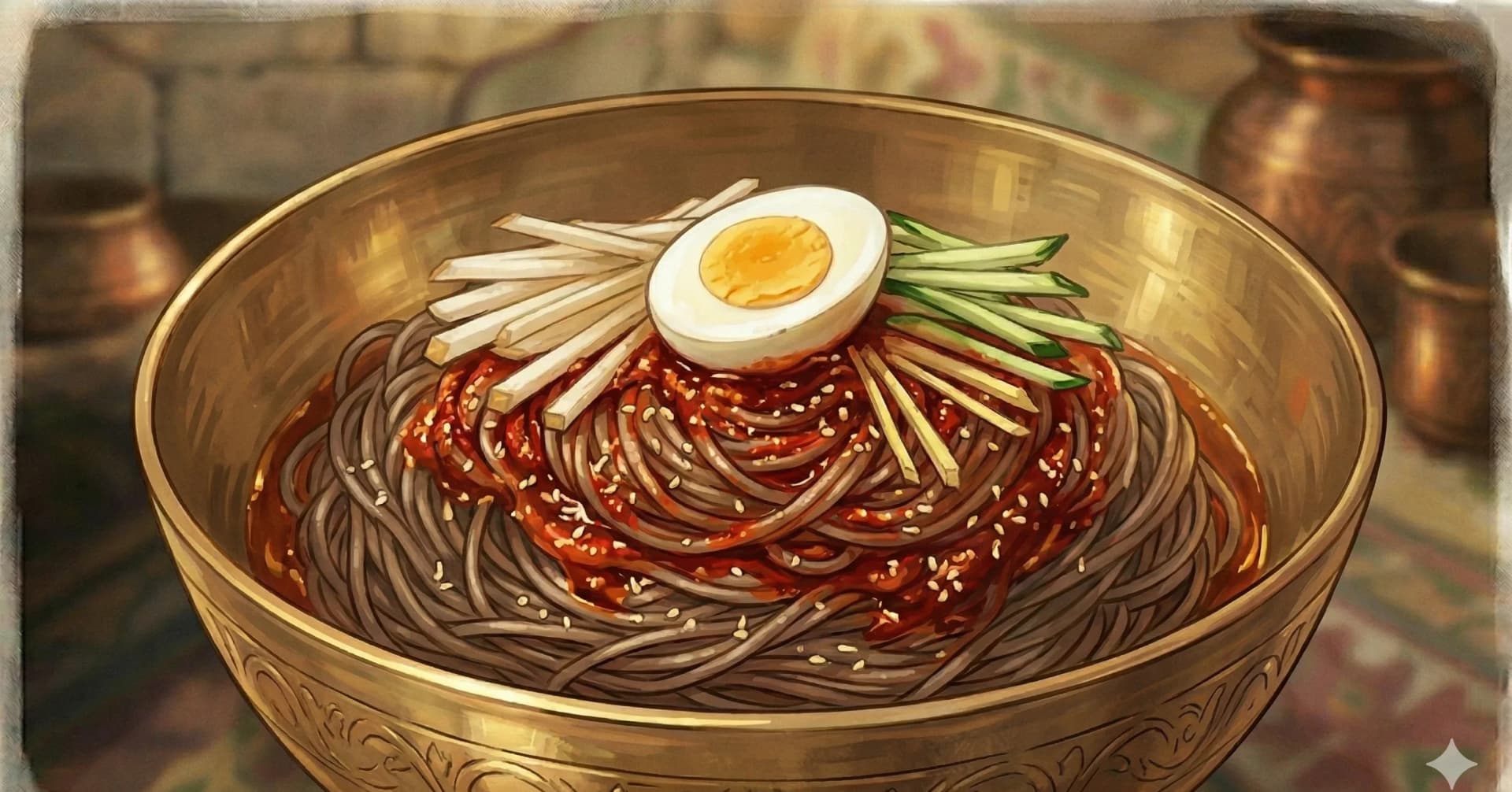
Pyongyang style vs. Hamheung style: This recipe is Pyongyang-style (mul naengmyeon) with its broth-based preparation. For the Hamheung-style (bibim naengmyeon), see Bibim Naengmyeon.
Serving Suggestions
Mul naengmyeon is traditionally served after a meat course, particularly after bulgogi or galbi, as a refreshing contrast to the rich, smoky grilled meats. On its own, it is a complete summer meal. A side of vinegared radish or a small plate of oi-muchim (spicy cucumber salad) complements the cold noodles well. In Korea, a pot of warm broth or tea is sometimes served alongside to balance the extreme cold of the dish.
Storage & Reheating
Broth: The seasoned broth can be stored in the refrigerator for up to 3 days or frozen for up to 1 month. Keep it well chilled and add ice when serving.
Noodles: Cook noodles fresh for each serving. Leftover cooked naengmyeon becomes a solid, sticky mass in the refrigerator.
Toppings: Prepare the sliced beef, eggs, and vegetables up to 1 day ahead. Store separately in the refrigerator.
Assembly: Mul naengmyeon must be assembled just before serving. It cannot be held or prepared in advance as a complete dish.
Cultural Notes
Mul naengmyeon (물냉면) is the colder, quieter sibling of bibim naengmyeon. Both dishes originated in the northern provinces of pre-division Korea, especially around Pyongyang and Hamhung, where the harsh winters made buckwheat (one of the few grains that thrives in cold conditions) a regional staple. The two cold-noodle styles split along a clean axis. Mul (water, broth) preparations like this one became the Pyongyang style. Bibim (mixed) preparations became the Hamhung style.
The dish migrated south during and after the Korean War (1950-1953), brought by North Korean refugees who opened naengmyeon shops in Seoul to feed displaced communities and serve as cultural anchors for the diaspora. The Pyongyang Myeonok restaurant in Seoul, founded in 1985 by refugees with direct ties to the original North Korean recipe, is among the most famous of those shops and remains a designated cultural heritage business today. The restaurant's signature broth, made from a long-simmered beef base then chilled to near-freezing, is the closest most Koreans alive today have ever come to authentic pre-war Pyongyang cooking.
Mul naengmyeon is summer food above all, ritually tied to the same hot-weather sambok (삼복) days that prompt other Korean dishes like samgyetang. But where samgyetang uses the "fight heat with heat" logic, naengmyeon takes the opposite strategy. Cool the body directly with icy broth, slippery noodles, and chilled garnishes. The mustard and vinegar sachets provided alongside each bowl are a small but essential ritual. Each diner adds them at the table to tune the bowl to personal preference.
The dish is also strongly tied to Korean barbecue meals, served as the cold, palate-cleansing finish after a long session of galbi or samgyeopsal.
Nutrition Facts
Calories: 510kcal (26%)|Total Carbohydrates: 79.8g (29%)|Protein: 27.6g (55%)|Total Fat: 8.4g (11%)|Saturated Fat: 3.2g (16%)|Cholesterol: 125mg (42%)|Sodium: 478mg (21%)|Dietary Fiber: 4.1g (15%)|Total Sugars: 5.8g
You Might Also Like
Ratings & Comments
Ratings & Comments
Ratings
Share your thoughts on this recipe.
Sign in to rate and comment