Korean Cuisine
Bibim Naengmyeon (Spicy Mixed Cold Noodles)
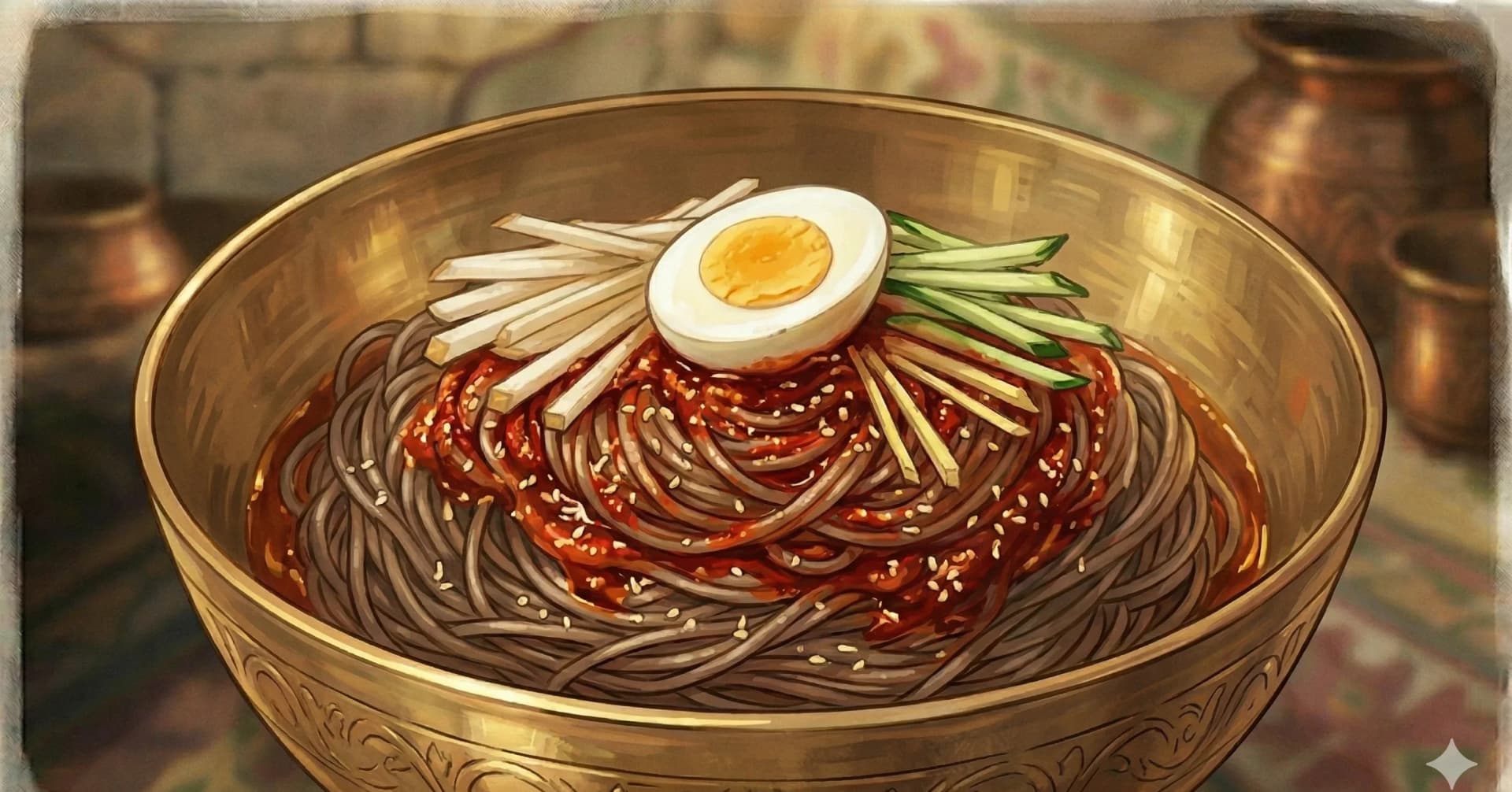
Chewy buckwheat noodles tossed in a fiery, sweet-sour gochujang sauce and topped with a hard-boiled egg
Where mul naengmyeon whispers with its icy, clear broth, bibim naengmyeon shouts. The noodles arrive glistening in vivid red sauce, every strand coated in a slick of gochujang that is simultaneously spicy, sweet, tangy, and nutty from sesame. You mix it all together, pulling the noodles through the sauce until nothing escapes the color, then take your first bite of cold, chewy noodles and scorching heat. It is a contradiction that works perfectly.
Bibim naengmyeon is associated with the Hamheung region of North Korea, where the noodle tradition favored a brothless, sauce-dressed preparation. The noodles from Hamheung were traditionally made with sweet potato starch rather than buckwheat, making them even chewier and more translucent. Today, both buckwheat and starch-based noodles are used, and the dish has become one of Korea's essential summer foods.
What this dish delivers is bold, immediate flavor. There is no subtlety here, and none is desired. The sauce is the center of everything, built to be intensely flavored because the cold noodles dilute and distribute it. The sweetness of grated Korean pear in the sauce, along with the sugar and vinegar, creates a bright backdrop against which the gochujang's heat and fermented depth stand out.
The practical insight is in the grated pear. Blending or grating Korean pear into the sauce adds a gentle, fruity sweetness and a slight enzymatic tenderness that sugar alone cannot replicate. It also loosens the thick gochujang, making the sauce coat the noodles more evenly. If Korean pear is unavailable, apple or even a splash of pear or apple juice achieves a similar effect.
At a Glance
Yield
4 servings
Prep
20 minutes
Cook
10 minutes
Total
30 minutes
Difficulty
Easy
Ingredients
Sauce Ingredients
- ¼ cupgochujang
- 5 tspgochugaru
- 2 tbsprice vinegar
- 1½ tbspsugar
- 1 tbspsoy sauce
- 1 tbspsesame oil
- 1¾ tbspminced garlic
- 1¾ ozKorean pear (or apple), finely grated
- 1⅔ tsptoasted sesame seeds
To Assemble
- 1 lbdried naengmyeon noodles (buckwheat or sweet potato starch based) (about 2½–3 potatoes)
- 1small cucumber, julienned
- 1Korean pear (or Asian pear), thinly sliced
- 2hard-boiled eggs, halved
- 3½ ozthinly sliced beef (optional, cooked and chilled)
To Serve
- —Toasted sesame seeds
- —Sliced scallion
- —Rice vinegar
- —Korean mustard (gyeoja)
- —Chilled dongchimi broth or cold beef broth (for sipping)
Method
- 1
Make the bibim sauce. Combine the gochujang, gochugaru, rice vinegar, sugar, soy sauce, sesame oil, garlic, grated pear, and sesame seeds in a bowl. Stir until smooth. Taste and adjust. The sauce should be boldly flavored, sweet and sour and spicy in roughly equal measure, with the sesame oil rounding the edges.
- 2
Prepare the toppings. Julienne the cucumber, slice the pear thinly, and halve the hard-boiled eggs. If using beef, slice it thinly and keep it chilled.
- 3
Bring a large pot of water to a rolling boil. Cook the naengmyeon noodles according to package directions, watching carefully. They cook quickly, usually 30 seconds to 2 minutes depending on the type.
- 4
Drain the noodles immediately and rinse thoroughly under cold running water. Use your hands to rub the noodles, working out the starch until the water runs clear and the noodles feel slippery and very cold.
- 5
Drain the noodles well. Shake off excess water and let them sit in a colander for a minute. Excess water will dilute the sauce.
- 6
Divide the noodles among serving bowls, preferably stainless steel. Use scissors to cut through the noodle mass a few times so they are easier to mix and eat.
- 7
Spoon a generous amount of bibim sauce over each portion of noodles. Use about 2 tablespoons per serving, adjusting to taste. The sauce should sit on top of the noodles, unmixed, until the diner is ready to eat.
- 8
Arrange the julienned cucumber, sliced pear, and sliced beef (if using) on top of the noodles. Place half a hard-boiled egg in each bowl.
- 9
Sprinkle with toasted sesame seeds and sliced scallion.
- 10
Serve immediately. Each diner should mix the noodles and sauce together thoroughly before eating, pulling the noodles through the sauce until every strand is coated in red.
- 11
Place rice vinegar and Korean mustard on the table for individual adjustment. A small bowl of chilled dongchimi broth or cold beef broth alongside is traditional for sipping between bites to temper the heat.
- 12
Eat cold. Bibim naengmyeon does not wait well. The noodles absorb the sauce and become less vibrant as they sit.
Key Ingredient Benefits
Naengmyeon noodles: Typically made from buckwheat flour with potato or sweet potato starch. Buckwheat provides rutin, quercetin, and complete protein. Sweet potato starch noodles are particularly high in resistant starch, which research suggests may support gut health by serving as a prebiotic.
Gochujang: Fermented chili paste containing capsaicin, which may support metabolic function according to preliminary research. The fermentation process produces beneficial enzymes and amino acids.
Korean pear: Contains natural enzymes (including actinidin-like proteases) traditionally used as a meat tenderizer. High in dietary fiber, vitamin C, and potassium. Research suggests Korean pear consumption may help reduce hangover symptoms.
Why This Works
Grated Korean pear in the sauce serves multiple functions. Its natural sugars add sweetness without the one-dimensionality of granulated sugar. Its juice loosens the thick gochujang, helping it spread and coat the noodles evenly. The fruit enzymes contribute a subtle brightness that balances the heavy fermented flavor of the gochujang.
Rice vinegar provides the sharp acidity that makes the sauce feel refreshing despite its intense spiciness. Without enough vinegar, the sauce would taste heavy and cloying. The sweet-sour balance is what makes you want to keep eating even when the heat builds.
Thorough rinsing of the noodles removes surface starch, which would make the sauce clump and distribute unevenly. Clean, slippery noodles allow the sauce to coat each strand individually, creating a more even flavor experience.
The cold temperature of the noodles slightly mutes the capsaicin heat compared to a hot dish with the same amount of gochujang. This allows a higher concentration of sauce without overwhelming the palate, which is why the sauce is made bolder than you might expect.
Substitutions & Variations
Noodles: Thin buckwheat soba noodles or even thin wheat noodles (somyeon) can substitute, though the signature chewiness will be different. Sweet potato starch noodles (japchae noodles) also work for a chewier, more translucent result.
Without Korean pear: Grate half an apple (Fuji or Gala) or add 30 ml of apple juice to the sauce.
Milder version: Reduce the gochugaru or omit it, relying on the gochujang alone for a gentler heat.
Protein additions: Sliced raw fish (hoe, especially skate or halibut) is the traditional Hamheung-style topping, known as hoe naengmyeon. Poached chicken or blanched squid are other options.
Instant version: Many Korean grocery stores sell naengmyeon kits with noodles and sauce packets. These provide a quick approximation, though making the sauce from scratch is significantly better.
Serving Suggestions
Bibim naengmyeon is often served after bulgogi or galbi, just like its brothy cousin. On its own, it is a quick, satisfying summer meal. Pair with kongnamul muchim or oi-muchim for additional freshness. A small cup of warm eomuk soup broth alongside provides a soothing contrast to the cold, spicy noodles.
Storage & Reheating
Sauce: The bibim sauce can be made up to 5 days ahead and stored in the refrigerator. It actually improves as the flavors meld.
Noodles: Cook fresh for each serving. Leftover noodles become a dense, sticky mass.
Assembled dish: Cannot be stored. Eat immediately after mixing.
Freezing: The sauce freezes well for up to 1 month. Thaw in the refrigerator before using.
Cultural Notes
Bibim naengmyeon (비빔냉면) belongs to the Korean tradition of cold buckwheat noodles that originated in the northern provinces, especially Pyongyang and Hamhung. Harsh northern winters made buckwheat a reliable staple, and two cold-noodle traditions developed in parallel along a single axis. Mul (water-based, broth-served) became mul naengmyeon, the Pyongyang style. Bibim (mixed, sauce-tossed) became bibim naengmyeon, the Hamhung style. Both are still served by the same restaurants today, and most diners pick one or the other depending on the weather.
The dish migrated south during and after the Korean War (1950-1953), carried by North Korean refugees who opened naengmyeon shops in Seoul and Busan to feed displaced communities and homesick neighbors. Many of those original shops are still operating, now run by second and third-generation owners, and a small handful have been designated Korean cultural treasures. Pyongyang Myeonok in Seoul, founded in 1985, is among the most famous. The Hamhung-style bibim version has equally storied addresses.
In modern Korea, naengmyeon is summer food first and foremost, served at restaurants that specialize in nothing else. It also has a specific pairing role at grilled-meat meals. A bowl of cold naengmyeon to close out a long galbi or samgyeopsal dinner is one of the most beloved Korean eating patterns. The small dish of vinegar and the small dish of mustard set on the table let each diner tune the bowl to their own taste, a small ritual that signals naengmyeon's slightly elevated position in the Korean repertoire.
Nutrition Facts
Calories: 577kcal (29%)|Total Carbohydrates: 97.4g (35%)|Protein: 23.2g (46%)|Total Fat: 11.7g (15%)|Saturated Fat: 3g (15%)|Cholesterol: 109mg (36%)|Sodium: 1123mg (49%)|Dietary Fiber: 7.8g (28%)|Total Sugars: 14g
You Might Also Like
Ratings & Comments
Ratings & Comments
Ratings
Share your thoughts on this recipe.
Sign in to rate and comment