Korean Cuisine
Pajeon (Korean Scallion Pancake)
A golden, crispy pancake bursting with whole scallions and an optional scattering of seafood
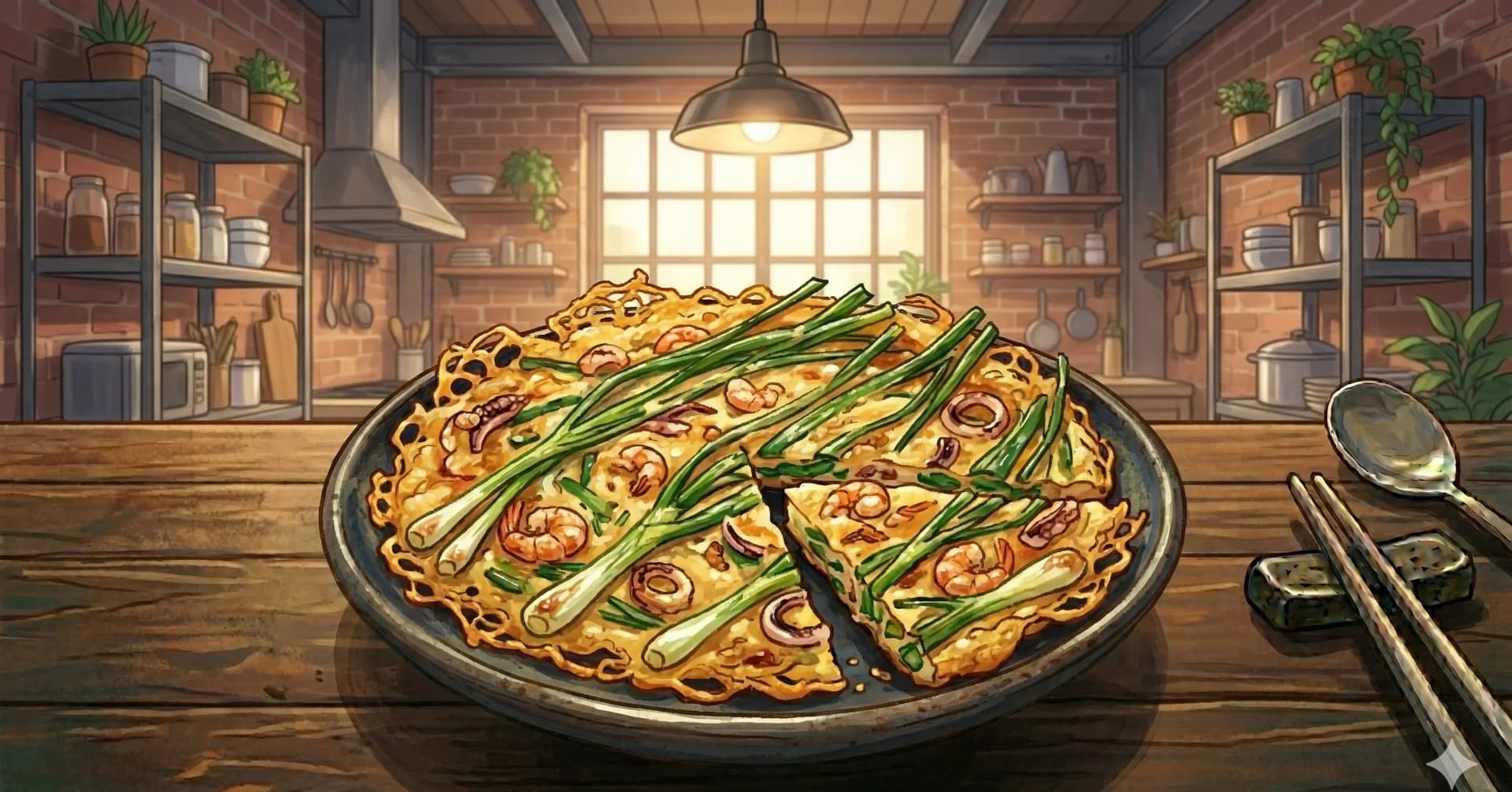
When you cut into a good pajeon, you should see long ribbons of scallion running through a thin, crispy batter, the greens slightly charred where they pressed against the pan, the whites sweet and tender from the heat. This is not a pancake that happens to contain scallions. The scallions are the point, and the batter exists to hold them together and give them a crispy frame.
Pajeon is one of the most beloved jeon (Korean pan-fried dishes) and shares the same rainy-day tradition as kimchijeon. The full name haemul pajeon, with "haemul" meaning seafood, refers to the version studded with squid, shrimp, and sometimes oysters, which elevates the humble pancake into something more substantial. But a simple pajeon made with nothing but scallions, batter, and generous oil is equally satisfying.
What the dish delivers is textural pleasure. The batter should be thin enough that the scallions are clearly visible through it, creating a pancake that is more crispy lattice than dense bread. The edges, where the batter spreads thin and fries in the oil, should shatter when bitten. The center, where the scallions are densest, should be softer and aromatic.
The key insight is to lay the scallions in the pan first, then pour the batter over them, rather than mixing everything in a bowl. This keeps the scallions aligned in one direction and ensures they make full contact with the hot oil, which concentrates their sweetness and gives the pancake its distinctive appearance.
At a Glance
Yield
2 large pancakes (4 servings)
Prep
15 minutes
Cook
15 minutes
Total
30 minutes
Difficulty
Easy
Ingredients
Pancake Ingredients
- 8to 10 whole scallions (about 200 g), trimmed to the length of the skillet
- ⅔ cupall-purpose flour
- 1 ozrice flour
- ⅔ cupice-cold water
- 1egg
- ½ tspfine salt
- —Vegetable oil for pan-frying (about 45 ml per pancake)
- 2¾ ozsquid, cleaned and cut into rings or small pieces
- 2¾ ozshrimp, peeled, deveined, and halved if large
- 1½ ozfresh oysters (optional)
Dipping Sauce Ingredients
- 2 tbspsoy sauce
- 1 tbsprice vinegar
- 1 tspsesame oil
- 1small fresh red chili, thinly sliced (optional)
- 1⅔ tsptoasted sesame seeds
Method
- 1
Trim the scallions to fit the diameter of your skillet. If the white parts are very thick, halve them lengthwise so they cook evenly. Leave them as long as possible for the best visual effect.
- 2
Prepare the seafood if using. Pat the squid and shrimp dry with paper towels. Excess moisture will cause the oil to splatter and prevent the batter from crisping.
- 3
Make the batter by whisking together the all-purpose flour, rice flour, ice-cold water, egg, and salt. Mix until just combined. The batter should be thin and pourable, about the consistency of heavy cream. A few lumps are acceptable.
- 4
Heat a large nonstick skillet over medium-high heat with about 45 ml of oil. The oil should cover the bottom of the pan generously and shimmer when ready.
- 5
Lay half the scallions in the hot pan in a single layer, all running in the same direction. They should sizzle as they touch the oil. If using seafood, scatter half the squid, shrimp, and oysters over the scallions.
- 6
Pour half the batter evenly over the scallions and seafood, letting it flow between and around them. Use the back of a spoon to gently spread it into an even layer. Do not drown the scallions in batter. You should still see them clearly through the thin coating.
- 7
Cook without disturbing for 3 to 4 minutes. The bottom should develop a deep golden crust. You will see the edges turn brown and crispy, and the batter on top will begin to set and turn opaque.
- 8
Flip the pancake in one confident motion. A wide spatula or a plate can help. Press it down firmly with the spatula to ensure full contact with the pan. Drizzle a little more oil around the edges if needed.
- 9
Cook for another 3 to 4 minutes until the second side is equally golden and crispy. Press down once more during this time. The scallions should have softened and sweetened, and you should see golden-brown spots where they pressed against the pan.
- 10
Slide the finished pancake onto a cutting board. Let it rest for 30 seconds, which allows the interior to finish setting while the crust stays crisp.
- 11
Repeat with the remaining scallions, seafood, and batter for the second pancake.
- 12
Make the dipping sauce by combining soy sauce, rice vinegar, sesame oil, chili slices, and sesame seeds. Stir well.
- 13
Cut each pancake into wedges or rectangles and serve immediately with the dipping sauce alongside.
Key Ingredient Benefits
Scallions (pa): Rich in vitamin K, vitamin C, and folate. The green parts contain more vitamins than the white, while the white parts are richer in allicin, a sulfur compound that research suggests may support cardiovascular health. Scallions have been traditionally used in Korean folk medicine for colds and digestive issues.
Squid and shrimp: Lean sources of protein that provide omega-3 fatty acids, selenium, and zinc. Squid is notably high in vitamin B12 and copper.
Rice flour: Produces a lighter frying texture and is naturally gluten-free. When combined with wheat flour, it creates a batter that is both structurally sound and delicately crispy.
Why This Works
Laying the scallions directly in the hot oil before adding batter means they begin to caramelize on contact. This develops sweetness in the scallions and gives the bottom of the pancake a more complex, layered flavor than mixing everything in a bowl would achieve.
Ice-cold water in the batter inhibits gluten development, keeping the pancake light and crispy rather than tough and chewy. This is the same principle that makes tempura batter effective.
The rice flour component is essential. It fries to a lighter, more shattering crispness than wheat flour alone. The starch in rice flour also absorbs less oil, so the finished pancake is crispy without being greasy.
Pressing the pancake flat during cooking maximizes surface contact with the hot oil. Every point of contact becomes a potential crispy spot, and the thin profile means the center cooks through without the edges burning.
Substitutions & Variations
Without seafood: A scallion-only pajeon is traditional and delicious. The seafood is an addition, not a requirement.
Other vegetables: Thinly sliced zucchini, chili peppers, or onion can be layered with the scallions.
Chives (buchu): Korean garlic chives can replace or supplement scallions for buchujeon, a popular variation with a more garlicky flavor.
Crispy variation: For extra crispness, replace half the water in the batter with soda water. The carbonation creates additional bubbles that expand and crisp during frying.
Dipping sauce variation: Some prefer a simpler sauce of equal parts soy sauce and vinegar without sesame oil. Others add a pinch of gochugaru for heat.
Serving Suggestions
Pajeon is traditionally enjoyed with makgeolli (Korean rice wine), and the pairing is deeply rooted in Korean food culture. For a meal, serve alongside steamed rice, doenjang-jjigae, and a few banchan. As a snack or appetizer, cut into small pieces and serve with the dipping sauce. Pajeon also works well as part of a jeon platter alongside kimchijeon and hobak jeon.
Storage & Reheating
Leftover pajeon: Store in an airtight container in the refrigerator for up to 1 day. Seafood pajeon should be eaten the same day for best quality.
Reheating: Re-crisp in a dry or lightly oiled skillet over medium heat for 2 minutes per side. An oven at 200°C for 5 to 7 minutes also restores crispness. Avoid the microwave.
Not ideal for freezing: The seafood and scallions release moisture when thawed, making the pancake soggy. If you must freeze, use the plain scallion version, wrap tightly, and re-fry from frozen.
Cultural Notes
Pajeon (파전) is one of the foundational dishes in the Korean jeon (전) family, the broader category of pan-fried lightly-battered preparations that ranges from this simple scallion pancake to elaborate court-cuisine fish, meat, and vegetable variations. Inside that family, pajeon is the most universally beloved. Partly because its visual identity (long ribbons of green scallion held in a crispy golden batter) signals its character before you even take the first bite. Partly because of its strong cultural association with comfort, gathering, and rainy weather.
The dish is the iconic Korean bijeon (비전) food: pancakes specifically eaten on rainy days, traditionally accompanied by glasses of makgeolli (막걸리), the unfiltered milky rice wine. The cultural pairing is so universal that Korean broadcasters report measurable spikes in flour, scallion, and makgeolli sales when the weather forecast turns to rain. The explanation Koreans give involves both the acoustic resemblance between sizzling jeon and falling rain, and the practical comfort of warm fried food on a cool wet day. Pajeon and rain together are one of the most strongly conditioned cultural pairings in Korean food culture.
The most prestigious regional version is Dongnae pajeon (동래파전), a much more elaborate Busan specialty that incorporates fresh seafood (typically oysters, mussels, and squid), a thicker rice-flour batter, and noticeably larger whole scallions. Dongnae pajeon was designated an official Busan intangible cultural heritage item in 2002, and certain restaurants in the Dongnae neighborhood of Busan have specialized in this single dish for decades.
The simpler everyday pajeon described in modern home recipes is the more accessible weeknight cousin of that prestigious regional showpiece. Together with hobak jeon and kimchijeon, pajeon anchors the entire Korean jeon repertoire.
Nutrition Facts
Calories: 190kcal (10%)|Total Carbohydrates: 25.1g (9%)|Protein: 13.4g (27%)|Total Fat: 3.8g (5%)|Saturated Fat: 0.8g (4%)|Cholesterol: 131mg (44%)|Sodium: 757mg (33%)|Dietary Fiber: 1.8g (6%)|Total Sugars: 1g
You Might Also Like
Ratings & Comments
Ratings & Comments
Ratings
Share your thoughts on this recipe.
Sign in to rate and comment