Chinese Cuisine
Hui Guo Rou (Twice Cooked Pork)
Sichuan's bold pork belly stir-fry with doubanjiang, leeks, and fermented black beans
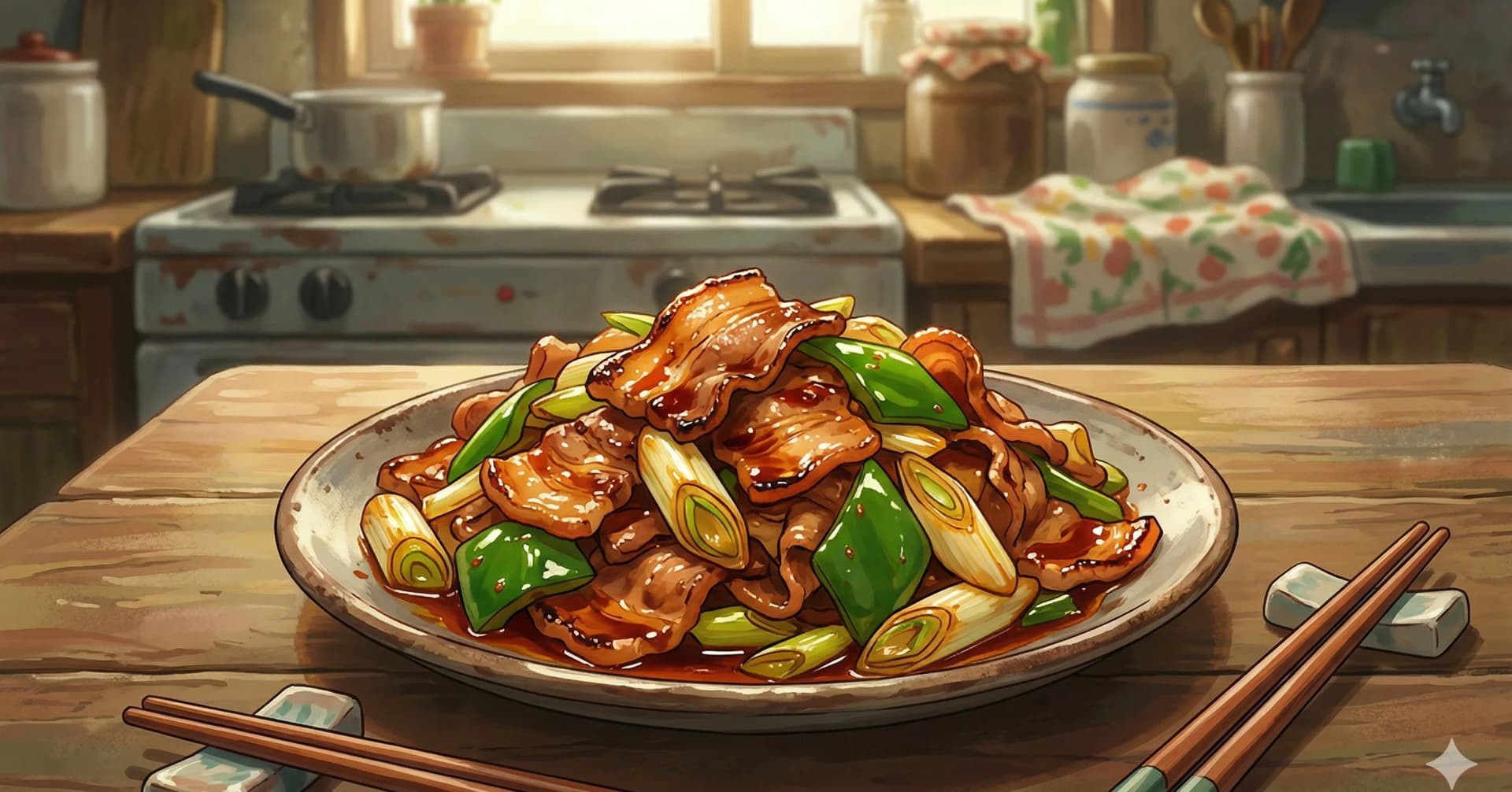
The smell hits you before the dish arrives at the table: a deep, roasted warmth from doubanjiang, the sharp sweetness of leeks catching the heat of the wok, and underneath it all, the rich, almost caramelized scent of pork belly that has been cooked twice over. Hui guo rou, which translates literally to "return to the pot meat," is one of the most beloved dishes in the Sichuan canon, and with good reason. It transforms a humble cut of pork belly into something that balances richness, heat, and fermented depth in every bite.
The dish has roots in rural Sichuan cooking, where pork belly boiled for ancestral offerings would be sliced and returned to the wok the following day. That second cooking is where the magic happens. Thin slices of boiled belly hit a screaming hot wok, rendering their fat until the edges curl and crisp, then mingle with doubanjiang (fermented chili bean paste), tianmianjiang (sweet wheat paste), and fermented black beans. The leeks, added at the very end, bring a fresh, almost grassy brightness that lifts the entire plate.
The practical key to this dish is the boiling step. Cooking the pork belly whole, then chilling it briefly, makes it firm enough to slice thinly. Thin slices mean more surface area, which means more of that coveted crispy, slightly caramelized texture from the wok. Do not rush the rendering step. Let the pork release its fat slowly, and the dish will reward you with curled, tender slices that carry the sauce beautifully.
At a Glance
Yield
4 servings
Prep
15 minutes
Cook
25 minutes
Total
40 minutes
Difficulty
Medium
Ingredients
Pork Ingredients
- 1 lbskin-on pork belly, whole piece
- 2scallions, trimmed
- 3 slicesfresh ginger
- 1 tspShaoxing wine
Stir-Fry Ingredients
- 1 tbspvegetable oil
- 1 ozdoubanjiang (Pixian preferred)
- ¼ oztianmianjiang (sweet wheat paste)
- ¼ ozfermented black beans, rinsed and roughly chopped
- 3 clovesgarlic, sliced
- 1¾ tbspfresh ginger, sliced
- 1small green bell pepper (about 80 g), cut into diamond shapes
- 5½ ozleeks, cut into 5 cm lengths on the diagonal
- 2 tsplight soy sauce
- 1 tspdark soy sauce
- 1¼ tspsugar
- 1 tspShaoxing wine
Method
- 1
Place the whole pork belly in a pot and cover with cold water by about 3 cm. Add the scallions, ginger slices, and Shaoxing wine. Bring to a boil over high heat, then reduce to a gentle simmer.
- 2
Cook for 20 to 25 minutes, skimming any foam that rises. The pork is ready when a chopstick slides through the thickest part with moderate resistance. It should be cooked through but still firm, not falling apart.
- 3
Transfer the pork belly to a bowl of ice water or cold running water. Let it cool for at least 10 minutes. This firms the fat and makes slicing much easier.
- 4
Pat the pork belly dry with paper towels. Slice it against the grain into pieces roughly 5 cm long, 3 cm wide, and 3 mm thick. Thinner slices will curl and crisp better in the wok.
- 5
Heat a wok over high heat until it begins to smoke faintly. Add the vegetable oil and swirl to coat. Add the pork belly slices in a single layer, working in batches if needed to avoid crowding.
- 6
Let the pork cook without stirring for about 90 seconds, until the fat begins to render and the edges turn golden. Flip the slices and cook the other side. You will see the slices start to curl at the edges, which is exactly what you want.
- 7
Push the pork to one side of the wok. Add the doubanjiang to the open space and stir it in the rendered fat for about 30 seconds, until the oil turns a deep red and the paste becomes fragrant.
- 8
Add the fermented black beans, garlic slices, and ginger. Stir everything together and cook for another 20 seconds. The aroma should be intensely savory and warm.
- 9
Add the tianmianjiang and toss quickly to coat the pork. The paste will darken the sauce and add a gentle sweetness.
- 10
Splash in the Shaoxing wine along the edge of the wok. It will sizzle and steam immediately. Follow with the light soy sauce, dark soy sauce, and sugar. Toss to combine.
- 11
Add the green bell pepper pieces and stir-fry for about 1 minute, until they soften slightly but retain their color and crunch.
- 12
Add the leek pieces last. Toss vigorously over high heat for 30 to 45 seconds, just until the leeks wilt slightly and release their fragrance. They should still have body and a bright green color.
- 13
Taste and adjust. If the sauce feels too thick, add a splash of water. If it needs more depth, a small dash of soy sauce will help.
- 14
Transfer immediately to a warm serving plate. Serve alongside steamed white rice.
Key Ingredient Benefits
Doubanjiang is rich in naturally occurring umami compounds produced during fermentation. Some research suggests that fermented soybean products may contain beneficial probiotics, though the high-heat cooking in this dish likely reduces their viability. It is also high in sodium, so adjust added soy sauce accordingly.
Pork belly is a fatty cut, but much of that fat renders out during the boiling and stir-frying steps. The remaining fat contributes to mouthfeel and helps carry fat-soluble flavor compounds from the spices and pastes.
Leeks are a good source of vitamin K and contain prebiotic fibers that are traditionally associated with digestive health in Chinese food culture.
Why This Works
The double cooking method is the backbone of this dish. Boiling the pork belly first renders some of the internal fat and cooks the connective tissue just enough to make the meat tender. Chilling firms the fat layer, allowing you to slice the belly thinly and evenly. When those thin slices hit the hot wok, the remaining fat renders out quickly, creating crispy, slightly curled edges while keeping the lean meat tender.
Doubanjiang is a living ingredient, fermented for months or even years. When it meets hot oil, the fermentation compounds bloom, creating the deep red color and complex flavor that defines Sichuan cuisine. Cooking it briefly in fat (a technique called chao, or stir-frying the paste) is essential. Raw doubanjiang tastes harsh and one-dimensional. Toasted in oil, it becomes round, rich, and deeply savory.
The leeks serve a structural purpose beyond flavor. Their fresh, almost sweet sharpness cuts through the richness of the pork and the intensity of the fermented pastes. Adding them at the very end preserves their texture and ensures they do not become limp or bitter.
Substitutions & Variations
- Pork belly alternatives: Pork shoulder or boneless country-style ribs work if you prefer a leaner dish, though you will lose some of the characteristic richness and curl.
- Doubanjiang: There is no true substitute. If unavailable, a mix of gochujang and miso can approximate the fermented chili-bean flavor, but the dish will taste noticeably different.
- Tianmianjiang: Hoisin sauce is a reasonable stand-in, though it is sweeter and more complex. Use slightly less.
- Leeks: Green garlic, garlic scapes, or large scallions cut on the bias are the best alternatives.
- Vegetarian version: Firm tofu, pressed and sliced, can replace the pork. Pan-fry the tofu slices until golden before proceeding with the sauce.
Serving Suggestions
This is a rice dish through and through. A bowl of plain steamed jasmine rice is all you really need alongside it. If you are building a multi-dish meal in the Chinese tradition, pair it with something light and clean, like a simple stir-fried green vegetable or a cold cucumber salad dressed with vinegar and sesame oil. A simple egg drop soup rounds out the table nicely without competing for attention.
Storage & Reheating
Store leftovers in an airtight container in the refrigerator for up to 3 days. The flavors will deepen overnight as the fermented pastes continue to meld. Reheat in a hot wok or skillet over high heat, adding a small splash of water to loosen the sauce. Microwave reheating works in a pinch but will not restore the crispness of the pork edges. The leeks may soften further upon reheating, which is normal. Freezing is possible for up to 1 month, though the texture of the leeks will suffer.
Cultural Notes
Hui guo rou (回锅肉, "returned-to-the-wok pork") is the Sichuan pork belly dish that Fuchsia Dunlop calls the single most representative home-cooked dish of the cuisine. The name refers to the two-stage cooking method: a piece of pork belly is first simmered whole in water with ginger and Sichuan peppercorns until just cooked through, then chilled, sliced thin, and "returned to the wok" for a second cooking with the Sichuan flavor stack of doubanjiang, douchi, garlic, and leek. The dish predates the introduction of chilies from the Americas and originally relied on white peppercorn and ginger heat; the chili-based form documented today crystallized in the late Ming and early Qing dynasties as Sichuan absorbed New World capsicums.
The technical signature of the dish is the deng zhan wo (灯盏窝, "lamp bowl") shape that the pork slices take when they hit the hot wok. Properly cut slices of pork belly, with their alternating layers of lean meat and fat, curl up at the edges during the second cooking as the fat renders and contracts, creating small concave shapes that look like the oil lamps used in traditional Sichuan homes. The shape is a visual indicator that the cook has both sliced the belly correctly (across the grain, neither too thick nor too thin) and gauged the wok heat correctly (hot enough to crisp the edges but not so hot that the pork toughens).
The flavor profile is built from Pixian doubanjiang as the foundation, sweet flour sauce (tian mian jiang) for depth, douchi for fermented umami, garlic and ginger as aromatics, and Chinese leek (suan miao, garlic stems with their flat green tops) added at the end so the vegetable stays crisp and bright. The dish is served on white rice, eaten as one course in a multi-dish family meal rather than as a standalone plate. In Chengdu and Chongqing home kitchens, hui guo rou is the test of a young cook's competence: simple in ingredient list, demanding in technique, with no place to hide poor knife work or temperature management.
Nutrition Facts
Calories: 669kcal (33%)|Total Carbohydrates: 13.6g (5%)|Protein: 13g (26%)|Total Fat: 62.5g (80%)|Saturated Fat: 21.9g (110%)|Cholesterol: 81mg (27%)|Sodium: 687mg (30%)|Dietary Fiber: 2.2g (8%)|Total Sugars: 5.4g
You Might Also Like
 Medium
Chinese Cuisine
Char Siu (Chinese BBQ Pork)
9 hours (including marinating)
 Medium
Chinese Cuisine
Niu Rou Yang Cong Jiaozi (Beef and Onion Dumplings)
60 minutes
 Medium
Chinese Cuisine
Bai Qie Ji (White Cut Chicken)
4 hours 30 minutes
 Easy
EasyCross-Cultural · China
Chicken and Broccoli in White Sauce (白汁鸡花椰)
45 minutes
Ratings & Comments
Ratings & Comments
Ratings
Share your thoughts on this recipe.
Sign in to rate and comment