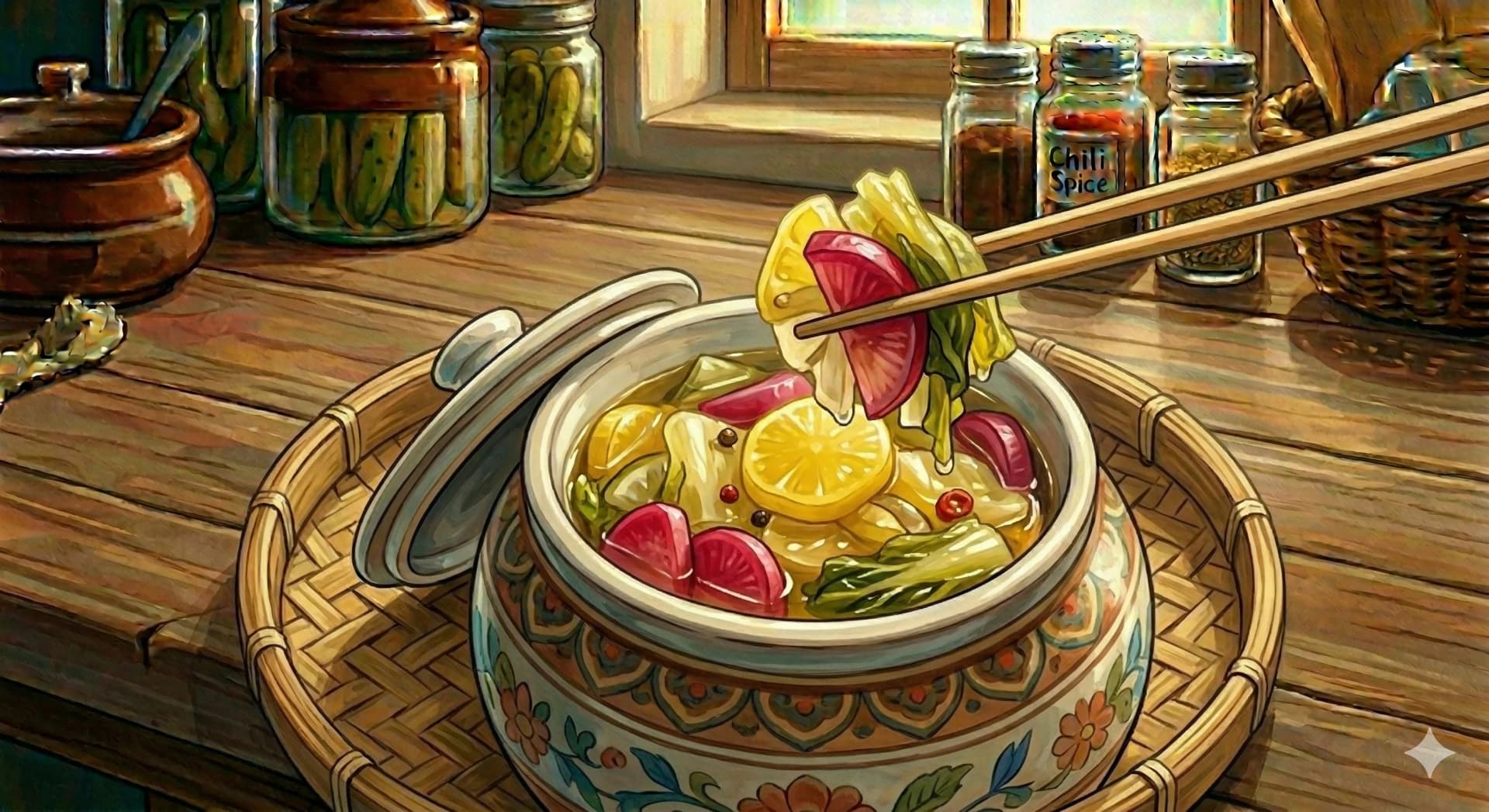
Pickled Vegetables
Also known as: Pao Cai, Sichuan Paocai, Jiachang Pao Cai, Table Pickles
Pickled vegetables in the Chinese pantry refers primarily to pao cai — a Sichuan tradition of quick-pickling fresh vegetables in a seasoned brine in a special ceramic pao cai jar.
Unlike long-fermented preserved vegetables, pao cai can be ready in days, producing crisp, tangy, mildly sour pickled vegetables that serve as a digestive condiment, a palate cleanser, and a bright contrast to rich meat dishes. Napa cabbage, daikon, carrots, celery, green beans, and ginger are common pao cai vegetables.
Key facts at a glance:
- Pao cai — Sichuan quick-pickled vegetables in a water-sealed ceramic jar
- Ready in 1-3 days — unlike longer-fermented preserved vegetables
- Over 2,000 years old — one of the oldest food preservation technologies
- Rich in Lactobacillus — with documented gut health benefits
- Source of vitamin K2 — produced through bacterial synthesis during fermentation
Flavor Profile
Origin
Sichuan, China, East Asia
Traditional Medicine Perspectives
Traditional Chinese Medicine
Pickled vegetables (Pao Cai) are classified as sour and cool in TCM, associated with the Liver and Stomach meridians. The sour flavor enters the Liver, promotes smooth flow of Liver Qi, and stimulates digestive secretions. Pao cai is valued as a digestive aid — the organic acids stimulate gastric acid production and bile flow. The cooling nature makes it an appropriate condiment alongside rich, warm meats.
Modern Scientific Research
Lactic acid-fermented pickled vegetables contain Lactobacillus and other beneficial bacteria that contribute to gut microbiome health.
Research on fermented vegetables shows associations with improved digestive health, enhanced immune function, and better bioavailability of vitamins and minerals. The organic acids in pickled vegetables have antimicrobial properties. Fermented vegetables are a significant source of vitamin K2 (from bacterial synthesis).
Cultural History
Pao cai has been made in Sichuan for over two thousand years, with the ceramic pickling jars with water-seal lids representing one of the oldest food preservation technologies in the world. The water seal creates an anaerobic environment that allows lactic acid fermentation while preventing harmful bacteria — an ancient understanding of fermentation chemistry.
In Sichuan homes, a pao cai jar is a constant presence, continuously refreshed with new vegetables — the cuisine of Sichuan developed with pao cai as a structural condiment, its bright sourness providing counterpoint to the numbing spice of Sichuan peppercorn.
Culinary Uses
Serve as a table condiment alongside congee, rice, and noodle dishes. Stir-fry finely chopped pickled vegetables with minced pork.
Add to cold noodle dishes for sourness. Use as a garnish on rich braised dishes to cut through fat.
Preparation Methods
For quick pao cai: dissolve salt in water (roughly 1 tablespoon per cup of water). Add Sichuan peppercorns, dried chili, ginger, and a little sugar. Submerge cut vegetables in the brine. Keep submerged with a weight.
Ready in 1–3 days at room temperature; 3–7 days for more sourness. Refrigerate when flavor is right.
Traditional Dishes
- Sichuan pao cai as condiment
- Stir-fried pickled vegetables with pork
- Congee with pickled side dishes
- Cold sesame noodles with pickled vegetables
- Vietnamese banh mi do chua
Comments
Share your thoughts on this ingredient.
Sign in to comment0 Comments