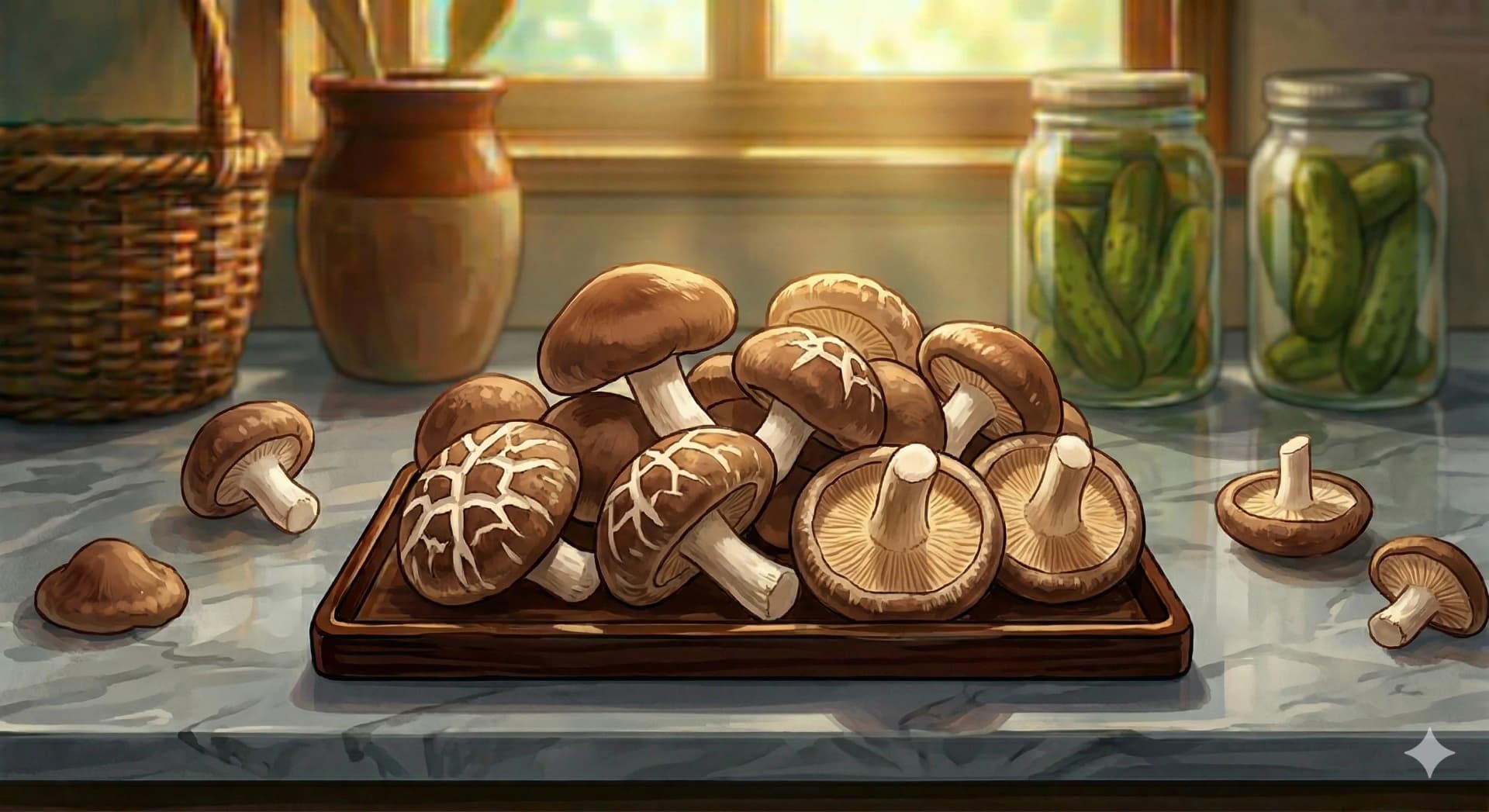
Shiitake Mushrooms
Also known as: Xiang Gu, Fragrant Mushroom, Lentinula edodes, Dong Gu (dried winter mushroom)
Shiitake are the most important mushroom in Chinese and Japanese cooking — rich, savory, and deeply umami, with a meaty, satisfying texture and a woody, earthy fragrance that perfumes everything around them.
Fresh shiitake are excellent; dried shiitake are even more intensely flavored and produce a soaking liquid that is one of the great natural stocks in Chinese cooking.
In Chinese cuisine, dried shiitake (particularly the prized thick-capped 'dong gu' or winter mushrooms) are a luxury ingredient used in the most refined preparations.
Key facts at a glance:
- One of the first cultivated mushrooms — over a thousand years of cultivation history in China
- Dried shiitake produce a prized soaking liquid — one of the great natural stocks in Chinese cooking
- Winter mushrooms (dong gu) — thick-capped variety considered a luxury ingredient
- Lentinan — a beta-glucan studied as an immune modulator and cancer adjunct therapy in Japan
- Among the few plant sources of vitamin D — when sun-dried
Flavor Profile
Origin
China, Japan, East Asia
Traditional Medicine Perspectives
Traditional Chinese Medicine
Shiitake (Xiang Gu) are classified as neutral and sweet in TCM, associated with the Spleen and Stomach meridians. They are used to tonify Qi, nourish Blood, support immune function, and benefit the Stomach. In TCM dietary medicine, shiitake are considered among the most tonifying and nourishing of vegetables — frequently prescribed for Qi and Blood deficiency, weakness, and general tonification.
Modern Scientific Research
Shiitake are among the best-researched medicinal mushrooms. Lentinan, a beta-glucan extracted from shiitake, has been studied extensively as an immune modulator and is used as a cancer adjunct therapy in Japan.
Research shows shiitake consumption supports immune function, lowers LDL cholesterol (from eritadenine content), and provides cardiovascular benefits.
Shiitake contain ergothioneine — a potent antioxidant also found in reishi — and are among the few plant sources of vitamin D when sun-dried.
Cultural History
Shiitake have been cultivated in China for over a thousand years, making them one of the first intentionally cultivated mushrooms in history. The technique of inoculating oak logs with shiitake spores was developed in China centuries before it was recorded in Japan.
Dried winter shiitake (dong gu), with their thick caps and characteristic cracked pattern, are among the most expensive dried vegetables in Chinese cooking and feature prominently in Chinese New Year and celebration dishes.
The soaking liquid from reconstituted dried shiitake is treated as a prized stock in Shanghainese and Cantonese cooking.
Culinary Uses
Fresh: slice and stir-fry, add to soups, use in dumpling fillings and hot pots.
Dried: rehydrate in warm water for 30 minutes, squeeze gently, slice, and cook. Keep the soaking liquid — strain and use as a stock.
The soaking liquid from dried shiitake is one of the great natural stocks in Chinese cooking — never discard it.
Use in red-braised preparations, stuffed preparations, and as a vegetarian substitute for meat umami.
Preparation Methods
Fresh: wipe clean with a damp cloth, remove stems (save for stock). The stems are woody — never eat them, but they make excellent stock.
Dried: soak in warm water 30–60 minutes until fully rehydrated. Squeeze liquid back into the bowl.
Strain and reserve the soaking liquid.
Traditional Dishes
- Buddha's delight (lo han jai)
- Braised whole shiitake
- Dumpling fillings
- Red-braised chicken with shiitake
- Steamed egg with shiitake
Comments
Share your thoughts on this ingredient.
Sign in to comment0 Comments