Chinese Cuisine
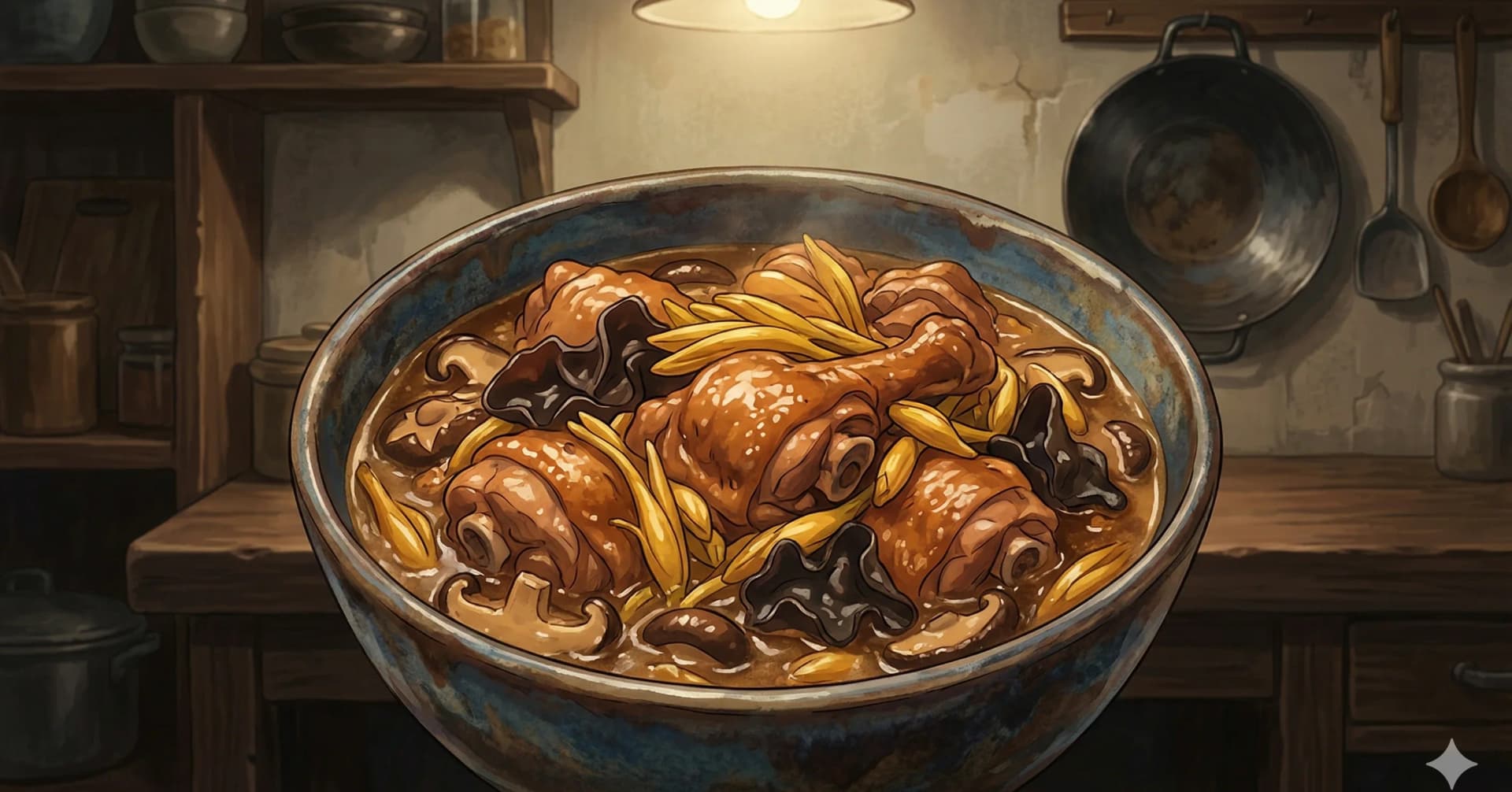
Braised Chicken with Lily Buds and Mushrooms (Jin Zhen Yun Er Ji)
A Cantonese home-cooking classic where bone-in chicken simmers with golden needle lily buds, wood ear, and shiitake in a savory braising sauce
Golden needles are not needles and they are not gold. They are the dried buds of the daylily flower, harvested just before opening and dried until they turn a deep amber. In Cantonese kitchens, they have been a pantry staple for generations, showing up in soups, stir-fries, and braises alongside their usual companions: wood ear mushrooms and dried shiitake.
This trio of dried ingredients is the quiet backbone of the dish. Each one brings a different texture. The lily buds are slightly chewy with a faint sweetness that surprises people who have never tasted them before. Wood ear contributes a delicate crunch, almost like biting into a thin sheet of something between a mushroom and a vegetable. And the shiitake, after soaking, become meaty and full of concentrated umami that no fresh mushroom can match.
The braising liquid does double duty here. You soak all three dried ingredients together, and that soaking water becomes the base of the sauce. It is already loaded with mushroom flavor before you even turn on the stove. The chicken, marinated briefly in oyster sauce, sears until the skin is golden, then everything comes together in a covered pan for a gentle 25-minute braise. The house fills with the smell of ginger, Shaoxing wine, and something deeply savory that is hard to name but impossible to ignore.
This is not restaurant food or dinner party food. This is what Cantonese families cook on a Tuesday night when they want something warming and satisfying without a lot of fuss. The kind of dish that tastes even better reheated the next day, spooned over rice with some of the braising liquid pooling around the edges.
At a Glance
Yield
4 servings
Prep
20 minutes (plus 30 minutes soaking)
Cook
30 minutes
Total
80 minutes
Difficulty
Easy
Ingredients
- 1½ lbbone-in, skin-on chicken thighs, cut into 2-inch pieces through the bone
- 1 tbspoyster sauce, for marinating
- 1 ozdried lily buds (golden needles / jin zhen), soaked 30 minutes in warm water, hard ends trimmed, tied in knots
- ¼ ozdried wood ear mushrooms, soaked 30 minutes in warm water, torn into bite-sized pieces
- 8dried shiitake mushrooms, soaked 30 minutes in warm water, stems removed, halved
- 1 cupmushroom soaking liquid, strained through a fine mesh sieve
- 2 tbspneutral oil
- 4slices fresh ginger, smashed
- 3cloves garlic, minced
- 3scallions, cut into 2-inch lengths, white and green separated
- 2 tbspShaoxing wine
- 1 tbspdark soy sauce
- 1 tbspoyster sauce
- 1 tspsugar
- 0.5 tspsesame oil
- —pinch of white pepper
Method
- 1
Soak the dried lily buds, wood ear mushrooms, and shiitake mushrooms together in 2 cups of warm water for 30 minutes. Once softened, drain and reserve 1 cup of the soaking liquid, straining it through a fine mesh sieve to remove any grit. Trim the hard ends from the lily buds and tie each one into a loose knot (this keeps them from falling apart during braising). Tear the wood ear into bite-sized pieces. Remove the shiitake stems and halve the caps.
- 2
Toss the chicken pieces with 1 tablespoon of oyster sauce in a bowl and let sit while you prepare everything else, at least 10 minutes.
- 3
Heat the neutral oil in a wok or large deep skillet over medium-high heat. Add the chicken pieces skin-side down and sear without moving for 3 to 4 minutes until the skin is golden and releases easily from the pan. Turn and sear the other side for 2 minutes. Remove the chicken and set aside.
- 4
In the same pan, reduce heat to medium. Add the ginger slices and scallion whites and cook for 30 seconds until fragrant. Add the garlic and stir for another 15 seconds. Pour in the Shaoxing wine and let it sizzle and reduce for a few seconds, scraping up any browned bits from the chicken.
- 5
Return the chicken to the pan. Add all the soaked mushrooms and lily buds, the reserved mushroom soaking liquid, dark soy sauce, the remaining 1 tablespoon oyster sauce, and sugar. Stir gently to combine. Bring to a simmer, then cover and reduce heat to medium-low.
- 6
Braise covered for 20 to 25 minutes, turning the chicken once halfway through, until the chicken is cooked through and the sauce has reduced and thickened slightly. The lily buds should be tender and the shiitake should be plump and deeply flavored.
- 7
Remove the lid, increase heat to medium-high, and let the sauce reduce for 2 to 3 minutes if it still looks thin. You want it glossy and coating the back of a spoon. Finish with sesame oil, white pepper, and the scallion greens. Toss once and transfer to a serving plate. Serve immediately with steamed rice.
Key Ingredient Benefits
Dried lily buds (golden needles): These are the unopened flowers of the daylily plant, Hemerocallis fulva. In traditional Chinese food culture, they are associated with calming properties and are sometimes called "forgetting worry grass" (wang you cao). They are a source of iron and dietary fiber. Modern nutritional analysis confirms they contain beta-carotene and various B vitamins, though they are eaten in small enough quantities that the contribution is modest.
Dried shiitake mushrooms: Drying concentrates the guanylate compounds that give shiitake their intense umami flavor, making dried shiitake significantly more savory than fresh. They are one of the richest plant sources of vitamin D when sun-dried, and contain beta-glucan polysaccharides that have been studied for potential immune-supporting properties.
Wood ear mushrooms: These thin, ruffled fungi are prized more for texture than flavor. They are very low in calories and contain soluble fiber. Traditional Chinese dietary practice considers them beneficial for circulation, though clinical evidence for specific health claims remains limited.
Why This Works
The foundation of this dish is the mushroom soaking liquid. When dried shiitake, wood ear, and lily buds sit in warm water for 30 minutes, they release a concentrated broth full of glutamates and nucleotides. Using this as the braising base means the sauce starts with a depth of flavor that would otherwise require hours of stock-making.
Marinating the chicken in oyster sauce before searing serves two purposes. The sugars in the oyster sauce help the skin caramelize faster, giving you a deeper golden color in less time. And the salt in the sauce begins seasoning the meat from the surface inward, even in a short 10-minute rest.
Tying the lily buds into knots is not just tradition for the sake of it. The buds are long, thin strands that can tangle and clump during braising. Knotting them keeps each piece distinct and gives a better bite, with a satisfying little chew at the center of each knot.
The dark soy sauce is there primarily for color, not saltiness. It gives the braising liquid that deep mahogany tone that signals comfort food in Cantonese cooking. The actual seasoning comes from the oyster sauce and the naturally salty mushroom soaking liquid.
Substitutions & Variations
Chicken: Bone-in chicken drumsticks work well, though they take 5 to 10 minutes longer to cook through. Boneless thighs will work for convenience but lose the body that bones add to the braising sauce. For a vegetarian version, substitute firm tofu and increase the shiitake to 12 pieces.
Lily buds: If you cannot find dried lily buds, the dish will still taste good without them, but you will lose the distinctive sweet-savory chew they bring. There is no perfect substitute, but a small handful of mung bean noodles (soaked and cut short) approximates the texture, if not the flavor.
Wood ear mushrooms: Fresh wood ear can replace dried. Use about 60g fresh and skip the soaking step for them. Cloud ear fungus is the same family and works identically.
Shaoxing wine: Dry sherry is the closest substitute. In a pinch, dry vermouth or sake will work, though each shifts the flavor profile slightly.
Dark soy sauce: If unavailable, use regular soy sauce plus a half teaspoon of molasses or brown sugar to approximate the color and mild sweetness.
Serving Suggestions
This is a rice dish through and through. Steamed jasmine rice is ideal because it absorbs the braising liquid beautifully. For a more complete meal, serve alongside a simple stir-fried green vegetable like Gai Lan with Oyster Sauce or a bowl of clear winter melon soup. The dish also pairs well with a plate of Tomato Egg Stir-Fry for color contrast and a lighter texture on the table.
Storage & Reheating
Refrigerator: Store in an airtight container for up to 4 days. This is one of those dishes that genuinely improves overnight as the chicken absorbs more of the braising sauce and the dried ingredients continue to soften and meld.
Reheating: Reheat gently in a covered pan over medium-low heat with a splash of water to loosen the sauce. The dark soy sauce will thicken further as it cools, so adding a little liquid when reheating is essential.
Freezing: Freezes well for up to 2 months. Thaw overnight in the refrigerator and reheat as above. The mushroom textures hold up surprisingly well after freezing.
Cultural Notes
Golden needles, wood ear, and shiitake form one of the most traditional ingredient trios in Cantonese home cooking, appearing together in soups, stir-fries, and vegetarian Buddhist cuisine. The lily bud is known as jin zhen (金针, "golden needle") for its shape and color, and in folk tradition, the daylily plant is called the "forgetting worry grass" (忘忧草), believed to ease anxiety when eaten. The knotting technique for lily buds is passed from parent to child in Cantonese kitchens. It is both practical (preventing tangling) and symbolic of tying together good fortune. This combination of ingredients was historically considered nourishing without being heavy, making it everyday food rather than celebration food.
Nutrition Facts
Calories: 310kcal (16%)|Total Carbohydrates: 12g (4%)|Protein: 28g (56%)|Total Fat: 16.5g (21%)|Saturated Fat: 3.8g (19%)|Cholesterol: 115mg (38%)|Sodium: 680mg (30%)|Dietary Fiber: 2.5g (9%)|Total Sugars: 4g
You Might Also Like
Ratings & Comments
Ratings & Comments
Ratings
Share your thoughts on this recipe.
Sign in to rate and comment