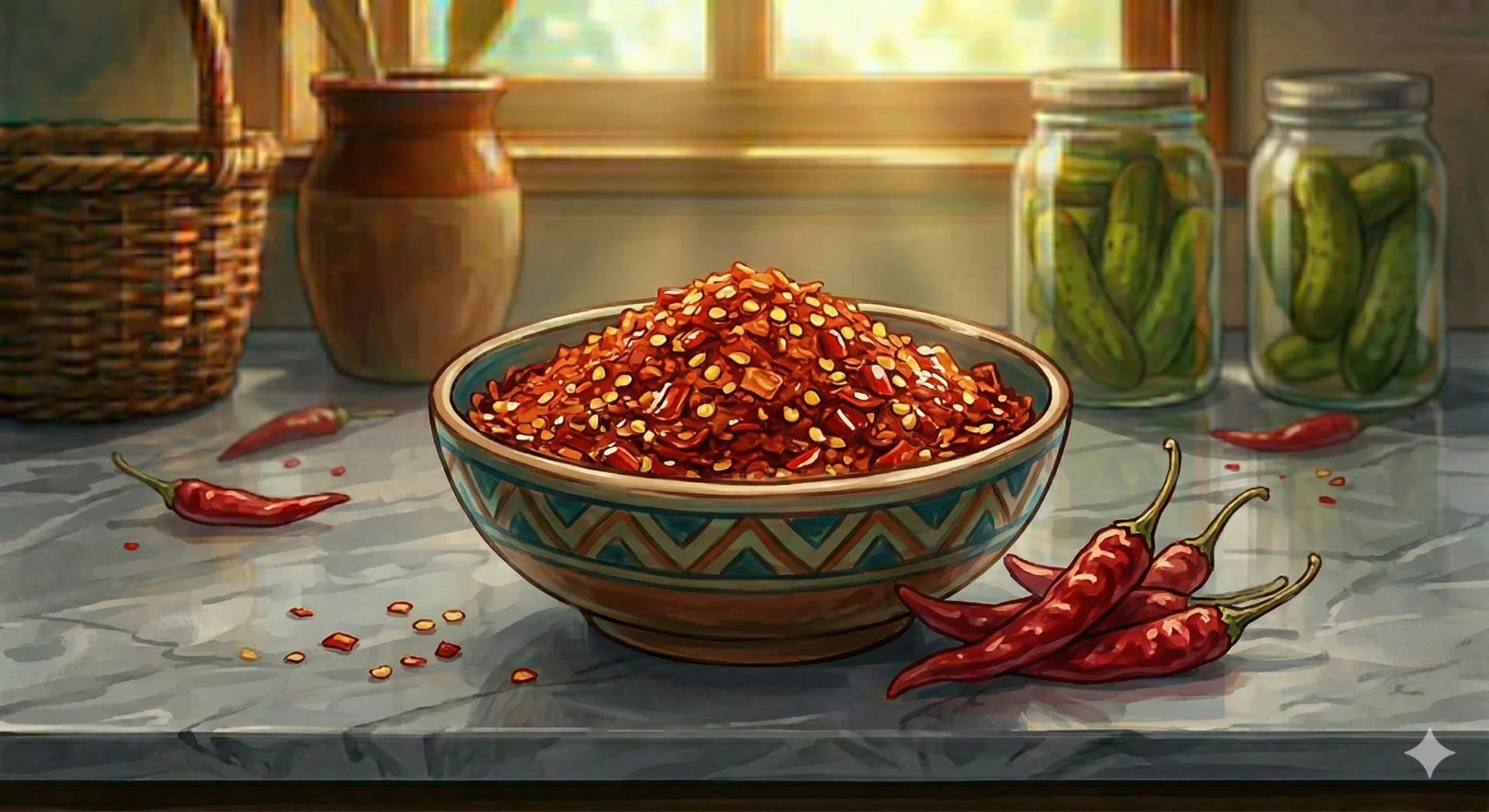
Sichuan Chili Flakes
Also known as: La Jiao Mian, Chili Powder (Chinese), Sichuan Red Pepper Flakes, Er Jing Tiao Flakes
Sichuan chili flakes are coarsely ground dried red chilies — a specific texture and heat level distinct from generic red pepper flakes.
Made primarily from Erjing tiao chilies, they are prized for their vivid red color and moderate, fruity heat rather than pure burning intensity.
They are the key ingredient poured over at the critical moment in homemade chili oil, and the correct texture for this application — coarse enough to crisp in hot oil but fine enough to bloom with color.
Key facts at a glance:
- Made from Erjing tiao chilies — developed specifically for deep red color and moderate heat
- Distinct from generic red pepper flakes — specific texture suited for chili oil
- Fruity heat over burning intensity — prized for color and layered flavor
- Key ingredient in homemade chili oil — oil temperature is critical for proper blooming
- Rich in capsanthin — carotenoid compound responsible for the vivid red color
Flavor Profile
Origin
Sichuan, Chengdu, China
Traditional Medicine Perspectives
Traditional Chinese Medicine
Ground chili (La Jiao Mian) shares the TCM profile of dried chilies: hot, acrid, warming, and circulatory. The finer grind means quicker flavor release and more even distribution of heat through a dish, which is relevant in TCM culinary applications where consistent warming is the goal.
Modern Scientific Research
Chili flakes retain the capsaicinoid content of dried whole chilies, with the increased surface area from grinding slightly accelerating the release of active compounds.
Research on capsaicin shows consistent anti-inflammatory effects and potential metabolic benefits.
The vivid red color of Erjing tiao flakes comes from carotenoid compounds, including capsanthin, which show antioxidant activity.
Cultural History
The specific chili flakes used in Sichuan cooking represent generations of refinement in selecting, drying, and grinding chilies for particular culinary outcomes.
Erjing tiao chilies, the primary variety used for Sichuan chili flakes, were developed specifically for their combination of deep red color and moderate heat — both qualities important in a cuisine where visual presentation and layered flavor matter as much as pure spice level.
The technique of pouring hot oil over chili flakes at precisely the right temperature to bloom their color and flavor without burning them is one of Sichuan cooking's most important skills.
Culinary Uses
The essential ingredient for homemade chili oil — pour hot oil at precisely 180–200°C over the flakes to bloom their color and flavor.
Use in dry spice rubs. Sprinkle over finished dishes. Add to dumpling dipping sauces.
Use in Sichuan cold dishes and noodle sauces. Mix with Sichuan peppercorn for the ma la flavor base.
Preparation Methods
For chili oil: the oil temperature when it hits the flakes is critical. Too hot (above 210°C) burns and turns them dark and bitter. Too cool (below 160°C) produces pale, under-bloomed flakes.
Aim for around 180–190°C for vivid red color and full flavor.
A two-pour method (first at higher temp, second at lower) gives maximum color and flavor.
Traditional Dishes
- Homemade chili oil
- Dan dan noodles
- Sichuan cold dishes (liang ban)
- Chili wontons
- Kou shui ji (saliva chicken)
Comments
Share your thoughts on this ingredient.
Sign in to comment0 Comments