Indian Cuisine
Aloo Ki Tikki
Spiced potato patties with a deep golden crust and a soft, fragrant interior
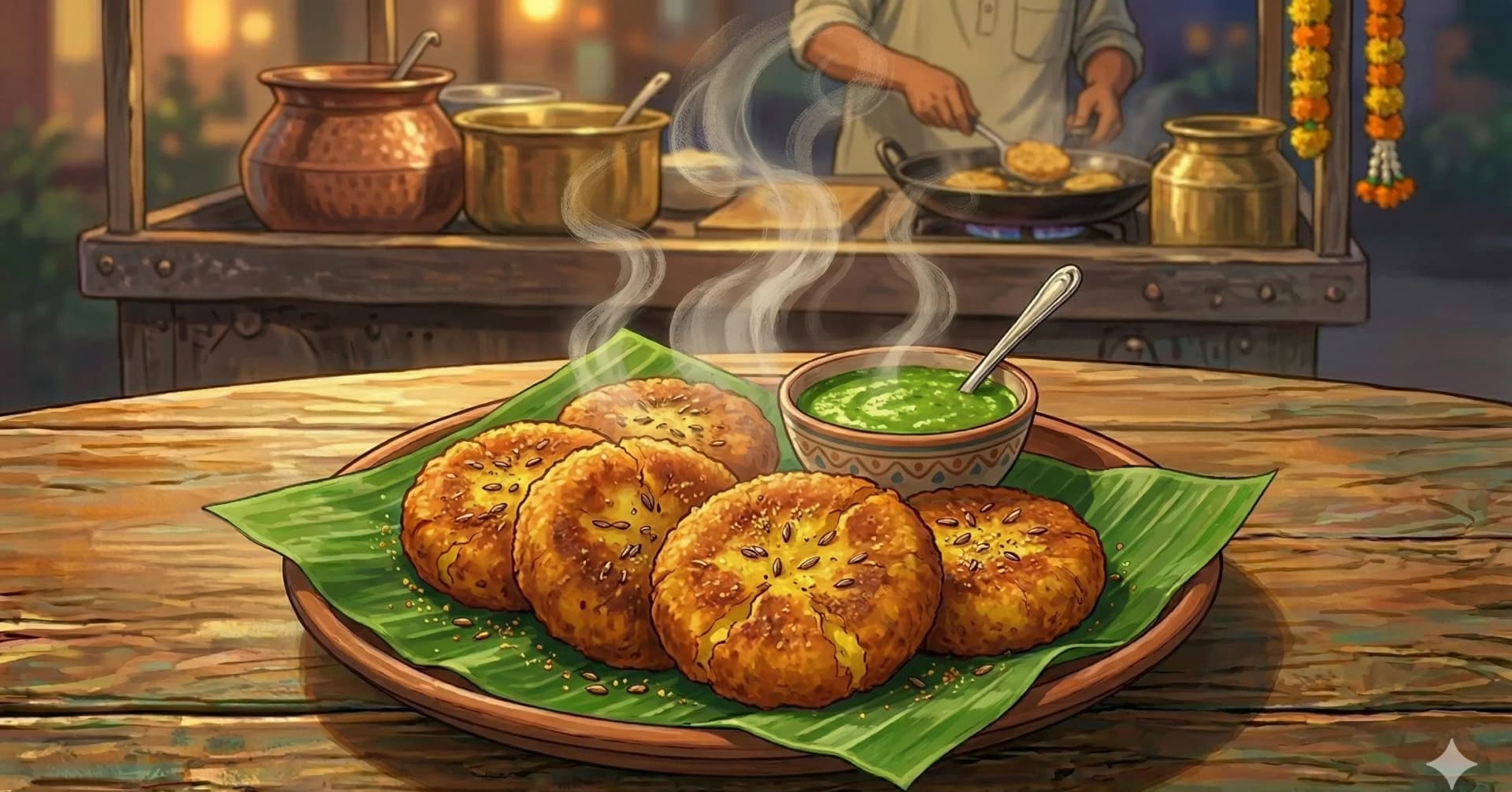
At any decent chaat counter in Delhi (the kind with the iron griddle blackened from years of use, the line of jars holding different chutneys, the vendor who works the spatula with unhurried authority), the aloo ki tikki is the anchor. Everything else is built on it or beside it. The tikki arrives flat and golden, its edges crisped to a satisfying resistance, the inside still soft and fragrant with cumin and the sharp, fruity edge of amchoor.
Tikki means patty or small cake in Hindi, and the aloo ki tikki is exactly that: mashed potato seasoned with care and shallow-fried until the exterior develops a proper crust. It sounds simple, and it is. Good technique is never complicated. But there are decisions that separate a great tikki from a mediocre one.
The potato must be mashed completely smooth before any other ingredients are added. Lumps create soft spots in the exterior that don't crust evenly, and they also make the patties difficult to shape without cracking. Boil the potatoes the day before if possible. Overnight refrigeration drives off moisture and produces a drier mash that holds together better.
Cornflour is the binder. Just enough to hold the patties together in the pan; too much makes them dense and starchy-tasting. Shape each tikki to an even thickness, roughly 1.5 cm, so the inside cooks through as the outside crisps. And fry with patience: a deep golden crust needs time, not high heat.
At a Glance
Yield
10–12 tikkis
Prep
20 minutes
Cook
25 minutes
Total
45 minutes
Difficulty
Easy
Ingredients
- 2¼ lbpotatoes, boiled, peeled (about 6½–7 potatoes), and completely cooled
- ⅓ cupcornflour (cornstarch)
- 3¼ tbspgreen chillies (2–3 chillies), finely chopped
- 3¼ tbspfresh ginger, finely grated
- 1½ tbspcumin powder
- 1¾ tbspcoriander powder
- 1⅔ tspgaram masala
- 2 tspamchoor (amchur), dried mango powder
- 1 cupfresh coriander, finely chopped
- ⅞ tspsalt, or to taste
- ½ cupneutral oil, for shallow frying
Method
- 1
Mash the potatoes (1 kg). While the boiled potatoes are still warm but not hot, pass them through a potato ricer or mash thoroughly with a masher until absolutely smooth, with no lumps at all. Spread on a plate and allow to cool completely. (If the potato is warm when you add cornflour (50 g) and shape, the tikkis will be sticky and difficult to handle.)
- 2
Mix the filling. Transfer the cooled mashed potato to a bowl. Add cornflour, green chillies (20 g), ginger (20 g), cumin powder (2 tsp), coriander powder (2 tsp), garam masala (1 tsp), amchoor (1 tsp), fresh coriander (20 g), and salt (5 g). Mix thoroughly with your hands until everything is evenly combined. Taste the mixture and adjust salt and amchoor. It should be properly seasoned with a distinct tang.
- 3
Shape the tikkis. Divide the mixture into 10–12 equal portions (about 100 g each). Roll each into a smooth ball between your palms, then flatten to a disc about 7–8 cm across and 1.5 cm thick. Smooth the edges with your fingertips. If the mixture is sticky, wet your hands lightly.
- 4
Fry the tikkis. Heat a wide, flat pan or tawa over medium heat. Add enough oil to generously coat the surface, about 2–3 tablespoons. When the oil is hot and shimmering, lay the tikkis in the pan without crowding. Cook undisturbed for 4–5 minutes until the underside is deeply golden, a rich amber-brown rather than pale gold. Carefully flip and cook the other side for another 4–5 minutes. The tikki should feel firm and set; if it feels soft, it needs more time.
- 5
Drain and serve. Transfer to a wire rack briefly. Serve hot with chutneys alongside.
Key Ingredient Benefits
Potato is the foundation here. Boiled and mashed, it becomes a mild, absorbent vehicle for the spicing. Cooked and cooled potatoes have substantially higher resistant starch content than freshly boiled ones, which research associates with slower glucose release and prebiotic benefit to gut bacteria.
Amchoor (dried mango powder) provides the characteristic sour-fruity edge of the North Indian chaat palate. It adds acidity without moisture, which matters in a potato-based mixture where excess liquid compromises texture. Traditionally associated with digestive support in Ayurvedic cooking.
Cornflour (cornstarch) serves as binder and crust-former. Its fine particle size and high starch content gelatinise quickly at frying temperatures, giving the tikki its crisp, slightly lacquered-looking exterior.
Cumin in ground form provides earthy, slightly bitter warmth. Traditionally used as a digestive spice in Indian cooking, and it remains one of the most researched culinary spices for gut comfort associations.
Green chillies provide bright, sharp heat. The capsaicin they contain has long been used in traditional Indian medicine as a digestive stimulant and circulatory warming agent.
Why This Works
The cornflour binding works on two levels. In the mix, it absorbs any residual moisture from the potato, making the mixture dryer and easier to shape into patties that hold their form. In the pan, the surface cornflour gelatinises rapidly in the hot oil, forming a thin, starch-based crust that locks moisture inside and develops colour well. It browns more readily than wheat flour, which is why tikkis made with cornflour develop a deeper, more even golden crust.
Mashing to complete smoothness is a textural imperative. Lumps of potato in a tikki mean the surface doesn't make full contact with the hot pan. The lumpy areas sit slightly off the surface, creating pale, underdone spots surrounded by well-crisped areas. A smooth mash gives you uniform contact and therefore a uniform, even crust across the entire surface.
The spice combination (cumin, coriander, amchoor, garam masala) is the classic North Indian chaat balance: earthy and warm, bright and sour, complex and aromatic. The heat of green chilli and the freshness of coriander leaf add liveliness. This exact combination appears across aloo chaat, samosa filling, and papdi chaat. It's the flavour profile of the North Indian street food canon.
Substitutions & Variations
- Stuffed tikki: Press a small cavity into a shaped tikki, fill with a spoonful of spiced chana (chickpeas cooked with ginger and spices), re-seal and shape before frying. Delhi's street version is often served this way.
- Sweet potato tikki: Replace half the potato with mashed sweet potato for a sweeter, slightly softer tikki with more complex colour. Add ½ tsp more cornflour to compensate for the extra moisture.
- Breadcrumb coating: Roll the shaped tikkis in fine breadcrumbs before frying for an extra-crunchy exterior.
- Paneer addition: Mix 50 g grated paneer into the potato mix for richer flavour and a softer interior texture.
- Aloo tikki chaat: Serve as a full chaat dish: place tikkis on a plate, top with beaten yogurt, green chutney, tamarind chutney, sev, chopped onion, and chaat masala.
Serving Suggestions
Aloo ki tikki is complete with two chutneys: green coriander-mint chutney and sweet tamarind chutney. For the full chaat treatment, add a drizzle of whisked plain yogurt, a handful of fine sev, chopped raw onion, diced tomato, and a dusting of chaat masala and red chilli powder. That's aloo tikki chaat, one of the essential North Indian street food compositions. Simpler serving (on a piece of newspaper with a chutney cup alongside) is equally valid. Tikkis make a good starter or snack; serve 2–3 per person.
Storage & Reheating
Shaped, uncooked tikkis can be refrigerated on a tray for up to 24 hours; cover with cling film so the surface doesn't dry out. They can also be frozen at this stage: freeze on a tray until solid, then bag for up to 1 month. Fry from frozen, adding 2–3 minutes per side. Cooked tikkis reheat well in an air fryer at 180°C for 5 minutes or in a pan with a little oil. The mashed potato mixture (unshaped) keeps in the refrigerator for 2 days.
Cultural Notes
Aloo ki tikki (आलू की टिक्की, "potato cutlet") is the North Indian street snack of boiled potatoes mashed with green peas, ginger, green chilies, garam masala, and ground cumin, shaped into flat round patties, and pan-fried on a hot griddle until both sides develop a deep golden crust. The dish is one of the most internationally recognized of the Indian chaat (savory snack) family, and the central element of the broader chaat tradition in which the tikki is topped with chickpea curry, two or three chutneys, yogurt, sev (crispy fried lentil noodles), and chopped raw onions for a layered street-food experience.
The dish is most strongly associated with the Lucknowi-Awadhi street food tradition of northern India, where it appears at the famous Lucknow chaat shops like Royal Cafe, Chowk, and the kachori-tikki stalls along Hazratganj. The dish has also spread heavily through the Delhi street-food tradition, where it appears at the chaat stalls of Chandni Chowk, Bengali Market, and Lajpat Nagar. The Punjabi diaspora carried the dish to the United Kingdom, where it became one of the staple offerings of Indian-Punjabi halwai shops in Southall, Leicester, and Bradford from the 1960s onward.
The technique is simple but demands proper potato preparation. Russet or other starchy potatoes are boiled whole until completely soft, peeled, and mashed thoroughly while still warm. Cooked green peas (or fresh peas in season) are roughly crushed and mixed in, along with finely chopped fresh ginger, finely chopped green chilies, chopped cilantro, salt, garam masala, ground cumin, ground coriander, and amchur (dried mango powder) for tang. The mixture is divided into portions of about two ounces each and shaped between the palms into flat round patties about three inches across and half an inch thick. The patties are pan-fried in oil on a hot tava (flat griddle) for three to four minutes per side until both surfaces turn deep golden brown. The dish is served immediately, either plain with a green chutney dip, or assembled as full aloo tikki chaat with chickpea curry (chole), tamarind chutney, mint-cilantro chutney, yogurt, chopped onion, and sev on top.
Nutrition Facts
Calories: 492kcal (25%)|Total Carbohydrates: 61g (22%)|Protein: 6g (12%)|Total Fat: 26g (33%)|Saturated Fat: 3.6g (18%)|Cholesterol: 0mg (0%)|Sodium: 510mg (22%)|Dietary Fiber: 7.2g (26%)|Total Sugars: 3.1g
You Might Also Like
Ratings & Comments
Ratings & Comments
Ratings
Share your thoughts on this recipe.
Sign in to rate and comment