Indian Cuisine
Goan Semolina Bites (Bolinas)
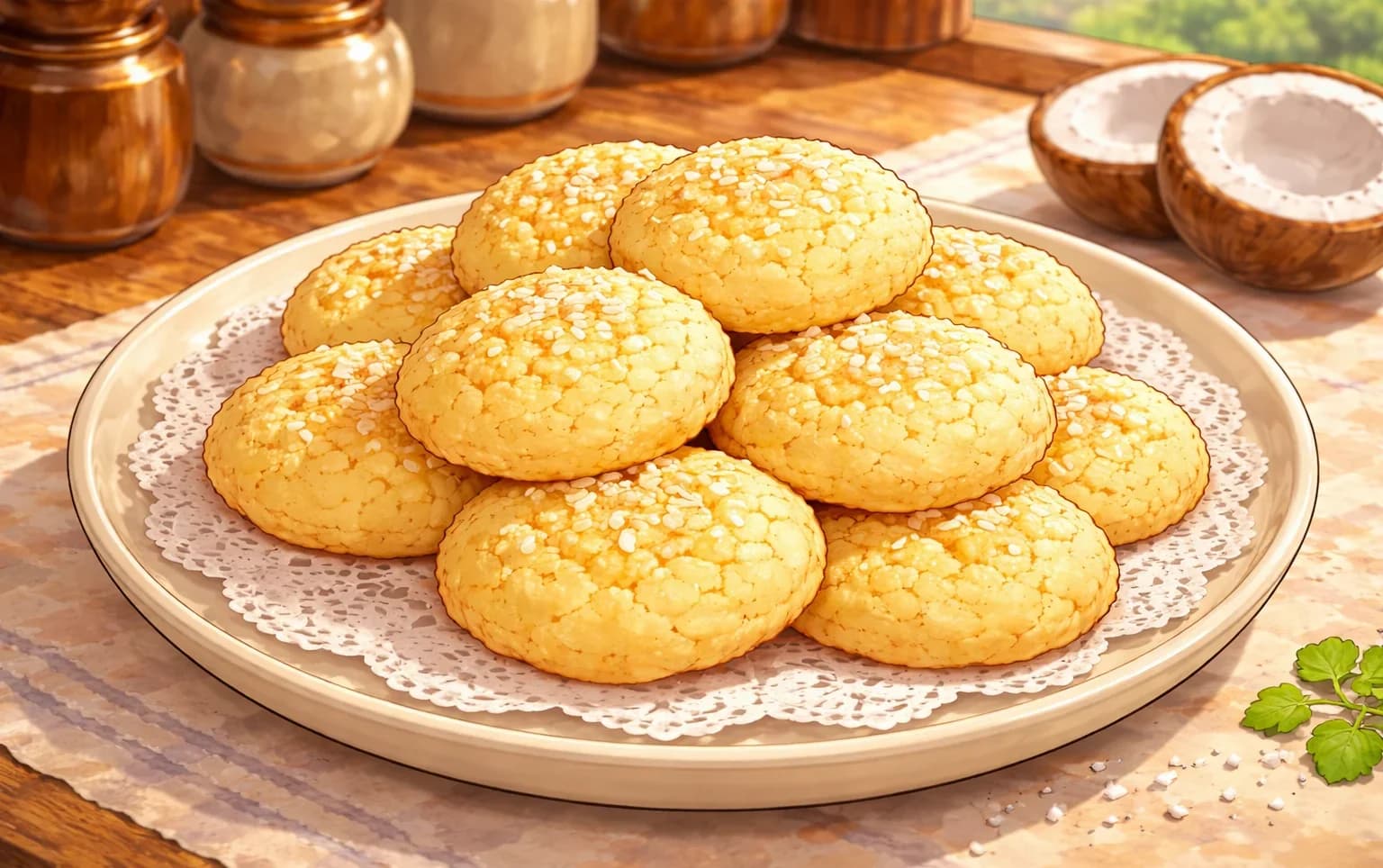
Goan Coconut, Egg, and Semolina Tea Cookies
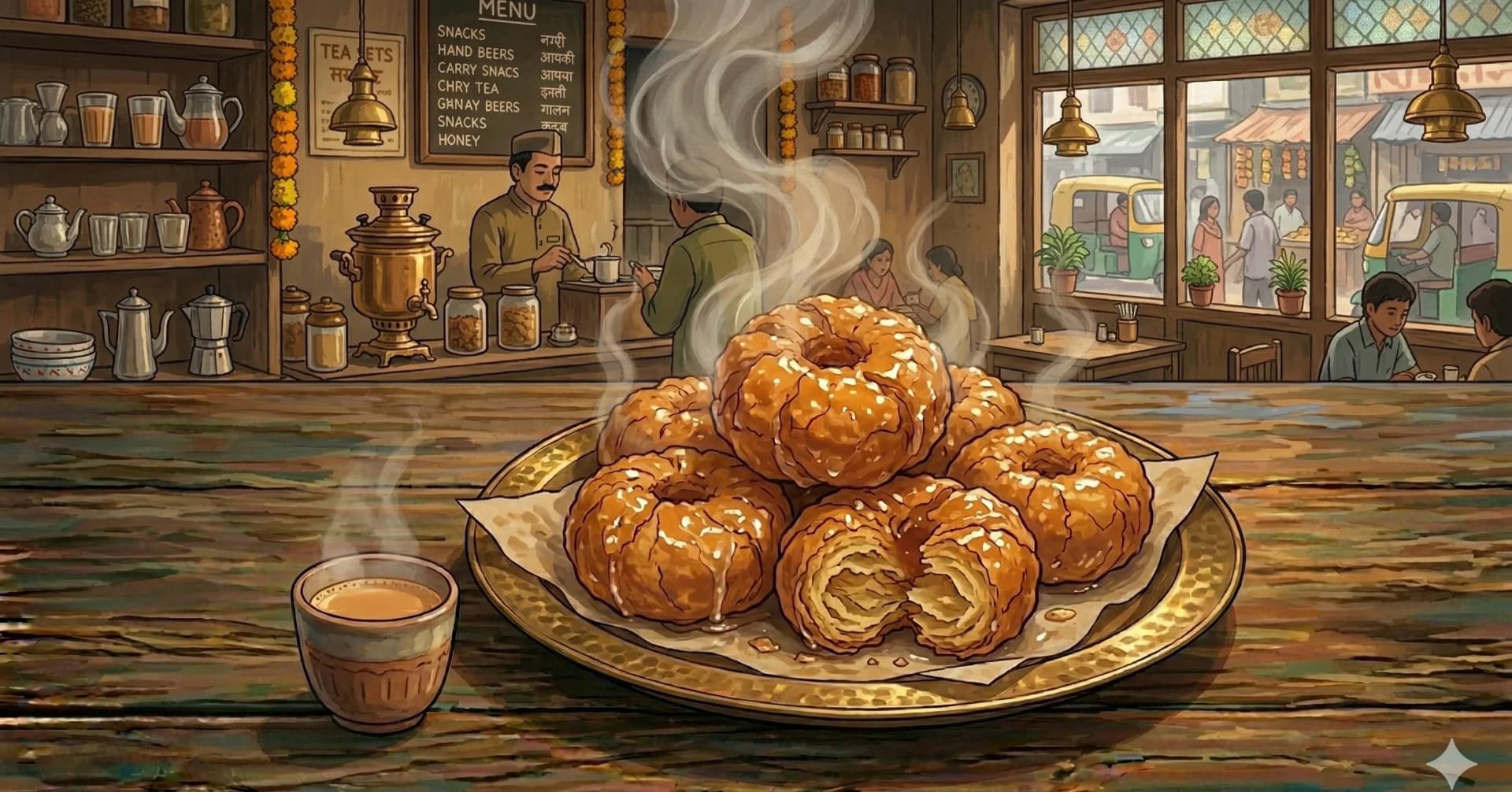
Among Goa's catalogue of Portuguese-influenced baked sweets (the bebinca, the baath, the neureo), bolinas are the most modest and perhaps the most beloved. They are small, golden-brown cookies, slightly irregular in shape, with a dense interior of coconut and semolina held together by egg and fragrant with vanilla. They require no special technique, no temperature precision, no resting period. They are the kind of sweet that any Goan grandmother could make with her eyes half-closed on a Tuesday afternoon, for no occasion other than that someone might come by for tea.
The method follows a pattern common across Goan Catholic baking: a sugar syrup is made first, then ground coconut is cooked briefly in the syrup, the heat doing the initial work of binding the coconut with the sugar. The pan is taken off the burner and the hot coconut-syrup mixture is left to cool, stirring, as the residual heat continues to work. Then the eggs go in (yolks only, for richness and colour), followed by the semolina, sieved smooth, and the vanilla essence.
What results is a thick, heavy batter that is scooped onto a baking tray in spoonfuls and baked until golden. The egg yolks produce a warm, amber colour; the coconut and semolina produce a dense, slightly chewy interior; the sugar gives a sweet, almost caramelised surface.
Eat with strong tea. Best on the day they are made, good for three days after.
At a Glance
Yield
30–35 cookies
Prep
20 minutes
Cook
25–30 minutes
Total
50 minutes
Difficulty
Easy
Ingredients
- 5 cupsugar
- ¾ cupwater
- 7 ozfresh coconut, ground to a coarse paste
- 5½ ozegg yolks (approximately 8–10 large egg yolks)
- 2¼ lbfine semolina (sooji), sieved
- 2 tspvanilla essence
Method
- 1
Make the sugar syrup with coconut. Combine the sugar and water in a wide, heavy-bottomed pan. Bring to a boil over medium heat, stirring until the sugar dissolves. Continue cooking until the syrup reaches soft ball stage: a drop pressed between fingers should hold a very soft, pliable ball. Add the ground coconut to the hot syrup and stir well. Cook briefly for 2–3 minutes, stirring, until the coconut is incorporated and the mixture is fragrant.
- 2
Cool the coconut mixture. Remove from heat. Continue stirring the coconut-syrup mixture as it cools, allowing the residual heat to continue working. Stir continuously until the mixture has cooled to warm: still liquid and pourable, but not hot enough to scramble the eggs on contact.
- 3
Add egg yolks. Add the egg yolks to the warm coconut mixture and mix well until fully incorporated. The mixture should be smooth and homogeneous.
- 4
Add semolina and vanilla. Add the sieved semolina and vanilla essence. Mix thoroughly until you have a thick, heavy batter with no dry pockets of semolina. The batter should hold its shape when dropped from a spoon.
- 5
Shape onto baking tray. Preheat the oven to 180°C. Line baking trays with greased baking paper. Using two spoons or a small ice cream scoop, drop spoonfuls of batter (approximately 1 tablespoon each) onto the prepared trays, spacing them 3–4 cm apart. The bolinas will not spread significantly, but allow some room.
- 6
Bake. Bake at 180°C for 18–22 minutes until golden-brown on top and set throughout. They should be firm to the touch and golden, with the coconut-semolina interior cooked through. A toothpick inserted into the centre should come out clean.
- 7
Cool. Allow to cool on the tray for 5 minutes before transferring to a rack. Cool completely before storing.
Key Ingredient Benefits
Fresh ground coconut is specified for its moisture content and natural sweetness, which dried or desiccated coconut can't replicate. Fresh coconut provides fat, natural coconut sugar, and medium-chain fatty acids. Cooking it in the sugar syrup concentrates all of these.
Egg yolks only (no whites) give both the amber colour and a richer, denser texture than whole eggs would. Egg whites introduce air and lightness, which is what you want in a sponge cake but not in bolinas. The fat in the yolks also helps the cookies keep.
Semolina provides structure through starch gelatinisation during baking. Unlike flour-based doughs that rely on gluten for structure, semolina cookies set through starch alone, producing the characteristically firm, slightly grainy texture.
Vanilla essence is the Portuguese inheritance, appearing in virtually all Goan baked sweets. Pure vanilla extract can be substituted freely.
Why This Works
Cooking the ground coconut in the hot sugar syrup before adding other ingredients is a deliberate pre-cooking step. Raw coconut added directly to batter can release moisture during baking and produce a wet, under-baked interior. Brief cooking in sugar syrup drives off some of the coconut's surface moisture and coats the coconut particles with sugar, producing a more stable ingredient that integrates cleanly into the batter without releasing additional liquid.
The soft ball stage of the syrup (approximately 113–115°C) is important here. Too dilute a syrup (one-thread) doesn't have enough sugar concentration to bind properly with the coconut; too concentrated (hard ball) produces a toffee-like mixture that's difficult to incorporate with the eggs and semolina.
Stirring as the mixture cools ensures that the coconut is evenly distributed through the cooling syrup and that the mixture doesn't begin to crystallise unevenly as the sugar concentration increases. Adding egg yolks when the mixture is warm but not hot prevents the yolks from scrambling on contact.
The high semolina ratio (1 kg to 1 kg sugar plus 200 g coconut) produces the characteristic dense, firm cookie texture. Unlike flour-based cookies that have a soft, airy crumb from gluten and leavening, semolina cookies set to a dense, slightly sandy-crisp texture that holds together cleanly.
Substitutions & Variations
- Desiccated coconut: Rehydrate 150 g of desiccated coconut in 50 ml of warm water before cooking in the syrup. The texture will be slightly drier than fresh coconut.
- With cardamom: Add 1 tsp of ground cardamom with the semolina for a more South Asian flavour character.
- Smaller cookies: Drop teaspoon-sized portions for petite, bite-sized bolinas; reduce baking time by 3–4 minutes.
- With whole eggs: Substitute 5–6 whole eggs for the 8–10 yolks for a slightly lighter, less rich result. The colour will be paler.
Serving Suggestions
Bolinas are tea cookies, served with strong black tea, Goan filter coffee, or chai. They are a simple pleasure: pick up one or two, eat them with your tea, talk. In Goan Catholic households they appear at the tea table alongside other small sweets during the Christmas and Easter seasons, but they are also made year-round because they are quick, keep well, and satisfy the very specific craving for something dense and coconut-sweet. They need no plating or accompaniment beyond the cup of tea.
Storage & Reheating
Store in an airtight container at room temperature for up to 5 days. The cookies are best on day one but remain good through day three; after day four the semolina begins to dry slightly and the texture becomes less pleasant. In humid conditions, the surface can become slightly tacky. Store with silica gel or in a well-sealed tin. Do not refrigerate. Bolinas do not benefit from reheating.
Cultural Notes
Bolinas (બોલિનાસ) is the Parsi fried meat-ball or croquette preparation, descended from the Portuguese bolinhos (small balls) and adapted by Parsi cooks during the colonial period when Portuguese culinary influence reached Bombay through Goan trade and the broader Portuguese Indian Ocean network. The dish is one of the Parsi adaptations of European cooking techniques that the community absorbed during their commercial integration with the British colonial economy and their continued cultural exchange with Portuguese Catholic communities along the western Indian coast.
The dish reflects the layered colonial culinary history of Parsi cooking. The Parsis arrived in India as religious refugees from Persia in the eighth and ninth centuries CE, settled in Gujarat for several centuries, then established themselves in Bombay during the British colonial period of the seventeenth through nineteenth centuries. The community's commercial prosperity during the colonial era brought them into close contact with European trading communities, including the Portuguese and British, and Parsi cuisine absorbed elements from both. Bolinas is one of the clearest examples of Portuguese culinary borrowing, sitting alongside the related Goan chouriço (Portuguese-style sausage), the Anglo-Parsi cutlets, and other hybrid preparations.
The technique varies by family recipe but the standard Parsi version uses ground chicken or mutton mixed with mashed boiled potatoes, finely chopped onion, ginger, green chilies, cilantro, salt, ground cumin, turmeric, and a beaten egg for binding. The mixture is shaped into small oval croquettes about two inches long and an inch thick, rolled in breadcrumbs (sometimes seasoned with additional spices), and deep-fried or shallow-fried in oil until both sides develop a deep golden crust. Some Parsi families also stuff the croquettes with a small piece of cheese or a hard-boiled egg quarter in the center for additional richness. The dish is served as an appetizer or as part of a multi-course meal, with a side of Parsi-style mint chutney and sliced raw onion. The dish appears at Parsi family parties, Navjote celebrations, and the menus of Parsi-themed restaurants in Mumbai. The dish is less commonly encountered outside the Parsi community than other Parsi preparations like akuri or patrani machi.
Nutrition Facts
Calories: 1241kcal (62%)|Total Carbohydrates: 252g (92%)|Protein: 22g (44%)|Total Fat: 17g (22%)|Saturated Fat: 10.8g (54%)|Cholesterol: 233mg (78%)|Sodium: 19mg (1%)|Dietary Fiber: 8.1g (29%)|Total Sugars: 144.9g
You Might Also Like
Ratings & Comments
Ratings & Comments
Ratings
Share your thoughts on this recipe.
Sign in to rate and comment