Chinese Cuisine
Dang Gui Ji Tang (Dang Gui Chicken Soup)
A nourishing Chinese herbal soup of chicken, angelica root, goji berries, and jujube dates
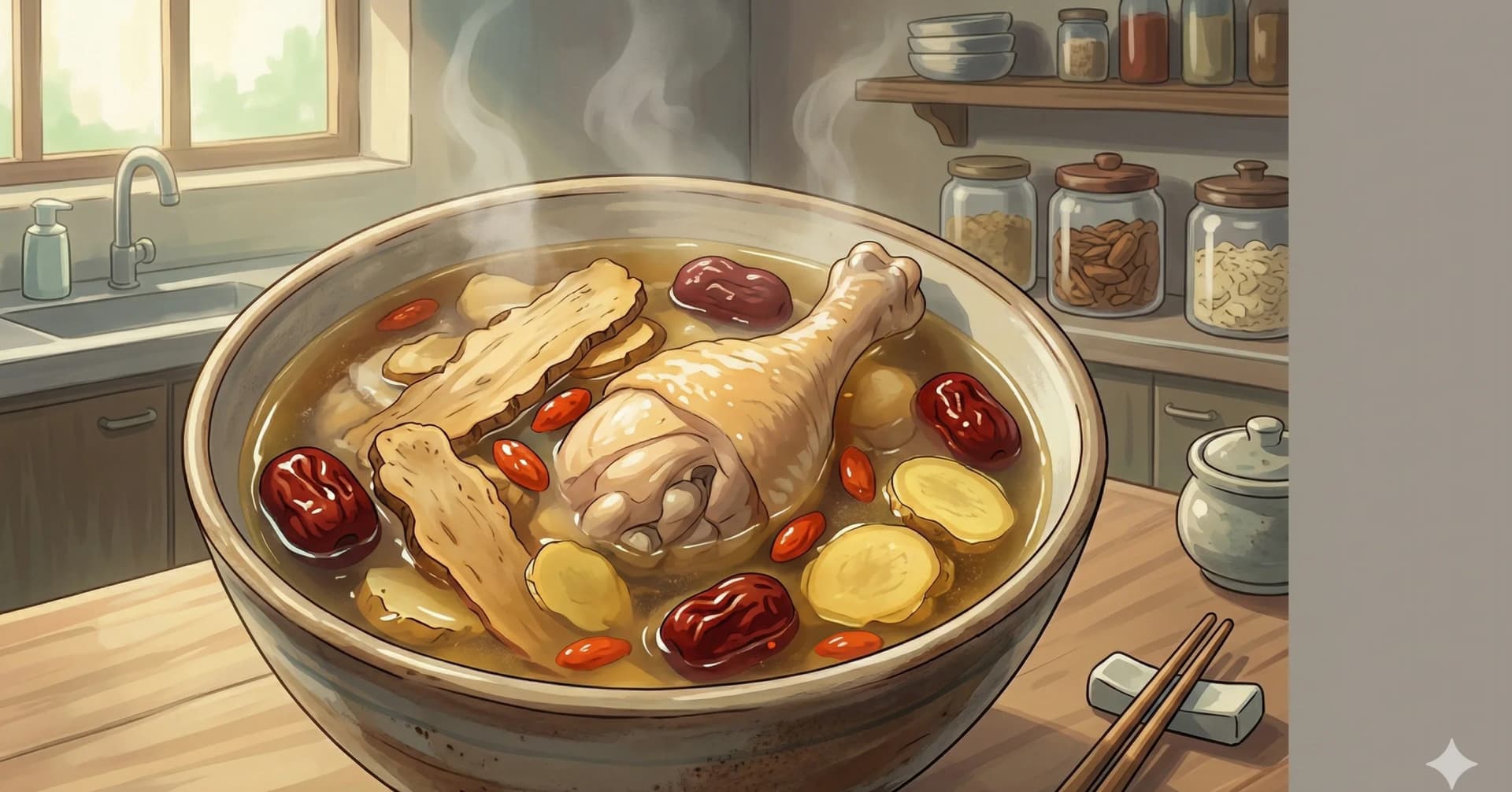
The aroma of dang gui chicken soup is ancient. It smells of earth and sweetness, of dried roots and slow-simmered bone, with a warmth that is not from heat but from something deeper, something that settles into your chest and stays. The broth itself is clear and golden, with a gentle sweetness from the jujube dates and a subtle, almost floral bitterness from the angelica root. The chicken, simmered long enough to release its gelatin into the broth, is tender and full-flavored, enriched by the herbal infusion.
Dang gui (Angelica sinensis) is one of the most revered herbs in the Chinese pharmacopoeia, used for centuries in traditional Chinese medicine as a blood tonic, particularly for women's health. In the kitchen, it bridges the gap between medicine and food, a concept known as yao shi tong yuan, or "medicine and food share the same origin." This soup is a perfect expression of that philosophy: it is both deeply nourishing and genuinely delicious, a dish you would eat for pleasure even if it carried no medicinal reputation.
This type of herbal soup, or yao shan, is a cornerstone of Chinese home cooking, especially in the colder months. Every family has its own combination of herbs, adjusted to the season and the needs of the household. Some add astragalus for immune support, others include codonopsis for energy.
The practical key is restraint with the dang gui. A little goes a long way. Too much and the soup becomes overpoweringly bitter and medicinal. The right amount provides a gentle, aromatic backbone that enhances rather than dominates the chicken flavor.
At a Glance
Yield
4 servings
Prep
15 minutes
Cook
90 minutes
Total
105 minutes
Difficulty
Easy
Ingredients
- 1¾ lbbone-in chicken pieces (thighs and drumsticks work best)
- ¼ ozdang gui (Angelica sinensis), about 3 to 4 slices
- ¼ ozastragalus root (huang qi), about 5 to 6 slices (optional)
- ¼ ozcodonopsis root (dang shen), about 2 pieces (optional)
- ½ ozgoji berries (gou qi zi)
- 8red jujube dates (hong zao)
- 3¼ tbspfresh ginger, sliced
- 1½ qtcold water
- 2 tspShaoxing wine
- —Salt to taste
Method
- 1
Bring a pot of water to a boil. Add the chicken pieces and blanch for 3 minutes. This removes blood, impurities, and excess fat. Drain and rinse each piece under warm running water. Set aside.
- 2
If the jujube dates are dried, rinse them. Some cooks slit them open to release more of their sweetness during simmering.
- 3
Rinse the dang gui, astragalus, and codonopsis root briefly under cool water to remove any dust.
- 4
Place the blanched chicken in a large pot or clay pot. Add the dang gui, astragalus, codonopsis root, jujube dates, and ginger slices.
- 5
Pour in the 1.5 L of cold water. Starting with cold water and bringing it up gradually extracts more flavor and nutrients from both the chicken and the herbs.
- 6
Bring to a boil over high heat. As it heats, skim any foam that rises to the surface.
- 7
Add the Shaoxing wine. Reduce the heat to the lowest possible setting. The soup should simmer very gently, with only the occasional bubble breaking the surface. Cover with a lid slightly ajar.
- 8
Simmer for 75 minutes. Do not rush this with higher heat. A gentle simmer produces a clearer, cleaner-tasting broth.
- 9
Check the chicken at 75 minutes. The meat should be very tender and pulling away from the bone. The broth should be golden and fragrant.
- 10
Add the goji berries during the last 10 minutes of cooking. They soften quickly and add a gentle sweetness and a pop of red color.
- 11
Taste the broth. It should be gently savory, slightly sweet from the dates and goji berries, with a subtle herbal depth from the dang gui. Season with salt. Start with less than you think you need; the herbs provide their own complexity that salt should support, not mask.
- 12
If the dang gui flavor feels too prominent, it will mellow as the soup rests. If it feels too faint, the broth may have been diluted by too much water.
- 13
Ladle the soup into bowls, distributing the chicken, dates, and goji berries evenly. The herb slices can be served in the bowl or removed, depending on preference.
- 14
Serve hot. Sip the broth first, then eat the chicken and dates.
Key Ingredient Benefits
Dang gui (Angelica sinensis) is one of the most widely used herbs in traditional Chinese medicine, traditionally prescribed for blood nourishment, menstrual regulation, and circulation. Some research suggests it contains compounds with anti-inflammatory and immune-modulating properties. It should be used with caution by those on blood-thinning medications or who are pregnant.
Astragalus (huang qi) is traditionally used to strengthen the body's defensive qi and support immune function. Research suggests it contains polysaccharides that may have immune-stimulating properties.
Goji berries (gou qi zi) are rich in zeaxanthin and beta-carotene, antioxidants traditionally associated with eye health and liver support. They have been a staple of Chinese herbal medicine for over two thousand years.
Jujube dates (hong zao) are traditionally considered a blood-nourishing food. They are rich in vitamin C, potassium, and natural sugars that provide sweetness to the broth.
Why This Works
Simmering chicken on the bone for an extended period extracts collagen, which converts to gelatin and gives the broth its body and richness. The gelatin also helps the broth carry flavors more effectively, which is why long-simmered soups taste so much more satisfying than quickly boiled ones.
The herbal ingredients release their active compounds gradually into the hot water, much like brewing a strong tea. Dang gui contains ferulic acid and polysaccharides that dissolve slowly, which is why the soup needs time. Astragalus and codonopsis work similarly, contributing their flavors and potentially beneficial compounds over the long simmer.
Starting with cold water is important for clarity. Plunging ingredients into already-boiling water causes proteins to coagulate rapidly on the surface, trapping impurities and making the broth cloudy. A gradual temperature increase allows impurities to rise to the surface where they can be skimmed away, producing a clear, golden broth.
Substitutions & Variations
- Dang gui: This is the star of the soup and should not be omitted. If you find the flavor too strong, reduce the quantity to 5 g.
- Astragalus and codonopsis: These are optional additions that deepen the herbal profile. The soup is complete without them.
- Chicken: A whole small chicken (about 1 kg), quartered, produces an even richer broth. Duck is an alternative for a richer, slightly gamey version.
- Pork bone version: Some families make this soup with pork ribs instead of chicken, which produces a heavier, more unctuous broth.
- Additional herbs: Dried longan, lily bulb (bai he), or lotus seeds can be added for different therapeutic benefits.
Serving Suggestions
This is a restorative soup, best served as part of a simple meal with steamed rice and one or two side dishes. It is traditionally consumed in autumn and winter for warmth and nourishment, and is often prepared for women postpartum or during menstruation as part of traditional Chinese dietary therapy. Drink the broth first, savoring its warmth and herbal complexity, then eat the chicken and dates.
Storage & Reheating
Store the soup in an airtight container in the refrigerator for up to 3 days. The broth will gel when cold due to its gelatin content, which is a sign of good technique. Reheat gently on the stove over medium-low heat. Avoid boiling vigorously during reheating, as this can cloud the broth. The soup can be frozen for up to 1 month. Thaw overnight in the refrigerator before reheating. The goji berries may become very soft after storage, which is normal.
Cultural Notes
Dang gui ji tang (當歸雞湯, "angelica root chicken soup") is the Chinese herbal chicken soup built around dang gui (當歸, Angelica sinensis, sometimes called Chinese angelica or female ginseng), among the most widely used herbs in Chinese herbal cookery and traditional Chinese medicine. The soup is a classic example of yao shan (藥膳), the broad Chinese culinary tradition in which herbal medicines are incorporated into everyday cooked dishes so the therapeutic benefit is delivered through food rather than as a separate medicinal preparation. The dish appears at Cantonese, Hokkien, and Taiwanese family tables, especially during cold weather and during the postpartum recovery period (zuo yue zi) traditional in many Chinese cultures.
The traditional preparation simmers a whole chicken (or chicken legs) with a small bundle of dang gui slices, jujube dates (hong zao), wolfberries (gou qi zi), ginger, and Shaoxing wine in water for two to three hours over low heat. The herbs release their bitter and slightly sweet aromatic compounds into the broth, giving the finished soup a dark amber color, a noticeable medicinal-herbal note, and a warming quality that diners typically describe in terms of internal warmth and circulation rather than specific flavor. The chicken provides the protein and the body of the soup; the herbs provide the cultural and therapeutic frame.
The traditional Chinese medicine context for dang gui is specific. The herb is classified in Chinese herbal medicine texts including the Bencao Gangmu (1578) as warming and as supportive of blood circulation, and has been used traditionally for menstrual irregularities, postpartum recovery, and cold-weather wellness. Modern research on dang gui has explored its compounds (including ferulic acid and various polysaccharides) for circulatory and anti-inflammatory properties, with studies appearing in journals including the Journal of Ethnopharmacology, though the clinical evidence for specific therapeutic uses remains limited. In Cantonese, Hokkien, and Taiwanese households, the soup is treated as a seasonal cooking practice rather than as medicine: a warming bowl that complements winter meals and that carries familial associations with grandmothers' kitchens.
Nutrition Facts
Calories: 381kcal (19%)|Total Carbohydrates: 15.7g (6%)|Protein: 27.2g (54%)|Total Fat: 21.6g (28%)|Saturated Fat: 5.7g (29%)|Cholesterol: 158mg (53%)|Sodium: 225mg (10%)|Dietary Fiber: 1.7g (6%)|Total Sugars: 12.3g
You Might Also Like
Ratings & Comments
Ratings & Comments
Ratings
Share your thoughts on this recipe.
Sign in to rate and comment