Punjabi · Indian Cuisine
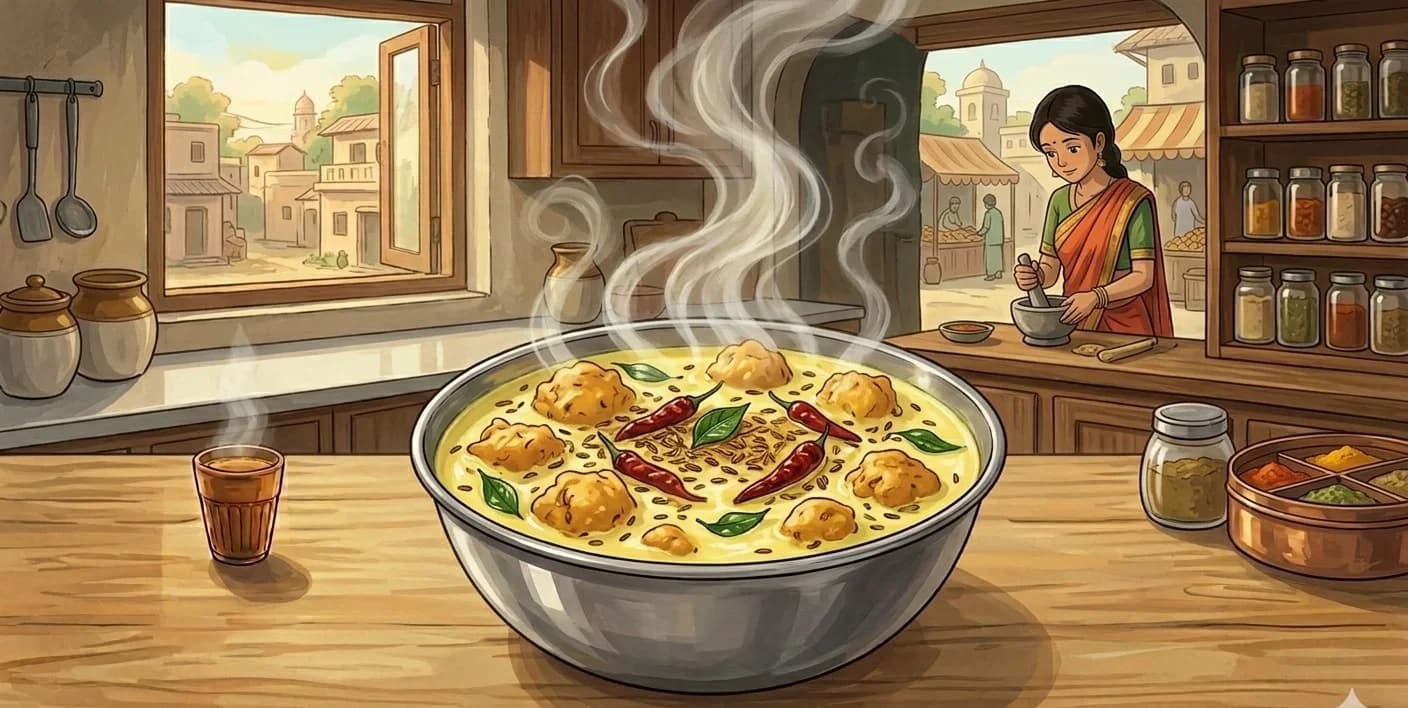
Fritters in Yogurt Curry (Kadhi Pakora)
Tangy yogurt broth studded with crisp gram flour fritters
Kadhi is comfort in a bowl. The broth is warm, tangy, slightly sweet, and impossibly silky, thickened with gram flour and soured by yogurt. Floating in it are pakoras, small, irregularly shaped fritters made from the same gram flour batter, studded with onion and fenugreek. They absorb the broth as they sit, softening from crisp to pillowy, and the contrast between the smooth kadhi and the spongy pakora is the whole pleasure of the dish.
In Punjab, kadhi pakora is Sunday food, weekend food, the kind of thing you come home to. It is also one of the most common dishes served at langars (communal kitchens at Sikh gurdwaras), where it feeds hundreds alongside rice and roti. Its ingredients are among the cheapest and most widely available in the Indian kitchen: yogurt, gram flour, onion, oil. Yet the finished dish has a sophistication that belies its simplicity.
The technique hinges on two things. First, the yogurt and gram flour must be whisked together thoroughly and simmered long enough for the raw, beany taste of the besan to cook out entirely, usually 25 to 30 minutes at a gentle simmer. Second, the pakoras must be fried separately and added to the kadhi only near the end, so they have time to absorb the broth without disintegrating.
The final tadka, a small tempering of cumin, mustard seeds, dried chillies, and curry leaves sizzled in ghee and poured crackling over the finished kadhi, is not decorative. It transforms the dish. The smoky, aromatic fat hitting the surface of the tangy broth creates a fragrance that signals the dish is complete.
At a Glance
Yield
Serves 4
Prep
25 minutes
Cook
40 minutes
Total
1 hour 5 minutes
Difficulty
Medium
Ingredients
Kadhi Ingredients
Batter Ingredients
For Frying
- —Neutral oil for deep frying
Tempering Ingredients
- 1⅔ tbspghee
- 2⅓ tspcumin seeds
- 1 tspmustard seeds
- 2dried red chillies, broken in half
- 8to 10 fresh curry leaves
- —A pinch of asafoetida (hing)
Method
- 1
Prepare the kadhi base. In a large bowl, whisk together the yogurt (400 g) and gram flour (60 g) until completely smooth, with no lumps remaining. This is important; lumps of gram flour will not dissolve during cooking and will make the kadhi gritty. Add the water (800 ml) gradually, whisking as you pour, until you have a smooth, thin liquid the consistency of buttermilk.
- 2
Cook the kadhi broth. Pour the yogurt-besan mixture into a heavy-based saucepan. Add the turmeric (5 g), red chilli powder (5 g), salt (8 g), and sugar (5 g). Place over medium heat and bring to a gentle boil, stirring frequently with a whisk or wooden spoon to prevent the gram flour from settling and catching on the bottom. Once it begins to simmer, reduce heat to low. The broth will thicken slightly as the gram flour cooks.
- 3
Simmer the kadhi. Let the kadhi simmer gently, uncovered, for 25 to 30 minutes, stirring every few minutes. The raw, beany smell of the gram flour will gradually disappear, replaced by a clean, tangy aroma. The broth should thicken to the consistency of a thin soup, coating the back of a spoon lightly. If it thickens too much, add a splash of water. If it is too thin, continue simmering.
- 4
Make the pakora batter. While the kadhi simmers, prepare the pakora batter. In a bowl, combine the gram flour (120 g), chopped onion (100 g), fenugreek leaves (15 g fresh or 3 g dried), green chillies (2), salt (3 g), cumin seeds (3 g), and baking soda (2 g). Add water (60 to 80 ml) gradually, mixing with your hand or a spoon, until you have a thick, dropping-consistency batter. It should hold its shape briefly on a spoon before slowly sliding off. Do not make it too thin; the pakoras will spread and become flat rather than round.
- 5
Fry the pakoras. Heat oil for deep frying in a kadai or deep pan to approximately 170°C (340°F). Test the oil temperature by dropping a small piece of batter in; it should sink briefly, then rise to the surface and begin to bubble steadily. Using a spoon or your fingers, drop small, irregular rounds of batter into the hot oil, about the size of a walnut. Fry in batches of 6 to 8, turning once, for 3 to 4 minutes until deep golden and crisp all the way through. They should feel firm when pressed. Drain on paper towels.
- 6
Soak the pakoras. Once all the pakoras are fried, place them in a bowl of warm water for 2 to 3 minutes. This softens the exterior slightly and removes excess oil, helping them absorb the kadhi broth evenly. Gently squeeze each pakora between your palms to remove excess water before adding to the kadhi. This step is traditional and prevents the pakoras from making the kadhi oily.
- 7
Add pakoras to the kadhi. Gently add the soaked and squeezed pakoras to the simmering kadhi. Stir very gently to submerge them. Let them simmer together over low heat for 5 to 7 minutes. The pakoras will absorb the broth, becoming soft and spongy on the inside while retaining some structure.
- 8
Check the seasoning. Taste the kadhi. It should be tangy from the yogurt, slightly sweet, and well-salted. Adjust salt, sugar, or chilli as needed. The tanginess should be the dominant flavor, balanced by just enough sweetness to round the edges.
- 9
Prepare the tadka. In a small pan, heat the ghee (25 g) over medium-high heat. When it begins to shimmer, add the cumin seeds (5 g) and mustard seeds (3 g). Wait for them to crackle and pop, about 10 seconds. Add the broken dried red chillies (2), curry leaves (8 to 10), and asafoetida (a pinch). The curry leaves will sputter vigorously. Let the whole tempering sizzle for 15 seconds until the chillies darken slightly.
- 10
Pour the tadka over the kadhi. Immediately pour the crackling tadka over the surface of the kadhi. The contact of the hot ghee with the broth will create an audible sizzle and release a rush of cumin and curry leaf fragrance. Do not stir it in. Let the tempered oil sit on the surface.
- 11
Rest the kadhi. Cover the pan and let the kadhi rest off the heat for 5 minutes. This resting period allows the pakoras to absorb more broth and the flavors to settle.
- 12
Serve. Ladle the kadhi into bowls, making sure each portion contains several pakoras. Serve hot.
Key Ingredient Benefits
Yogurt provides the tangy acidity that defines kadhi. It is a source of protein, calcium, and probiotics (in traditionally fermented varieties). The fermentation process partially pre-digests lactose, which may make yogurt more tolerable for those with mild lactose sensitivity. In Ayurvedic tradition, sour yogurt is considered to stimulate digestion, and kadhi is traditionally categorized as a digestive preparation.
Gram flour (besan) is milled from chickpeas (chana dal) and is naturally high in protein and fibre compared to wheat flour. It is also naturally gluten-free. In Indian cooking, besan is one of the most versatile flours, used for batters, thickening, and as a base for sweets. Research suggests that chickpea-based foods may contribute to more stable blood sugar responses compared to refined wheat products.
Fenugreek leaves (methi) add a distinctive, slightly bitter, earthy flavor to the pakoras. Fenugreek has been used in Ayurvedic medicine for centuries, traditionally associated with digestive health and blood sugar regulation. Research has explored fenugreek's potential effects on glucose metabolism, with some studies suggesting modest benefits.
Why This Works
The gram flour in the kadhi serves two purposes: it thickens the broth and it stabilizes the yogurt, preventing it from splitting at high temperatures. Without the besan, the yogurt would curdle and separate into whey and solids when heated. The starch in the gram flour forms a protective matrix around the yogurt proteins, allowing the broth to simmer for an extended period without breaking.
The extended simmering time (25 to 30 minutes) is not optional. Raw gram flour has a distinctive, unpleasant beany taste that only disappears with prolonged cooking. Tasting the kadhi at 10 minutes versus 30 minutes reveals a significant difference. The finished broth should taste clean and smooth, with no raw flour edge.
Soaking the pakoras in warm water before adding them to the kadhi is a traditional technique that serves multiple purposes. It removes surface oil (which would make the kadhi greasy), softens the exterior (allowing the broth to penetrate evenly), and prevents the pakoras from absorbing too much kadhi too quickly, which would make them mushy.
The tadka poured over the finished dish introduces fat-soluble flavor compounds (from the cumin, mustard, and curry leaves) that were not present in the water-based broth. This layer of aromatic fat sitting on the surface is the first thing the palate encounters, creating the characteristic flavor signature of Punjabi kadhi.
Substitutions & Variations
Sindhi kadhi: Omit the pakoras entirely. Add mixed vegetables (okra, potato, drumstick, cluster beans) directly to the broth and simmer until tender. This produces a thinner, more vegetable-forward version common in Sindhi households.
Rajasthani kadhi: Thicker, more concentrated, often made without pakoras and finished with a more aggressive chilli tempering. Reduce the water to 500 ml for a thicker consistency.
Pakora variations: Add grated spinach, chopped cauliflower, or sliced green chillies to the pakora batter for different textures and flavors.
Quicker version: If short on time, skip the soaking step for the pakoras. The kadhi will be slightly oilier but still good.
Serving Suggestions
Kadhi pakora with steamed rice is the canonical Punjabi pairing and one of the great simple meals in North Indian cooking. The tangy broth coats the rice, the pakoras provide substance, and the tadka adds richness. Alongside, a dry vegetable dish (aloo gobhi, bhindi masala) and a pickle provide contrast. Kadhi is also excellent with khichdi (rice and lentils cooked together) for a simpler, more comforting meal. Some households serve it with roti rather than rice, tearing pieces and dipping them in the broth.
Storage & Reheating
Kadhi keeps well in the refrigerator for up to 3 days. The broth thickens considerably as it cools; thin with water when reheating and adjust the seasoning. The pakoras will continue to soften over time, which many people prefer. Reheat gently over medium-low heat, stirring occasionally. The tadka can be refreshed by making a small additional tempering and pouring it over the reheated kadhi. Kadhi freezes adequately for up to 1 month, though the pakoras become very soft after thawing.
Cultural Notes
Kadhi pakora (कढ़ी पकोड़ा, "yogurt curry with fritters") is the Punjabi yogurt-based curry in which a thick golden gravy made from whipped yogurt, chickpea flour, and turmeric is simmered with onion-and-spinach pakoras (chickpea-flour fritters) added partway through cooking so they absorb the curry while staying tender. The dish is one of the most strongly Punjabi vegetarian preparations and one of the comfort foods that Punjabi families rotate through their weekly home cooking, especially during cooler months when the warming yogurt curry feels seasonally right.
The dish exists in multiple regional Indian variations, each with distinct character. The Punjabi version (the one most commonly meant by "kadhi pakora") uses thick well-whisked yogurt, chickpea flour for body, a tempering of fenugreek seeds and curry leaves, and the addition of chickpea-flour pakoras for substance. The Gujarati kadhi is sweeter, thinner, and contains no pakoras (it is served as a soup-like accompaniment with rice rather than as a main curry). The Rajasthani version (often called gatte ki kadhi) uses chickpea-flour dumplings (gatte) instead of pakoras. The South Indian moru curry of Kerala is a related but distinct yogurt-based preparation with coconut and curry leaves. The Punjabi version is the most internationally recognized.
The technique demands careful yogurt handling. Yogurt is whisked thoroughly with chickpea flour, salt, and turmeric until completely smooth (any lumps will appear as gritty bits in the finished curry), then water is added gradually with continued whisking to thin the mixture to a thick liquid. The mixture is brought slowly to a simmer over medium-low heat with constant stirring (yogurt curries can split or curdle if heated too quickly), then simmered for thirty to forty minutes at low heat, stirring periodically, until the chickpea flour has cooked through (the raw chickpea flour flavor must dissipate) and the curry has thickened to a glossy gravy consistency. The pakoras (made by deep-frying small spoonfuls of a chickpea flour batter mixed with chopped onions, spinach, and green chilies) are added to the simmering curry for the final ten minutes so they absorb the yogurt flavor. A final tempering of ghee, cumin seeds, mustard seeds, dried red chilies, fenugreek seeds, and asafoetida is poured over the finished curry just before serving. The pairing with plain steamed rice is the standard Punjabi household format.
Nutrition Facts
Calories: 285kcal (14%)|Total Carbohydrates: 34.4g (13%)|Protein: 13.9g (28%)|Total Fat: 10.1g (13%)|Saturated Fat: 4.7g (24%)|Cholesterol: 23mg (8%)|Sodium: 205mg (9%)|Dietary Fiber: 5.3g (19%)|Total Sugars: 11.9g
You Might Also Like
Ratings & Comments
Ratings & Comments
Ratings
Share your thoughts on this recipe.
Sign in to rate and comment