Cross-Cultural · Wellness
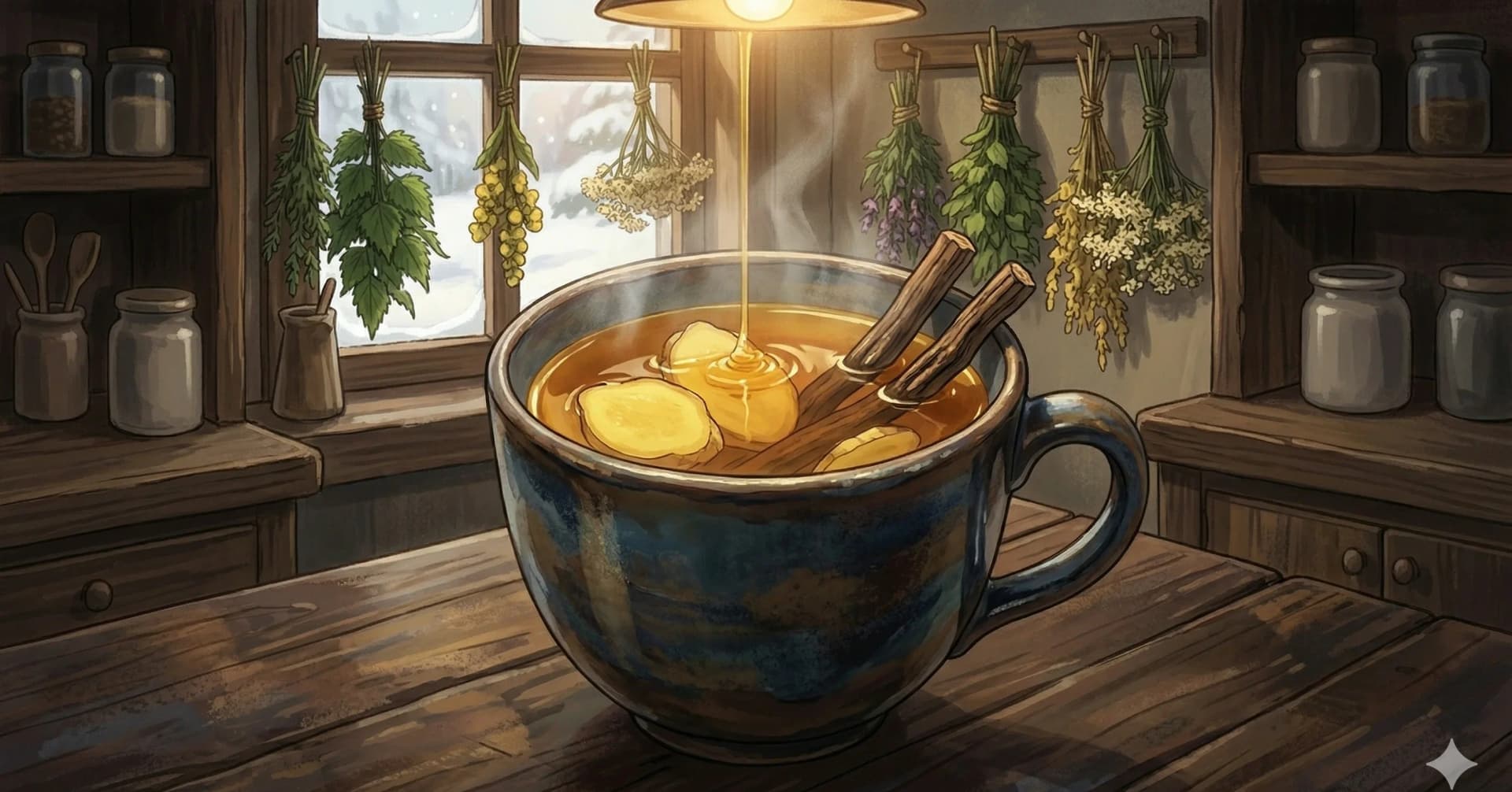
Licorice Root & Ginger Throat Soother
An ancient two-herb formula for sore throats and respiratory health
Every major traditional medicine system has a formula for sore throat and respiratory irritation that involves licorice root. In TCM, Gan Cao (licorice) moistens and soothes the throat. In Ayurveda, Yashtimadhu does the same. In European herbal medicine, licorice has been prescribed for bronchial complaints since the earliest medieval texts. The Greeks, Romans, Arabs, Chinese, and Ayurvedic physicians all arrived at the same conclusion through different intellectual paths.
Ginger accompanies it here because the two herbs are complementary: licorice cools and soothes inflamed mucous membranes; ginger warms and moves stagnant respiratory fluid. Together they address both the inflammation and the congestion that often accompany throat and upper respiratory complaints.
This preparation takes ten minutes and requires two readily available ingredients. It tastes genuinely pleasant — the sweetness of licorice balancing the bite of ginger — and has been produced in some form for at least two thousand years.
At a Glance
Yield
2 servings
Prep
2 minutes
Cook
15 minutes
Total
17 minutes
Difficulty
Easy
Ingredients
- ¼ ozdried licorice root, sliced or broken into pieces
- 1 inchginger, peeled and sliced into coins
- 2½ cupswater
- 1 tspraw honey, added after cooling (optional)
- 1squeeze lemon (optional)
Method
- 1
Combine the licorice root (1 tablespoon) pieces, ginger slices, and water (2½ cups) in a small saucepan.
- 2
Bring to a boil, then reduce to a low simmer. Cook for 12 to 15 minutes — the water will reduce and turn a warm amber color as the licorice releases its compounds.
- 3
Strain into two cups. The tea will be naturally sweet from the glycyrrhizin in licorice.
- 4
Allow to cool slightly. Add honey (1 tsp) and a squeeze of lemon if using. Drink warm, sipping slowly.
Key Ingredient Benefits
Licorice Root: Glycyrrhizin, the primary bioactive compound, is demonstrably anti-inflammatory and antiviral in clinical research. DGL (deglycyrrhizinated licorice) is used in multiple clinical trials to treat peptic ulcers. Licorice root forms the coating base for many commercial throat syrups and lozenges — because it works. Note: avoid regular high-dose consumption without consulting a practitioner.
Ginger: The anti-inflammatory gingerols and shogaols in ginger complement licorice's soothing action by reducing prostaglandin synthesis — the same mechanism as NSAIDs, without the side effects at normal culinary doses. Ginger also warms respiratory tissues and promotes the movement of phlegm.
Why This Works
Licorice soothes by coating and reducing inflammation in the mucous membranes of the throat. Ginger acts simultaneously to warm, improve circulation to the area, and provide independent anti-inflammatory support. The 15-minute simmer is necessary to extract glycyrrhizin and ginger's shogaols from their respective root structures — a shorter steep would produce a less effective preparation.
Substitutions & Variations
Licorice root can be replaced with licorice tea bags (look for pure licorice, not anise-flavored). Fresh turmeric root can be added alongside ginger for additional anti-inflammatory support. A cinnamon stick complements both flavors and adds circulatory support. Fennel seeds can be added for anti-spasmodic benefit if there is a cough.
Serving Suggestions
Drink 2 to 3 cups per day during acute throat irritation. Add to a thermos and sip throughout the day. Can be cooled and used as a base for popsicles when throat pain is severe.
Storage & Reheating
Store prepared tea in the refrigerator for up to 2 days. Reheat gently. Note: consult a healthcare provider if using regularly or in large amounts, as large doses of licorice root can affect blood pressure.
Cultural Notes
Licorice root tea or decoction appears in traditional medicine from China to Persia to ancient Egypt. It is one of the most widely prescribed herbs in TCM — Gan Cao appears in an estimated 60% of all Chinese herbal formulas as a harmonizing agent. The convergence of independent cultures on the same plant for the same condition over thousands of years is one of the strongest forms of traditional medical evidence we have.
Nutrition Facts
Calories: 20kcal (1%)|Total Carbohydrates: 5g (2%)|Protein: 0g (0%)|Total Fat: 0g (0%)|Saturated Fat: 0g (0%)|Cholesterol: 0mg (0%)|Sodium: 10mg (0%)|Dietary Fiber: 0g (0%)|Total Sugars: 3g
You Might Also Like

Ratings & Comments
Ratings & Comments
Ratings
Share your thoughts on this recipe.
Sign in to rate and comment