Indian Cuisine
Fried Onion Fritters (Piyanj Bhaja)
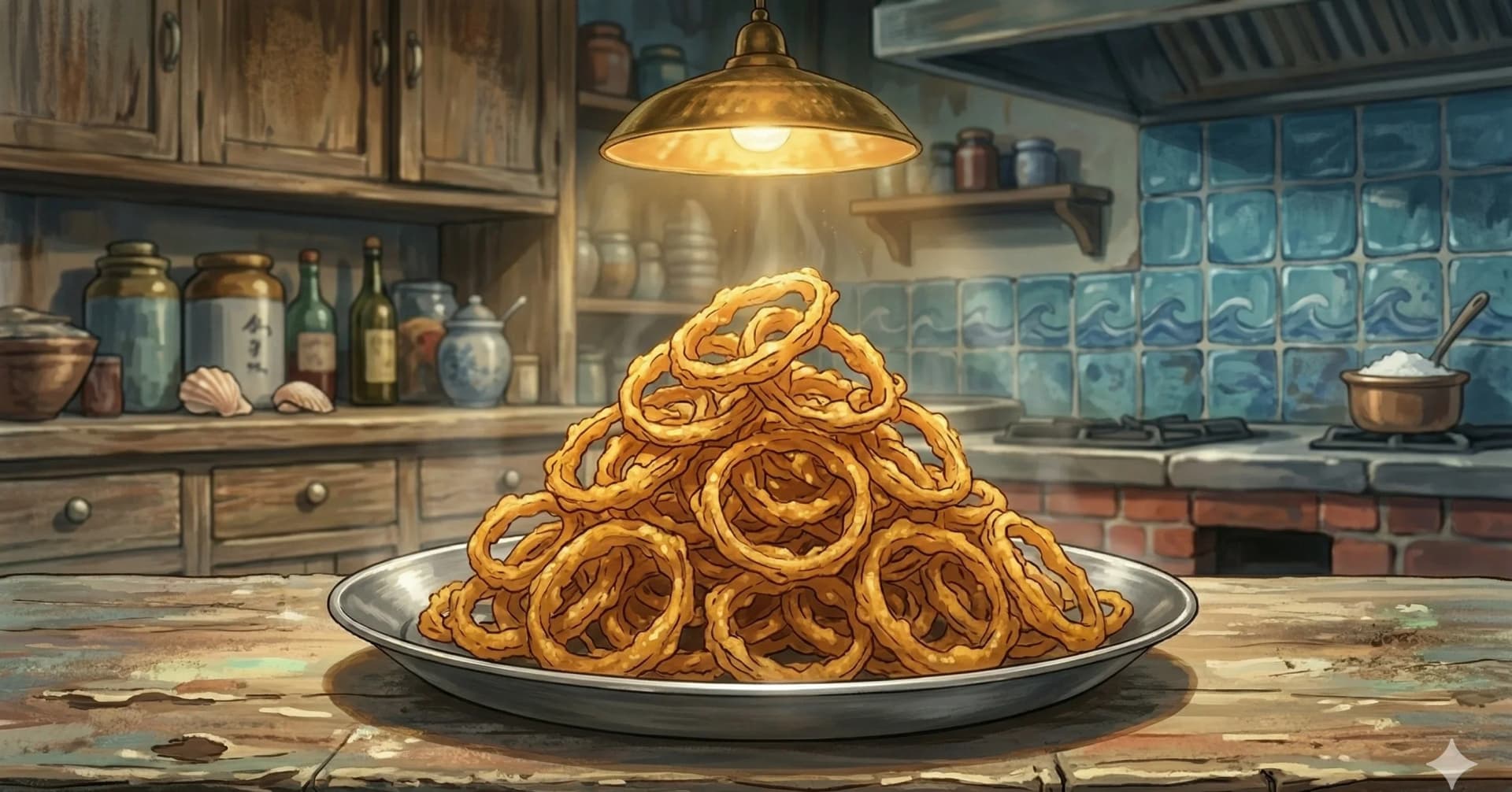
Double-fried Bengali onion fritters, thick rings of batter with ginger and green chilli
Piyanj means onion in Bengali, and bhaja means fried. But the name understates the process. It's a double-fry: the rings are cooked once at medium heat until half-done, removed, flattened by hand, then returned to very hot oil for the final crisping. This two-stage technique is what separates piyanj bhaja from a standard pakora. The double-fry drives out more moisture, produces a blistered, almost shatteringly crisp exterior, and creates layers within the batter that a single fry cannot achieve.
The batter is minimal: gram flour, soda bicarbonate, ginger, green chilli, salt, and water. The soda creates gas bubbles that expand in the hot oil, keeping the batter light even as it darkens and crisps. The ginger and chilli are not subtle inclusions; they are present enough to be tasted in every bite, providing warmth against the sweet, faintly caramelised onion.
Piyanj bhaja is a monsoon food, the kind eaten on rainy afternoons with strong tea. The oil splatters. The kitchen fills with fragrance. The fritters come out of the oil dark golden and must be eaten immediately. The window between perfect and soft is short, as it always is with anything double-fried.
At a Glance
Yield
Makes 12–15 fritters (serves 3–4)
Prep
15 minutes
Cook
15 minutes
Total
30 minutes
Difficulty
Easy
Ingredients
Method
- 1
Make the batter. In a large mixing bowl, combine the gram flour, bicarbonate of soda (½ teaspoon), salt (4 teaspoons), ginger (50 g), and green chillies (10 chillies). Add the water (250 ml) gradually, beating vigorously with your hands as you go, until you have a thick batter that coats a spoon heavily, similar to a thick pancake batter. The vigorous beating develops the gluten slightly and incorporates air.
- 2
Coat the onion rings. Separate the onion slices into individual rings. Add them to the batter and toss to coat thoroughly.
- 3
First fry. Heat oil in a kadhai to about 160°C (medium heat; a small drop of batter should sizzle slowly but not immediately colour). Working in batches, carefully lower onion rings coated in batter into the oil. Fry for 3–4 minutes until the batter is set and the fritters are about half-done: pale golden, cooked but not crisp. Remove with a slotted spoon and drain on kitchen paper.
- 4
Flatten. While still hot, gently press each fritter flat with your palm or a flat spoon. This breaks open the interior slightly, allowing the second fry to penetrate more effectively.
- 5
Second fry. Increase the oil temperature to 180°C (high heat; batter should sizzle immediately and actively). Return the flattened fritters to the hot oil in batches and fry for 2–3 minutes until deeply golden and crispy. Drain on fresh kitchen paper.
- 6
Serve immediately with green chutney or simply with tea.
Key Ingredient Benefits
Gram flour (besan, chickpea flour) has a natural nuttiness and a slight binding quality from its protein content. It is the standard Indian frying batter flour: higher in protein than wheat flour, producing a crispier result, and naturally gluten-free.
Why This Works
The double-fry technique appears across many cuisines (Japanese fried chicken, Belgian fries, Korean fried chicken) for the same reason: it achieves a crispness that a single fry cannot. First fry sets the structure and partially cooks. Resting allows steam to escape. Second fry at higher heat quickly drives off remaining moisture, creating crispness without burning the exterior.
Bicarbonate of soda in the batter creates CO₂ bubbles when it hits the hot oil. These expand and create a lighter, more porous batter texture than a batter without leavening. The pores also help moisture escape during frying.
The vigorous hand-beating instruction in the original recipe creates a slightly more developed batter that holds together better in the oil and produces a slightly chewy interior, different from a minimally mixed batter, which produces a more delicate result.
Substitutions & Variations
Other vegetables: The same batter works with potato slices, aubergine, or raw banana. Adjust frying time by vegetable thickness.
Less ginger: Reduce ginger to 20 g for a milder result. The ginger quantity in the original recipe is assertive.
Spice addition: A pinch of ajwain (carom seeds) or cumin powder in the batter adds depth and is traditionally said to aid digestion of fried food.
Serving Suggestions
Serve immediately alongside strong Darjeeling tea or masala chai. A green coriander-mint chutney for dipping. A squeeze of lemon over the just-fried fritters is the only other thing needed.
Storage & Reheating
Cannot be stored successfully. Eat immediately. Fritters soften within 15 minutes of frying.
Cultural Notes
Piyanj bhaja (পিঁয়াজ ভাজা, "fried onion") is the Bengali fritter of sliced onions dipped in a chickpea-flour and rice-flour batter and deep-fried until crisp and golden, served as a snack or as an accompaniment to dal-and-rice at lunch. The dish is the Bengali version of the broader Indian onion pakora tradition, with a Bengali-specific batter that includes mustard oil and a tempering of kalonji (nigella seeds) that gives the fritter a distinctly Bengali aromatic character not found in Punjabi or South Indian onion fritters.
The batter is the differentiator. Bengali piyanj bhaja batter combines chickpea flour (besan) with a smaller proportion of rice flour (for added crispness), water, salt, turmeric, and the Bengali aromatic stack: chopped green chilies, finely chopped ginger, kalonji seeds, and sometimes a pinch of asafoetida. The batter is thin enough to coat the onion slices in a delicate web rather than encasing them in a heavy crust, which keeps the finished fritter light and lets the onion flavor stay forward. A small amount of mustard oil is sometimes added to the batter for additional Bengali character.
The technique mixes thinly sliced onions directly into the batter rather than dipping individual rings, so each fritter contains multiple onion pieces held together by the cooked batter. Small clumps of the battered onion mixture are spooned into hot oil and fried for two to three minutes per side until golden brown and crisp. The fritters drain on paper and are served immediately, traditionally with a small dish of dal or with sliced raw onion and lemon as part of the Bengali lunch sequence. The dish also appears at the late-afternoon tea ritual that Bengali bhadralok households observe, served alongside small cups of milky chai or strong filter coffee. In the rainy monsoon months when Bengali eaters traditionally crave fried snacks, piyanj bhaja appears at homes more frequently than at other times of year as part of the seasonal Bengali food rhythms documented in Chitrita Banerji's Bengali Cooking: Seasons and Festivals.
Nutrition Facts
Calories: 369kcal (18%)|Total Carbohydrates: 45g (16%)|Protein: 11.2g (22%)|Total Fat: 15g (19%)|Saturated Fat: 2.1g (11%)|Cholesterol: 0mg (0%)|Sodium: 5034mg (219%)|Dietary Fiber: 8.3g (30%)|Total Sugars: 14.6g
You Might Also Like
Ratings & Comments
Ratings & Comments
Ratings
Share your thoughts on this recipe.
Sign in to rate and comment