Indian Cuisine
Moong Dal Fritters (Ram Ladoo)
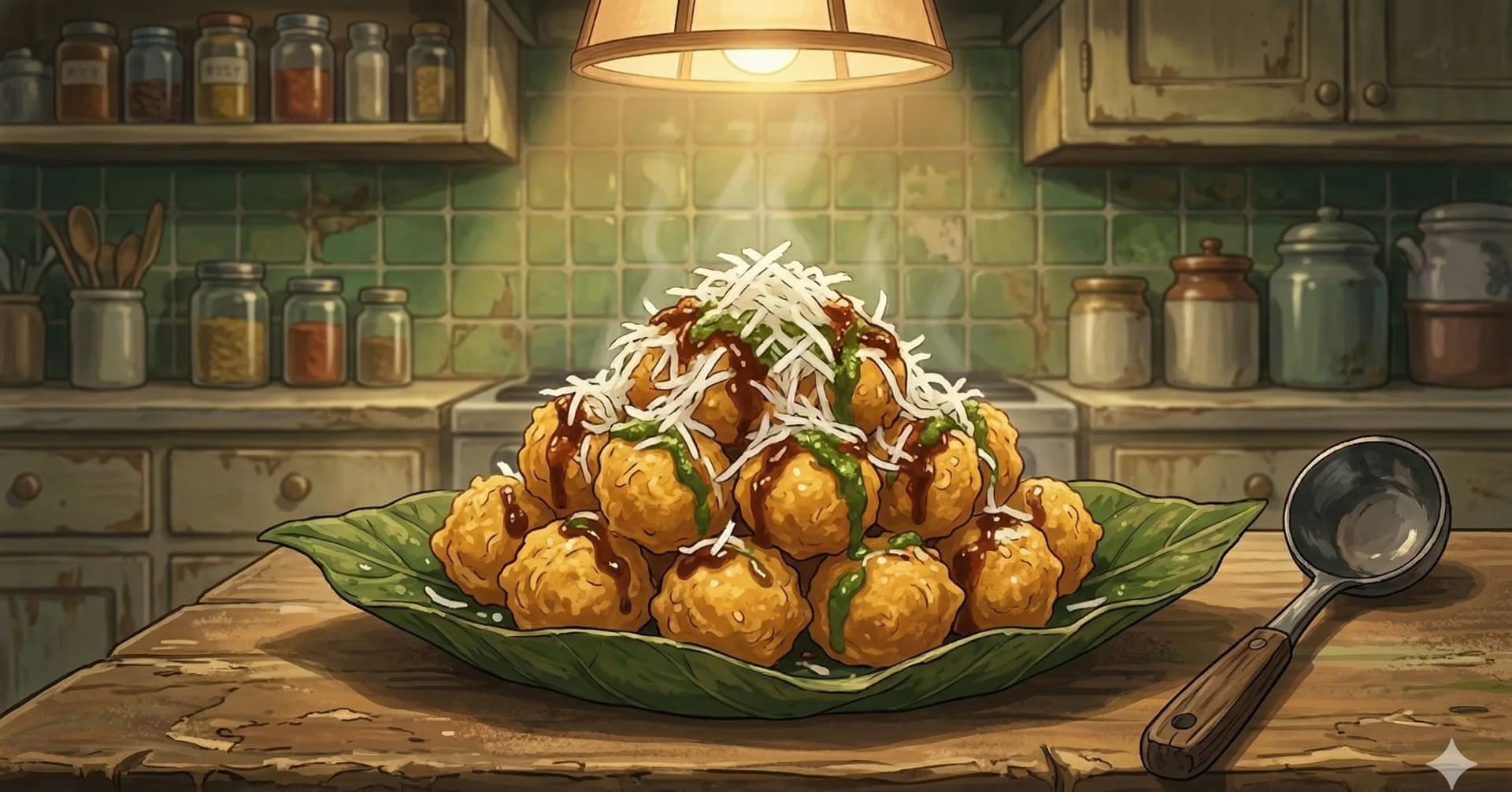
Delhi's moong dal fritters served over grated radish with mint chutney and tamarind
Ram ladoo is a dish about contrast managed deliberately. The fritters are made from soaked and ground moong dal (not smooth as in a pakora batter, but coarsely ground with enough texture to hold its shape), mixed with chopped onion, green chilli, and coriander, then deep-fried into rough, irregular dumplings. They are good on their own. But the dish only reveals itself when they are placed over grated white radish and doused with mint chutney and tamarind water.
The radish is the element that surprises. It is cold, watery, sharp, and provides a base that the fritters (hot, starchy, slightly spiced) rest on and slowly warm. The mint chutney provides bright herbaceous acidity. The tamarind water adds depth and a sweet-sour counterpoint. The fritters absorb some of this and provide the substance that holds everything together.
Ram ladoo is emphatically Delhi street food, sold from carts in Old Delhi and neighbourhood markets, eaten standing, the cold-hot, sharp-starchy, sour-savoury contrast arriving all at once. It is the kind of dish that reads oddly from a recipe and makes complete sense in person.
At a Glance
Yield
Serves 3–4
Prep
20 minutes + 3 hours soaking
Cook
20 minutes
Total
3 hours 40 minutes
Difficulty
Medium
Ingredients
Batter Ingredients
To Serve
- ½ lbwhite radish (mooli) (about 3–3½ radishes), finely grated
- ⅓ cuptamarind water, a small ball of tamarind dissolved in 100 ml warm water, strained
- ⅔ cupmint-coriander green chutney, coriander, mint, green chilli, and ginger blended together
Method
- 1
Grind the dal. Drain the soaked moong dal thoroughly. Transfer to a food processor or wet grinder and grind to a coarse paste, not completely smooth. Some texture is essential for the fritters to hold together. Add water only if absolutely necessary (1–2 tablespoons at most).
- 2
Make the batter. Transfer the ground dal to a bowl. Add the chopped onion (50 g), green chillies (25 g), coriander (25 g), and salt (2 teaspoons). Mix well. Beat the batter vigorously with your hand for 2 minutes. This incorporates air, making the fritters lighter.
- 3
Test a fritter. Drop a small amount of batter into the oil before frying the batch. If it holds together and rises to the surface, the batter is correct. If it disintegrates, the dal may be too wet. Drain further, or add a teaspoon of besan (gram flour) to bind.
- 4
Fry the ladoo. Heat oil in a kadhai to 170°C (medium-high; a drop of batter should sizzle actively and rise). Using two wet spoons or a small scoop, shape rough dumplings and slide them into the oil in batches. Fry for 5–6 minutes, turning, until deep golden all over and cooked through. Drain on kitchen paper.
- 5
Prepare the base. Spread the grated radish (250 g) in individual serving bowls. Pour the tamarind water (100 ml) over the radish and let it soak for a minute.
- 6
Assemble. Place 3–4 hot fritters on each portion of soaked radish. Drizzle generously with mint chutney (150 ml) and more tamarind water if desired.
- 7
Serve immediately. The hot fritters against the cold radish is the experience.
Key Ingredient Benefits
Split moong dal (moong dal chilka or yellow moong) is one of the most easily digestible lentils and appears across Indian cooking in both sweet and savoury preparations. High in protein and folate.
White radish (mooli) is pungent when raw, with a clean, slightly sharp bite. High in water content and digestive enzymes. In Ayurvedic tradition, radish is considered beneficial for digestion of heavy foods, which makes its appearance alongside fried food somewhat fitting.
Why This Works
Coarsely grinding the dal rather than making a smooth batter produces fritters with interior texture. Some pieces of lentil are slightly distinct within the cooked dumpling, creating a more interesting mouthfeel than a uniformly smooth fritter. The vigorous beating incorporates air in the same way that a creamed cake batter does, lightening the structure.
Grated radish as the serving base is a South Asian chaat technique used in several dishes, notably chaats with dumplings where the cold, watery vegetable provides both a textural counterpoint and a liquid medium for absorbing the chutneys. The radish is not a garnish. It is part of the eating experience.
Substitutions & Variations
No tamarind: Substitute with a small amount of amchur (dried mango powder) dissolved in water. The character will be slightly different but the sour element remains.
Chana dal addition: Replace half the moong dal with soaked chana dal for a firmer fritter with a nuttier flavour.
Serving Suggestions
Ram ladoo should be assembled and served immediately after frying. It is a complete snack on its own. No accompaniments needed. Serve at room temperature or slightly warm, with extra green chutney and tamarind on the side for those who want more.
Storage & Reheating
Fritters can be made ahead and refrigerated for 1 day. Reheat in a hot oven (200°C, 5 minutes) or re-fry briefly in hot oil. Assemble immediately before serving.
Cultural Notes
Ram ladoo (राम लड्डू) is the Delhi street food of small split-moong-dal fritters deep-fried in oil, served topped with a generous mound of grated daikon radish, mint chutney, tamarind chutney, chopped green chili, and a sprinkle of chaat masala. Despite the ladoo in the name (which usually denotes a sweet ball), ram ladoo is a savory snack, with the name ladoo referring only to the round ball shape rather than to any sweet content. The dish is among the iconic Old Delhi street foods and appears at small carts and corner stalls across Old Delhi, Chandni Chowk, and the broader Delhi-NCR street food landscape.
The Delhi street food context shapes the dish's identity. The street food tradition of Delhi developed over centuries as a working-class food culture serving the laborers, traders, students, and commuters who passed through the city's markets and streets. The food is fast, hot, fresh, served on disposable leaf or paper plates, and built on contrasting textures and flavors (crisp-soft, hot-cold, sour-sweet-spicy in one bite). Ram ladoo fits the pattern: the crisp fried lentil ball provides the base texture, the cool grated radish provides the temperature and bitter-fresh counterpoint, the mint chutney brings green herbaceous heat, the tamarind chutney brings sweet-sour, and the chaat masala brings the rounding salty-sour-cumin note that defines Delhi chaat. The dish is sold by weight or by piece, eaten quickly while standing at the cart, and washed down with a small glass of lime soda or jaljeera (the spiced cumin water of Delhi street drinks).
The technique fries the lentil batter and assembles the toppings at order time. Split moong dal is soaked for four hours, drained, and ground with a small amount of water into a thick batter (thicker than a vada batter, since the ram ladoo holds its round shape rather than being shaped between palms). Chopped ginger, green chili, asafoetida, and salt are folded into the batter. Oil is heated in a deep kadai to about 170°C, and small spoonfuls of batter are dropped in to fry into round balls (about the size of a walnut). The balls fry for three to four minutes until golden and crisp on the outside while staying soft inside. To serve, six or eight balls are placed in a small bowl, topped with a generous mound of grated daikon radish, two spoons of green mint chutney, one spoon of tamarind chutney, chopped green chili, a pinch of red chili powder, and a generous shake of chaat masala. The dish is eaten immediately while the balls are still crisp.
Nutrition Facts
Calories: 288kcal (14%)|Total Carbohydrates: 42.9g (16%)|Protein: 15.5g (31%)|Total Fat: 7g (9%)|Saturated Fat: 0.9g (5%)|Cholesterol: 0mg (0%)|Sodium: 2523mg (110%)|Dietary Fiber: 11.2g (40%)|Total Sugars: 5.7g
You Might Also Like
Ratings & Comments
Ratings & Comments
Ratings
Share your thoughts on this recipe.
Sign in to rate and comment