Goan · Indian Cuisine
Portuguese Shrimp Soup (Sopa de Camarão)
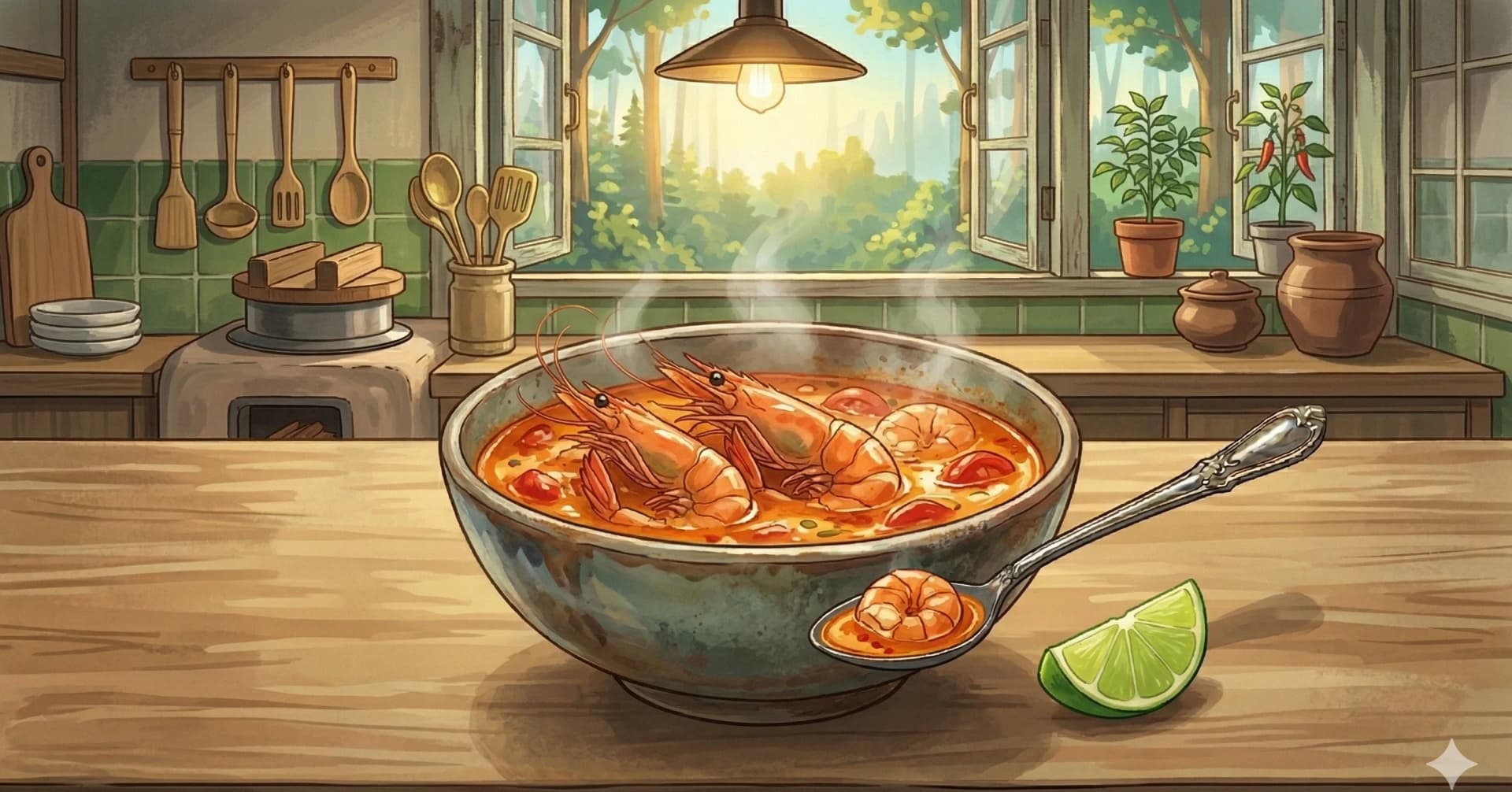
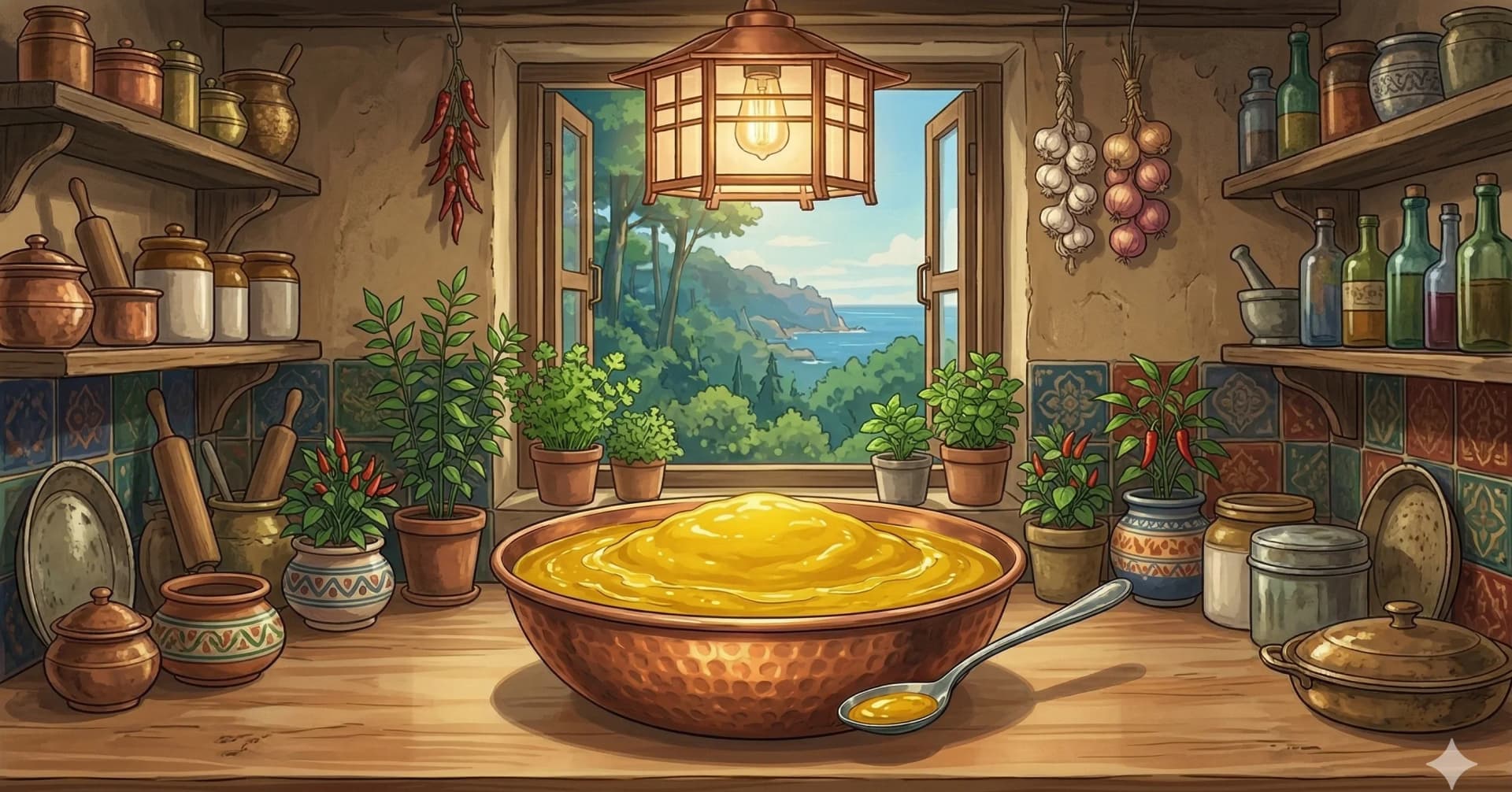
Goan prawn soup — a velvety Portuguese-style bisque of prawn stock, potato, and egg yolk
Among all the evidence of Portuguese culinary influence that remains in Goa — the vinegar, the wine, the technique of marinating meat before cooking — sopa de camarão is perhaps the most directly recognisable as belonging to a European soup tradition. It is a bisque in spirit: prawn stock used as the liquid, potato and onion cooked and sieved to form the body, butter mounted in at the end. The egg yolk finish, added carefully off heat in a liaison with milk, gives the soup its silky, barely-thickened texture.
The genius of this soup is its economy. The prawns are boiled first to make the stock (the most flavourful cooking liquid possible) and then the stock becomes the soup's foundation. Nothing is wasted, and the result is a first course with depth that far exceeds what the few ingredients suggest.
This is not an everyday dish but it is not complicated. Techniques that are unusual in the Indian kitchen (passing through a sieve, mounting butter in increments, finishing with an egg yolk liaison) are simply borrowed from a culinary tradition that arrived by sea and stayed. At the table, the soup speaks Goa quietly and elegantly: warm, pale, slightly sweet from the prawn, with the softness of potato underneath.
At a Glance
Yield
Serves 4
Prep
15 minutes
Cook
30 minutes
Total
45 minutes
Difficulty
Easy
Ingredients
- 7 ozshrimp, shell-on (for boiling to make the stock and the soup)
- 1 qtwater (to make the prawn stock)
- 1 lbpotatoes (about 3–3½ potatoes), peeled and quartered
- ¾ lbonions (about 2 onions), sliced
- 2 tbspunsalted butter
- ⅔ cupwhole milk
- 2egg yolks
- 1⅔ tspfine salt, to taste
Method
- 1
Make the prawn stock. Bring 1 litre of water to a boil in a pot. Add the whole prawns (200 g) and cook for 5–6 minutes until pink and cooked through. Remove the prawns with a slotted spoon and peel them, setting the peeled flesh aside. Return the shells to the pot and simmer for a further 10 minutes. Strain through a fine sieve — this is your prawn stock. Discard the shells. Roughly chop the peeled prawn meat.
- 2
Cook the potato and onion. Place the quartered potatoes (500 g) and sliced onions (300 g) in a pot with the prawn stock. Bring to a boil and cook for 15–18 minutes until the potatoes are completely tender when pierced.
- 3
Sieve for smoothness. Pass the cooked potato and onion through a fine sieve or food mill, pressing well. Return the sieved purée to the stock in the pot — this creates the body of the soup. Stir to combine.
- 4
Add prawns and butter (30 g). Add the chopped prawn meat to the pot. Return to a gentle heat and bring almost to a simmer. Add the butter, a small piece at a time, stirring to incorporate each piece before adding the next. The soup should be glossy and slightly enriched.
- 5
Finish with egg liaison. In a small bowl, whisk the egg yolks (2) with the milk until combined. Remove the soup from the heat. Ladle a couple of spoonfuls of the hot soup into the egg-milk mixture, whisking constantly to temper it (this prevents the eggs from scrambling). Pour the tempered mixture back into the soup pot, stirring gently. Do not return to a boil.
- 6
Season and serve. Taste and adjust salt (2 teaspoons). Serve immediately in warmed bowls.
Key Ingredient Benefits
Prawns are a rich source of lean protein, selenium, iodine, and astaxanthin, the carotenoid that gives them their pink colour and has been studied for its antioxidant properties. Prawn shells contain chitin, a natural polysaccharide that infuses the stock during simmering, contributing both flavour compounds and a slightly gelatinous quality.
Egg yolks are nutritionally dense, containing fat-soluble vitamins A, D, E, and K, as well as choline, which research has associated with liver function and brain health. As a liaison in this soup, they serve a culinary function: the lecithin in the yolk helps emulsify the fat from the butter into the water-based soup, creating a stable, velvety texture.
Why This Works
Making the stock from the prawn shells first, then using that stock as the cooking liquid for the potato and onion, layers prawn flavour into the soup from the beginning rather than adding it as an afterthought. The stock carries a depth of crustacean flavour (from the natural compounds in the shells) that water could not provide.
Passing the potato and onion through a sieve rather than blending produces a finer, more delicate texture. A blender, especially a high-powered one, can overwork the potato starch and produce a gluey result; a sieve produces lightness.
The egg yolk liaison is a classic French technique used to add richness and a silky mouthfeel without the heaviness of cream. The tempering step (adding hot soup to the yolk-milk mixture before combining) is non-negotiable: adding cold egg yolk to hot liquid directly causes the proteins to scramble immediately, producing flecks of cooked egg in the soup.
Substitutions & Variations
No prawns: A good quality fish stock can replace the prawn stock, with 200 g of cooked, flaked white fish added instead of prawn meat. The character of the soup shifts but remains elegant.
Cream instead of egg liaison: Replace the egg yolk and milk with 100 ml of double cream added at the end. Less classical but simpler and forgiving.
Spiced version: A half-teaspoon of white pepper and a pinch of turmeric added with the potato gives the soup a Goan character beneath the Portuguese technique.
Serving Suggestions
Serve in warmed bowls as a first course before a seafood main. A few poached prawn tails on top and a scattering of fresh parsley or chervil complete the presentation. Crusty bread on the side (a Portuguese influence that is entirely at home here) makes the meal.
Storage & Reheating
The egg liaison makes this soup difficult to store well; reheating risks curdling the egg. Make and serve on the same day. If necessary, refrigerate for 1 day and reheat very gently over very low heat, never allowing the soup to simmer.
Cultural Notes
Sopa de camarão (सोपा दे कमरांव, "shrimp soup") is the Goan Catholic shellfish soup descended from the Portuguese shrimp-and-tomato soup tradition, adapted in Goa with kashmiri red chili, coconut milk, and local aromatics. The dish appears at Goan Catholic family meals and at the small Indo-Portuguese restaurants of Panjim, Margao, and Old Goa as a refined first-course offering distinct from the spicier mainstream Goan curries and the more rustic everyday seafood preparations.
The dish reflects the Portuguese soup-based opening of the formal meal tradition. Portuguese restaurant and home meals frequently open with a soup course (the sopa) before moving to the main dish, a format that the Portuguese brought to Goa and that Goan Catholic families have continued for centuries. The shrimp version is one of the most prestigious openings: shrimp itself was expensive in colonial Goa (despite Goa's coastal location, the labor and time required to peel and devein shrimp at scale made the ingredient a luxury), and serving shrimp soup as the first course of a meal signaled hospitality and effort to the guests.
The technique blends Portuguese soup-making with Goan flavor profiles. Shrimp shells and heads are simmered with onion, garlic, bay leaf, and salt in water for forty-five minutes to make a flavorful shellfish stock, then strained. In a separate pot, chopped onion, garlic, and ginger are softened in olive oil (or ghee for the more Indianized versions), then chopped tomato, kashmiri red chili powder, and a small amount of paprika bloom in the oil. The strained stock is added with thin coconut milk, brought to a simmer, and the peeled shrimp are added for the final three to four minutes (just until they turn pink and curl). The dish is finished with thick coconut milk added off the heat for richness, a squeeze of lime, and a scatter of chopped cilantro. The dish is served hot in small bowls as the first course of a Goan Catholic Sunday lunch or wedding feast, sometimes with a small piece of toasted bread floating on top.
Nutrition Facts
Calories: 272kcal (14%)|Total Carbohydrates: 30.9g (11%)|Protein: 16g (32%)|Total Fat: 9.8g (13%)|Saturated Fat: 5.3g (27%)|Cholesterol: 186mg (62%)|Sodium: 2587mg (112%)|Dietary Fiber: 4g (14%)|Total Sugars: 5g
You Might Also Like
Ratings & Comments
Ratings & Comments
Ratings
Share your thoughts on this recipe.
Sign in to rate and comment