Tamil Nadu · Indian Cuisine
Tamarind Rice
Tangy, spiced rice tossed with a dark tamarind paste and roasted peanuts
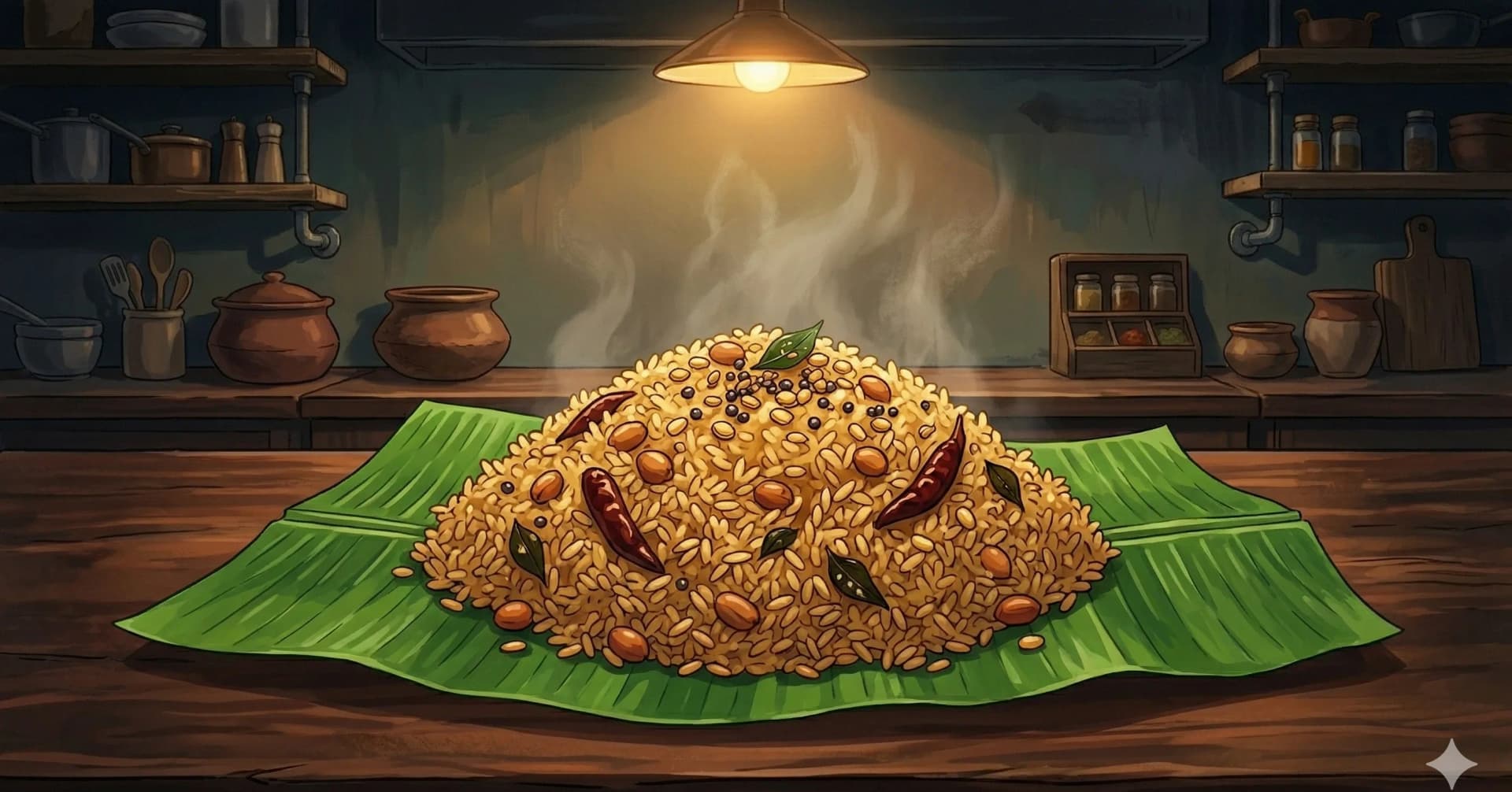
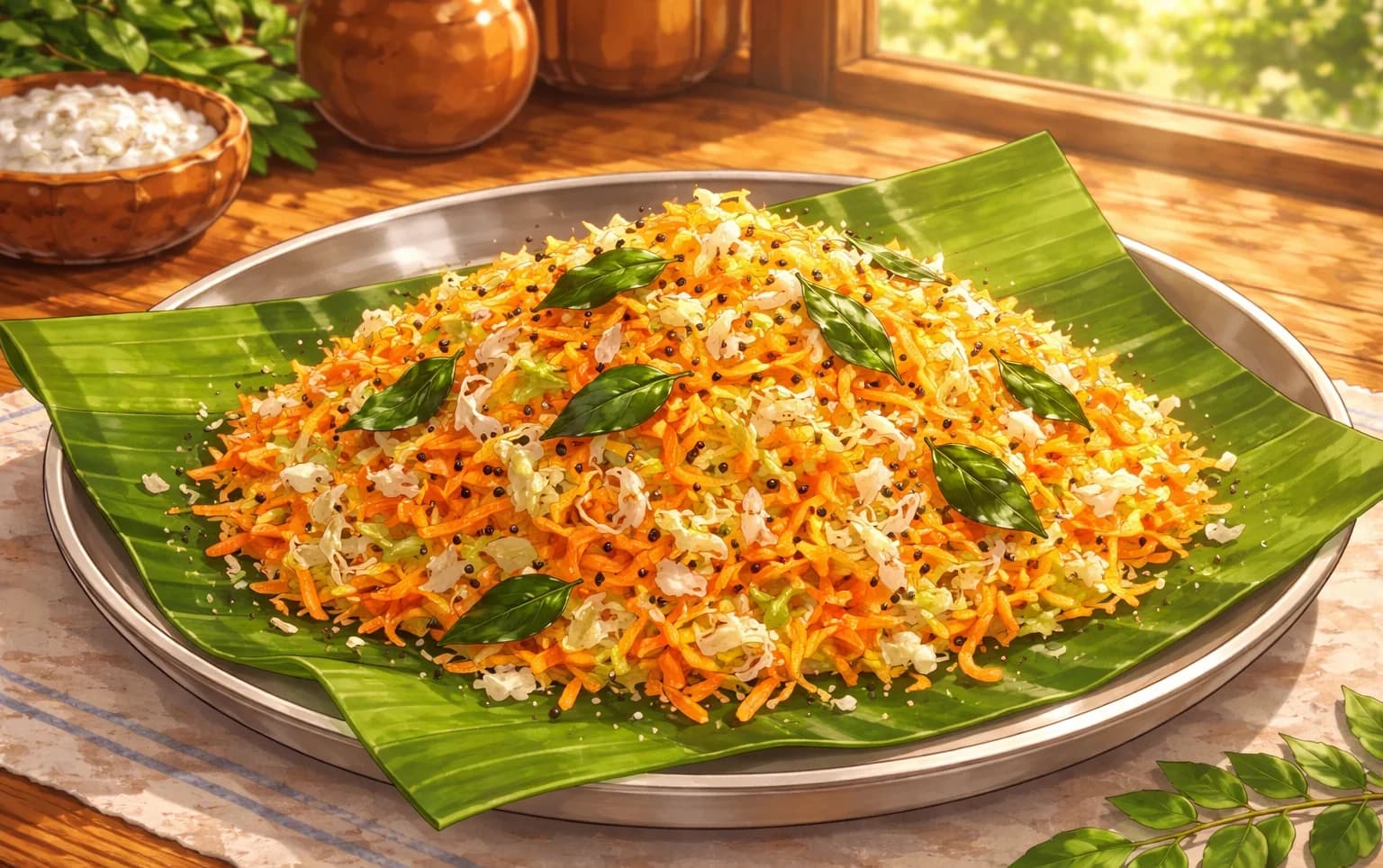
Open a box of tamarind rice at a temple in Tamil Nadu and the scent rises immediately: dark, sour, warm with sesame oil and roasted spices. The rice is stained a deep amber, each grain separate and glistening. Peanuts provide crunch. Curry leaves, fried until brittle, scatter through the mix. It is one of the great portable foods of South India, and its flavors are simultaneously simple and deeply layered.
Tamarind rice, known as puliyodarai or pulihora, is one of the most iconic prasadams (temple offerings) in South Indian Hindu worship. At the Srirangam temple and other major temples across Tamil Nadu, it is prepared in enormous quantities and distributed to devotees. The recipe is ancient and varies from temple to temple, but the core remains constant: cooked rice, a concentrated tamarind paste, a tempering of mustard seeds, dried chillies, and curry leaves, and roasted peanuts for texture.
The beauty of this dish for the home cook is in its practicality. The tamarind paste (called puliyodarai mix or gojju) can be made in large batches and stored in the refrigerator for weeks. When needed, a spoonful is mixed into freshly cooked (and cooled) rice with a drizzle of sesame oil. This makes tamarind rice one of the fastest, most reliable meals in the Tamil kitchen, as well as the most common lunchbox food for school and work.
The one thing that determines whether the rice will be excellent or merely acceptable is the quality of the tamarind. Fresh tamarind pulp, extracted from the pods and strained, produces a brightness and depth that block tamarind paste from a jar cannot match. If you have access to tamarind pods or good-quality compressed tamarind, use it.
At a Glance
Yield
Serves 4
Prep
15 minutes
Cook
20 minutes
Total
35 minutes (plus rice cooking time)
Difficulty
Easy
Ingredients
Rice Ingredients
- ¾ lbraw rice (any medium or short grain), cooked and cooled
- 1 tbspsesame oil (gingelly oil), for tossing
- ½ tspsalt
Tamarind Paste Ingredients
- 2¾ oztamarind (compressed block), soaked in 200 ml warm water for 15 minutes, then strained to yield thick pulp
- 2 tbspsesame oil (gingelly oil)
- 1⅔ tspmustard seeds
- ¼ ozurad dal (split black gram, about 1 teaspoon)
- ¼ ozchana dal (split chickpea, about 1 teaspoon)
- 2dried red chillies, broken in half
- ¾ cupfresh curry leaves (about 2 sprigs)
- —A pinch of asafoetida (hing)
- 1⅛ tspturmeric
- 1 ozroasted peanuts (skin on or off)
- 2¾ tspred chilli powder
- ⅞ tspsalt
- ¾ tspjaggery or brown sugar
Method
- 1
Cook and cool the rice. If not already done, cook the rice until each grain is separate and fully cooked but not mushy. Spread on a wide plate or tray to cool to room temperature. Drizzle the sesame oil (15 ml) over the cooled rice and add the salt (3 g). Toss gently with a fork or your fingers to coat each grain. The oil prevents the grains from sticking together and provides the characteristic sesame flavor.
- 2
Prepare the tamarind pulp. If using a compressed tamarind block (80 g), break it into pieces and soak in 200 ml of warm water for 15 minutes. Work the tamarind with your fingers to dissolve the pulp, then strain through a fine sieve, pressing to extract as much thick pulp as possible. Discard the seeds and fibres. You should have approximately 200 ml of thick tamarind extract.
- 3
Make the optional spice powder. If using, dry-roast the coriander seeds (5 g), fenugreek seeds (3 g), and dried red chillies (2) in a small dry pan over medium-low heat for 2 to 3 minutes until fragrant and slightly darkened. Cool and grind to a fine powder. This adds an extra layer of warmth and complexity.
- 4
Start the tempering. Heat the sesame oil (30 ml) in a heavy-based pan over medium heat. When the oil is hot, add the mustard seeds (5 g). Wait for them to pop and crackle, about 10 seconds. Add the urad dal (5 g) and chana dal (5 g). Stir for 1 to 2 minutes until the dals turn golden brown. They should be nutty and fragrant, not burnt.
- 5
Add aromatics. Add the broken dried red chillies (2), curry leaves (2 sprigs), and asafoetida (a pinch). The curry leaves will sputter and crackle. Stir for 15 seconds. Add the turmeric (3 g) and stir for 10 seconds.
- 6
Add peanuts. Add the roasted peanuts (30 g) and stir for 1 minute to warm them through and coat in the spiced oil.
- 7
Cook the tamarind paste. Pour in the strained tamarind pulp. Add the red chilli powder (5 g), salt (5 g), and jaggery (3 g). If using the spice powder, add it now. Stir well. Bring to a gentle simmer over medium-low heat and cook for 8 to 10 minutes, stirring regularly, until the tamarind paste thickens and darkens. The raw, sharp sourness of the tamarind will mellow, and the paste will become glossy and concentrated. You will see the oil beginning to separate at the edges. This is the point at which the paste is properly cooked.
- 8
Check the paste. Taste the tamarind paste. It should be intensely sour, slightly sweet from the jaggery, well-salted, and warm from the chilli and spice powder. The sourness should be the dominant note. Adjust salt, chilli, or jaggery as needed.
- 9
Cool the paste slightly. Remove the tamarind paste from heat and let it cool for 5 minutes. It should be warm but not hot when mixed with the rice.
- 10
Mix with rice. Add the cooled rice to the tamarind paste (or add the paste to the rice in a large bowl). Toss gently but thoroughly, using a fork or your hands, until every grain of rice is evenly coated in the dark tamarind paste. The rice should be uniformly amber-gold with visible peanuts, curry leaves, and dal pieces distributed throughout.
- 11
Adjust the seasoning. Taste the mixed rice. Add more salt, a squeeze of tamarind, or a drizzle of sesame oil if needed. The rice should be tangy, slightly oily, and well-seasoned.
- 12
Rest before serving. Let the tamarind rice sit for 10 to 15 minutes at room temperature before serving. The flavors settle and the rice absorbs the paste more evenly during this resting period.
Key Ingredient Benefits
Tamarind (Tamarindus indica) is one of the most important souring agents in South Indian cooking. It is high in tartaric acid, which gives it its distinctive sharp sourness. Tamarind is a source of B vitamins, iron, magnesium, and potassium. In Ayurvedic tradition, tamarind is associated with digestive stimulation. Research has explored tamarind's potential role in cholesterol management and antioxidant activity, though clinical evidence remains in early stages.
Sesame oil (gingelly oil) is the traditional cooking fat of Tamil Nadu. It is high in polyunsaturated and monounsaturated fats and contains sesamin and sesamolin, lignans that research suggests may have antioxidant properties. In traditional South Indian dietary practice, sesame oil is considered warming and is used generously.
Peanuts provide protein, healthy fats, and a range of micronutrients including niacin, folate, and magnesium. They are also a significant source of resveratrol, a polyphenol that has attracted research interest for potential cardiovascular benefits. In this dish, they provide essential textural contrast and protein to what is otherwise a carbohydrate-dominant preparation.
Why This Works
Cooking the tamarind paste until the oil separates is the technique that transforms raw tamarind extract into something with depth and shelf stability. Raw tamarind pulp is aggressively sour and one-dimensional. Cooked tamarind paste, where the water has been driven off and the sugars have begun to caramelize, has a rounder, more complex sourness with notes of dried fruit and molasses. The oil separation indicates that the water content has reduced sufficiently for the paste to concentrate.
Using sesame oil (gingelly oil) rather than a neutral oil is not optional in this dish. Sesame oil provides a distinctive nutty, toasted flavor that is deeply embedded in Tamil cuisine. It also has a higher smoke point than many unrefined oils, allowing it to withstand the tempering process, and it complements the sour tamarind in a way that other oils do not.
The roasted urad dal and chana dal in the tempering serve a textural purpose as well as a flavor one. They provide small, crunchy bursts of nuttiness throughout the rice that contrast with the soft grains. Combined with the peanuts, they create a range of textures that make each bite interesting.
Substitutions & Variations
Batch preparation: The tamarind paste can be made in large quantities (double or triple the paste recipe) and stored in a clean glass jar in the refrigerator for up to 3 weeks. When needed, mix 2 to 3 tablespoons of the paste into a portion of cooked rice for an instant meal. This is the traditional approach in Tamil households.
Lemon rice variation: For a brighter, less complex version, replace the tamarind paste with the juice of 2 lemons mixed into the tempering. Add turmeric for color. This produces the related dish known as elumichai sadam.
Without peanuts: Omit peanuts for nut allergies. Increase the urad dal and chana dal to 8 g each for additional crunch.
Brown rice: Brown rice can be used. The nuttier flavor complements the tamarind well, though the texture will be chewier.
Serving Suggestions
Tamarind rice is traditionally served as a standalone meal or as part of a South Indian thali. It is excellent at room temperature, which makes it one of the best lunchbox and travel foods in the Indian repertoire. Common accompaniments include papadum, potato chips, a small bowl of curd (yogurt), or coconut chutney. At temples, it is often served simply, without accompaniment, as prasadam. For a fuller meal, pair with a rasam or sambar, a dry vegetable poriyal, and a papadum.
Storage & Reheating
Tamarind rice keeps well at room temperature for up to 8 hours (making it ideal for packed lunches) and in the refrigerator for up to 2 days. The acidity of the tamarind acts as a natural preservative. Reheat gently or serve at room temperature; microwaving tends to dry the rice. Add a small drizzle of sesame oil and toss before serving if the rice seems dry. The tamarind paste alone, stored separately, keeps for up to 3 weeks refrigerated.
Cultural Notes
Puliyodarai (புளியோதரை, "tamarind rice"; also called puliyogare in Karnataka, pulihora in Andhra Pradesh, and chitranna in some regions) is the South Indian rice preparation in which cooked rice is mixed with a deeply spiced tamarind paste, peanuts, urad dal, mustard seeds, dried red chilies, and curry leaves. The dish is one of the foundational temple food (prasadam) preparations across South India, distributed at Hindu temples to devotees after the daily worship rituals, and it is also one of the most common travel and lunchbox foods of the region because it keeps well at room temperature for many hours and develops more flavor as it sits.
The tamarind paste (called puli kachal in Tamil, puli gojju in Kannada) is the technical heart of the dish and is typically prepared in large batches and stored for weeks. Thick tamarind extract is simmered with toasted ground spices (typically a blend of coriander, chana dal, urad dal, dried red chilies, fenugreek, asafoetida, and sesame seeds), jaggery for sweetness, and salt until the mixture reduces to a thick dark paste that can be spread with a spoon. The paste itself is the flavor concentrate that, when mixed into rice with a final tempering of peanuts, mustard seeds, and curry leaves, produces the finished dish.
The cultural setting spans temple food, festival meals, and travel cooking. Puliyodarai is one of the standard offerings at the major South Indian Hindu temples (Tirupati, Srirangam, Madurai, Palani, Sabarimala), distributed in small banana-leaf packets to thousands of pilgrims daily as prasadam. The Tirupati version is so famous that it has been documented in scholarly food writing as a temple cooking tradition with continuous practice for several centuries. The dish also has a separate identity as the travel food carried by South Indian families on long train journeys, since it keeps well, packs flat in a tiffin box, and improves in flavor over the eight to twelve hours of a typical Indian train trip. Chandra Padmanabhan's Dakshin: Vegetarian Cuisine from South India and other South Indian cookbooks document the regional variations across Tamil Nadu, Karnataka, and Andhra Pradesh.
Nutrition Facts
Calories: 425kcal (21%)|Total Carbohydrates: 65g (24%)|Protein: 6g (12%)|Total Fat: 16g (21%)|Saturated Fat: 2g (10%)|Cholesterol: 0mg (0%)|Sodium: 920mg (40%)|Dietary Fiber: 3g (11%)|Total Sugars: 5g
You Might Also Like
Ratings & Comments
Ratings & Comments
Ratings
Share your thoughts on this recipe.
Sign in to rate and comment