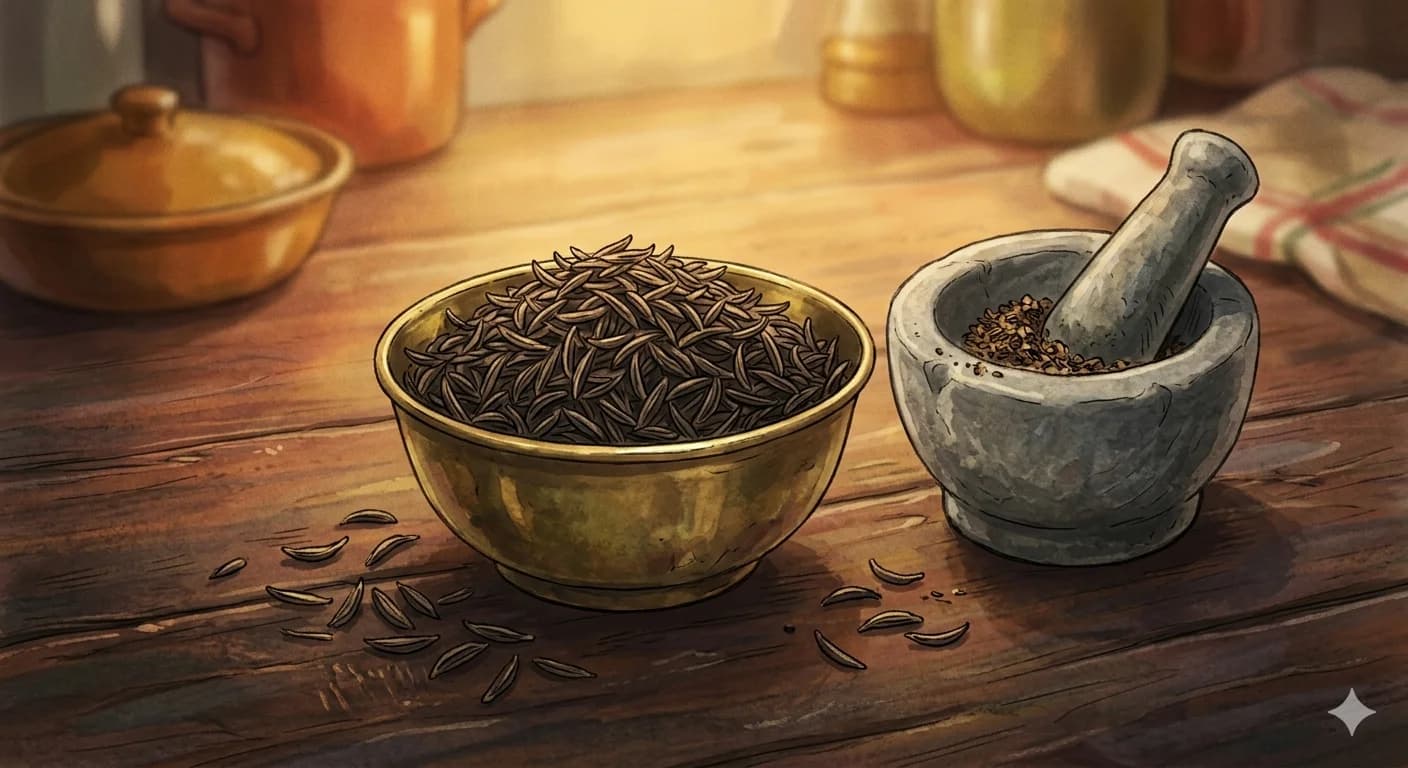
Black Cumin Seeds
Also known as: Shah Jeera, Kala Jeera, Caraway (sometimes confused), Bunium persicum, Royal Cumin
Black cumin seeds occupy one of the most confusing naming situations in the entire spice world. The name "black cumin" is used in different markets to refer to at least three entirely different plants: Bunium persicum (the subject of this entry, also called Shah Jeera or Royal Cumin), Nigella sativa (a completely different genus, sometimes called black seed or kalonji), and occasionally even regular cumin (Cuminum cyminum) that has darkened with age or roasting. When shopping for this spice, the botanical name or the Kashmiri name Shah Jeera is the only reliable way to be certain of what you are buying.
Bunium persicum is a perennial plant in the carrot family (Apiaceae), native to the high-altitude regions of Kashmir, Afghanistan, Iran, and Central Asia. The seeds are thin, elongated, and very dark brown, almost black, with pointed tips. They are distinctly smaller and more slender than regular cumin seeds and carry a noticeably different aroma: deeper, more intense, and more nuanced, with a nuttier quality and a faint earthy sweetness underneath the characteristic cumin bite.
The name Shah Jeera translates directly from Persian and Urdu as "royal cumin," and this royal distinction reflects not just prestige but a genuine flavor difference that separates it from common cumin.
The spice grows at elevations between 2,000 and 3,000 meters, primarily in the high valleys of Kashmir and the Hindu Kush. This high-altitude growth, in cold, mineral-rich soils with intense sunlight and cool nights, is understood to concentrate the essential oils that give Shah Jeera its superior aromatic intensity. Like saffron and certain other Kashmiri spices, the quality of the growing region is considered inseparable from the quality of the final product.
Key facts at a glance:
- Black cumin — Seeds occupy one of the most confusing naming situations in the entire spice world.
- When shopping — For this spice, the botanical name or the Kashmiri name Shah Jeera is the only reliable way to be certain of what you are buying.
- The seeds — Are thin, elongated, and very dark brown, almost black, with pointed tips.
- The spice — Grows at elevations between 2,000 and 3,000 meters, primarily in the high valleys of Kashmir and the Hindu Kush.
- Like saffron — And certain other Kashmiri spices, the quality of the growing region is considered inseparable from the quality of the final product.
Flavor Profile
Origin
Kashmir, Iran, Central Asia
Traditional Medicine Perspectives
Ayurveda:
Shah Jeera shares many therapeutic properties with regular cumin but is considered to act with greater potency due to its higher concentration of volatile oils. It is classified as warming, digestive, and carminative, supporting the digestive fire and helping to resolve gas and bloating. It is specifically indicated for cold-type digestive conditions, those characterized by heaviness, sluggishness, and poor transformation of food, rather than conditions of excess heat or acidity. In Unani medicine, the Islamic healing tradition that developed alongside Ayurveda in South Asia and deeply influenced Kashmiri medicine, Shah Jeera is similarly valued as a stomachic and general digestive tonic, prescribed in conditions of cold and damp imbalance. Its warming properties make it appropriate for the mountain climate of its origin, where cold-related digestive weakness is common.
Modern Scientific Research
The essential oil composition of Bunium persicum has been analyzed and found to contain cuminaldehyde, gamma-terpinene, and p-cymene as major constituents, a profile broadly similar to but distinct from Cuminum cyminum (regular cumin). Studies comparing the two have found that Bunium persicum oil tends to have higher concentrations of cuminaldehyde, which may explain its more intense aromatic presence. Antimicrobial studies have demonstrated activity against several foodborne pathogens, consistent with the historical use of aromatic spices as food preservatives in warm-climate cooking.
Research into the phytochemistry of Bunium persicum remains a smaller body of literature than that on regular cumin, partly due to the plant's restricted cultivation area and lower commercial availability globally. The documented activities of cuminaldehyde, including antifungal effects and inhibition of certain bacterial strains, provide plausible biochemical mechanisms for the traditional digestive and preservative applications of this spice.
Cultural History
Shah Jeera is, in many ways, the signature spice of Kashmiri cuisine. The cooking of the Kashmir Valley, particularly the formal feast tradition called Wazwan, developed around a distinctive set of spices that set it apart from the cuisines of the plains below. Wazwan, the multi-course ceremonial banquet prepared by specialist cooks called wazas, uses Shah Jeera in nearly every meat preparation.
Its deeper, more resinous flavor relative to regular cumin aligns with the bold, clarified-butter-rich style of Kashmiri cooking.
The spice's name directly encodes its cultural status. In the Persian language that shaped the courts and cuisines of Mughal North India, Shah means king or emperor. The designation of this particular cumin as "royal" suggests it was considered a superior variety, one appropriate for the kitchens of rulers.
The Mughal emperors, whose court culture was soaked in Persian language and aesthetics, apparently agreed: Shah Jeera appears in the biryani preparations associated with Mughal culinary tradition, particularly in the rice-based dishes that became the most prestigious category of North Indian cookery.
The trade routes that brought Shah Jeera down from Kashmir to the plains of Punjab and then further south shaped the distribution of Kashmiri culinary influence. Spice merchants in Srinagar's Maharaj Bazaar have sold Shah Jeera alongside saffron and dried cockscomb flowers for generations, and the spice remains one of the commercially significant exports from the valley. In the diaspora communities of Kashmiris who settled across North India and Pakistan, Shah Jeera remained a marker of culinary identity, a spice that distinguished Kashmiri cooking from the surrounding regional traditions.
Culinary Uses
Shah Jeera is most often used whole rather than ground, and this is where it differs most notably from regular cumin in practice. In biryani and rice dishes, whole seeds are bloomed in ghee or oil at the start of cooking, where they sizzle and release their essential oils into the fat, perfuming the base before rice or meat is added. They appear whole in the finished dish and are eaten alongside the rice without being separated out, their flavor having mellowed into a subtle background presence after cooking.
In Kashmiri meat preparations like rogan josh and yakhni, Shah Jeera is added early in the cooking of the gravy, again as a whole spice bloomed in hot fat. The extended cooking time extracts its deeper, earthier notes while the top volatile aromas cook off, leaving a grounding warmth in the finished dish. Ground Shah Jeera can be used but is less common, as grinding is generally reserved for applications where the spice needs to coat a surface or integrate fully into a sauce in a short cooking time.
The seeds can also be dry-toasted before use to intensify their nuttier qualities.
Preparation Methods
Whole in hot ghee: Add whole seeds to hot ghee over medium-high heat and wait for them to splutter and pop, roughly 30 to 45 seconds. This is the correct starting point for any Kashmiri-style rice dish or slow-cooked meat preparation.
Dry toasting for grinding: In a dry heavy pan over medium heat, toast seeds until they deepen in color and begin to release a strong aroma, about 2 minutes. Stir constantly to avoid burning. Cool completely before grinding. Use freshly ground for maximum impact.
In rice: For yakhni pulao or biryani, add 1 teaspoon whole seeds per cup of dry rice along with other whole spices in the early oil stage. The seeds will perfume the rice throughout the cooking process.
Distinguishing from regular cumin when buying: Shah Jeera seeds are noticeably thinner, more elongated, and darker than regular cumin. The aroma when rubbed between fingers is more intense, deeper, and slightly sweeter. If seeds are thick, squat, or a lighter brown, they are likely regular cumin.
Traditional Dishes
- Kashmiri rogan josh
- Yakhni pulao
- Kashmiri biryani
- Kashmiri dum aloo
- Goshtaba (slow-cooked meatballs in yogurt gravy)
- Rista (minced meat dumplings in red gravy)
- Sheer chai (Kashmiri pink salt tea)
- Wazwan feast preparations
- Mughlai biryani
- Seekh kebab (ground meat kebabs)
Comments
Share your thoughts on this ingredient.
Sign in to comment0 Comments