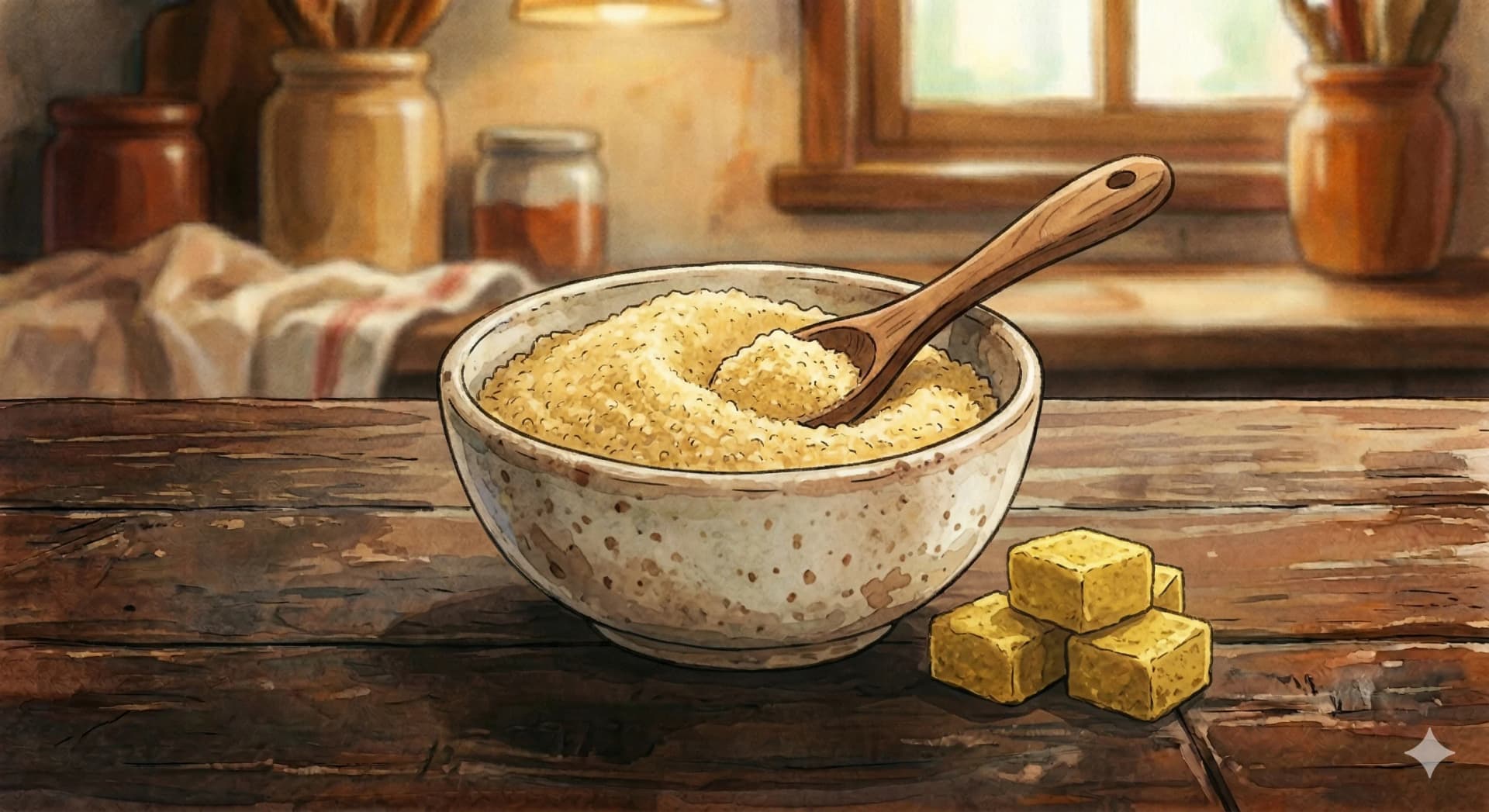
Chicken Bouillon Powder
Also known as: Ji Jing, Chicken Powder, Chicken Stock Powder, Ji Tang Fen
Chicken bouillon powder is one of the most widely used seasoning shortcuts in Chinese home and restaurant cooking — a concentrated blend of dried chicken extract, salt, MSG, and flavor compounds that adds a rounded, savory depth to dishes in seconds. In Chinese kitchens it functions less as a stock substitute and more as a layer of seasoning added alongside soy sauce, oyster sauce, and white pepper to create a complete flavor profile. A small amount added to stir-fries, soups, and rice provides the background umami that might otherwise require hours of stock-making.
Flavor Profile
Origin
China, Cantonese cuisine, Chinese cuisine broadly
Traditional Medicine Perspectives
Traditional Chinese Medicine
Chicken (Ji Rou) is classified as warm and sweet in TCM, associated with the Spleen and Stomach. It is considered nourishing to Qi and Blood, strengthening to sinews and bones. Chicken-based broths and preparations are prescribed for Qi and Blood deficiency, weakness after illness, and general tonification. Chicken bouillon powder captures some of these associations as a concentrated chicken flavoring, though it is understood as a modern processed ingredient rather than a traditional medicinal food.
Modern Scientific Research
Chicken bouillon powder's primary flavor contributions come from hydrolyzed chicken protein (which releases free glutamates and amino acids), MSG, and salt. The free glutamates from hydrolyzed protein and added MSG contribute to umami perception through the same mechanisms as naturally occurring glutamates in aged and fermented foods. Sodium content is high — a teaspoon typically contains 400–600mg of sodium — so it should be factored into overall seasoning.
Cultural History
Chicken powder (ji jing) became standard in Chinese restaurant kitchens in the mid-20th century and spread rapidly into home cooking. In Chinese culinary culture, it is not viewed as a compromise or a shortcut in the pejorative sense — it is simply a modern seasoning ingredient with a specific function, like fish sauce or soy sauce. The brand most associated with Chinese cooking is Lee Kum Kee's chicken powder, though many brands exist.
In Cantonese home cooking in particular, a pinch of chicken powder is as automatic as reaching for salt.
Culinary Uses
Add a small amount to stir-fry sauces, soups, braises, and fried rice for background depth. Use in dipping sauces and salad dressings. Add to the water when cooking noodles for subtle flavor.
Use in combination with salt and MSG rather than instead of them — each contributes differently. A pinch added to congee or vegetable dishes compensates for the absence of a proper stock.
Preparation Methods
Dissolve in liquid before adding to a dish, or add directly to sauces and stir-fries where moisture is present. Taste carefully before adding salt — bouillon powder is already salty. A quarter to half teaspoon is typically sufficient for a dish serving four.
Traditional Dishes
- Cantonese stir-fries
- Fried rice
- Wonton soup base
- Congee
- Clay pot dishes
Comments
Share your thoughts on this ingredient.
Sign in to comment0 Comments